
Private Accounting Lessons in Bali
Accounting Lessons in Bali: From Journals to Tax and Audit
Edupola's accounting lessons in Bali pair one tutor with one learner, at your location or online, for students, finance staff, future public accountants, and business owners. Topics run from journals to tax, audit, MYOB, and Accurate. Once your schedule is agreed, we find a tutor within 1 to 5 working days. Fees start from IDR 197,300 per session.

Who It Is For
Who Takes Private Accounting Lessons?
Learners come to accounting lessons in Bali from different starting points, and the first session is planned around yours.
-
Accounting Students
Coursework, midterm and final exam preparation (UTS and UAS at Indonesian universities), and the comprehensive exam. The tutor reads your syllabus and your lecturer's sample questions first, so each discussion follows the order and the terms used on your campus.
-
Future Public Accountants
Preparation for the CPA and CA professional exams and for Brevet Pajak A and B, Indonesia's tax certification levels. Sessions cover practice questions by topic, a close look at every wrong answer, and timed simulations.
-
Finance and Accounting Staff
Financial statements, tax, internal audit, and the accounting software used at your workplace. If you work at a hotel, a villa, or a trading business in Bali, practice cases can come from the kinds of transactions you handle every day, with the data anonymized first.
-
Small Business Owners
Simple bookkeeping, the income statement and balance sheet, a working understanding of tax for small businesses (UMKM, Indonesia's micro, small, and medium enterprises), and accounting software for your own company. The starting point is the records you already keep, even if they are still a pile of receipts and bank statements.
For Business Owners
Bookkeeping for Bali Businesses: From Receipts to Reports
Businesses in Bali have their own transaction patterns, and those patterns shape what you study. Guesthouses and tour operators collect deposits from guests long before the service is delivered. In accounting, that money is recorded as unearned revenue and only recognized as revenue once the service is complete. Rent for business premises paid a year in advance works the other way around: it is recorded as a prepaid expense, then charged as an expense month by month.
The high and low tourist seasons in Bali make a business's cash rise and fall. That is why bookkeeping lessons for business owners begin with three habits: separating your personal account from your business account, recording cash in and cash out every day, and preparing a monthly income statement and cash flow statement. The cash flow statement shows you which months run short of cash before those months arrive. Once these three habits are in place, your records move into accounting software.
Topics by Level
What You Learn, from Basic to Advanced Accounting
The curriculum for accounting lessons in Bali at Edupola is split into five groups. You do not have to start with the first: in the early sessions, the tutor checks which parts you have already mastered.
-
Basic Accounting
The Accounting Cycle for Service and Trading Companies
It starts with the basic accounting equation: assets equal liabilities plus equity. From there you learn to analyze transactions, write entries in the general journal, post them to the general ledger, prepare a trial balance, make adjusting entries and a worksheet, and close the books. The same cycle is then repeated for a trading company, with accounts for purchases, sales, returns, discounts, and the cost of goods sold.
- The basic equation and transaction analysis
- General journal, general ledger, and trial balance
- Adjusting entries, worksheet, and closing entries
- Trading companies under the periodic and perpetual methods
-
Intermediate Accounting
Financial Statements and Balance Sheet Items
At this level the focus moves from recording to presenting. You prepare the income statement, the statement of financial position, the statement of changes in equity, and the cash flow statement. Balance sheet items are covered one by one: receivables and their loss allowance, inventory under FIFO and the weighted average method, fixed assets and depreciation, long-term liabilities, and investments in securities. Liquidity, solvency, and profitability ratio analysis closes this part.
- The four main financial statements
- Inventory, fixed assets, and depreciation
- Cash flows under the direct and indirect methods
- Financial ratio analysis
-
Advanced Accounting
Consolidation, Tax, Audit, and Cost Accounting
This part holds the final-semester topics and the topics that come up at work: consolidated financial statements with intercompany eliminations, tax accounting for PPh (Indonesian income tax) and PPN (value added tax), auditing basics, cost accounting, and management accounting. Changes in the standards are covered too, such as SAK Entitas Privat, the Indonesian standard for private entities that took effect on 1 January 2025 and replaced SAK ETAP.
- Consolidation and intercompany eliminations
- PPh and PPN in the accounting records
- Audit assertions, evidence, and procedures
- Cost of goods manufactured and break-even analysis
-
Accounting Software
MYOB, Accurate Online, SAP, Jurnal, and Excel
Software practice starts with setting up the chart of accounts and opening balances, then moves to daily transaction entry and bank reconciliation, through to printing financial statements. If you already handle manual journals with ease, this stage has something to hold on to, because you know what the software does every time a transaction is saved.
- Chart of accounts and opening balances
- Sales, purchases, and inventory
- Bank reconciliation
- Financial statements from the software
-
Exam Preparation
University Exams and Professional Exams
For students: midterms, finals, and the comprehensive exam. For future accounting professionals: material preparation for the CPA and CA exams and for Brevet Pajak A and B. The pattern is the same in both: map the topics being tested, work through questions by topic, go over every wrong answer, then practice under a time limit.
- A topic map from the exam outline or syllabus
- Practice questions by topic
- Timed simulations
Ratings and fees for accounting lessons in Bali
| Program | Accounting Lessons in Bali |
|---|---|
| Provider | Edupola |
| Description | Private accounting lessons in Bali, one tutor for one learner. Topics: journals, the general ledger, the balance sheet, financial statements, tax accounting, audit, MYOB, and Accurate. Flexible schedule, in person or online. |
| Fee | Rates start from Rp197,300 per session. |
| Session Length | Each session runs 60, 90, or 120 minutes. |
| Schedule | Flexible, set around the learner's needs. |
| Start | Starts once the schedule is agreed and the tutor is ready. |
| Sessions per Month | 4 to 28 sessions, as needed. |
| Rating | 4.9 out of 5, based on 115 reviews |
Program Overview
Accounting Lessons in Bali for Study, Work, and Business
Edupola's accounting lessons in Bali are private lessons: one tutor works with one learner, and the material is built from that learner's needs. Students can bring the syllabus for a course and questions from their lecturer. Finance staff can bring work that is in progress, such as a bank reconciliation with a difference nobody has found yet. Business owners can bring receipts and bank statements they want to turn into a tidy income statement.
Sessions take place in person in Denpasar, Badung, Gianyar, Tabanan, Buleleng, and other parts of Bali, or online for learners outside the reach of an in-person tutor. One session lasts at least 60 minutes and can be taken as 90 or 120 minutes, with 4 to 28 sessions a month depending on your needs. The material follows the Indonesian Financial Accounting Standards (SAK) and how they relate to IFRS.
Fees start from IDR 197,300 per session. The program holds a rating of 4.9 from 115 learner reviews.
Common Mistakes
Frequent Accounting Mistakes and How the Tutor Handles Them
The mistakes below come up often in basic and intermediate accounting. The table shows where each mistake sits and how the tutor works through it in a session.
| Topic | The frequent mistake | How the tutor handles it |
|---|---|---|
| Debits and credits | Memorizing where debits and credits go without knowing which accounts increase on the debit side, so expenses and revenue often get swapped | Going back to the basic equation, grouping accounts by their normal balance, then having you state the transaction analysis out loud before writing the entry |
| Adjusting entries | Forgetting to adjust prepaid expenses, unearned revenue, supplies used, and depreciation at the end of the period | An adjustment checklist used in every exercise, with the effect of each adjustment checked against the income statement and the balance sheet |
| Trial balance | Assuming the work is correct because the trial balance balances, even though a wrong account or a missed transaction still produces equal totals | Tracing back from the source documents to the journal, plus examples of errors a trial balance cannot detect |
| Drawings and expenses | Business money taken for personal use is recorded as an expense, so the business profit looks smaller than it is | Separating owner transactions from business transactions using your own records, which matters most for small business owners |
| Trading companies | Mixing up the periodic and perpetual methods, or miscalculating the cost of goods sold because of returns, discounts, and freight-in | One case worked side by side with both methods, so the difference shows in every journal entry |
| Indirect cash flow method | Using the wrong sign when adjusting net income: an increase in receivables gets added, when it actually reduces cash | One question for every item: does this change add to or reduce the money actually received? |
| Depreciation of fixed assets | Mixing the straight-line and declining balance methods, or depreciating land along with the buildings | You build a year-by-year depreciation schedule, then match it to the journal entries and the book value on the balance sheet |
| Opening balances in software | Opening balances entered without being checked, so the very first report is already out of balance | Before any transactions go in, the opening balances are matched against the latest balance sheet and the bank statement |
This list gives examples. The mistakes covered in your sessions are set by the results of your first exercise.
Accounting Software
Accounting Software You Can Learn and Its Licenses
The software part suits finance staff and business owners in Bali who already use, or plan to use, one of these programs at work. MYOB and Accurate Online are used for the full cycle: chart of accounts, opening balances, sales and purchase transactions, inventory, cash and bank, through to reports. Jurnal, an Indonesian cloud accounting app, covers similar needs, while Excel is useful for building your own worksheets, reconciliations, and depreciation schedules.
MYOB, Accurate Online, SAP, and Jurnal are paid software. You arrange your own software license or account, and it is not included in the fee for the lessons. SAP can usually be reached only through a company system, so SAP material is covered when you already have access through your workplace.
Learning Stages
Basic Accounting Milestones You Can Check Yourself
The outline below assumes 2 to 3 sessions a week for basic accounting. Each milestone is something you can verify on your own, and none of them promises a particular grade.
-
Weeks 1 to 2
Confident Transaction Analysis
You can name the accounts a service company transaction affects, along with the debit or credit side, without looking at your notes.
-
Weeks 3 to 5
A Complete Service Cycle
You finish one service company case from the general journal to the closing entries, and the post-closing trial balance holds only real accounts.
-
Weeks 6 to 9
Trading Companies
You calculate the cost of goods sold under the periodic and perpetual methods, including returns and discounts, then prepare a multi-step income statement.
-
Weeks 10 to 12
Complete Statements
You prepare financial statements from your own worksheet and can explain why net income differs from the increase in cash.
Every learner moves at a different pace. The tutor shifts these milestones when a topic needs another round.
How You Learn
How the Tutor Teaches Accounting in Each Session
The method behind Edupola's accounting lessons in Bali rests on exercises you work through yourself, with the tutor checking and explaining.
-
Case Studies Built from Realistic Transactions
Questions are built from transactions that are common in Bali: villa rent paid in advance, credit sales to a travel agency, or ingredient purchases for a food business. You work one case from the journal through to the reports, so the links between the statements become visible.
-
Hands-On Software Practice
You operate MYOB, Accurate, or Excel yourself on your own laptop while the tutor watches and corrects. Every figure on the screen is matched to the manual journal you completed earlier.
-
Working Through Questions by Topic
University and professional exam questions are worked through topic by topic. When an answer is wrong, the tutor first asks for the reasoning behind it, because the reasoning is where the misunderstanding shows.
-
Help with Coursework and Work Problems
Coursework, midterm and final exam preparation, or an accounting problem at work can all be brought to a session. The tutor guides you until you understand the steps, and you still complete the work yourself.
One Session
What Does One Private Accounting Session Look Like?
A sample 90-minute session for a learner who is studying trading companies. The structure changes to fit your goal.
-
10 minutes
Checking Previous Work
The tutor reviews the exercises you did since the last session and notes which kinds of mistakes keep coming back.
-
20 minutes
A New Concept
An explanation of one topic, such as recording purchase returns, with one example worked together.
-
40 minutes
Independent Practice
You work a case on your own, from the source documents to the journal. The tutor steps in when you get stuck or when your journal does not balance.
-
15 minutes
Review
Answers are compared, the cause of each mistake is discussed, then you rewrite the entries that were wrong.
-
5 minutes
Next Exercises
The tutor sets questions to complete before the next session, picked from the topics that are not yet fluent.
The length of each part is only an example. In a 2-hour session, independent practice usually gets more time.
Sample Schedules
Accounting Lesson Schedules in Bali by Goal
Accounting lessons in Bali range from 4 to 28 sessions a month. Use the patterns below as a reference during the consultation: you set your exact schedule first, and the tutor is found to fit that schedule.
| Goal | Session pattern | Focus |
|---|---|---|
| Students before midterms or finals | 2 to 3 sessions a week, starting 4 to 6 weeks before the exam | The topics your lecturer tests and practice with exam questions from past semesters |
| Professional exam preparation | 2 to 3 sessions a week | One exam subject per period, practice questions by topic, and timed simulations |
| Finance staff | 1 to 2 sessions a week, evenings or weekends possible | Work problems currently in progress and the software used at your workplace |
| Business owners | 1 to 2 sessions a week for 2 to 3 months | Daily records, a monthly income statement, then the move to software |
One session lasts at least 60 minutes, and 90 or 120 minutes can be chosen. Evening and weekend sessions can be requested during the consultation.
Service Limits
When Private Accounting Lessons Are Not Yet Right for You
Accounting lessons in Bali at Edupola teach you how to do the work yourself. Some needs are better served by someone else.
-
You are looking for a bookkeeping service
If you need someone to record transactions and prepare reports every month on behalf of your business, that is the work of a bookkeeping service. These lessons teach you or your staff to do it yourselves.
-
You want your tax filing handled
The tutor explains how to calculate and understand your tax obligations. Completing and submitting a tax return (SPT) on your behalf is a service offered by tax consultants.
-
You want the tutor to do your assignments
The tutor guides you until you understand the steps. Coursework, internship reports, and your final thesis are still written by you.
-
You need a professional certificate
These lessons help you prepare the material. Registration for the CPA, CA, and Brevet Pajak exams goes through the official organizers, and the certificates are issued by those organizers.
-
There is no time to practice between sessions
Accounting is learned by working through questions. If you have no time at all to practice between sessions, progress will be slow, so consider starting when your schedule is lighter.
Not sure which group your needs fall into? Tell us during the consultation, and the team will give you a straight answer.
Gallery
A Glimpse of Private Accounting Study
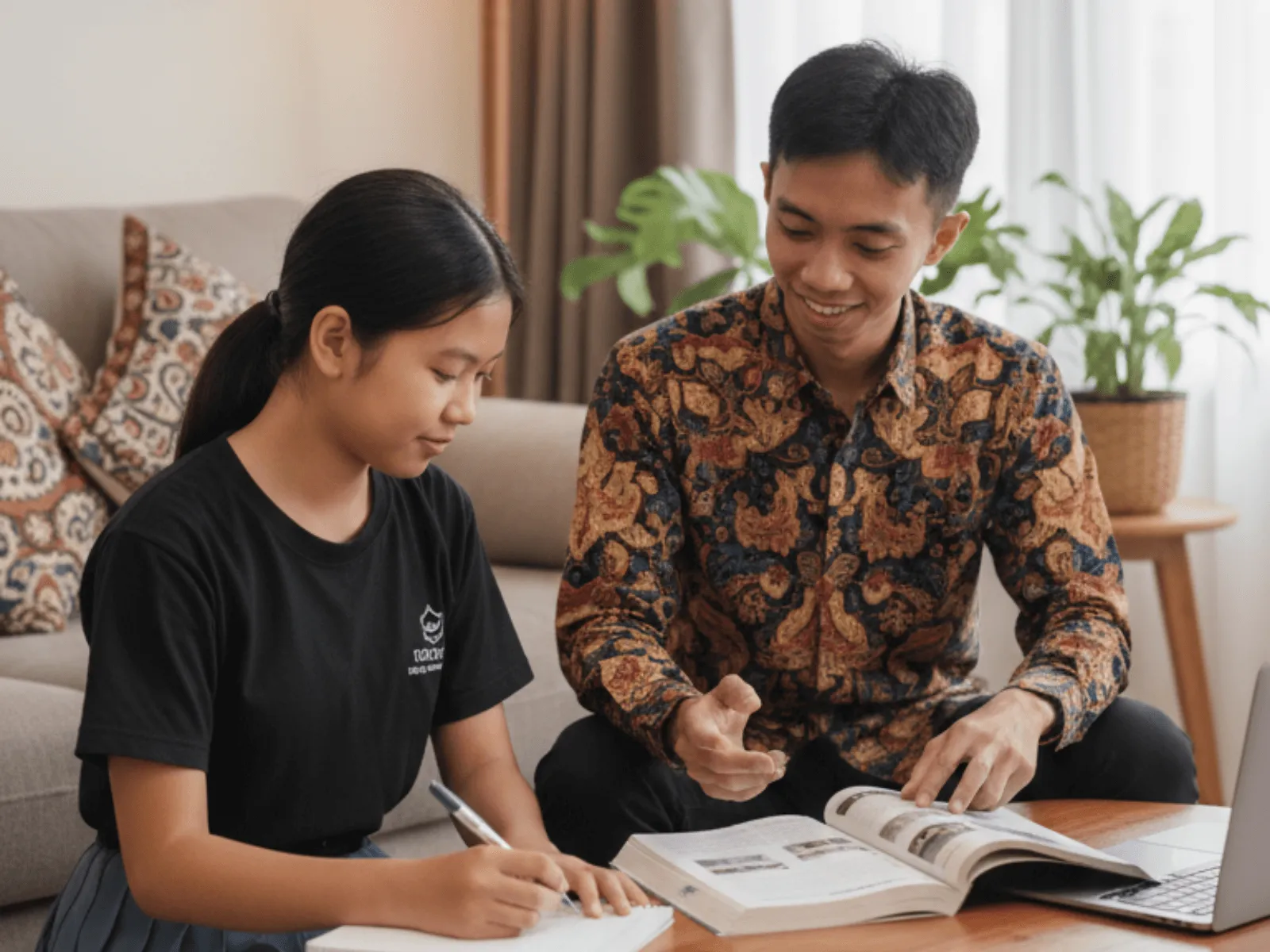
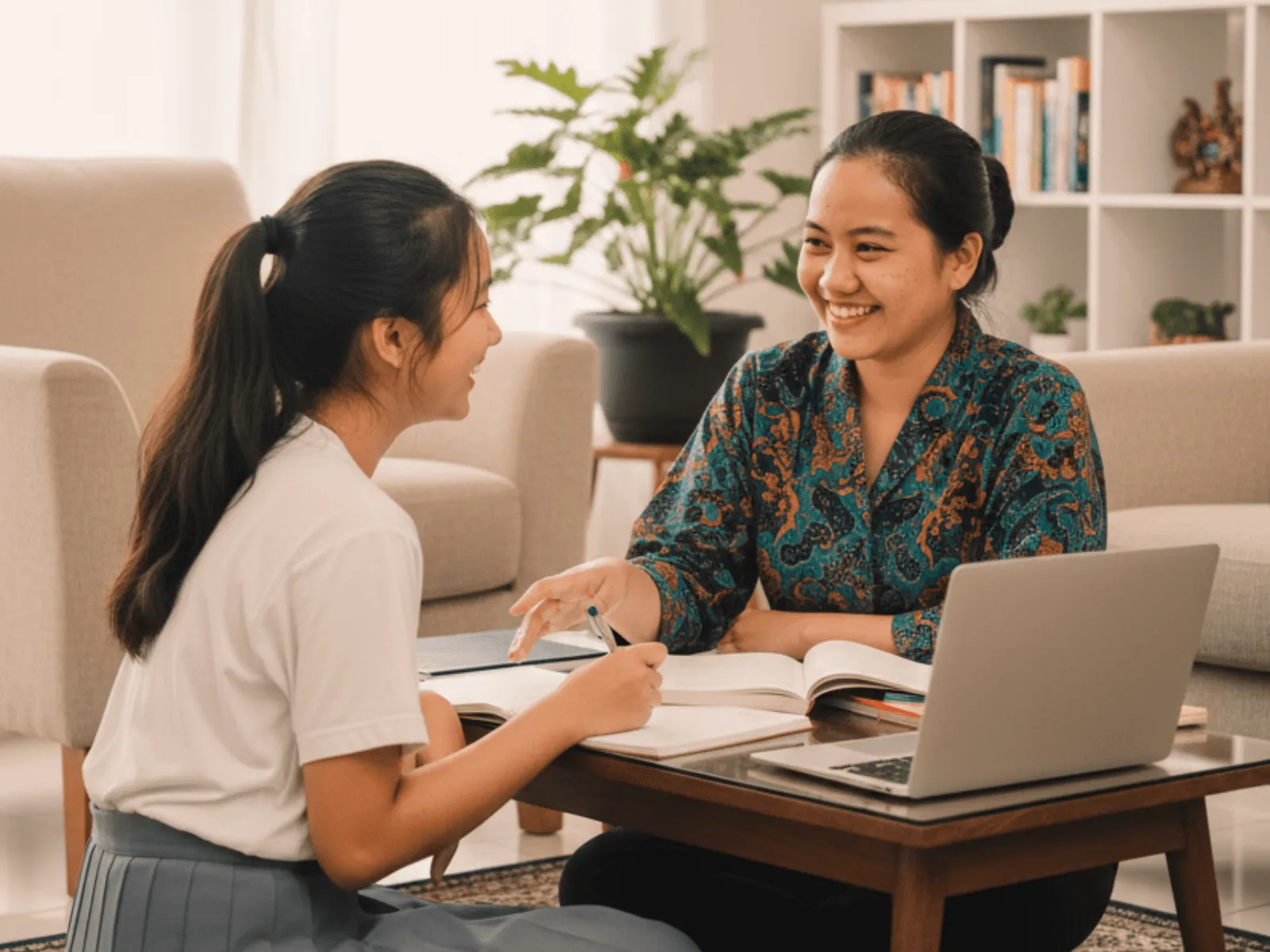
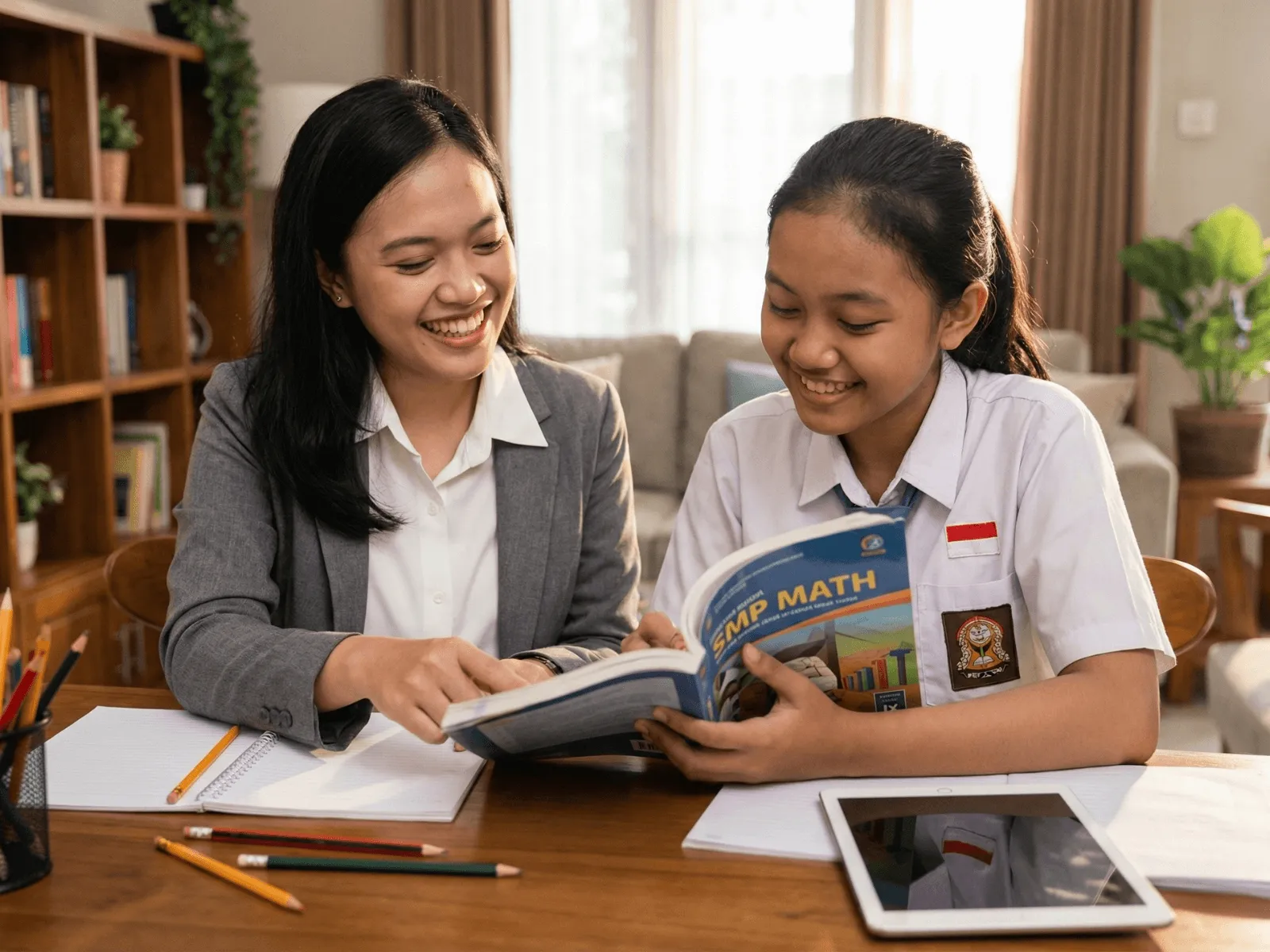
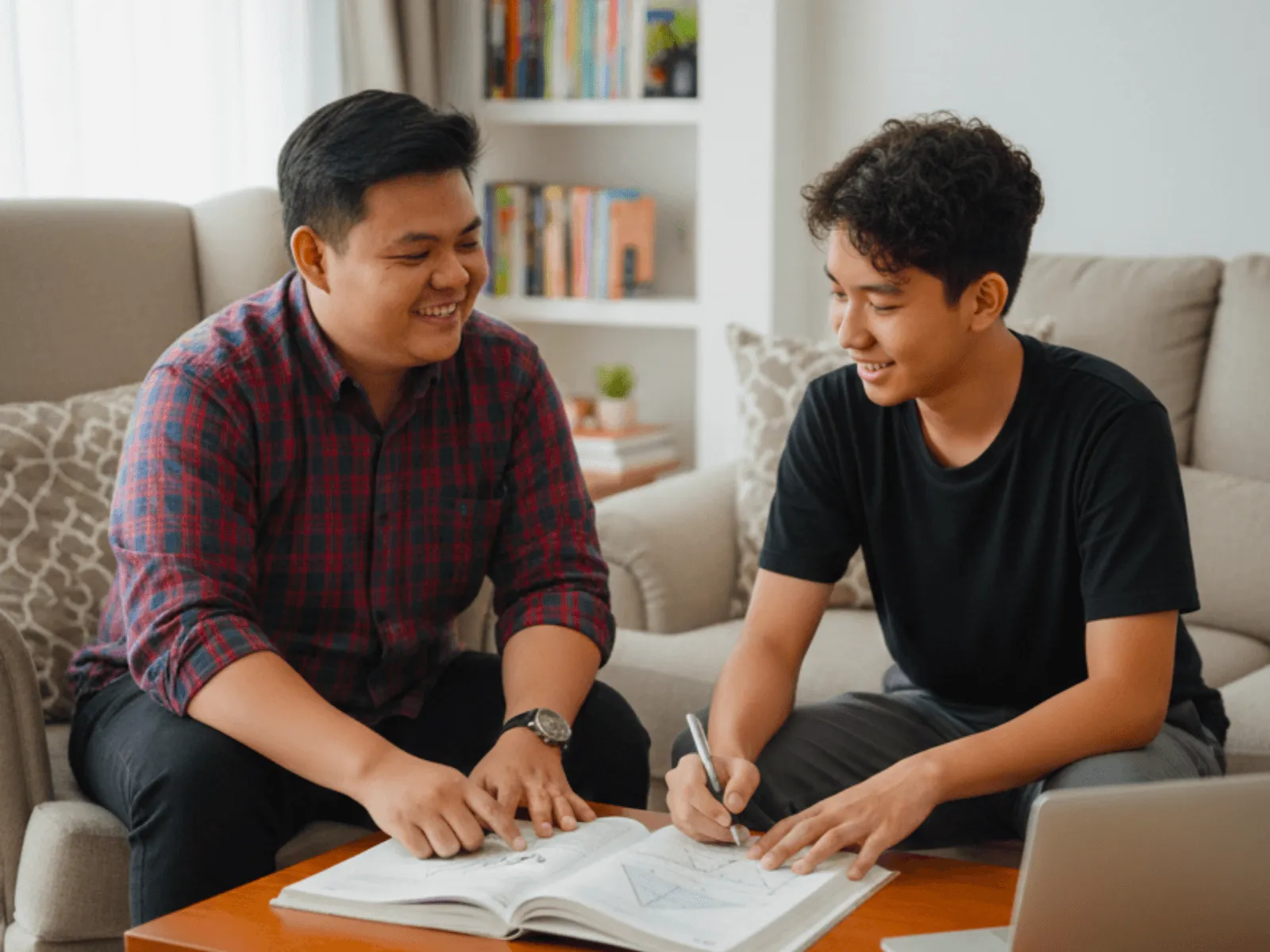
Illustrations of a private session with one tutor and one learner, with books, notes, and a laptop on the study table.

Service Area
Where Accounting Tutors Teach in Bali
Accounting tutors come to a place you choose anywhere in Bali. It can be your home, your business premises, or any other quiet space where you can work through questions.
-
Denpasar
The city center of Bali, including Renon, Sesetan, Panjer, and Sanur.
-
Badung
Kuta, Seminyak, Canggu, Jimbaran, and Nusa Dua on the southern coast of Bali.
-
Gianyar
Ubud, Sukawati, Tegallalang, and Payangan.
-
Sanur and Surroundings
Sanur Kaja, Sanur Kauh, Kesiman, and Tohpati.
-
Tabanan and Buleleng
Tabanan town and Tanah Lot in the west, Singaraja and Lovina in the north of Bali.
-
Online Lessons
Zoom or Google Meet with screen sharing, for parts of Bali not yet reached by in-person tutors and for learners outside Bali.
If a session uses a paid venue such as a coworking space or a cafe, the learner covers that cost. Edupola's office is not used as a place for lessons.
Online Lessons
Online Accounting Lessons from Anywhere in Bali
Online accounting lessons run on Zoom or Google Meet with screen sharing. This format works well for software practice: the tutor sees your screen as you work, so a wrong entry in MYOB or Accurate can be pointed out right in the menu where it happened. For manual exercises, you photograph or share your worksheet.
Online sessions are recorded, so you can replay the explanation of adjusting entries or the steps of a bank reconciliation before you start your exercises. The online format also helps when your work schedule in Bali changes from week to week, or when you are away from Bali for a while.
Read how Edupola's online private lessons work (in Indonesian)
Preparation
Bring These to Your First Accounting Session
The first session of your accounting lessons is more useful when the tutor can look at your material right away.
-
The course syllabus or RPS
If you are a student, bring the syllabus (called RPS, the semester lesson plan, at Indonesian universities), the list of reference books, and sample questions from your lecturer. The tutor matches the order of topics to your class meetings.
-
Questions you could not answer
Collect the exercises or assignments where you got stuck. Questions like these show where a misunderstanding sits faster than any initial test.
-
Sample transaction data
Business owners and finance staff can bring one month of receipts, bank statements, or a report exported from their software. Anonymize customer names and account numbers first.
-
A laptop with the software installed
If you are learning software, have a laptop ready with the program installed and an active account before the session begins.
-
A calculator and columnar paper
A basic calculator is enough for manual exercises. Columnar paper or a journal book makes journal and ledger practice easier.
-
One sentence about your goal
Write down the result you want, such as passing Cost Accounting this semester or closing your own business's books each month. This sentence sets the order of the material.
Books, a calculator, a laptop, and software are prepared by the learner and are not included in the fee.
Fees
Accounting Lesson Fees in Bali and What They Cover
Fees for accounting lessons in Bali are charged per session. Below are the fee details, payment methods, and the items not covered by the lesson fee.
| Item | Details |
|---|---|
| Lesson fee | From IDR 197,300 per session |
| Session length | 60, 90, or 120 minutes per session |
| Number of sessions | 4 to 28 sessions a month, as needed |
| Initial consultation | Free of charge |
| Payment | Bank transfer or an e-wallet such as GoPay, OVO, and DANA |
| Changing tutors | Can be requested within the first 2 weeks if the teaching style is not a good match |
| Not included | Books, a calculator, a laptop, software licenses, and paid venues such as a coworking space or a cafe |
The final fee depends on the session length and the number of sessions per month you choose. The details are shared during the consultation, before the first session.
Testimonials
What Edupola Accounting Learners Say
Experiences from learners who took accounting lessons in Bali for university, work, and their own businesses. Quotes are translated from Indonesian, and names are shortened to protect each learner's privacy.
-
★★★★★
I used to really struggle with Intermediate Accounting and Cost Accounting. After lessons at Edupola, the tutor explained things with real case studies that were easy to understand. My GPA rose significantly, and I now feel more confident facing the comprehensive exam.
GPA rose from 2.8 to 3.6
Sari D.
Accounting student at Udayana · Verified Learner
-
★★★★★
Preparing for the CPA is very hard if you study alone. My Edupola tutor is a practicing public accountant who knows exactly what the CPA exam covers. Drilling questions and in-depth discussion helped me pass 3 exam subjects at once in my first period.
Passed 3 CPA exam subjects
Arta K.
CPA candidate · Verified Learner
-
★★★★★
I needed to upgrade my accounting skills to move up. My lessons at Edupola focused on consolidated statements and IFRS, which I applied directly at the office. My manager was impressed with my improvement, and within 6 months I was promoted.
Promoted to Senior Accountant
Ratna W.
Hotel accounting staff · Verified Learner
-
★★★★★
As a business owner, I was confused about handling bookkeeping and tax. My Edupola tutor taught me from zero: journals, the income statement, all the way to using Accurate Online. Now my business finances are recorded neatly and my tax reports are on time.
Neat and orderly business books
Agus W.
Online shop owner · Verified Learner
-
★★★★★
Ahead of my interview at a public accounting firm, I needed to refresh audit and tax accounting. My Edupola tutor guided me intensively for a month. The technical discussions and audit case studies helped a lot in the technical test. Alhamdulillah, I was accepted!
Hired at a Big Four public accounting firm
Ayu L.
Accounting graduate · Verified Learner
-
★★★★★
The company I work for migrated to SAP and IFRS standards. I took lessons at Edupola to speed up my learning. The tutor was very competent, and the material was directly applicable. Within 2 months I could operate SAP and prepare reports in line with IFRS.
Mastered SAP and IFRS
Putra M.
Finance employee at an export company · Verified Learner
FAQ
Questions About Accounting Lessons in Bali
Answers to questions you may have before registering. You can send other questions on WhatsApp 0816-4896-919.
How much do private accounting lessons at Edupola cost?
Accounting lessons in Bali start from IDR 197,300 per 60-minute session. The final price follows the session length and the number of sessions per month you choose. Books, a calculator, a laptop, and software licenses are not included in the price.
Which accounting topics can I study?
Basic accounting (journals, the general ledger, the trial balance, adjustments), intermediate accounting (financial statements, cash flows, inventory, fixed assets), advanced accounting (consolidation, tax, audit, cost accounting), and hands-on practice in MYOB, Accurate Online, SAP, Jurnal, and Excel.
Do the lessons help with CPA or Brevet Pajak exam preparation?
Yes. The tutor helps you prepare the material for the CPA and CA exams and for Brevet Pajak A and B through practice questions by topic, a review of every wrong answer, and timed simulations. You register for the exam yourself through the official organizer.
How is an accounting tutor found for me?
The Edupola team finds a tutor based on the material you need, such as financial accounting, tax, audit, or a particular software package, and based on your schedule and location. You can share the tutor background you are hoping for during the consultation.
Are accounting lessons suitable for small business owners?
Yes. The material starts from the business records you already have: separating personal and business money, recording cash in and out, preparing a simple income statement and balance sheet, understanding small business tax obligations, then moving it all into accounting software.
How long does it take to learn basic accounting?
The basic accounting cycle usually takes about 2 to 3 months at 2 to 3 sessions a week. Intermediate and advanced material needs another 3 to 6 months, depending on how intensively you study and how much you practice between sessions.
Can I get help with accounting coursework and my final thesis?
Yes. The tutor guides coursework, midterm and final exam preparation, the comprehensive exam, internship reports, and final theses in accounting. The guidance takes the form of explanations and checking, while the writing and the answers remain your own work.
Can I take accounting lessons online?
Yes. Online sessions use Zoom or Google Meet with screen sharing, which suits software practice. Sessions are recorded so you can replay them, and learners outside Bali can join as well.
What if the tutor is not a good match for me?
Within the first 2 weeks you can ask for a different tutor. Share the reason, such as explanations that move too fast or too few practice questions, so the team can find a replacement who suits the way you learn.
How to Register
How to Register for Private Accounting Lessons
From consultation to the first session, the order stays the same: the schedule is agreed first, and the tutor is found after that.
-
Consultation on Needs and Schedule
Share your learning goal, the material you want to cover, your location in Bali or a preference for online lessons, and the schedule you want, on WhatsApp or through the registration form. The consultation is free of charge.
-
Our Team Finds an Accounting Tutor
Based on the agreed schedule and material, the Edupola team finds a tutor within 1 to 5 working days. Mention specific topics such as tax or audit during the consultation so they become part of the search criteria.
-
Payment
Pay by bank transfer or an e-wallet such as GoPay, OVO, and DANA, following the fee details you have approved.
-
The First Session
The session takes place at the location you set or online through Zoom or Google Meet. If the tutor's teaching style is not a good match, you can ask for a different tutor within the first 2 weeks.
Not sure which material comes first? Ask us on WhatsApp before you register.
Related Programs
Other Programs That Complement Your Accounting Studies
Accounting overlaps with data processing and other university courses. These programs can be taken alongside accounting lessons in Bali. Some of their pages are currently in Indonesian.
-

University Student Tutoring in Bali
Support for courses outside accounting while you study at a university in Bali.
-

Data Processing Lessons in Bali
Processing and analyzing data, useful for reports read by management and for thesis research.
-

High School Tutoring in Bali
Support for senior high school (SMA) subjects, including Economics, before you begin an accounting degree.
Get Started
Start Accounting Lessons in Bali with Edupola
Tell us about the material you are working on and the times you are free. The Edupola team will find an accounting tutor near your location in Bali or for online sessions.