
Private English Tutoring in Bali
English Tutoring in Bali: Four Tracks One Tutor Each
English tutoring in Bali from Edupola opens four tracks: general conversation, TOEFL and IELTS preparation, workplace English, and a programme for children. Each session pairs one tutor with one learner, and the track is settled before the first meeting. Fees start from IDR 120,900 per 60-minute session.

Rating and fees for English tutoring in Bali
| Programme | English Tutoring in Bali |
|---|---|
| Provider | Edupola |
| Description | Private English tutoring in Bali from Edupola, one tutor per learner. Four tracks are available: general conversation, TOEFL and IELTS preparation, workplace English, and a programme for children and teens. |
| Fee | From Rp120,900 per session |
| Session Length | 60, 90, or 120 minutes per session |
| Schedule | Flexible, by agreement |
| Rating | 4.8 out of 5, based on 155 reviews |
Programme at a Glance
English Tutoring in Bali for Children through Working Adults
English tutoring in Bali runs one on one: a single tutor with a single learner, at your home, your workplace, or over a screen. The first decision comes before any lesson plan, and it shapes everything after it: which of the four tracks you are on.
The tracks exist because the same word, English, means four different jobs. Conversation work trades accuracy for fluency and keeps the learner talking. Test preparation runs against a fixed date and a published scoring rubric. Workplace English narrows to the handful of situations you actually face, usually meetings, email, and calls. The children's track moves in short alternating segments because attention spans in that age group are narrow.
Mixing those tracks in one session is the most common waste we see. Someone who needs a band score in eight weeks loses ground to free conversation, and someone who wants to speak with hotel guests gains nothing from grammar drills built for an exam. The fee starts from IDR 120,900 per session of 60 minutes, and this programme holds a 4.8 out of 5 rating across 155 learner reviews in Bali.
The Four Tracks
Which Track Fits Your Reason for Learning
The track is chosen during the opening consultation for English tutoring in Bali, and it decides how session time is divided. Learners sometimes switch tracks later; what we avoid is running two at once.
-
General Conversation
For learners who understand more than they can say. Speaking time belongs to the learner, corrections wait until a thought is finished, and vocabulary comes from the situations you meet each week in Bali.
-
TOEFL and IELTS Preparation
For learners with a date and a target score. Work follows the published rubric and the clock: timed sections, scoring criteria read together, and a diagnostic test before any strategy is taught.
-
Workplace English
For learners who need English for a specific job. The material narrows to meetings, email, calls, and the vocabulary of your own industry, and your real documents become the practice material.
-
Children and Teens
For school-age learners. Sessions move through several short segments, speaking comes before writing, and reading uses material the child actually wants to finish.
-
Switching Tracks Later
A learner on the conversation track who later needs a test score moves across without starting over. What transfers is listening comfort and speaking habit; what has to be built is the exam technique.
-
Why Two Tracks at Once Fails
Session time is finite, and the two tracks pull in opposite directions: one rewards fluency over accuracy, the other rewards accuracy under time pressure. Choosing one and finishing it is faster than holding both.
Skill Map
The Skills Trained and How Each One Is Measured
Tutors for English tutoring in Bali use this table to divide session time. The last column matters most: a skill with no way of being measured quietly stops being practised.
| Skill | What the work looks like | How progress is measured |
|---|---|---|
| Speaking fluency | Talking without stopping to assemble grammar first | Minutes spoken without switching to Indonesian |
| Listening | Recordings at natural speed, played once | How much of the point is caught on the first pass |
| Pronunciation | Sounds that do not exist in Indonesian, plus word stress | Whether a listener needs anything repeated |
| Vocabulary | Words drawn from your own week, not from a list | Words used unprompted in the next session |
| Grammar | Patterns fixed from mistakes you actually made | Mistakes that stop reappearing in speech |
| Reading | Texts slightly above your current level | Pages finished without losing the thread |
| Writing | Email, reports, or exam essays, depending on the track | Drafts needing fewer corrections per paragraph |
| Confidence in use | Real situations: calls, guests, meetings | Situations entered without rehearsing first |
Level Ladder
English Levels and the Signs You Are Ready to Move Up
Level is set in the first session through a short conversation and one piece of writing, and never through a self-assessment form. The signs below decide when the level changes.
-
Level 1
Short Sentences and Survival Situations
Present-tense sentences, numbers, times, and the handful of exchanges you cannot avoid: greetings, prices, directions. Reading and writing stay small while the ear is still settling.
- Present tense
- Numbers and times
- Everyday exchanges
-
Level 2
Past and Future, Longer Turns
Talking about what happened and what will happen, in turns long enough to tell a story. This is where most learners stall, because longer turns expose gaps that short answers hid.
- Past and future
- Turns of several sentences
- Telling a sequence
-
Level 3
Opinion, Reason, and Disagreement
Giving a view and defending it, including polite disagreement. Workplace learners usually need this level and no more, because meetings live here.
- Giving reasons
- Polite disagreement
- Meeting language
-
Level 4
Precision Under Pressure
Saying exactly what you mean, in writing and under time limits. Test-track learners work here, and so do learners writing for international clients.
- Writing precisely
- Timed work
- Exam rubrics
In Every Session
Habits That Keep the Learner Talking
These four habits are what make the learner, and not the tutor, the one doing most of the speaking in English tutoring in Bali.
-
Corrections Wait for the Full Thought
A learner cut off mid-sentence learns to stop talking. The tutor notes the error, lets the thought finish, then returns to it. Fluency and accuracy both improve faster this way.
-
Questions That Cannot Be Answered in One Word
Questions are shaped so a yes or no will not do. This single habit changes how much a learner speaks in an hour more than any material choice.
-
Silence Is Left Alone
A pause while a learner assembles a sentence is work in progress, not a gap to fill. Tutors are trained to wait through it, which feels longer than it is.
-
Mistakes Become the Next Lesson
Grammar comes from errors the learner actually made, written down during the session, and never from the next unit in a book. Each rule arrives attached to a sentence the learner owns.
-
One Topic Carried Across Sessions
A subject the learner cares about returns across several sessions, so vocabulary gets reused instead of being met once and lost.
-
English Only After the Warm-Up
Indonesian is allowed early in a session and tapers off. Starting with a hard rule tends to produce silence; tapering produces speech.
Who It Is For
Learners Who Usually Take English Tutoring in Bali
Each session holds one learner, so the track and the material follow that person's reason for learning, never a fixed syllabus.
-
Hospitality and Tourism Staff
Learners serving guests in Bali's hotels, villas, and restaurants. Work narrows to the exchanges that happen at the desk and on the phone, including the questions guests ask most often. Most of them work along Bali's southern coast.
-
Office Workers Facing Meetings
Learners whose job added English without warning. Priority goes to meeting language and email, and the learner's own documents become the practice material.
-
Learners With a Test Date
Learners who need a TOEFL or IELTS score for study, a scholarship, or a visa. A diagnostic test comes first, because the gap to the target decides how often sessions are held.
-
Children and Teenagers
School-age learners, including those whose school marks are fine while speaking stays stuck. Sessions move in short segments and speaking leads.
-
Business Owners and Freelancers
Learners dealing with international clients from Bali. Written English gets equal weight, since a proposal or an invoice email carries the work.
-
Learners Who Understand but Freeze
The most common case we meet: comprehension is good and speech stops. The first sessions deliberately lower accuracy demands so speech can start moving again.
One Session
Inside a 60-Minute Conversation-Track Session
This is how an intermediate conversation session in English tutoring in Bali is usually divided. The shape changes on other tracks: test sessions give more time to timed sections, and children's sessions use shorter, more frequent segments.
-
10 minutes
Warm-Up on the Learner's Week
The learner describes something that happened since the last session. Indonesian is allowed here and fades out, and the tutor collects errors in writing without interrupting.
-
15 minutes
One Pattern From Those Errors
A single grammar pattern is worked on, chosen from the warm-up. One pattern per session, because two taught together usually means neither is kept.
-
20 minutes
A Real Situation, Played Through
A situation the learner will actually face is rehearsed end to end: a guest complaint, a client call, a meeting update. The tutor plays the other side without softening the pace.
-
10 minutes
Listening at Natural Speed
A short recording is played once, then once more. The first pass is for the point, the second for detail, and the transcript opens only after both.
-
5 minutes
What to Use Before Next Time
The tutor names one thing to use in real life before the next session, small enough to happen on a busy day.
In a 90 or 120 minute session, the situation practice and the listening block both grow, which is what learners preparing for interviews usually choose.
Test Track
What Changes When There Is a Test Date
The test track has one feature no other track has: a date that does not move. Everything else follows from that. A diagnostic test comes first, the gap between the current score and the target decides session frequency, and the scoring rubric is read together early, because learners lose points to rules they never saw.
Two habits separate learners who reach their target from learners who stall. The first is working under the real clock from the start; untimed practice produces a score that does not survive the exam room. The second is treating the rubric as the specification: in writing and speaking, examiners award points for things that feel unnatural to add unless you know they are counted.
One thing is said plainly during the consultation for English tutoring in Bali: a target far above the current level in a few weeks is a plan that fails. Where that is the case, the tutor says so and proposes either a later test date or a lower first target, because booking an exam that cannot be passed costs more than waiting.
Prepared by the Learner
What to Have Ready Before the First Session
The admin confirms these five items once the schedule for English tutoring in Bali is agreed. Workbooks and devices are prepared by the learner and not included in the fee.
-
Your Reason, in One Sentence
Why you need English, written as one sentence with a deadline if there is one. This single sentence picks the track, and a vague reason tends to produce a vague programme.
-
A Real Situation You Struggle With
One situation where English failed you recently: a call, a guest, an email, an exam question. It becomes the first thing rehearsed, so the first session already earns its keep.
-
Previous Test Results, If Any
Score reports broken down by section, if you have taken a test before. The breakdown tells the tutor far more than the total, and it changes where time goes.
-
Documents From Your Own Work
For workplace learners: emails, reports, or scripts you actually send. Practising on invented documents produces English that does not survive contact with your job.
-
Headphones for Listening Work
Listening uses recordings at natural speed, so sound needs to be clear. The headphones you already own are enough.
If the track is still unclear, say so during the consultation. The tutor runs a short conversation and one piece of writing, then proposes a track with the reasoning attached.
How Long
How Long Until Speaking Feels Easy
Two measurable things decide the answer, and neither is talent. The first is session frequency: twice a week moves faster than once a week, by more than the arithmetic suggests, because less is forgotten between meetings. The second is hours of use outside sessions, which in Bali is often the deciding factor.
That second point is worth stating plainly. A learner working at a hotel desk uses English for hours a day and makes visible progress in weeks. A learner who only speaks English during sessions is working with roughly one hour a week of use, and progress matches that. Where daily use is impossible, the tutor builds it in: a weekly call in English, recorded voice notes, or a standing topic the learner must report on. Learners in Bali's tourist areas have the easiest time building that daily use.
For the conversation track, learners who meet twice a week and use English at work usually feel the change within a few months, starting with shorter pauses, before any growth in vocabulary. For the test track, the honest answer comes from the diagnostic: the gap in points, divided by the realistic gain per month, gives a number both sides can plan around.
What Learners Say
Stories From English Learners in Bali
The quotes below come from learners who completed the English programme at Edupola, with their situation and what changed.
-
★★★★★
After three months at Edupola I had the nerve to present in English at the office. My tutor did a great deal for my confidence.
Rina P.
Private-sector employee · Verified learner
-
★★★★★
My TOEFL score went from 450 to 550 across two months of preparation. The strategies my tutor taught were very effective for working through the questions.
Dimas P.
University student · Verified learner
-
★★★★★
My child, who is in grade 4, now has the confidence to chat in English. The tutor is patient and teaches in a way that stays fun.
Maya A.
Parent of a grade 4 student · Verified learner
-
★★★★★
The business English was very practical. I am more confident in meetings with international clients now, and in writing professional email.
Budi S.
Business owner · Verified learner
-
★★★★★
Thanks to IELTS lessons at Edupola I reached band 7.0 and met the requirement for an overseas scholarship. Thank you so much.
Dewi L.
Fresh graduate · Verified learner
-
★★★★★
Working in hospitality takes good English. After lessons at Edupola I serve foreign guests more smoothly, and I was promoted.
Agus W.
Hotel employee · Verified learner
Documentation
English Lessons With Edupola in Bali
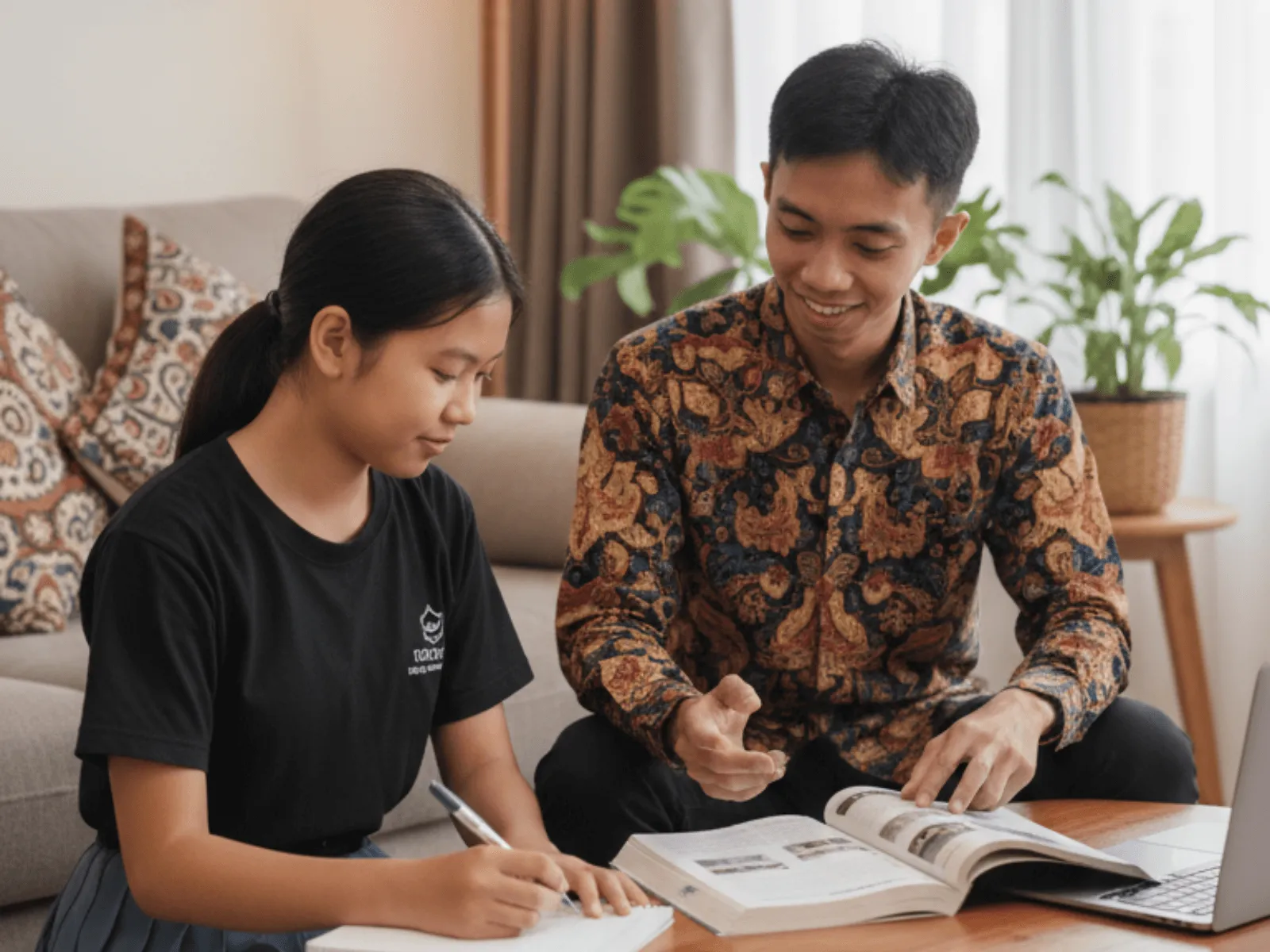
The photographs below were taken during English tutoring in Bali sessions held at learners' own locations.




Service Area
Where Edupola English Tutors Travel in Bali
Tutors for English tutoring in Bali travel to the location you choose, from Denpasar, Badung, and Gianyar through to Tabanan, Buleleng, Klungkung, Bangli, Karangasem, and Jembrana. What the place needs is a seat for two and sound quiet enough for listening work.
One thing specific to this programme shapes the schedule more than distance does: shift work. Many learners here work in hospitality on rotating hours, so sessions are often placed at the same clock time on different days of the week, and the between-session task is kept very short so it survives a long shift.
The Edupola office is not used as a lesson venue. Online sessions fill the places where no tutor is close by, and English loses nothing over a screen. Ask the admin about tutor coverage at your location in Bali.
Area not listed? Message the admin and the team checks tutor coverage near you before a schedule is agreed.
-
Denpasar
Provincial capital
- Denpasar Barat
- Denpasar Timur
- Denpasar Selatan
- Denpasar Utara
4 Kecamatan
-
Badung
South Badung
- Kuta and Legian
- Seminyak and Kerobokan
- Canggu and Umalas
- Jimbaran and Pecatu
- Nusa Dua and Benoa
10+ Area
-
Gianyar
Area Ubud
- Ubud
- Batubulan
- Sukawati
- Tegallalang
4 Kecamatan
-
Sanur
East Denpasar coast
- Sanur Kaja
- Sanur Kauh
- Intaran
- Sanur beachfront
4 Area
-
Tabanan and Buleleng
North and west Bali
- Tabanan
- Kediri
- Singaraja
- Lovina
4 Area
-
Les Online
Seluruh Indonesia
- Online sessions over Zoom or Meet
- Jadwal Fleksibel
- Materi Digital
- Session recordings
Tanpa Batas Lokasi
Why Here
Why Learners in Bali Study English
Bali differs from much of the rest of Indonesia in one respect that changes how this programme runs: English here is a working language, used at the desk, in the kitchen, and on the phone, often within the same hour. That makes practice material easy to find and raises the cost of staying stuck.
It also changes which skills matter first. A learner facing guests needs listening before grammar, since guests speak at natural speed with accents from everywhere and will not slow down. A learner writing to international clients needs written precision before conversational range. The track system exists precisely so those two learners do not sit through each other's material.
One more local factor shapes schedules. High season fills the calendars of exactly the learners who most need English, so sessions are often agreed as a fixed weekly slot booked ahead, never arranged week by week. The admin raises this during the consultation, since a slot agreed in advance survives a busy month far better than one negotiated each time.
Online Sessions
Online English Sessions and How They Differ
Online suits English particularly well, since what the work needs is clear sound and one shared screen. Sessions run over Zoom or Google Meet, and conversation, reading, writing, and exam technique all transfer without loss.
Two differences are worth naming. Listening work improves online in one respect: recordings play from the learner's own device with their own headphones, which is exactly the exam-room condition. Pronunciation work loses a little, because the tutor cannot see mouth shape as clearly, so the learner records short samples on a phone and sends them for review.
One habit keeps online sessions from draining away: material is sent the day before. Last week's writing, the recording for this session, and the learner's error list all arrive in advance, so the hour is spent working, with no minutes lost to opening files. Fees for online sessions match face-to-face sessions.
Frequently Asked
Questions About English Tutoring in Bali
What does private English tutoring in Bali cost?
Fees start from IDR 120,900 for a 60-minute session, the shortest option and the one most working learners take. Longer sittings of 90 and 120 minutes cost in proportion to their length, and learners with an exam date tend to pick one of them so that a timed section is not cut in half. The final fee follows session length and the number of sessions per month. The admin sends the breakdown in writing before the first payment.
Can a complete beginner join?
Yes, and beginners are a large share of our learners. Level is set in the first session through a short conversation and one piece of writing, and the first weeks deliberately keep accuracy demands low so speech can start moving. What we avoid at this stage is correcting every error, because a learner stopped mid-sentence learns to stop talking.
From what age can a child start English lessons?
What decides readiness is whether the child can stay with one activity for a few minutes, not the age on paper. For school-age children, sessions move through several short segments and speaking comes before writing. Reading uses material the child actually wants to finish, which matters more than its level. Mention your child's age during the consultation so the segment length is set correctly.
Does Edupola prepare learners for TOEFL and IELTS?
Yes, and that is a separate track. It starts with a diagnostic test, because the gap between the current score and the target decides how often sessions need to run. The scoring rubric is read together early, since learners lose points to criteria they never saw. Where a target sits far above the current level with only weeks available, the tutor says so and proposes a later date or a lower first target.
How long until I can speak comfortably?
Two measurable things decide it: how often sessions run, and how many hours you use English outside them. A learner at a hotel desk uses English for hours a day and changes visibly in weeks; a learner who speaks English only during sessions is working with about an hour a week. Where daily use is hard, the tutor builds it in through recorded voice notes or a standing topic to report on.
How is an English tutor matched to a learner?
The consultation settles which track you are on, what you need the language for, and the hours you have, including how long a session runs and how many fall in a month. Matching then favours a tutor who teaches that track week in week out and who is near enough to reach you in Bali quickly; allow 1 to 5 working days for it. If the first 2 weeks feel like a poor fit, a replacement is arranged at no extra cost.
Related Programmes
Other Language Programmes Learners Add in Bali
Learners taking English tutoring in Bali sometimes add a second language, or move their focus to a standardised test.
-

IELTS Preparation in Bali
Taken by learners whose paperwork names a band score with a fixed deadline.
-

TOEFL Preparation in Bali
Chosen by learners whose institution asks for TOEFL instead of IELTS.
-

BIPA: Indonesian for Foreigners
Often taken by foreign residents who teach in English and want Indonesian for daily life.
Get Started
Start From Your Own Reason for Learning
Name why you need English in one sentence, with a deadline if there is one, and one situation where English recently failed you. A tutor is matched within 1 to 5 working days.