BIPA Course in Bali
Indonesian Lessons in Bali: Bahasa Indonesia for Non-Native Speakers
Edupola's Indonesian lessons in Bali teach Bahasa Indonesia to non-native speakers, one tutor with one learner, in person anywhere in Bali or online on Zoom. Lessons run from first greetings to workplace Indonesian and UKBI preparation. Fees start from IDR 197,300 per 60-minute session, and our team finds a tutor within 1 to 5 working days.
Bali Context
Indonesian and Balinese in Everyday Life
In Bali you will hear two languages. Indonesian is used in offices, schools, shops, and with people you have just met. Balinese is spoken at home, in the banjar, and during ceremonies. For nearly everything a newcomer needs to do, Indonesian is enough, so these Indonesian lessons in Bali keep Bahasa Indonesia at the center.
Tutors who live in Bali often add the Balinese phrases you hear around you. Suksma means thank you, Om Swastyastu is the opening greeting at formal events, and Bli and Mbok are used for a man or a woman slightly older than you. Knowing a few of these helps you follow conversations near home, even when you answer in Indonesian.
If you want to study Balinese itself, including its speech levels from alus to kasar and the Balinese script, Edupola runs a separate program, listed under related programs below. It is taught on its own because its grammar differs from Indonesian.
Conversation Topics
Conversation Topics for Daily Life in Bali
You choose these topics with your tutor based on where you are now. Food and shopping make a practical starting point if you have just arrived. If you have lived in Bali for a while, lessons can go straight to household and work matters.
-
Everyday Conversation
Small talk with neighbors, asking how someone is, and answering the questions newcomers hear all the time, such as where you are from and how long you have been in Bali.
-
Food and Warungs
Reading menus, ordering without chili or without meat, asking what is in a dish, and asking for the bill. Words like bungkus (takeaway), pedas (spicy), and kembalian (change) get practiced until they come easily.
-
Shopping and Bargaining
Asking prices, requesting a discount politely, and saying quantities. Useful at markets such as Pasar Badung in Denpasar or Pasar Seni Sukawati in Gianyar.
-
Renting a House and Running a Household
Lease terms, prepaid electricity tokens, water supply, a leaking roof, and agreements with the owner. Includes writing messages to builders and villa managers.
-
Travel and Directions
Belok kiri, lurus, perempatan, and lampu merah (turn left, straight on, crossroads, traffic light), plus explaining an address to a driver. Handy for trips from Kuta to Ubud or up to Singaraja in north Bali.
-
Health and Emergencies
Describing symptoms to a doctor, buying medicine at a pharmacy, mentioning allergies, and asking for help after an accident or when something is lost.
-
Indonesian for Business
Running a short meeting, giving instructions to staff with tolong, mohon, and silakan, and reading price quotes from suppliers.
-
Balinese Culture in Conversation
Birth-order names such as Wayan, Made, Nyoman, and Ketut, ceremony terms you will hear often, and what to do when a village road is closed for a ceremony.
BIPA course ratings and fees
| Program | Learn Bahasa Indonesia (BIPA) in Bali |
|---|---|
| Provider | Edupola |
| Description | Bahasa Indonesia for non-native speakers (BIPA) in Bali, one tutor per learner. For international families, long-stay visitors, professionals, and students, from beginner to advanced: daily conversation, formal Indonesian, and Balinese cultural context. |
| Fee | Starting from IDR 197,300 per session. |
| Duration | Standard 60 minutes per session, with 90 or 120 minutes as options |
| Schedule | Flexible, following the learner's free time |
| Rating | 4.9 out of 5, based on 120 reviews |
Program Overview
How the BIPA Course in Bali Works with a Private Tutor
BIPA stands for Bahasa Indonesia bagi Penutur Asing, the name Indonesia uses for teaching its national language to people whose first language is something else. Edupola runs private Indonesian lessons in Bali in this format: you study on your own with one BIPA tutor, in person at a place you choose on the island, or online on Zoom when you are away.
With nobody else in the room, the order of topics comes from your own week. A family that has just moved to Canggu and is negotiating a house lease needs different words from a café owner in Seminyak who runs a morning briefing with staff. In the first meeting your tutor checks what you can already say and understand, then plans pronunciation, vocabulary, grammar, and speaking practice around the situations you actually meet in Bali.
Fees start from IDR 197,300 per 60-minute session, the shortest available; 90 or 120 minutes can be chosen instead. Session length and how many sessions you book each week are what the final fee follows. Notebooks, dictionaries, and the device you use for online sessions stay yours and are not part of the fee. The rating of 4.9 out of 5 comes from 120+ learner reviews.
Common Mistakes
Expressions Learners Often Get Wrong and How Tutors Correct Them
Indonesian verbs do not change for tense, so the language has a reputation for being easy. The harder parts sit elsewhere. Below are slips that are common among learners from abroad, with the way a BIPA tutor works on each.
| Topic | Common mistake | How the tutor handles it |
|---|---|---|
| Clock time and duration | Mixing up jam tiga (three o'clock) with tiga jam (three hours), and reading setengah tiga as 3:30 when it means 2:30 | Practice making appointments and reading flight, ferry, and clinic schedules |
| Sudah and belum | Answering "Sudah makan?" (Have you eaten?) with "Tidak" | Short dialogues repeated over several sessions until "Belum" (not yet) comes naturally |
| Tidak and bukan | Using tidak with a noun, as in "Itu tidak rumah saya" | One rule, tidak for verbs and adjectives and bukan for nouns, followed by practice turning statements into denials |
| Passive sentences | Writing "Buku itu dibaca oleh saya" | Introducing the form Indonesian speakers actually use: "Buku itu saya baca" |
| The prefix me- | Saying "metulis" or "mesapu" | A table of sound changes, then spoken drills with verbs from your daily routine |
| Forms of address | Calling an older person by first name only | Practice with Bapak, Ibu, and the Balinese forms Bli and Mbok |
Your tutor adjusts this list to your first language. Japanese speakers, for example, often need extra work telling r and l apart, which rarely troubles Dutch speakers.
Who It Is For
Who Gets the Most from These Lessons?
People sign up for Indonesian lessons in Bali for different reasons, and the reason shapes the material from the first session.
-
International Families Living in Bali
You want to talk with neighbors, your landlord, the banjar (neighborhood council) office, and market sellers without someone translating. Lessons begin with greetings, numbers, and the sentences that keep a household running.
-
Remote Workers and Business Owners
You work from Bali or run a business here, such as a villa, café, or studio. The focus is giving clear instructions to staff, reading messages from suppliers, and negotiating politely.
-
Professionals Who Use Indonesian at Work
Meetings, emails, contracts, and presentations call for formal Indonesian. Your tutor drills formal sentence patterns, the Bapak and Ibu forms of address, and the letter layout common in Indonesian offices.
-
Long-Stay Visitors
You are staying several months and want to travel beyond the tourist areas. Priority goes to practical Indonesian for asking directions, ordering food, bargaining, and talking with drivers.
-
International Students
You study in Indonesia, plan to, or have been asked for a UKBI result. Practice covers academic reading, writing summaries, and the question formats used in UKBI.
Learning Levels
From Beginner to Advanced Bahasa Indonesia
Edupola groups the material for Indonesian lessons in Bali into beginner, intermediate, and advanced levels. Your tutor places you according to what you can already do, so a learner who can shop in Indonesian does not restart from the alphabet. For reference, Indonesia's national standard for BIPA courses, Permendikbud No. 27 of 2017, divides proficiency more finely into seven levels, BIPA 1 to BIPA 7.
-
Beginner Level
Getting By in Indonesian
This level starts with sounds. The letter c is said like the ch in "church", so cari (to look for) never sounds like kari (curry). The letter e has two sounds: the short, soft e in beli (to buy) and the clearer e in sate. A final k, as in bapak, is a short catch in the throat that you barely hear. Once the sounds settle, you learn greetings, introductions, numbers, clock times, and the phrases you will use every day in Bali.
The most common slip at this level is putting the describing word first. Indonesian places the noun in front: rumah besar (big house), nasi goreng (fried rice), kopi panas (hot coffee). Your tutor practices this order with warung menus and shop signs from your own street until it feels normal.
- Pronouncing c, e, r, ng, and ny
- Greetings, introductions, and Bapak or Ibu
- Numbers, prices, clock times, and days
- Ordering food and shopping
- Asking directions and answering simple questions
-
Intermediate Level
Affixes, Formal Speech, and Casual Speech
At intermediate level you start building words yourself with the prefixes me-, di-, and ber-. The prefix me- changes the first sound of the root: tulis becomes menulis, pakai becomes memakai, sapu becomes menyapu, kirim becomes mengirim. The rule is easy to follow on paper and harder to apply mid-sentence, so your tutor sets short spoken drills with verbs you use at home and at work.
This level also separates formal and casual Indonesian. An office email reads differently from a message to a friend: tidak turns into nggak, sudah into udah, saja into aja. You read news articles, write messages and emails, and learn the expressions that come up in everyday conversation.
- me-, di-, ber-, and passive sentences
- Repeated words such as anak-anak and jalan-jalan
- Formal and casual registers
- Reading short Indonesian news items
- Writing polite messages, emails, and complaints
-
Advanced Level
Work, Study, and UKBI Preparation
The advanced level trains Indonesian for professional use: chairing meetings, reading contracts, writing reports, and giving presentations. Lessons also cover proverbs, idioms, slang, and the Balinese phrases that slip into conversations around Bali.
Learners who need an official result can prepare here for the Uji Kemahiran Berbahasa Indonesia (UKBI), the Indonesian proficiency test. Practice focuses on fast reading, listening, and standard sentence rules, because at this level small details count, such as writing di rumah (at home) as two words and dikirim (sent) as one.
- Indonesian for meetings and negotiation
- Academic and report writing
- Proverbs, idioms, and slang
- Balinese phrases in everyday talk
- UKBI question formats
Teaching Method
How a BIPA Tutor Teaches
Four habits shape almost every session, in person or online.
-
Your Goals Set the Order
With private Indonesian lessons in Bali, the order of topics follows what you tell us during the consultation. A learner sorting out business permits starts with document vocabulary, while a learner who wants easy chats with neighbors starts with casual conversation.
-
Speaking from the First Session
Speaking takes up most of each session. Grammar is explained briefly, then used straight away in sentences you say yourself, and your tutor corrects them on the spot.
-
Small Tasks Near Where You Live
New words stay with you once you use them. Your tutor sets small tasks to do alone at a warung, a market stall, or a repair shop near home, and you go over the result together at the next session.
-
Switching Between In-Person and Online
Sessions can move between in-person lessons in Bali and Zoom without repeating material, because the same tutor keeps track of your progress for as long as that tutor is available.
One Session
What Happens in a 90-Minute Session?
A sample flow for Indonesian lessons in Bali at beginner or intermediate level. The order changes when you bring something urgent, such as a letter from your landlord that you need to understand that day.
-
10 minutes
Your Week in Indonesian
You describe the last few days in Indonesian as best you can. Your tutor notes the words you reached for and did not have, plus any mistakes that keep coming back.
-
25 minutes
New Material
One topic is covered thoroughly, for example the prefix ber- or ways of saying when something happened. Examples come from your life in Bali so you can use the sentences right away.
-
30 minutes
Speaking Practice
Role-play: bargaining at a market, phoning a mechanic, or explaining a problem to a villa manager. Your tutor plays the other person and now and then speeds up so your ear gets used to a natural pace.
-
25 minutes
Reading, Writing, and a Task for the Week
Reading a short, relevant text such as a banjar notice, a menu, or a text message, then writing a reply of two or three sentences. A small task to do on your own before the next session, such as ordering lunch without English or asking prices at three stalls. You report back at the start of the next session.
In a standard 60-minute session, reading and writing usually alternate with speaking practice from week to week.
Progress Markers
Signs of Progress You Can Notice Yourself
How fast you learn depends on how often you meet your tutor, how much you practice between sessions, and which languages you already speak. For that reason Edupola does not promise a timeline. Use this table to judge for yourself where you stand during your Indonesian lessons in Bali.
| Stage | What you can do | Example situation in Bali |
|---|---|---|
| Early beginner | Introduce yourself, say numbers and prices, understand short replies | Paying for parking and buying water at a small shop without pointing |
| Late beginner | Ask and answer in full sentences, follow someone who speaks slowly | Ordering food the way you like it and asking the way to where you are going |
| Intermediate | Talk about what happened yesterday, read short messages, write a polite message | Arranging a house repair with a builder and reading a notice from the banjar |
| Advanced | Follow a meeting, read work documents, give your view in formal Indonesian | Running a staff meeting and negotiating a contract with a business partner in Bali |
Your tutor tells you which stage they see you at and which skills need more practice.
Things to Consider
When This Course Is Not the Right Fit
Private Indonesian lessons in Bali are designed for one learner with a clear goal. In some situations another option makes more sense.
-
You Are on a Short Holiday
For a trip of a few days, a phrase list and a translation app are enough. The course pays off when you have time for several sessions.
-
You Want a Large Group Class
Edupola teaches one tutor to one learner. If you prefer a classroom with many classmates, a group course suits you better.
-
You Have No Time to Practice Between Sessions
Sessions with a tutor build the foundation, and fluency comes from daily use. Without practice between sessions, progress feels slow.
-
You Only Need an Official Proficiency Result
UKBI results come from the test organizer, separately from any course. If you already speak Indonesian well and only need a score, preparing on your own with the organizer's information can suit you better.
Gallery
Illustrations of a Private Indonesian Lesson
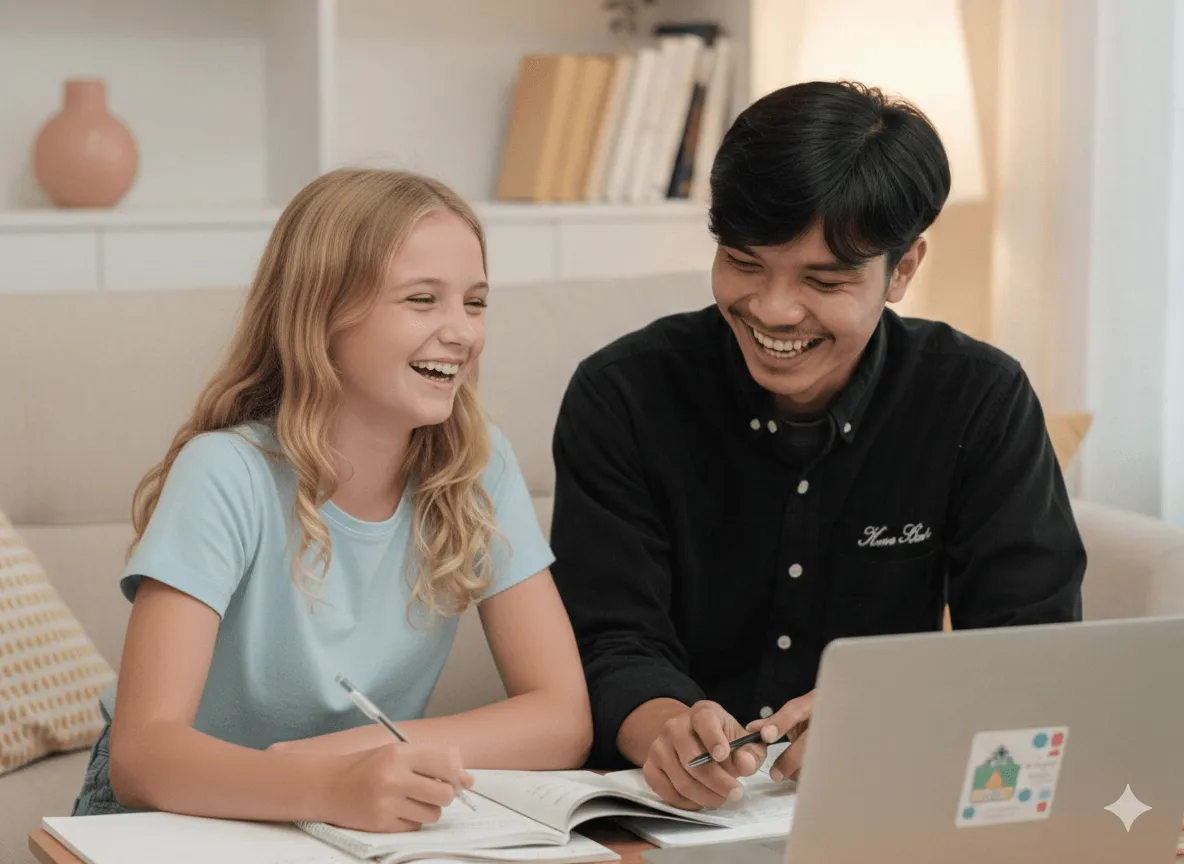
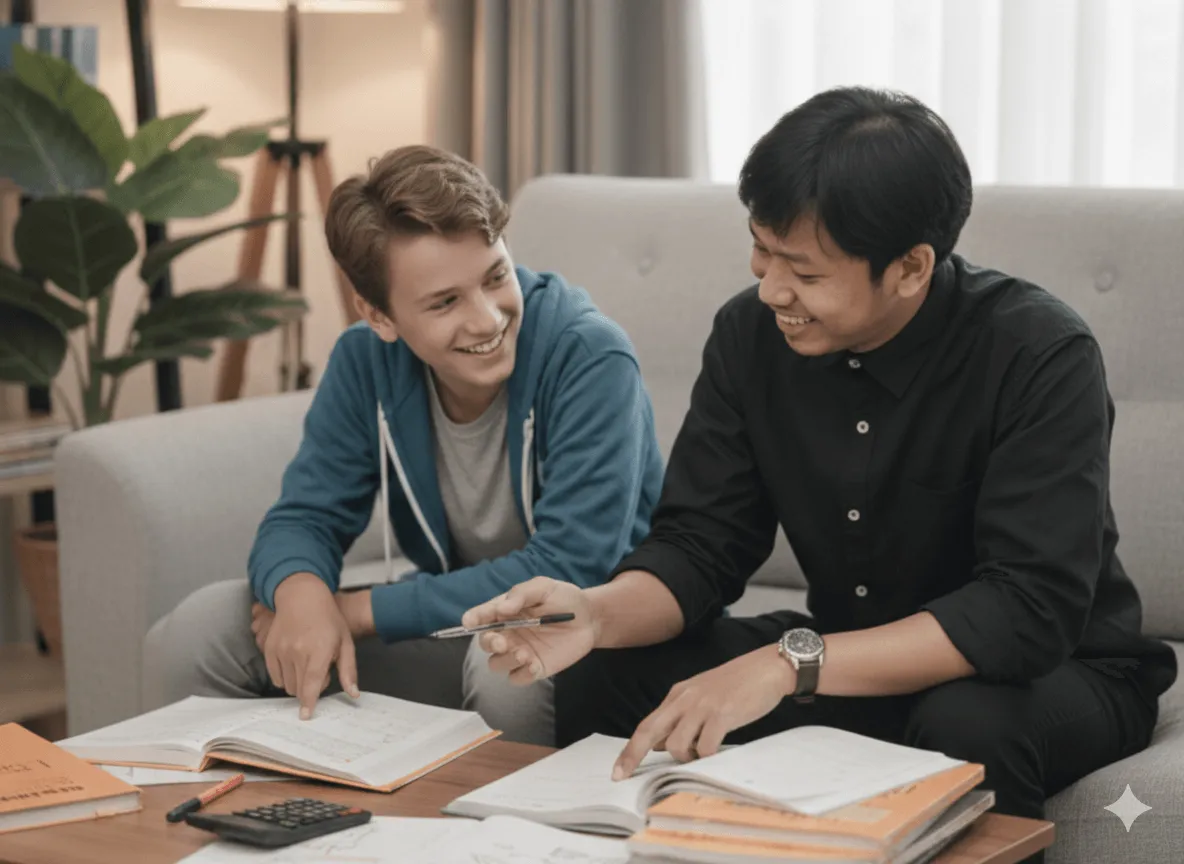
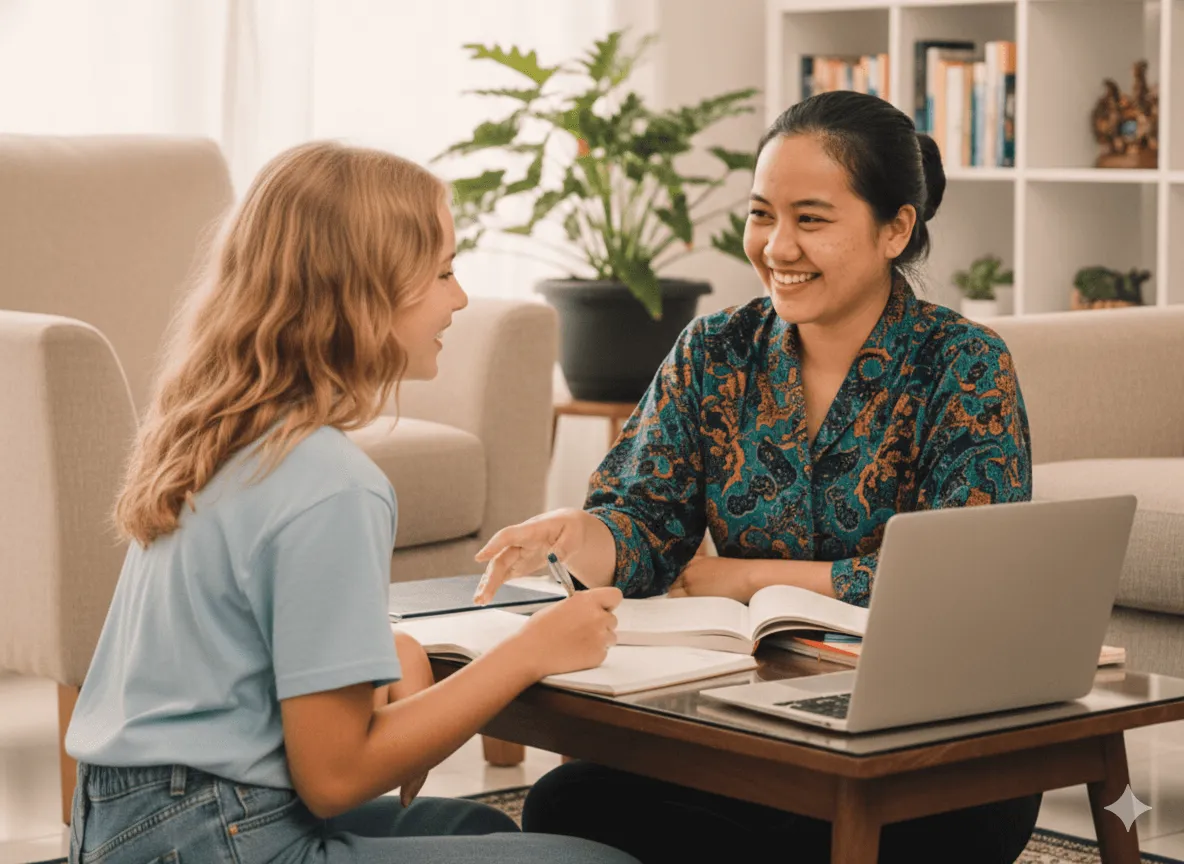
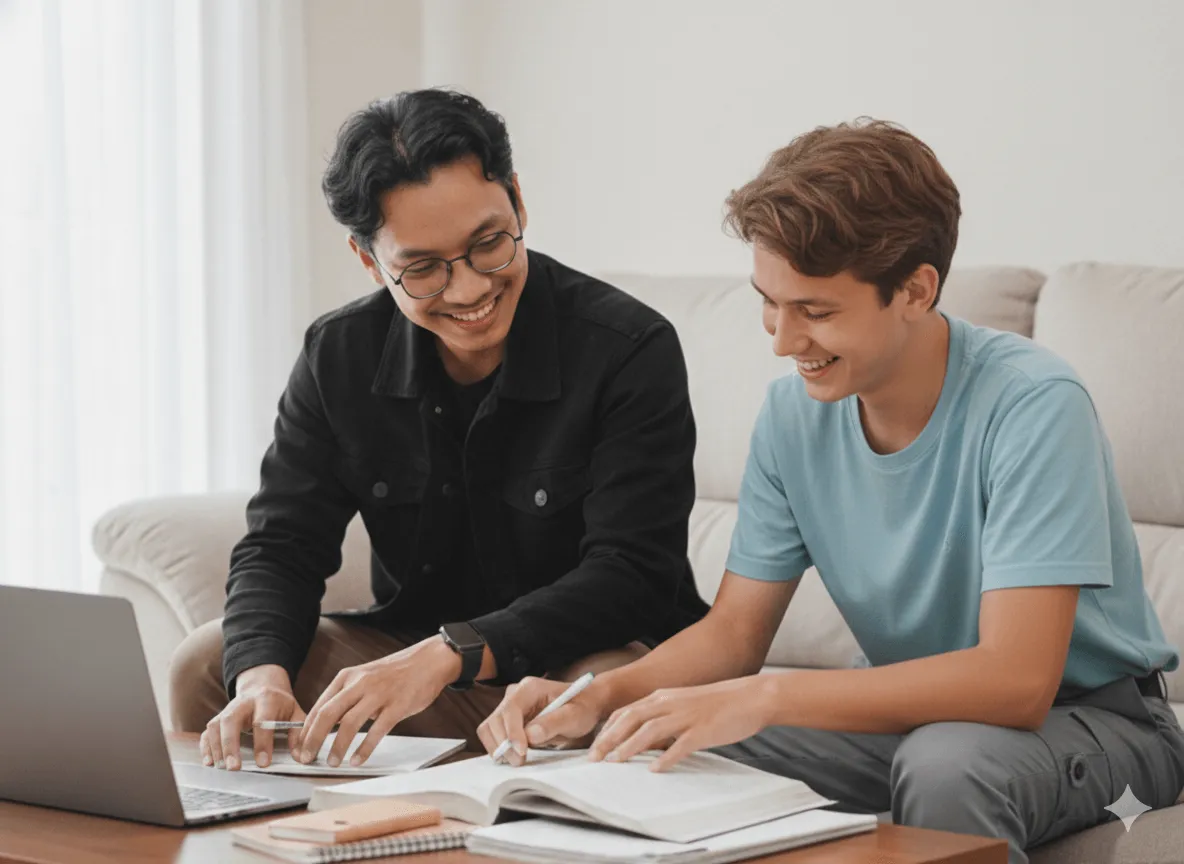
Illustrations of a private BIPA lesson: tutor and learner seated together with books, notes, and a laptop on the table.
Online Lessons
Online Indonesian Lessons When You Are Away from Bali
If you split your year between Bali and another country, the course can continue on Zoom while you are off the island, with the same sequence of material and, if the timing works, the same tutor. When you are back in Bali, sessions can return to in-person, depending on tutor availability.
Online sessions are recorded, so you can replay a pronunciation point or a grammar explanation you missed. Speaking still takes most of the time, and your tutor will ask you to keep your camera on so the mouth shapes for sounds like ng and ny are easy to see. Use a headset if you study somewhere noisy.
Service Area
Where BIPA Tutors Teach in Bali
In-person Indonesian lessons in Bali are available across the island, including Denpasar, Badung, Gianyar, Sanur, Tabanan, and Buleleng. Our team looks for a tutor who lives not far from you, which makes a weekly schedule easier to keep.
Your tutor comes to your house or villa, or you choose another quiet place. The Edupola office is not used for lessons. If no in-person tutor is available in your part of Bali yet, the course can run online with the same material.
Not seeing your area? Ask on WhatsApp whether a BIPA tutor is available near you.
-
Denpasar
Capital of Bali Province
- West Denpasar
- East Denpasar
- South Denpasar
- North Denpasar
4 Districts
-
Badung
South Badung
- Kuta and Legian
- Seminyak and Kerobokan
- Canggu and Umalas
- Jimbaran and Pecatu
- Nusa Dua and Benoa
10+ Areas
-
Gianyar
Ubud Area
- Ubud
- Batubulan
- Sukawati
- Tegallalang
4 Districts
-
Sanur
East Coast Area
- North Sanur
- West Sanur
- Intaran
- Sanur Beach Area
4 Areas
-
Tabanan and Buleleng
North and West Bali
- Tabanan
- Kediri
- Singaraja
- Lovina
4 Areas
-
Online Lessons
All of Indonesia
- Online lessons on Zoom
- Flexible Schedule
- Digital Materials
- Session recordings
No Location Limits
Fees
BIPA Course Fees in Bali and What They Cover
The admin sends the full fee breakdown for your Indonesian lessons in Bali before the first session. This table explains what moves the figure and what the learner pays for directly.
| Item | Details |
|---|---|
| Session rate | From IDR 197,300 per session. The final fee follows session length and the number of sessions per week. |
| Duration | Standard 60 minutes per session. You can take 90 or 120 minutes instead, depending on your needs and how long you can stay focused. |
| Schedule | Morning, afternoon, or evening, depending on when you are free and on tutor availability in your area. |
| Location | Your house or villa, or another place you choose. If the session is held in a café or a paid room, the venue cost and any food or drinks are paid by the learner. |
| Materials | Notebooks, dictionaries, and a device for online sessions are prepared by the learner and are not included in the fee. |
| Tutor change | No charge if you are not a good fit with the tutor inside the first 2 weeks. |
| Payment | Bank transfer or e-wallet such as GoPay, OVO, and DANA. What the amount is and where it goes reach you from the admin ahead of the first session. |
How to Register
How to Register for Indonesian Lessons in Bali
Registration follows the order below. The schedule is agreed first, and after that our team looks for a tutor who can teach at those times.
-
Share Your Goals and Current Level
Tell us on WhatsApp or through the registration form why you are learning Indonesian, what you can already say, and which topics you need most. This consultation is free of charge.
-
Agree on Schedule and Place
Choose the days, times, and sessions per week, and whether you meet in person at your location in Bali or online.
-
Our Team Finds a Tutor
Based on that schedule and location, the Edupola team finds a BIPA tutor within 1 to 5 working days and lets you know on WhatsApp.
-
Fee Details and Payment
The admin sends the fee details based on session length and number of sessions. Payment is by bank transfer or e-wallet.
-
Your First Session
Your tutor gauges your starting level through a relaxed conversation, then plans the material for the sessions that follow.
Preparation
Getting Ready for Your First Session
A few small preparations let the first of your Indonesian lessons in Bali go straight to learning.
-
List the situations that trip you up
For example talking with your landlord, understanding a builder, or reading a letter from the village office. The list becomes material for your tutor's lessons.
-
Keep a dedicated notebook
Separate vocabulary, example sentences, and weekly tasks. Handwritten notes are easy to review while you wait or travel.
-
Install a dictionary on your phone
The online Kamus Besar Bahasa Indonesia (KBBI), published by Indonesia's language agency (Badan Bahasa), is useful for checking meanings and standard spelling.
-
Pick a quiet place for sessions
A table with enough room, away from machinery or music, helps you catch your tutor's pronunciation clearly.
-
Check your device for online sessions
Camera, microphone, and a stable internet connection. Test Zoom a few minutes before the session starts.
-
Collect real texts from your day
Photos of menus, messages from staff, or notices near your home. Real texts like these make relevant reading practice.
You prepare everything above yourself, and none of it is part of the course fee.
What Learners Say
Stories from BIPA Learners in Bali
The quotes below come from international learners who completed the BIPA course at Edupola, with their origin and results.
-
★★★★★
After 3 months with Edupola, I can finally order food, chat with my villa neighbors, and negotiate at the market! My tutor Kadek is patient and makes learning fun.
Sarah M.
Digital Nomad from Australia · Verified learner
-
★★★★★
Best investment after moving to Bali. The one-on-one format means lessons are 100% tailored to my needs. Now my Balinese staff and I can communicate properly.
James B.
Resident from Netherlands · Verified learner
-
★★★★★
I was nervous about learning a new language at 60, but my tutor adapted perfectly to my pace. The cultural context they include makes lessons so interesting!
Yuki T.
Retiree from Japan · Verified learner
-
★★★★★
Needed business-level Indonesian for my company. Edupola created a custom curriculum covering formal meetings and contracts. Highly recommended!
Michael R.
Business Owner from UK · Verified learner
-
★★★★★
Preparing for UKBI exam was daunting, but my Edupola tutor had great strategies. Passed with flying colors! Flexible scheduling was perfect.
Emma C.
Student from Singapore · Verified learner
-
★★★★★
Living in Bali 5 years and finally decided to properly learn Indonesian. Should have done this sooner! Edupola's method is practical and results-focused.
David A.
Retiree from USA · Verified learner
FAQ
Questions About Indonesian Lessons in Bali
Answers to the questions prospective learners ask. Anything else can go to our team on WhatsApp 0816-4896-919.
How much does the BIPA course cost?
Indonesian lessons in Bali with Edupola start from IDR 197,300 per session. The final fee depends on the session length you choose (60, 90, or 120 minutes) and the number of sessions per week, and the admin sends the details before the first session.
Do I need any Indonesian before I start?
No. Complete beginners start with pronunciation, greetings, and numbers. If you already know some Indonesian, your tutor checks your level in the first session and starts the material from there.
Does the course use a particular textbook?
Your tutor builds exercises from situations you face in Bali and can share digital materials. If you want a printed book or a dictionary, you buy it yourself, and it is not part of the course fee.
Where do in-person lessons take place?
Your tutor comes to your house or villa in Bali, or to another place you pick. If you choose a café or a paid room, the venue cost and refreshments are yours to cover. Sessions are not held at the Edupola office.
Can I take BIPA lessons online, and are sessions recorded?
Yes. Online sessions run on Zoom and are recorded, so you can replay any explanation you missed. You can also combine in-person sessions in Bali with online sessions while you travel.
Does Edupola help with UKBI preparation?
Yes. UKBI (Uji Kemahiran Berbahasa Indonesia) is the Indonesian proficiency test run by Indonesia's language agency, Badan Pengembangan dan Pembinaan Bahasa. Your tutor practices the tested skills with you, such as listening, reading, and grammar rules. You register for the test yourself with the organizer.
Can I learn Balinese too?
This course focuses on Bahasa Indonesia, but tutors often add Balinese phrases you will hear around you. To study Balinese properly, Edupola has a separate Balinese language program.
What if the tutor is not a good fit?
Tell the admin on WhatsApp 0816-4896-919. If the tutor is not a good fit within the first 2 weeks, Edupola finds a replacement at no extra cost.
How long does it take to find a BIPA tutor?
With the schedule, the frequency, and the location agreed, a BIPA tutor is found within 1 to 5 working days. As soon as that tutor is ready the admin tells you on WhatsApp.
How many sessions a week should I take?
Two or three sessions a week leave enough time to try new sentences between lessons. One session a week works for keeping up the level you already have. You decide the frequency with us during the consultation.
How do I pay for the course?
By bank transfer or e-wallet such as GoPay, OVO, and DANA. Once the tutor is ready and before the first session, the admin sends the fee details and payment information.
Related Programs
More Language Programs at Edupola Bali
These programs can run alongside your Indonesian lessons in Bali, for you or for other members of your family.
-
Balinese Language Lessons
Conversation, the speech levels from alus to kasar, Balinese script, and literature and kidung songs.
-
Balinese Language and Culture
Balinese language together with an introduction to Balinese culture and traditions, for children, teens, and adults.
-
English Lessons
For your Indonesian staff or colleagues who want to improve their English.
-
Elementary Tutoring
For elementary-age children at school in Bali who need support with their subjects, including Bahasa Indonesia.
Get Started
Start Learning Bahasa Indonesia with Edupola
Tell us your goals and the times you are free. The Edupola team finds a tutor for Indonesian lessons in Bali near where you stay, or for online sessions from anywhere.