
Private Make-Up Artistry Tutoring in Bali
Make-Up Tutoring in Bali: The Light Judges the Work
Make-up artistry tutoring in Bali from Edupola pairs one teacher with one learner. Work that looks right at the mirror can read wrong under a hall's warm lamps or a camera flash, so 6 facts about light govern how every result is checked. Fees from IDR 174,100 per session.
Rating and fees for make-up tutoring in Bali
| Programme | Make-Up Artistry Tutoring in Bali |
|---|---|
| Provider | Edupola |
| Description | Private make-up artistry tutoring in Bali, one teacher per learner: the light at the event judges the work, so every result is checked in two kinds of light. |
| Fee | Fees start from Rp174,100 per session. |
| Session Length | Every session runs 60, 90, or 120 minutes. |
| Schedule | Flexible, following the learner's free hours. |
| Start | Enrolment is open year round. |
| Sessions per Month | 4 to 28 sessions per month, as needed. |
| Rating | 4.9 out of 5, 126 reviews |
Programme at a Glance
Make-Up Artistry Tutoring in Bali and the Light That Decides
Make-up artistry tutoring in Bali runs one tutor with one learner, at your home or your studio. One fact decides how every result on this programme is judged.
Make-up is applied in one light and seen in another. A face that looks even at a mirror under a ceiling bulb can show hard edges in direct sun, read ruddy under a hall's warm lamps, or lose its shaping entirely to a camera flash arriving flat from the front. The work has not changed; the light has.
So nothing is called finished at the mirror. The face is carried to a window and then under a warm lamp, and photographed with and without flash, and the differences are written down. Fees start from IDR 174,100 per 60-minute session, with 4 to 28 sessions a month. This programme holds a 4.9 out of 5 rating across 126 learner reviews in Bali.
Light
Where Make-Up Is Applied and Where It Is Seen
These six rules organise make-up artistry tutoring in Bali, and they are checked in every session of make-up artistry tutoring in Bali. The last one is the record that settles disagreements with a client later.
-
Check in the Event's Light
Before the work is called finished, the learner carries the face to light resembling the venue: near a window for an outdoor event, under a warm lamp for a hall.
-
Sun Shows Every Edge
Sunlight arrives from one direction and very strong, so boundaries between colours and the edges of the work are plainly visible. Outdoor work is built thinner for that reason.
-
Warm Lamps Shift Colour
Yellow lamps in a hall make reddish tones read stronger and bluish tones fade. Base colour and blusher choices change accordingly, and the change is not small.
-
A Flash Flattens Shaping
A camera flash arrives from the front and erases the face's natural shadows, so shaping that looked correct can disappear completely in the photograph.
-
Working Light Comes From the Front
The light used to do the work sits in front of the face at roughly the same height as it. Light from above drops shadows that hide what you are building.
-
Photograph Your Own Result
The finished work is photographed with and without flash as a record. That photograph is what gets compared later when a client asks for the same result again.
Types
Make-Up Types and What Each One Demands
The choice is made at the consultation and it sets the materials. What that type genuinely asks of you sits in the third column.
| Type | Used for | What it demands |
|---|---|---|
| Everyday make-up | Daily wear and work | Thinness and colours close to the skin; mistakes show most here because there is nowhere to hide |
| Bridal make-up | All-day events, often moving between indoors and outdoors | Resistance to heat and humidity, and layers that do not change colour after hours |
| Make-up for photography | Shoots with flash or studio light | Facial shadows stronger than the eye finds reasonable, because a flash flattens the shaping |
| Stage make-up | Performances seen from a distance | Larger differences between colours, since subtle differences do not read from the seats |
| Traditional bridal make-up | Balinese ceremonies with their own rules of make-up and hair | Following the conventions that apply; this part is discussed with the dresser handling the ceremony |
| Special effects | Short films, costume events, and themed shoots | Materials different from ordinary make-up, plus a skin reaction test before anything goes on a face |
Learning Path
Material From the Skin to Special Effects
The make-up stage a learner starts at is set by one basic application done on a face in the first session.
-
Stage 1
Skin, Colour, and Brushes
Recognising skin types, preparing skin before application, matching a base colour, and holding and caring for brushes. This stage looks the least glamorous and decides the most.
- Skin types
- Matching the base
- Brush care
-
Stage 2
Face Shape and Eyes
Building shadow and highlight to follow each individual face shape, plus eye work including lines and colour gradation.
- Each face shape
- Shadow and highlight
- Eye gradation
-
Stage 3
Bridal Work and Durability
Layers that hold for hours in hot humid air, a work order that can be repeated, and repair partway through an event.
- Layers that hold
- A repeatable order
- Mid-event repair
-
Stage 4
Photography, Stage, and Effects
Work for flash and studio light, stage work seen from a distance, and special effects with materials that behave differently.
- For flash
- Seen from afar
- Effect materials
Who It Is For
Learners Who Take Make-Up Lessons in Bali
Every session holds one learner, so the type and the materials are chosen with that learner.
-
Future Event Artists
Learners in Bali intending to take bookings. Bridal work and durability take the largest share, since events here run all day.
-
Artists Adding a Type
Learners in Bali already taking everyday bookings who want to move into photographic work. The foundation is passed quickly.
-
Content Creators
Learners in Bali making up their own face for posts. The material is adapted, since working on your own face has limits of reach.
-
Learners Doing Their Own Face
Learners in Bali whose aim is everyday work for the office or family events. Thinness and colours close to the skin carry the sessions.
-
Traditional Bridal Dressers
Learners in Bali working on ceremonies who want the make-up side stronger. The conventions are discussed with the dresser handling the ceremony.
-
Learners With Sensitive Skin
Learners in Bali whose own skin reacts easily, or whose clients' skin does. Reaction testing and material choice are covered from the first session.
One Session
Inside a 60-Minute Make-Up Session
This is the division used once a learner works on another face. The first and fourth blocks are the ones that are never skipped.
-
10 minutes
Cleaning Brushes and Preparing Skin
Brushes are checked for cleanliness and the model's face is prepared. This happens at the start of every session without exception.
-
5 minutes
Setting the Working Light
The light is placed in front of the face at roughly its height, then the learner names the light this work will be seen in later.
-
25 minutes
One Part Finished Completely
One part is taken to completion, for instance the facial shaping or the eye work. A completed part can be judged; a half-finished one cannot.
-
15 minutes
Checking in Two Lights
The result is carried to a window and then under a warm lamp, and photographed with and without flash. The differences that appear are written down.
-
5 minutes
Clearing Up and Setting Practice
Brushes are cleaned, then the teacher sets one part to practise alone together with the light to check it in.
In a 90 or 120 minute session, a whole face is completed and then checked in two lights without the checking being rushed, which is what learners preparing bridal bookings usually choose.
Prepared by the Learner
Tools, Materials, and a Face to Practise On
The admin confirms these once the schedule for make-up artistry tutoring in Bali is agreed. A basic brush set, bases in several shades, and a movable lamp are prepared by the learner and not included in the fee.
-
A Basic Brush Set
Several brushes of different shapes, and not many are needed. The teacher names the shapes that suit your chosen type at the consultation, so the first purchase is not wasted.
-
Bases in Several Shades
Base colour in two or three adjacent shades, so you practise mixing to match the face in front of you. One shade only teaches you to hope the face matches it.
-
A Face to Practise On
One or two people willing to be made up repeatedly, and ideally with different face shapes. Practising only on your own face hides what shaping has to do.
-
A Large Mirror and a Movable Lamp
A mirror that holds the whole face plus one lamp that can be placed in front of it. A movable lamp is what lets you imitate the light at the event.
-
Hygiene Supplies
Brush soap, disposable tissue, hand sanitiser, and separate containers for clean and used brushes. This list is not optional, because the work is on other people's skin.
If you have not chosen a type, say so during the consultation. Most learners start from everyday work, and the teacher names the brush shapes before anything is bought.
Hygiene
Tool Hygiene and the Skin Reaction Test
Make-up artistry tutoring in bali works directly on another person's skin, so hygiene enters as material instead of as advice. A brush that is not cleaned holds residue and dirt, and using it on the next face moves both across. The consequence falls on the client, which is why the brush block sits at the start of every session.
Several habits are taught from the first session. Product is lifted from its container with a clean tool instead of with a brush that has already touched a face; lipstick and mascara are not shared between clients; and a used brush goes into a separate container from a clean one so the two never get confused mid-booking.
For any material new to a client, a skin reaction test is done first on a small area and watched for a while. This applies particularly to special effects materials and adhesives. Edupola promises no particular outcome for any skin, and what the programme provides is the testing habit and the material knowledge to choose with.
What Learners Say
Stories From Make-Up Learners in Bali
The quotes below come from learners in Bali who completed the make-up programme at Edupola, with their situation and what changed.
-
★★★★★
At first I only wanted to be able to do my own make-up for my wedding day. But after learning at Edupola, I got hooked! The instructor taught contouring and the bridal look step by step. On the day itself, I looked confident in make-up I had done myself and many guests complimented it.
Able to do self make-up for the wedding day
Ayu D.
Bride-to-be · Verified learner
-
★★★★★
Before lessons at Edupola, my make-up skill was self-taught and the results were inconsistent. The MUA instructor here taught corrective and bridal make-up techniques that truly changed the quality of my work. My portfolio keeps getting better and my clients keep growing.
Gained 15+ bridal clients in 3 months
Ayu S.
Freelance MUA · Verified learner
-
★★★★★
As a beauty vlogger, I need a variety of interesting looks. Edupola taught editorial make-up and camera-ready techniques. After applying what I learned in the lessons, engagement on my content rose sharply because the make-up looks are far more professional and varied.
Beauty content engagement up 200%
Ayu W.
Beauty vlogger · Verified learner
-
★★★★★
My salon in Sanur had been running for 5 years but had no bridal make-up service. MUA lessons at Edupola helped me and two staff master professional bridal technique. Now we can offer wedding packages and the salon's revenue has risen significantly.
Upgraded the salon's services with a bridal package
Suci P.
Beauty salon owner · Verified learner
-
★★★★★
I study fashion but needed make-up skill to complete my portfolio. The Edupola instructor taught editorial and runway make-up that is very practical. I became the official make-up artist for the campus fashion show and several fashion events in Bali.
Make-up artist for the campus fashion show
Diah P.
Fashion design student · Verified learner
-
★★★★★
As a wedding planner, I need to understand bridal make-up standards so I can quality control the MUA teams I work with. After lessons at Edupola, I am more confident giving technical feedback, and clients are satisfied with the better coordination.
Able to supervise MUA teams at wedding venues
Cahaya W.
Wedding planner · Verified learner
Climate
Heat, Humidity, and Work That Has to Last a Day
Bali brings a real challenge to this craft, and it is the main reason durability takes such a large share in make-up artistry tutoring in Bali: warm humid air all year, plus a great many events held outdoors or moving between a hall and a garden within the same day.
Humidity makes layers shift and the skin's own oil rise faster, so work that is even in the morning can look patchy a few hours later. What the programme trains is the order of the layers: preparing the skin, a thin base built up in stages instead of one thick coat, and setting each stage before the next goes on.
Repair partway through an event is also taught as part of the job, including what goes in the small bag and what can be fixed without taking the work apart. For outdoor events, learners practise estimating how the light will move across the hours, since a face built for morning shade is seen at noon.
How to Register
Four Steps to the First Make-Up Session
The opening consultation carries no fee. The admin asks which type you want and what it is for.
-
Name the Type and the Purpose
The type you are aiming at and what it is for: taking bookings, your own face, or photo shoots. Both decide the materials and the order.
-
Agree the Schedule
Daylight decides the slot here, because the result has to be checked in natural light. Days, times, session length, and the monthly count are agreed with the admin around it.
-
Matching the Teacher
The team looks for a tutor whose travel to your location in Bali stays short, and that search runs 1 to 5 working days. The type decides this: bridal, photographic, stage, and special effects are matched to teachers who work them.
-
The First Session
You do a basic application on one face while the teacher checks brush grip, colour matching, and tool hygiene, then the stage is set.
Need help? Contact our admin on WhatsApp for a free consultation.
Documentation
Make-Up Lessons With Edupola in Bali
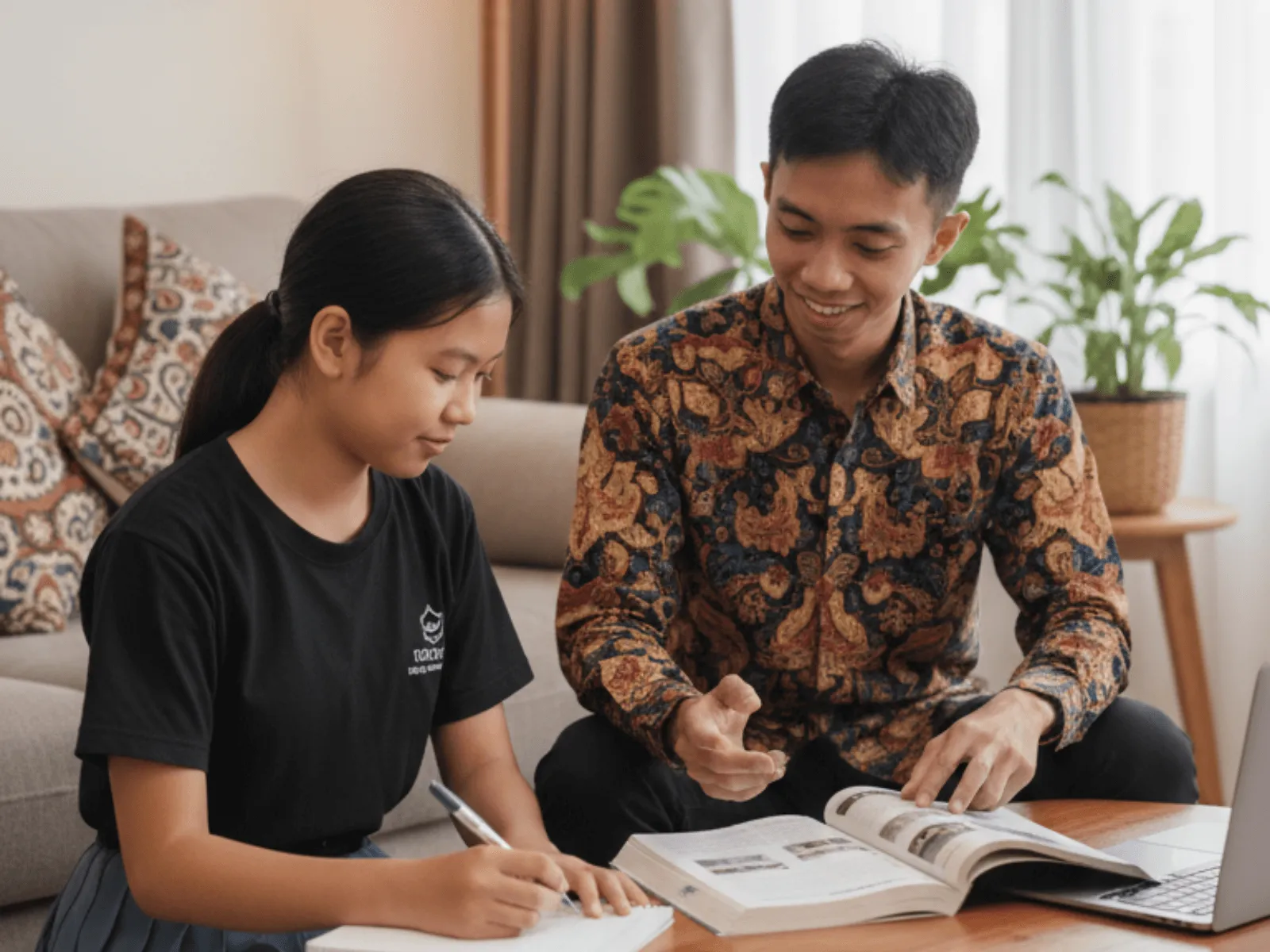
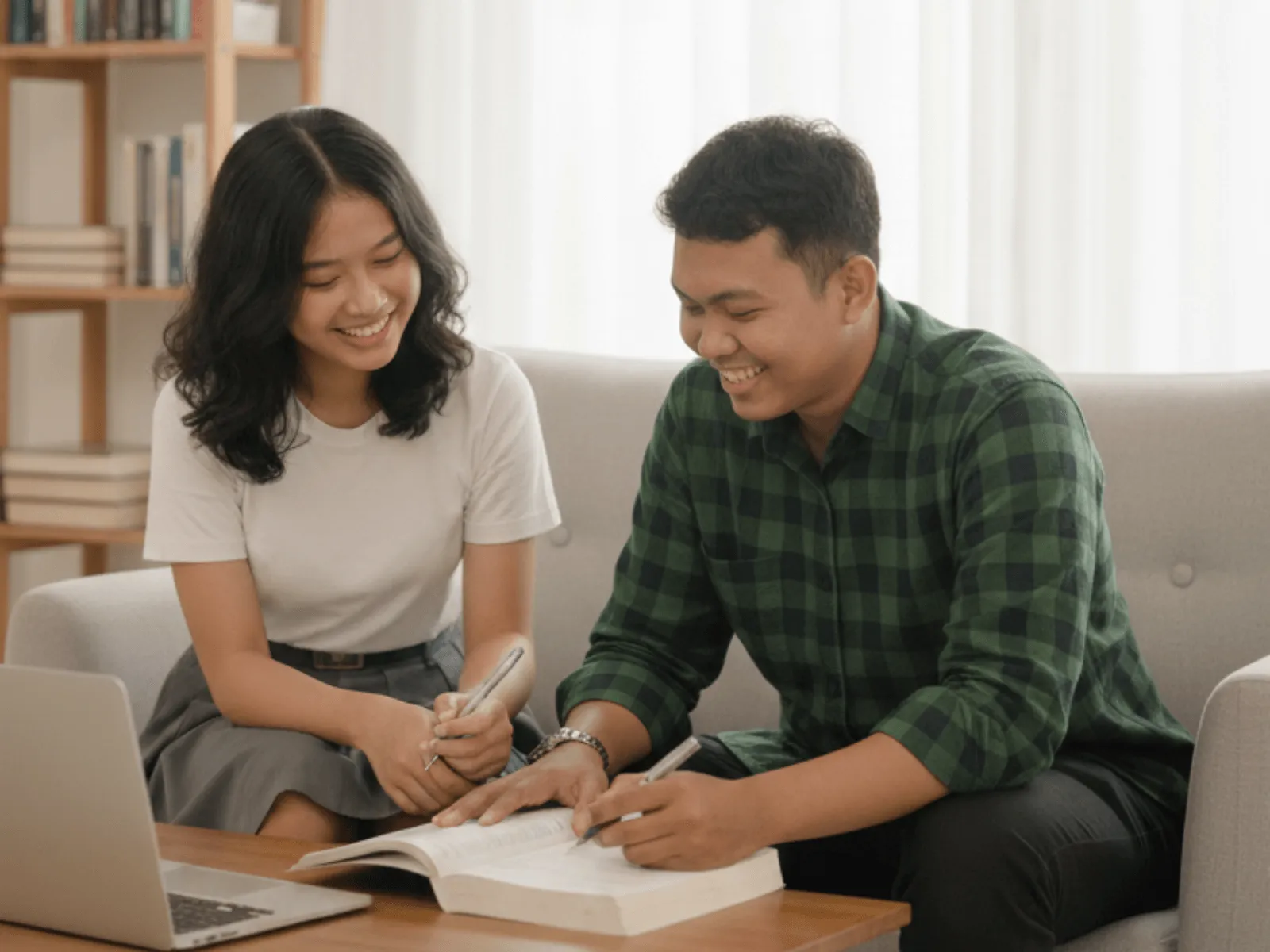
The photographs below were taken during make-up artistry tutoring in Bali sessions with learners on the island.



Service Area
Where Edupola Make-Up Teachers Travel in Bali
Tutors for make-up artistry tutoring in Bali travel to the location you choose, from Denpasar, Badung, and Gianyar through to Tabanan, Buleleng, Klungkung, Bangli, Karangasem, and Jembrana. What has to be there is a table, a mirror that holds the whole face, and a lamp that can be moved.
The light at the venue also decides the hour of the session. A room with large windows allows practice checking a result in natural light, and a room without windows needs a movable lamp to imitate the conditions of an event. The admin asks about both before a teacher is matched.
The Edupola office is not used as a lesson venue. Where no tutor is available near you, sessions run online. Part of this programme transfers online and the colour judgement does not, as the next section explains. Ask the admin about teacher coverage at your location in Bali.
Online Sessions
The Limit of Online Make-Up Sessions Is Colour
Online sessions for make-up artistry tutoring in Bali run over Zoom or Google Meet, and the limit lands on the thing that decides most in this programme, which is colour. Cameras and screens change the colour that arrives, and two screens never agree, so a teacher cannot confirm a base match through a stream.
What does work online is the order of the layers, choosing materials, brush grip, and tool hygiene. Learners also photograph their result in natural light and send the files, and a photograph from the learner's own camera is more reliable than a live stream for that purpose.
The common arrangement combines both: sessions that judge colour and the finished result taken in person, sessions that cover the work order and review photographs taken online. Learners preparing bookings usually keep the colour sessions in person. Fees for online sessions match face-to-face sessions.
Frequently Asked
Questions From Make-Up Learners in Bali
What does private make-up tutoring in Bali cost?
Fees start from IDR 174,100 for a 60-minute session, the shortest option. Sessions of 90 and 120 minutes are available with the fee following the length. The final fee follows session length and the number of sessions per month, between 4 and 28. The admin sends the breakdown in writing before the first payment. A basic brush set, bases in several shades, and a movable lamp are prepared by the learner and not included in the fee.
Why does my work look different at the venue?
Because the light changed. A hall's warm lamps make reddish tones read stronger, direct sun exposes every edge, and a camera flash arrives flat from the front and erases the shaping. The work did not move. This is why nothing is called finished at the mirror and every result is checked in two lights before the learner stops.
Do I need a model to practise on?
Yes, ideally one or two people with different face shapes. Practising only on your own face teaches you one shape and hides what shaping is for, and it also has limits of reach that change how you hold a brush. Learners who only have their own face available spend extra sessions on shape reading to compensate.
How is make-up made to last a whole event in Bali?
Through the order of the layers instead of through more product. The skin is prepared, a thin base is built in stages, and each stage is set before the next goes on, which holds up in humid air far better than one thick coat. Mid-event repair is taught as part of the job, including what to carry and what can be fixed without taking the work apart.
What if my client's skin reacts easily?
A reaction test comes first, on a small area, watched for a while before anything goes on the face. That applies especially to special effects materials and adhesives. Material choice is covered from the first session for exactly this reason, and Edupola promises no particular outcome for any individual skin.
How is a make-up teacher matched to a learner?
At the consultation the days, times, session length, and monthly count are fixed. The type then decides most of the match: bridal, photographic, stage, and special effects go to teachers who work them, and a teacher whose travel to your location in Bali stays short is found inside 1 to 5 working days. If the first 2 weeks feel like a poor fit, a replacement is arranged at no extra cost.
Related Programmes
Other Programmes Learners Add in Bali
Learners taking make-up artistry tutoring in Bali often add one other programme, usually once bookings start arriving.
-

Photography Tutoring in Bali
Taken by learners who photograph their own results and want to understand light from the camera's side.
-

Content Creator Tutoring in Bali
A choice for learners who film their process for posts and draw bookings from there.
-

Digital Marketing Tutoring in Bali
Often taken by artists already taking bookings who want to reach new clients in Bali.
Get Started
Start Make-Up Lessons by Reading the Light
Name the type you want and what you are aiming it at. A tutor in Bali is matched within 1 to 5 working days.