
Private Drawing Tutoring in Bali
Drawing Tutoring in Bali: Five Media One Tutor per Learner
Drawing tutoring in Bali from Edupola pairs one tutor with one learner at home. The programme runs in 5 media, and which one you begin in changes the order of everything after it. The tutor draws on a separate sheet beside you, never on your work. Fees from IDR 107,600 per session.
Rating and fees for drawing tutoring in Bali
| Programme | Drawing Tutoring in Bali |
|---|---|
| Provider | Edupola |
| Description | Private drawing tutoring in Bali, one tutor per learner, in five media: pencil, coloured pencil, watercolour, oil, and digital. The tutor draws alongside the learner on their own sheet. |
| Fee | Fees start from Rp107,600 per session. |
| Session Length | Sessions run 60, 90, or 120 minutes. |
| Schedule | Flexible, shaped around the learner's needs. |
| Start | Lessons begin once the tutor and materials are ready. |
| Sessions per Month | 4 to 28 sessions per month, as needed. |
| Rating | 4.9 out of 5, based on 125 reviews |
Programme at a Glance
Drawing Tutoring in Bali for Children Through to Adults
Drawing tutoring in Bali runs one tutor with one learner, at your home, your workplace, or over a screen. Learners here run from children who draw all day to adults starting from nothing, and the programme holds them in the same way: one medium at a time, chosen in the first session.
The choice of medium matters more than learners expect, because each one forgives a different mistake. Pencil forgives everything and is erasable, which is why it carries the fundamentals. Watercolour forgives almost nothing and has to be planned from light to dark. Oil forgives endlessly but takes days to dry, so the order of work is dictated by the paint.
What runs through all five is observation before technique: looking at the real proportion of a thing instead of the remembered one. Fees start from IDR 107,600 per 60-minute session, with 4 to 28 sessions a month. This programme holds a 4.9 out of 5 rating across 125 learner reviews in Bali.
The Media
The Media and the Order a Learner Meets Them
Every learner starts in one medium and adds the next only when the first is steady. The order below is the usual one; a learner with a specific goal can enter further along.
-
Medium 1
Pencil
Line, proportion, light and shade in one colour. Erasable and cheap, so mistakes cost nothing, and almost everything learned here transfers to the four media that follow.
- Line and proportion
- Light and shade
- Erasable practice
-
Medium 2
Coloured Pencil
Colour introduced with the control of pencil retained: layering, pressure, and mixing by overlay. The bridge medium, and the one most children stay in longest.
- Layering colour
- Pressure control
- Mixing by overlay
-
Medium 3
Watercolour
Water, timing, and the discipline of working light to dark. The least forgiving medium in the programme, and the one that teaches planning better than any instruction does.
- Light before dark
- Water and timing
- Planning the sheet
-
Medium 4
Oil
Opaque paint that can be corrected for days, worked thick to thin. The order of work follows drying time, so sessions are planned around what the paint is doing.
- Correcting over days
- Thick over thin
- Drying as a schedule
-
Medium 5
Digital Drawing
Tablet and layers, with the same observation work as pencil. Unlimited undo is the trap here, and the habit trained against it is committing to a line.
- Tablet and layers
- Committing to a line
- Export for use
Skill Map
Core Skills and the Mistake That Comes With Each
Drawing tutors work through these in order, whichever medium a learner chose. The third column is what the tutor watches for, since each skill has one characteristic failure.
| Skill | What is trained | The mistake that recurs |
|---|---|---|
| Observation | Measuring real proportion by eye against a reference | Drawing the remembered shape of a thing instead of the one in front of you |
| Line | One confident stroke instead of many hesitant ones | Sketching the same line repeatedly until it turns furry |
| Proportion | Relating each part to the whole before detail | Starting at the eye, so the head runs off the page |
| Light and shade | Finding one light source and keeping it | Shading every edge, which flattens the whole drawing |
| Composition | Placing the subject and deciding what to exclude | Centring everything, so the sheet reads as a specimen chart |
How Tutors Work
Four Habits a Drawing Tutor Keeps in Every Session
These are the habits the programme asks of the tutor, not of the learner. They exist because the fastest way to stall a learner is to take over their sheet.
-
Draw on a Separate Sheet
The tutor demonstrates on their own paper, never on the learner's work. A corrected drawing becomes the tutor's drawing, and the learner stops being able to tell what they can do alone.
-
Repair One Thing per Session
One skill is named at the start and only that one is corrected. A sheet returned with six corrections teaches a learner that everything was wrong, which is both untrue and discouraging.
-
Keep the Old Work
Every sheet is dated and kept, including the bad ones. Progress in drawing is invisible week to week and obvious across two months, and the folder is the only honest evidence of it.
-
Short Daily Practice
Ten or fifteen minutes most days beats two hours on a Sunday. Observation is a habit of looking, and looking is trained by frequency and not by duration.
Who It Is For
Learners Who Take Drawing Lessons in Bali
Every session holds one learner, so the subject on the sheet is chosen with that learner, from what they actually want to draw.
-
Children Who Draw Constantly
Children in Bali who draw for pleasure and have reached a wall. Observation work replaces repeated copying of the same characters.
-
Pupils Preparing for Competitions
Learners in Bali with a contest date. Weight goes to composition and finishing under time, since an unfinished sheet scores on what is there.
-
Art School Applicants
Learners in Bali building a portfolio for an entrance test. Observation drawing from life carries the most marks and is practised most.
-
Adults Starting From Nothing
Adults in Bali who have not drawn since school. The first sessions are pencil and proportion, and the result is visible within a handful of sheets.
-
Creative Workers
Learners in Bali who draw for their work: thumbnails, storyboards, and product sketches. Speed and clarity matter more than finish.
-
Learners Drawing to Settle
Adults in Bali who draw to quiet the day down. Sessions keep the pace slow and skip the competitive framing entirely.
One Session
Inside a 60-Minute Pencil Session
This is the division used in the pencil medium. The warm-up is never skipped, because cold hands draw the hesitant lines that take a month to unlearn.
-
10 minutes
Checking the Daily Practice
The sheets drawn since the last session are laid out together. The tutor reads them for one pattern instead of marking each one.
-
5 minutes
Line Warm-Up
Long strokes, circles, and ellipses drawn from the shoulder. It looks like nothing and it is what stops the furry repeated line.
-
15 minutes
One Skill Practised Apart
Today's skill is drilled on its own, away from any finished picture: proportion by measuring, or shade with one light source.
-
25 minutes
Working on the Piece
The skill goes into the learner's actual drawing, with the tutor demonstrating beside it on their own sheet when something needs showing.
-
5 minutes
Reading It Together and Setting Practice
The sheet is read aloud by the learner first, then the tutor names one thing to carry into the daily practice.
In a 90 or 120 minute session, the share given to working on the piece grows, and coloured media usually needs that length so its layers are finished within one sitting.
Prepared by the Learner
Drawing Materials the Learner Brings
The admin confirms these once the schedule for drawing tutoring in Bali is agreed. Drawing materials are prepared by the learner and not included in the fee.
-
Pencils and Paper for the First Medium
Two or three pencils of different softness and a pad bigger than a school exercise book. Nothing else is needed to start, and buying a full set before the first session is the most common wasted expense here.
-
Coloured Materials Later
Coloured pencil, watercolour, or oil materials are bought when you reach that medium, on the tutor's list. Buying early means buying the wrong thing in the wrong quantity.
-
A Table and Enough Light
A table you can sit at squarely with light coming from the side opposite your drawing hand, so your hand casts no shadow on the sheet.
-
Something to Draw From Home
Three objects with different shapes: a mug, a piece of fruit, a shoe. Observation needs a real thing in front of you, and photographs flatten the proportion you are learning to see.
-
Somewhere to Keep the Sheets
A folder or a large envelope. Keeping dated sheets is part of the method, since progress here is invisible week to week and plain across two months.
If your materials are not complete yet, say so during the consultation. A first session can run with one pencil and a single sketchbook.
How Long
How Long Before the Work Looks Different
The honest answer in drawing tutoring in Bali has two parts, and learners deserve both. Proportion and line improve fast: most learners see a visible difference within six to eight sheets, which is a few weeks at two sessions and daily practice. That part is a motor habit, and motor habits respond quickly to frequency.
The part that takes longer is seeing. Drawing badly is almost always drawing what you remember instead of what is in front of you, and unlearning that runs over months. It is why the programme keeps the old sheets: the change is invisible between two consecutive drawings and unmistakable between the first and the twentieth.
There is a dip that is worth naming in advance, because it stops people. Around the second month many learners feel they have got worse. What has usually happened is that their eye improved faster than their hand, so they can now see errors that were always there. Tutors raise it before it arrives, and the folder of dated sheets is what settles the argument.
What Learners Say
Stories From Drawing Learners in Bali
The quotes below come from learners in Bali who completed the drawing programme at Edupola, with their situation and what changed.
-
★★★★★
My child used to find it hard to concentrate and his basic sketching marks were always middling. After 3 months of lessons at Edupola his marks rose sharply and he is now in the top 3 of his class.
Moved into the top 3 in his class
Dewi L.
Parent of a year 4 pupil · Verified learner
-
★★★★★
My child took intensive lessons at Edupola before the school examination. The result was remarkable: the highest mark in the class. The Edupola tutors really do know how to teach learners at this level.
Passed the school examination with a good mark
Sudiarta
Parent of an advanced learner · Verified learner
-
★★★★★
My child used to always cry when told to study. Now the child keeps asking for more lessons because the tutor is so much fun! Learning while playing, so the child enjoys it and the material still sinks in. Thank you Edupola!
The child came to enjoy learning
Ayu S.
Year 2 drawing learner · Verified learner
-
★★★★★
My child was weak at Perspective, and test marks were always below 70. After private lessons at Edupola, the marks are now consistently above 85! The tutor teaches with a method children find easy to understand.
Perspective marks rose sharply
Putra
Year 5 drawing learner · Verified learner
-
★★★★★
As a learner who is busy with work, I find it hard to help my child practise drawing. With Edupola, the tutor comes to the house and helps my child finish homework correctly. My child has become more independent and confident!
Homework always finished on time
Ratna
Year 3 drawing learner · Verified learner
-
★★★★★
My child had just started drawing and still struggled to read. The Edupola tutor patiently taught until now my child reads and counts fluently. The fun learning method keeps my child eager to learn!
The child reads and counts fluently
Dharma W.
Beginner drawing learner · Verified learner
How to Register
Four Steps to the First Drawing Session
The opening consultation carries no fee. The admin asks which medium you want and what you would like to be able to draw.
-
Name the Medium and the Goal
Which medium you want to start in and what you want to be able to draw. Those two answers set the order of the material and the materials list.
-
Agree the Schedule
Days, times, session length, and sessions per month are agreed with the admin, following the hours you can give to short daily practice between sessions.
-
Matching the Tutor
The team looks for a tutor whose travel to your location in Bali stays short, and that search runs 1 to 5 working days. Watercolour, oil, and digital work are matched to tutors who work in that medium.
-
The First Session
Your current drawings are read if you have any, the medium is confirmed, and one skill is drilled apart from any finished picture.
Need help? Contact our admin on WhatsApp for a free consultation.
Documentation
Drawing Lessons With Edupola in Bali
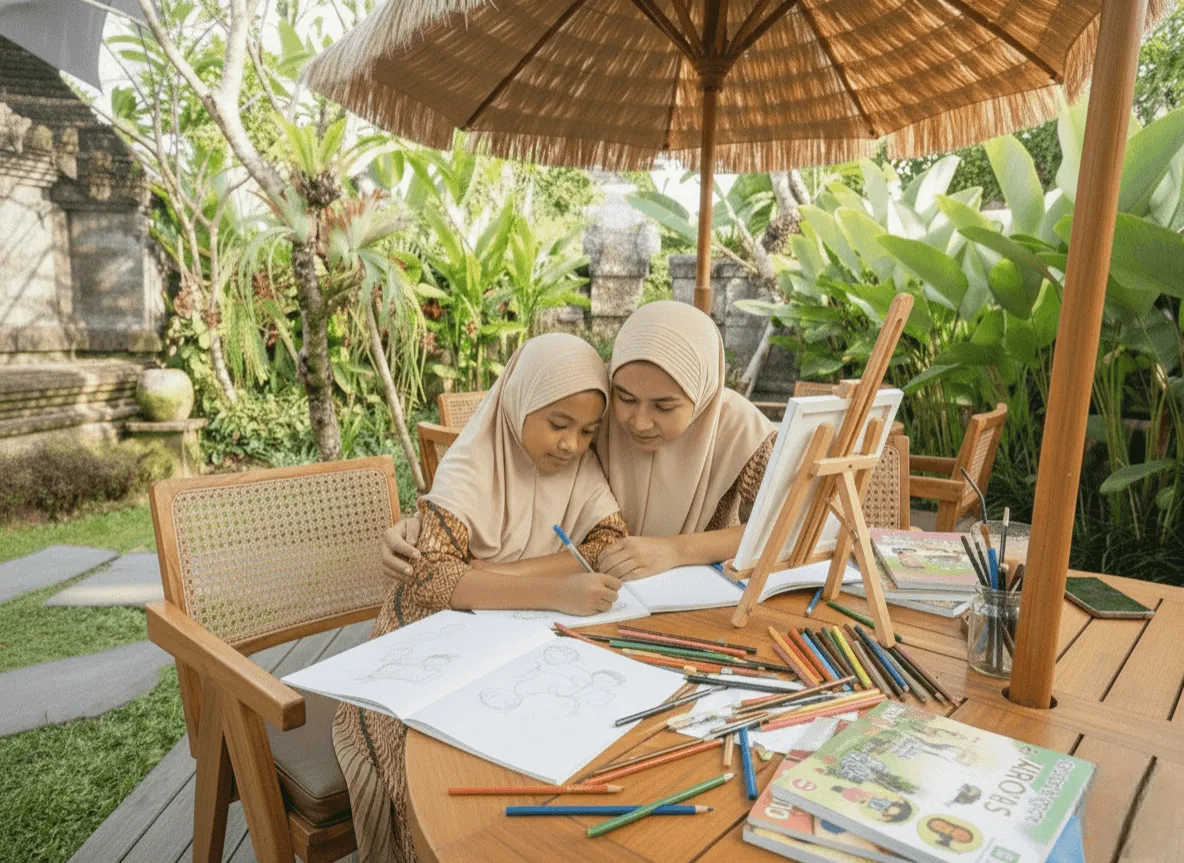
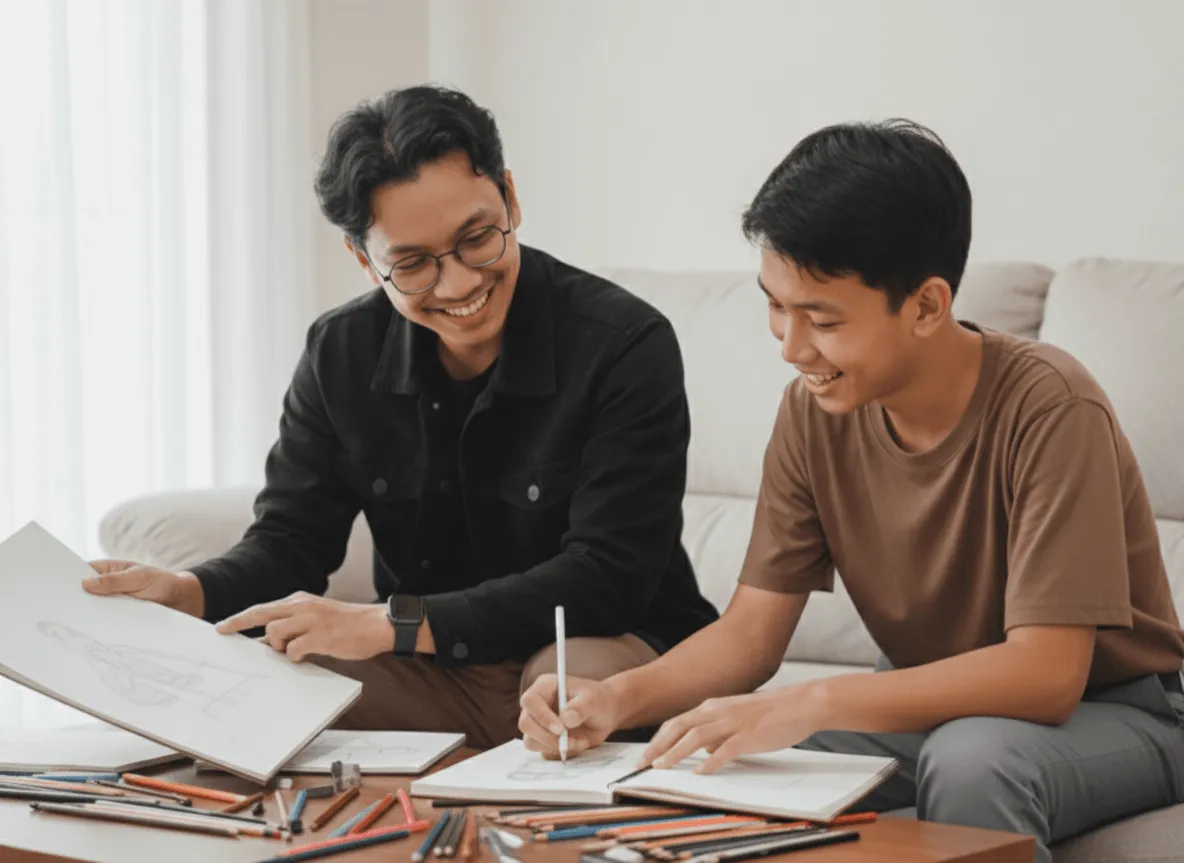
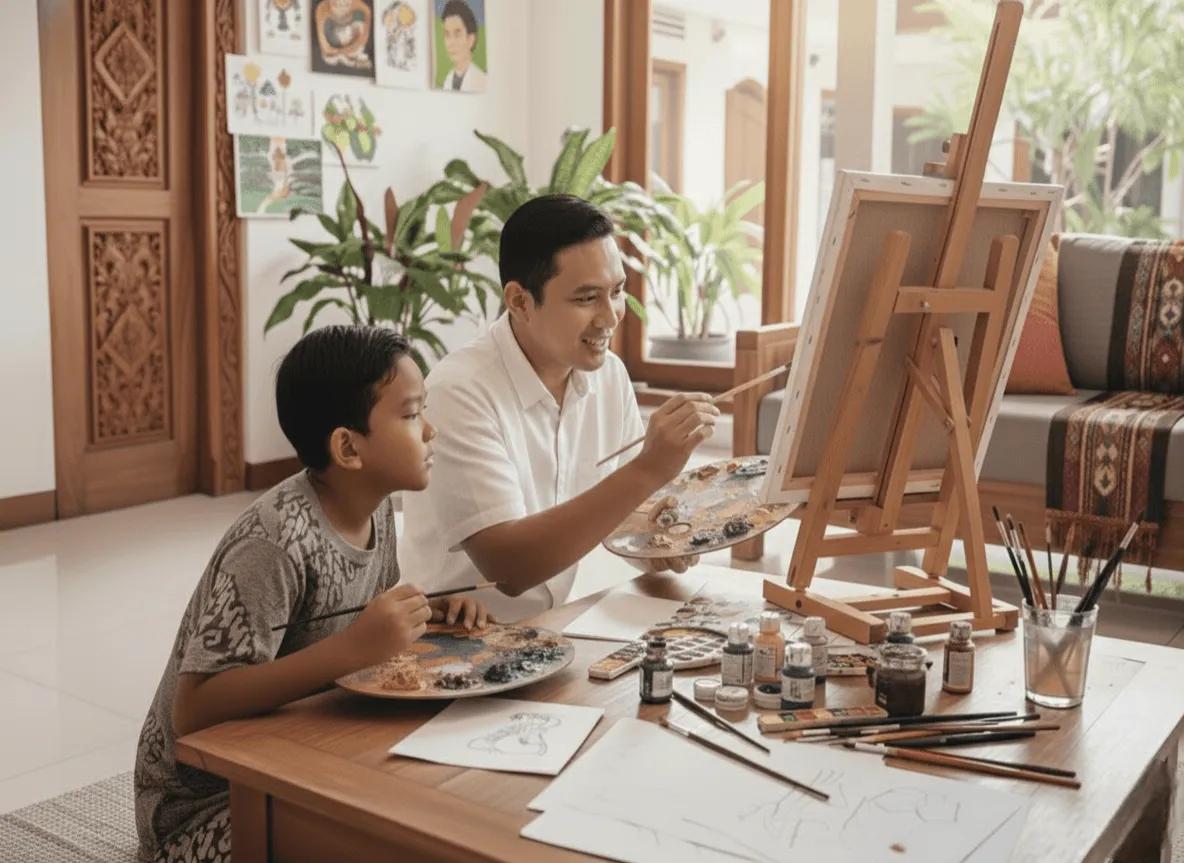
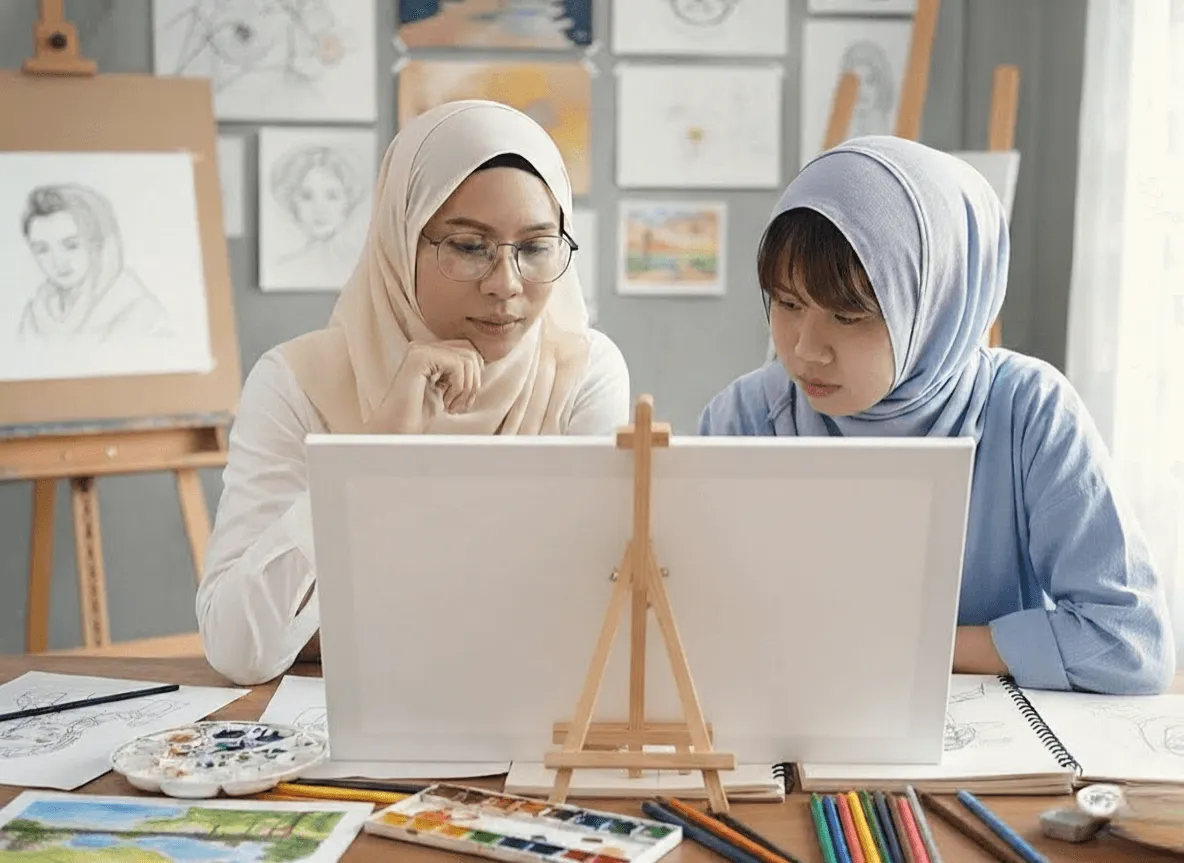
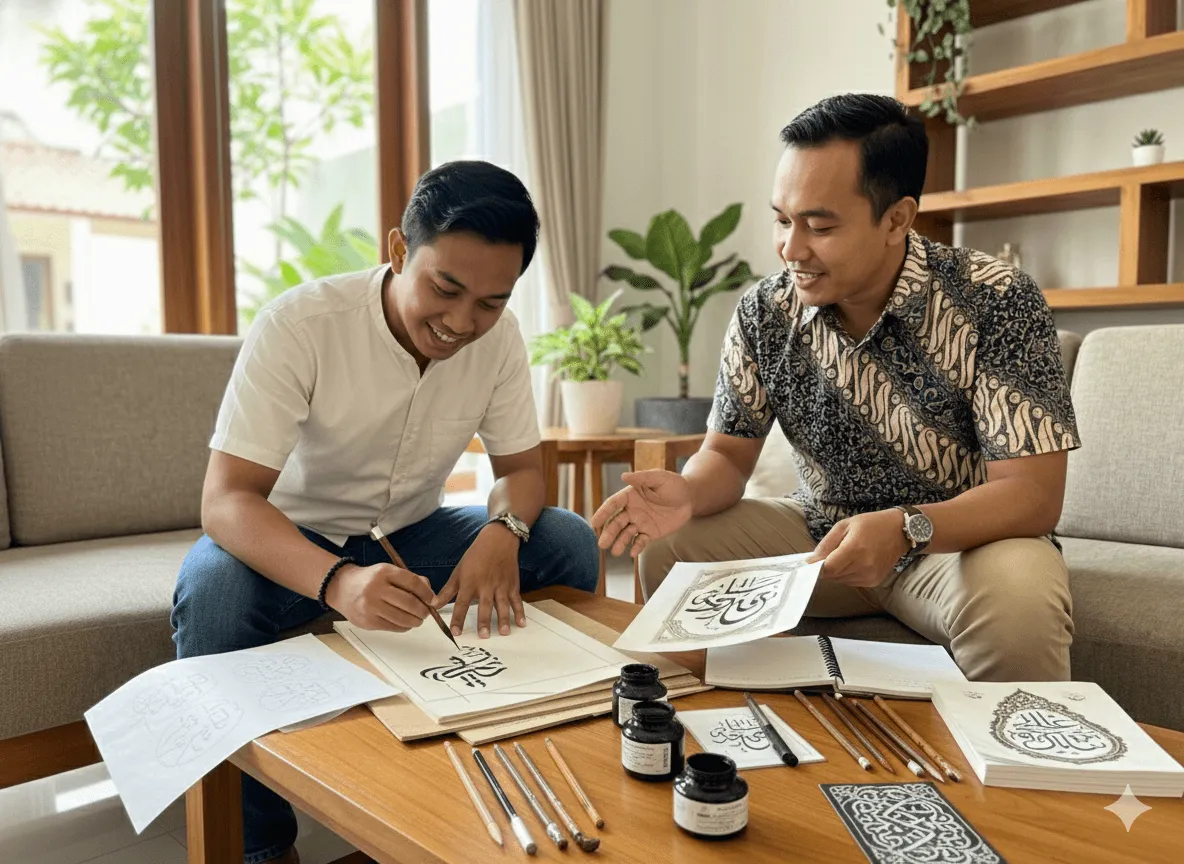
The photographs below were taken during drawing tutoring in Bali sessions with learners on the island.
Service Area
Where Edupola Drawing Tutors Travel in Bali
Tutors for drawing tutoring in Bali travel to the location you choose, from Denpasar, Badung, and Gianyar through to Tabanan, Buleleng, Klungkung, Bangli, Karangasem, and Jembrana. A table, a chair at the right height, and side light are what the session needs; everything else the learner already owns.
The medium decides more about the match than the distance does. Pencil and coloured pencil are taught by most tutors; watercolour, oil, and digital drawing are each taught by fewer, so learners who want those sometimes wait a little longer for the right person. Oil also needs a room you can leave work drying in, which is worth mentioning when the location is agreed.
The Edupola office is not used as a lesson venue. Where no tutor is available near you, sessions run online. Part of this programme transfers online and part does not, as the next section sets out. Ask the admin about tutor coverage at your location in Bali.
Online Sessions
Online Drawing Sessions in Bali and Two Cameras
Online sessions for drawing tutoring in Bali run over Zoom or Google Meet, and this programme works on that route with one requirement: two views. One camera on the learner's sheet from above, and one on the tutor's sheet, so demonstration and work can be seen at the same time.
Most learners arrange it with a phone propped over the table for their own sheet and the laptop for the conversation. It takes one session to get used to and then disappears. Digital drawing is the easiest case of all, since the screen is shared directly.
What suffers is colour. Watercolour and oil cannot be judged honestly through two cameras and two screens, so learners in those media usually keep colour sessions face to face and use the online route for drawing and composition. Fees for online sessions match face-to-face sessions.
Frequently Asked
Questions From Drawing Learners in Bali
What does private drawing tutoring in Bali cost?
Fees start from IDR 107,600 for a 60-minute session, the shortest option. Sessions of 90 and 120 minutes are available with the fee following the length. The final fee follows session length and the number of sessions per month, between 4 and 28. The admin sends the breakdown in writing before the first payment. Drawing materials such as pencils, paper, and paint are prepared by the learner and not included in the fee.
At what age can a child start drawing lessons?
From around 5 in Bali as anywhere, with the understanding that the early sessions are play with purpose: large paper, large tools, and looking at real objects. Formal proportion work starts later, usually around 8 or 9, when a child can hold a comparison in mind long enough to measure with it. The first session finds where a particular child is instead of using their age.
Does a learner need talent to start?
No, and the programme is arranged to make that visible. Almost everything called talent in drawing is observation, and observation is trained: measuring real proportion instead of drawing a remembered shape. Adults who have not drawn since school usually see a difference within six to eight sheets, which is faster than they expect and the reason the old sheets are kept.
Which medium should be learned first?
Pencil, for almost everyone in Bali. It is erasable and cheap, so mistakes cost nothing, and line, proportion, and shade transfer directly to the other four media. Learners with a specific goal can enter further along: someone preparing a digital portfolio may start on a tablet, and the tutor will say so during the consultation instead of after the materials are bought.
Does Edupola supply the drawing materials?
No, the learner in Bali brings them, and the first list is deliberately short: two or three pencils and a pad. Materials for coloured pencil, watercolour, oil, or digital work are bought when you reach that medium, from the tutor's list. Buying a full set in advance is the most common wasted expense in this subject.
How is a drawing tutor matched to a learner?
The schedule is settled first during the consultation, covering days, times, session length, and sessions per month. The Edupola team then looks for a tutor whose travel to your location in Bali stays short, and that search runs 1 to 5 working days. The medium matters here: watercolour, oil, and digital drawing are each taught by fewer tutors than pencil. If the first 2 weeks feel like a poor fit, a replacement is arranged at no extra cost.
Related Programmes
Other Art Programmes Learners Add in Bali
Learners taking drawing tutoring in Bali often add one other programme, usually once a medium is steady.
-

Photography Tutoring in Bali
Taken by learners who want to work from their own reference instead of borrowed photographs.
-

Graphic Design Tutoring in Bali
Chosen by learners whose drawings need to sit inside a layout with type.
-

UI and UX Tutoring in Bali
Often added by learners moving from drawing into interfaces and prototypes.
Get Started
Start From the Medium You Choose
Name the medium you want to begin in, what you would like to be able to draw, and the hours you can practise. A tutor in Bali is matched within 1 to 5 working days.