
Private Sewing Tutoring in Bali
Sewing Tutoring in Bali: The Pattern Decides the Result
Sewing tutoring in Bali from Edupola pairs one teacher with one learner at home, on the machine already there. A garment that hangs wrong was decided before the needle moved, so 6 decisions at the pattern stage carry the programme. Fees from IDR 136,200 per session.
Rating and fees for sewing tutoring in Bali
| Programme | Sewing Tutoring in Bali |
|---|---|
| Provider | Edupola |
| Description | Private sewing tutoring in Bali on the learner's own machine: the garment is decided at the measuring and pattern stage, long before anything is stitched. |
| Fee | Fees start from Rp136,200 per session. |
| Session Length | Sessions run 60, 90, or 120 minutes. |
| Schedule | Flexible, following the learner's calendar. |
| Start | Lessons can start any time after registration. |
| Sessions per Month | 4 to 20 sessions per month, as needed. |
| Rating | 4.9 out of 5, 112 reviews |
Programme at a Glance
Sewing Tutoring in Bali and Where the Decisions Are Made
Sewing tutoring in Bali runs one tutor with one learner, at your home. Beginners expect the difficulty to be at the machine. It is not.
A garment that pulls across the shoulders, hangs crooked, or ends up a size too small was decided earlier, at the point where a body was measured and a pattern was drawn. Two centimetres off the right measuring point changes the whole pattern. A pattern laid across the fabric grain instead of along it hangs crooked after a few washes, and no amount of careful stitching corrects either.
So the programme spends its longest stage on measuring and pattern drawing, and the machine work is learned alongside it. Fees start from IDR 136,200 per 60-minute session, with 4 to 28 sessions a month. This programme holds a 4.9 out of 5 rating across 112 learner reviews in Bali.
The Pattern Stage
Six Decisions Made Before Any Fabric Is Cut
These six are the working content of sewing tutoring in Bali. The last two are the ones learners skip and then pay for.
-
The Right Measuring Points
A chest measurement is taken at one specific point, and moving two centimetres from it already changes the whole pattern. Learners practise finding the point by feel instead of by eye.
-
Allowance for Movement
A pattern is not drawn to the exact size of the body: an allowance is added so the garment can be worn and moved in. How much depends on the garment and the fabric.
-
The Direction of the Grain
The pattern is laid along the grain of the fabric. Laid across it, the garment hangs crooked after a few washes, and the fault looks like poor stitching when it is not.
-
Seam and Hem Allowances
The stitching line and the turned edge are added outside the pattern line. Forgetting them makes the garment smaller than the measurements, which is the most common first failure.
-
The Pattern Is Tested in Cheap Fabric
Before the real fabric is cut, the pattern is stitched up quickly in cheap cloth and tried on. One metre of cheap fabric is far lighter than a length bought for an occasion.
-
Adjustment After the Fitting
From the fitting, the pattern is adjusted: the shoulder lowered, the waist shifted, or the sleeve length changed. This adjustment is what turns a pattern into a garment that fits a person.
Skills
Sewing Skills Trained and the Order of Arrival
Teachers use this to plan a route. The third column is when that skill enters, and the order is not interchangeable.
| Skill | What it involves | When it is trained |
|---|---|---|
| Measuring a body | Taking measurements at the right points and recording them in a list that can be read back | The first session, and repeated whenever a garment is made for a different person |
| Running the machine | Threading, setting the tension, stitching straight and around corners, and maintenance | Alongside measuring, since the two do not depend on each other and can be trained together |
| Drawing a basic pattern | Drawing the body, sleeve, and skirt patterns from the measurements, with seams and hems | After measuring is secure, and it is the longest stage in this programme |
| Sewing a garment | Joining pieces in the correct order, setting a sleeve, and fitting a waistband | After the first pattern has been tried successfully in cheap fabric |
| Finishing edges | Tidying raw edges, fitting buttons, making buttonholes, and hand stitches that do not show | Alongside the first garment, since a tidy edge is what separates a finished piece from a practice one |
| Adapting a pattern | Turning a basic pattern into another style, and fitting it to a different body shape | Advanced, after several garments have come off the same basic pattern |
Learning Path
The Garments Worked Through in Order
The sewing stage a learner starts at is set by one measurement taken and a few lines stitched in the first session.
-
Stage 1
Lines, Corners, and Edges
Practice on scrap fabric: stitching straight, turning a corner, stitching a curve, and tidying an edge. No garment is produced at this stage, deliberately.
- Straight and curved
- Turning corners
- Scrap fabric
-
Stage 2
A Garment From a Simple Pattern
A straight skirt or trousers with an elastic waistband, made from a pattern the learner drew from their own measurements. The style is simple so the pattern is the lesson.
- Your own pattern
- Elastic waistband
- Simple style
-
Stage 3
Sleeves and Buttons
A shirt or blouse: setting a sleeve, making buttonholes, and fitting a collar. Setting a sleeve is the step repeated most often before it comes right.
- Setting a sleeve
- Buttonholes
- A collar
-
Stage 4
Adapting and Changing the Style
The basic pattern is changed into another style and fitted to a body shape different from the learner's own. Here a learner starts working for other people.
- Another style
- A different body
- Working for others
Who It Is For
Learners Who Take Sewing Lessons in Bali
Every session holds one learner, so the garments are chosen by that learner and sewn on their own machine.
-
Sewing for the Family
Learners in Bali making and mending clothes for themselves and their household. Basic patterns take the larger share.
-
Clothing Business Owners
Learners in Bali selling garments who want to do the parts they currently contract out. The work order and finishing come first.
-
Tailors Adding Pattern Making
Learners in Bali who can sew from bought patterns and want to draw their own. Sessions start from measuring.
-
Learners Who Mend Clothes
Learners in Bali whose aim is taking in, lengthening, or replacing a damaged part. Material is condensed into unpicking and reassembling.
-
Makers of Crafts and Home Goods
Learners in Bali sewing bags, cushion covers, or household items. Body patterns take less room and finishing takes more.
-
Pupils and Teenagers
Learners of school age in Bali drawn to making their own clothes. Sessions are staged short with one small item finished early.
One Session
Inside a 60-Minute Sewing Session
This is the division used once a learner is sewing garment pieces. One block is unpicking, and it is there on purpose.
-
10 minutes
Checking Last Week's Work
The teacher checks the stitching the learner did outside session hours and marks the parts that need unpicking.
-
10 minutes
Preparing the Machine and Fabric
Threading, testing the tension on scrap of the same fabric type, and laying out the pieces. The tension test is never skipped, whatever the hurry.
-
25 minutes
One Part Finished Completely
One part of the garment is taken to completion, for example one side seam or one waistband. A completed part can be judged; a half-finished one cannot.
-
10 minutes
Checking and Unpicking
The result is checked together: straightness, evenness of gathers, and tidiness of the edge. What needs unpicking is unpicked inside the session.
-
5 minutes
Setting the Home Work
The teacher names one part to do alone and how much scrap fabric to have ready for testing the tension first.
In a 90 or 120 minute session, a whole garment piece is cut and assembled while the machine settings stay as they were tested, which is what learners sewing for a business or working on a fitted garment usually choose.
Prepared by the Learner
The Machine and Tools That Need to Be at Home
The admin confirms these once the schedule for sewing tutoring in Bali is agreed. A working machine, a tape measure, fabric scissors, and cheap fabric are prepared by the learner and not included in the fee.
-
A Sewing Machine That Works
Any machine that runs, including an old treadle one. Name the type at the consultation, because threading and tension setting differ and the teacher arrives knowing yours.
-
Measuring and Pattern Tools
A cloth tape measure, a long ruler, a pencil, and pattern paper. Pattern paper can be replaced with wrapping paper or newspaper for practice, which is what most learners do.
-
Cheap Fabric for Testing
A few metres of cheap cloth for trying a pattern before the real fabric is cut. This is the item learners skip most often, and the one that saves the most money.
-
Fabric Scissors and a Seam Ripper
Scissors kept for fabric only, plus a seam ripper. Unpicking is a normal part of learning to sew, so the tool for it belongs in the basic set.
-
A Table and Enough Light
A table wide enough to spread fabric out, and light falling from the front. Sewing in poor light produces crooked stitching that is only visible the next day.
If you are not sure what your machine can handle, say so during the consultation. The first session tests it on several fabric types and the settings are written down.
Fabric
The Fabric Chosen and the Price of a Mistake
In sewing tutoring in Bali the type of fabric changes almost everything: the machine settings, the way it is cut, and the stitch used. Slippery fabric shifts while being sewn and needs far more pinning. Stretchy fabric springs back and needs a stitch that can stretch with it, or the seam snaps on the first wearing. Thick fabric needs a heavier needle.
Those differences are what make the cheap-fabric fitting a necessary stage instead of extra work. One metre of cheap cloth is far lighter than a length bought specially for an occasion, and a pattern fault found in cheap fabric costs a morning while the same fault found in the real fabric costs the fabric.
For learners in Bali, fabric choice also follows the warm humid air. Cloth that absorbs sweat and lets air through is more comfortable to wear all day, and the teacher raises this when the fabric for a real garment is being chosen instead of afterwards.
What Learners Say
Stories From Sewing Learners in Bali
The quotes below come from learners in Bali who completed the sewing programme at Edupola, with their situation and what changed.
-
★★★★★
At first I only took sewing lessons at Edupola on a whim because I wanted to be able to sew clothes for my child. Now I have actually opened a sewing business from home and I already have regular customers. The tutor was so patient teaching me from nothing, from threading the machine to making my own patterns.
Opened a home sewing business with regular customers
Rai S.
Homemaker, Denpasar · Verified learner
-
★★★★★
I took lessons at Edupola to strengthen the technical sewing skill I was missing from my course. The result is that my portfolio is far more solid and I managed to win a province-level garment design competition. The draping technique they taught is genuinely next level.
Won a province-level garment design competition
Ayu D.
Fashion design student, Badung · Verified learner
-
★★★★★
I have been a tailor for 15 years but my technique was still conventional. At Edupola I learned modern tailoring, precise fitting, and couture technique. Now I can take custom suit and kebaya orders at a much higher price.
Mastered modern tailoring for suits and kebaya
Arta S.
Traditional tailor, Gianyar · Verified learner
-
★★★★★
I wanted to make my own kebaya for a Balinese ceremony. The tutor at Edupola was incredibly patient, teaching me from measuring to the final stitch. Now I have a beautiful handmade kebaya and the skills to create more. The private format is perfect for foreigners.
Made her own Balinese kebaya for a traditional ceremony
Sarah M.
Resident of Sanur · Verified learner
-
★★★★★
After retiring I was looking for a productive activity. Taking sewing lessons at Edupola turned out to be very enjoyable. Now I am a tailor for the community around me, making organisation uniforms and traditional clothing. It feels worthwhile and adds to my income.
Became a community tailor making organisation uniforms
Arya N.
Retired civil servant, Tabanan · Verified learner
-
★★★★★
Since I was little I liked drawing clothes but did not know how to make them. Lessons at Edupola taught me everything from cutting fabric to finishing. Now at 17, I already have a small clothing brand sold online. Really proud of the result!
Launched a clothing brand of their own at 17
Diah P.
Senior high school student, Denpasar · Verified learner
The Machine
Learning on the Machine Already in the House
Sewing tutoring in bali uses the machine the learner already owns, including an old treadle machine inherited from family. The reason is practical: you will be sewing on that machine after the programme ends, so knowing its behaviour is part of the skill instead of a separate problem to solve later.
The first session examines the machine. The teacher checks the needle's travel, sets the upper and lower tension, and tries several fabric types to find that machine's limits. Out of that examination comes a written note of settings, which saves the learner from guessing at the start of every project.
Maintenance is taught as well because it extends the machine's life: clearing lint from under the needle plate, replacing a blunt needle, and oiling the moving parts. A blunt needle is the most frequent cause of skipped stitches, and learners usually blame the tension for it.
How to Register
Four Steps to the First Sewing Session
The opening consultation carries no fee. The admin asks what you want to be able to sew and what machine is at home.
-
Name the Goal and the Machine
What you want to be able to sew, and the type of machine in the house. Both decide the order of material and the starting stage.
-
Agree the Schedule
Days, times, session length, and sessions per month are agreed with the admin, following the hours you can give to stitching between sessions, since one part finished at home moves this programme faster than anything else.
-
Matching the Teacher
The team looks for a tutor whose travel to your location in Bali stays short, and that search runs 1 to 5 working days. The garment type matters here: kebaya, shirts, trousers, and home goods are matched to teachers who sew them.
-
The First Session
The teacher checks the machine and sets its tension, then you take one measurement. The starting stage is set from that.
Need help? Contact our admin on WhatsApp for a free consultation.
Documentation
Sewing Lessons With Edupola in Bali
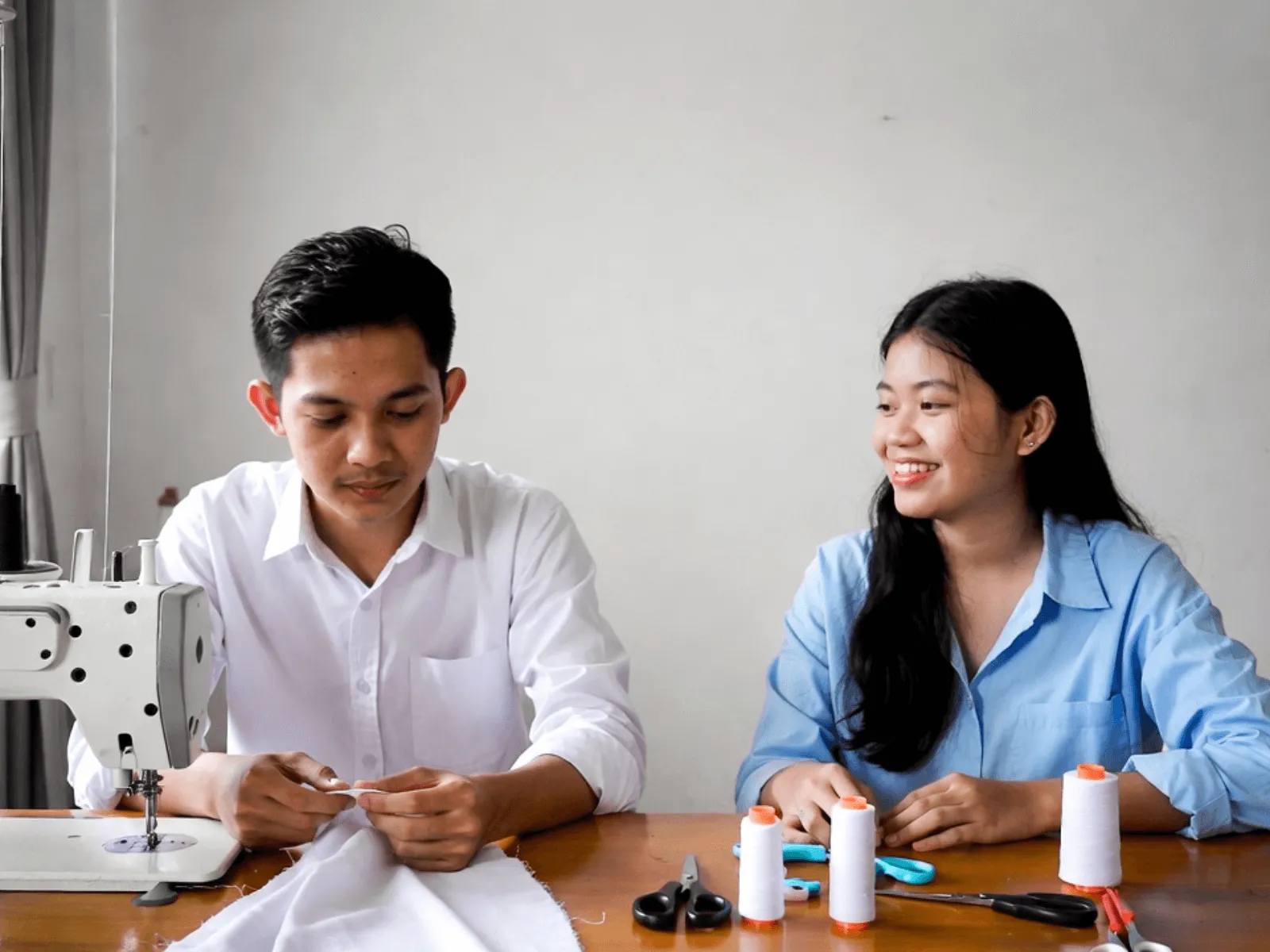
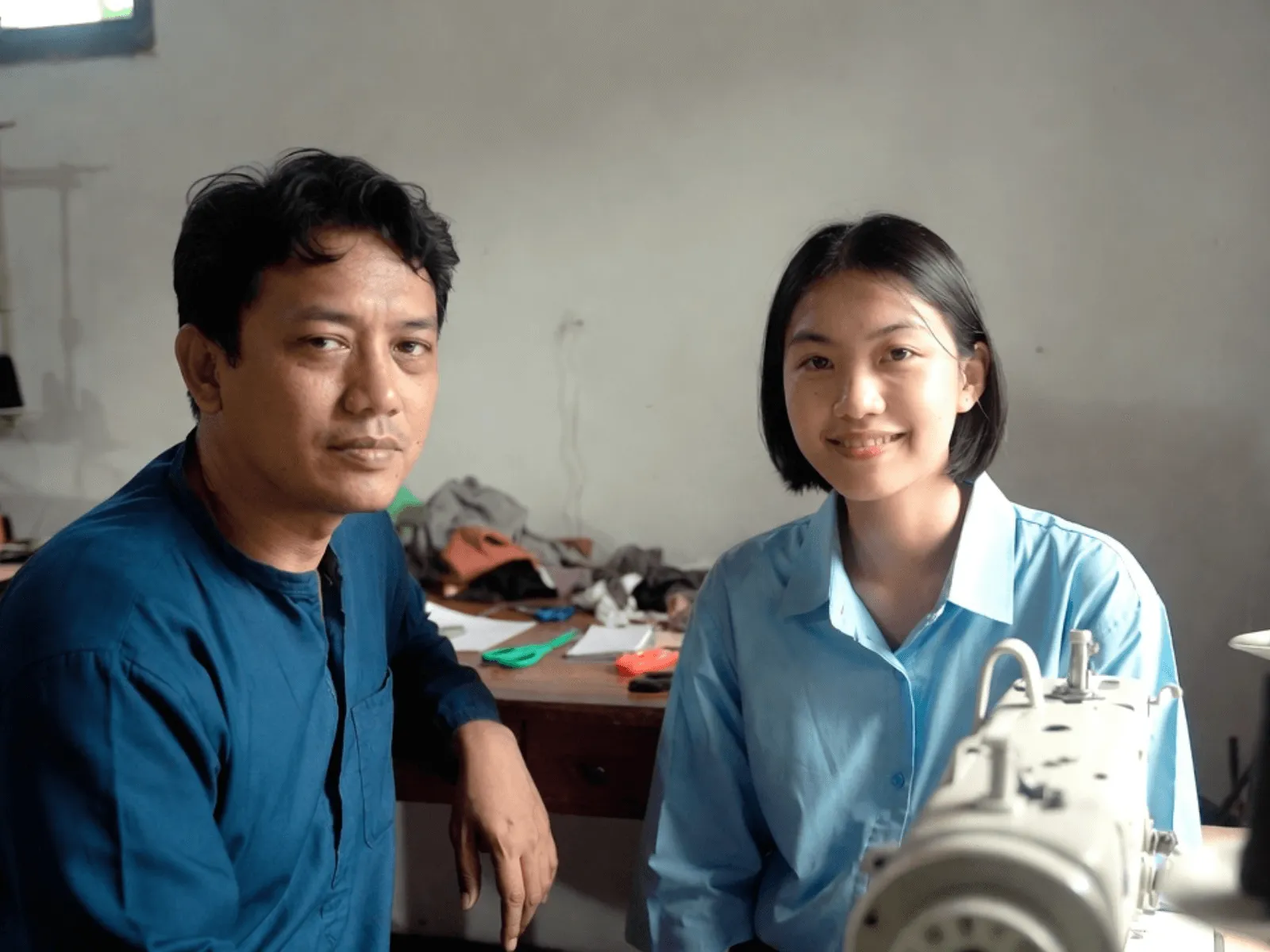
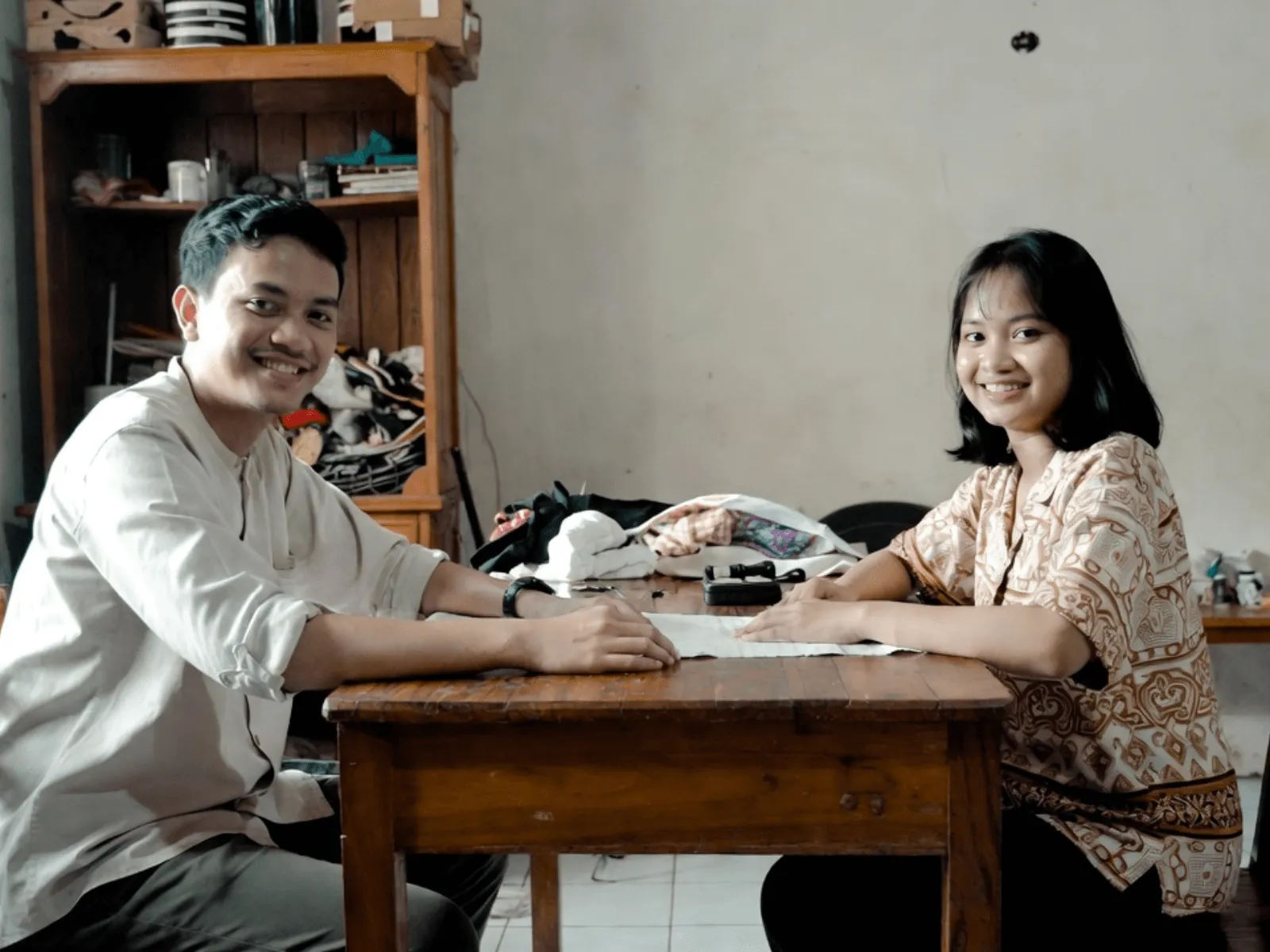
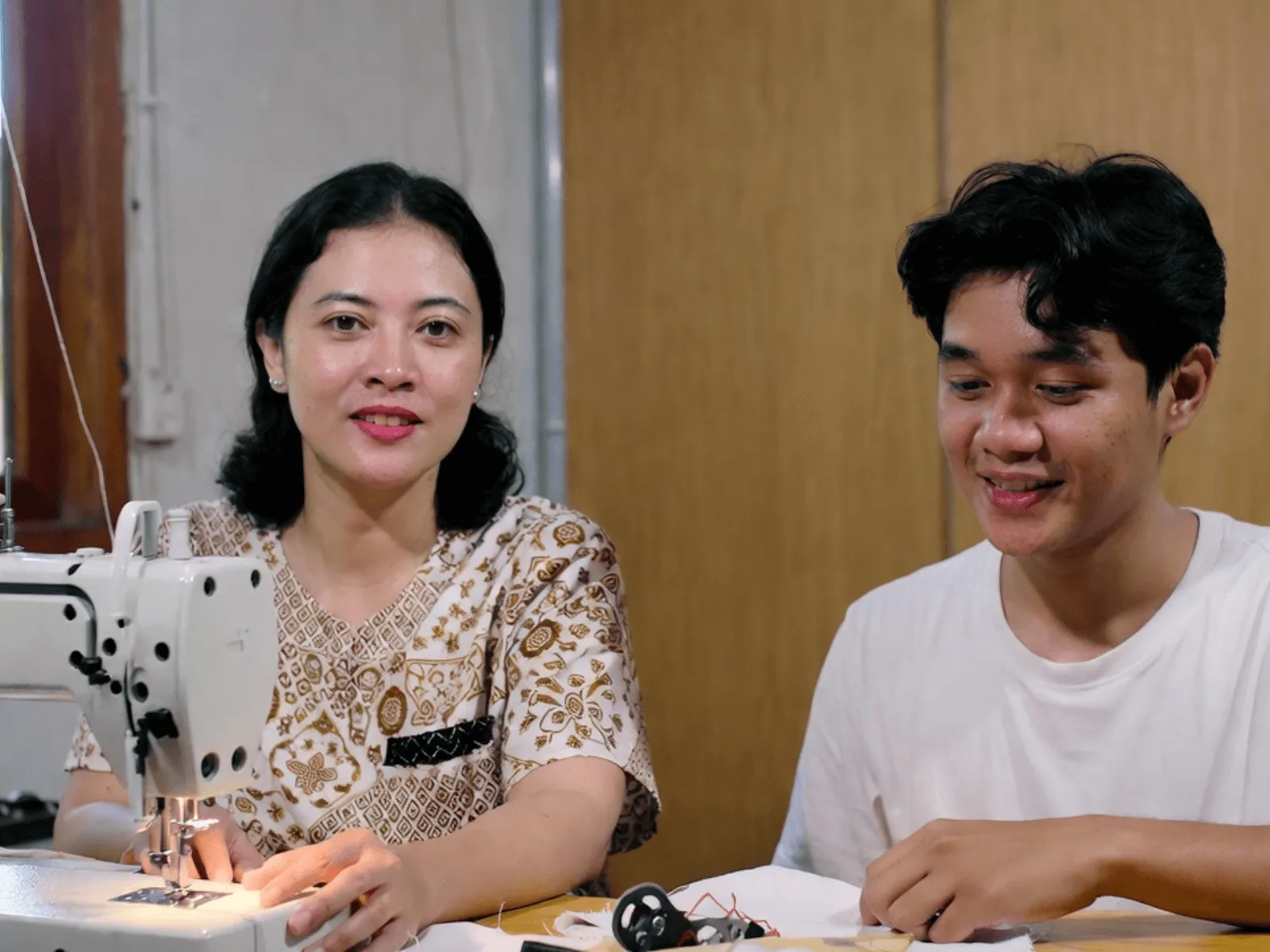
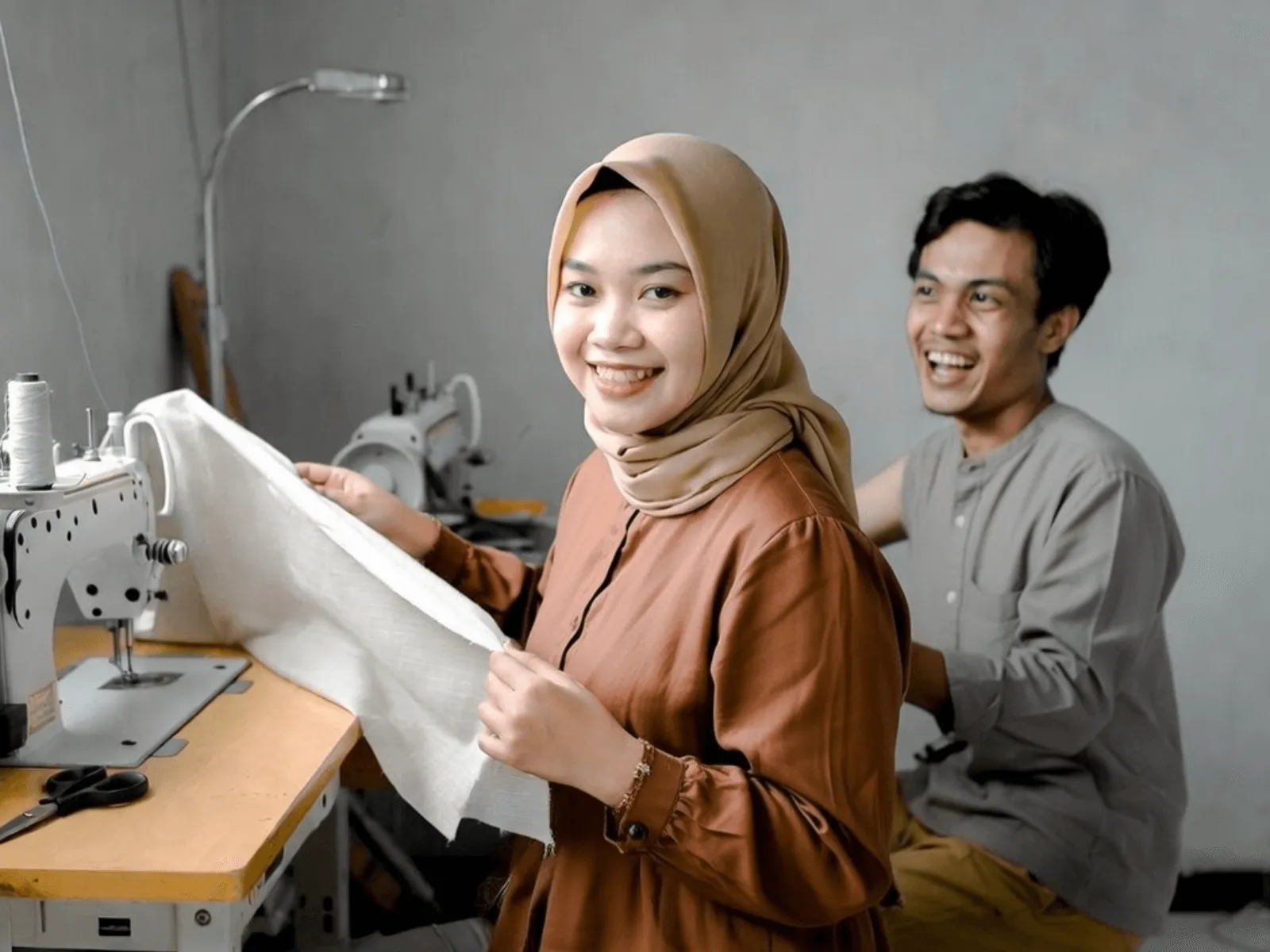
The photographs below were taken during sewing tutoring in Bali sessions with learners on the island.
Service Area
Where Edupola Sewing Teachers Travel in Bali
Tutors for sewing tutoring in Bali travel to the location you choose, from Denpasar, Badung, and Gianyar through to Tabanan, Buleleng, Klungkung, Bangli, Karangasem, and Jembrana. This programme runs at the learner's home for one plain reason: the machine is there and it is the machine you will keep using.
What needs to exist at the venue is a table wide enough to spread fabric out and light falling from the front. Those two matter more than the size of the room, and the admin asks about them before a teacher is matched.
The Edupola office is not used as a lesson venue. Where no tutor is available near you, sessions run online. Part of this programme transfers online and part does not, as the next section explains. Ask the admin about teacher coverage at your location in Bali.
Online Sessions
The Parts of Sewing That Work Well Online
Online sessions for sewing tutoring in Bali run over Zoom or Google Meet, and this programme divides fairly sharply. What works well on a screen is measuring and pattern drawing: the learner photographs their list of measurements and their drawn pattern, and the teacher marks the corrections on the image.
What needs a room is correcting how the fabric is held while stitching, setting the tension on a machine that is misbehaving, and inspecting a seam close up. A puckered seam and a wrong tension are hard to tell apart through a camera, and guessing wastes fabric.
The common arrangement combines both: measuring and pattern sessions taken online, cutting and stitching sessions taken in person. Learners whose location has no teacher yet can start online and add in-person sessions later. Fees for online sessions match face-to-face sessions.
Frequently Asked
Questions From Sewing Learners in Bali
What does private sewing tutoring in Bali cost?
Fees start from IDR 136,200 for a 60-minute session, the shortest option. Sessions of 90 and 120 minutes are available with the fee following the length. The final fee follows session length and the number of sessions per month, between 4 and 28. The admin sends the breakdown in writing before the first payment. A working machine, a tape measure, fabric scissors, and cheap fabric are prepared by the learner and not included in the fee.
Do I need my own sewing machine?
Yes, and any working machine will do, including an old treadle one. The programme deliberately uses the machine you own, because that is the machine you will sew on afterwards and its behaviour is part of the skill. Name the type at the consultation so the teacher arrives knowing how to thread and tension it.
Why is the pattern covered before the stitching?
Because the garment is decided there. A shoulder that pulls, a hem that hangs crooked, or a garment a size too small all come from the measuring and pattern stage, and careful stitching cannot correct any of them. Learners who start at the machine produce neat seams in a garment that does not fit, which is the most discouraging possible result.
How long before I can make a whole garment?
Most learners finish a simple garment from their own pattern within the second stage, which is a matter of weeks and not months. A fitted garment with sleeves and buttons takes longer, because setting a sleeve is repeated many times before it sits right. Teachers keep the first garment deliberately simple so one is finished early.
Can I learn sewing in order to start a business?
Yes, and the material shifts for it. The work order, finishing, and adapting one basic pattern into several styles take the larger share, since a business depends on repeatability instead of variety. Learners already sewing commercially often come to draw their own patterns, which removes their dependence on bought ones.
How is a sewing teacher matched to a learner?
The schedule is settled first during the consultation, covering days, times, session length, and sessions per month. The Edupola team then looks for a tutor whose travel to your location in Bali stays short, and that search runs 1 to 5 working days. The garment type matters most here: kebaya, shirts and trousers, mending, and home goods are matched to teachers who sew them. If the first 2 weeks feel like a poor fit, a replacement is arranged at no extra cost.
Related Programmes
Other Programmes Learners Add in Bali
Learners taking sewing tutoring in Bali often add one other programme, usually once a first garment is finished.
-

Graphic Design Tutoring in Bali
Taken by learners who draw their own design sketches and make posts for the clothes they sell.
-

Photography Tutoring in Bali
A choice for learners who photograph their finished garments themselves for marketplaces and social media.
-

Digital Marketing Tutoring in Bali
Often taken by learners selling what they sew who want to reach buyers in Bali themselves.
Get Started
Start Sewing Lessons From Measuring and Patterns
Name what you want to be able to sew and the machine you already have. A tutor in Bali is matched within 1 to 5 working days.