
Private Japanese Tutoring in Bali
Japanese Tutoring in Bali: Three Scripts From N5 to N1
Japanese tutoring in Bali from Edupola pairs one tutor with one learner at a place you choose. The language asks something unusual before grammar begins: 3 writing systems, and an ordinary sentence mixes all of them. So the scripts come first. Fees from IDR 174,100 per 60-minute session.

Rating and fees for Japanese tutoring in Bali
| Programme | Japanese Tutoring in Bali |
|---|---|
| Provider | Edupola |
| Description | Private Japanese tutoring in Bali, one tutor per learner: three writing systems first, then grammar, conversation, and the levels of politeness, through to JLPT preparation. |
| Fee | From Rp174,100 per session |
| Session Length | 60, 90, or 120 minutes per session |
| Schedule | Flexible, by agreement |
| Rating | 4.9 out of 5, based on 120 reviews |
Programme at a Glance
Japanese Tutoring in Bali From Script to JLPT
Japanese tutoring in Bali runs one tutor with one learner, at your home, your workplace, or over a screen. The language makes one demand before any grammar is useful, and learners who skip it pay for it later instead of sooner.
Japanese is written in three systems at once. Hiragana carries grammar, katakana carries borrowed words, and kanji carries the roots of meaning. A single ordinary sentence uses all three on the same line, so a learner who has only memorised spoken phrases can speak and still not read a menu or a message from a colleague.
So the scripts come first, with stroke order taught by hand, and grammar, conversation, politeness levels, and JLPT preparation follow. Fees start from IDR 174,100 per 60-minute session, with 4 to 28 sessions a month. This programme holds a 4.9 out of 5 rating across 120 learner reviews in Bali.
The Scripts
Five Things to Know About the Writing Systems
These are the first sessions of Japanese tutoring in Bali, and they are written by hand from the beginning.
-
Hiragana, 46 Basic Sounds
The first system learned, and the one that carries grammar. Most learners read it within two or three weeks of daily writing, which is the fastest visible progress in the whole language.
-
Katakana, the Shape for Borrowed Words
Used for words taken from other languages, which means menus, product names, and places. Learners in tourism often find this the most immediately useful system.
-
Kanji, Roots Written in Characters
Characters carrying meaning, each with more than one reading. They are learned in context and by frequency instead of alphabetically, since a list learned out of context does not survive.
-
Stroke Order
Each character has a sequence, and following it makes the shape consistent and the character searchable by handwriting. Learners who invent their own order write characters nobody can read.
-
Reading a Mixed Sentence
The real skill: three systems on one line, with no spaces between words. It is practised from the first sessions on short sentences instead of being postponed.
Levels
Ability Levels and the Target at Each One
The Japanese level a learner starts at is set by what they can read, and never by how long they have been watching subtitled television.
-
Beginner
N5 and N4
Both kana systems, around a few hundred kanji, present and past, and everyday conversation. This is where the scripts become automatic, and the work is daily and short.
- Both kana systems
- Everyday conversation
- First kanji by frequency
-
Intermediate
N3
The level most self-taught learners stall at: longer sentences, more kanji, and the politeness forms needed at work. Reading speed becomes the limiting factor here.
- Longer sentences
- Politeness at work
- Reading speed
-
Advanced
N2 and N1
News, documents, and formal writing, with kanji counted in the thousands. Taken by learners needing a scholarship, a visa, or professional work in Japanese.
- News and documents
- Formal writing
- Scholarship requirements
Skill Map
Parts of Japanese and the Difficulty Typical of Each
Japanese tutors use this to divide a session. The third column is what holds learners back in that part, and each has its own remedy.
| Part | What is trained | What holds learners back |
|---|---|---|
| Kana | Reading and writing both systems by hand | Recognising a character and not being able to write it |
| Kanji | Meaning, readings, and use in context | Learning lists alphabetically instead of by frequency |
| Grammar | Particles and sentence order | Translating from Indonesian word order, which inverts the sentence |
| Listening | Natural speed, with reductions and fillers | Textbook audio only, which is slower than any real speaker |
| Speaking | Short exchanges, then longer turns | Knowing the words and never having said them aloud |
| Politeness levels | Choosing the register for the listener | One register learned and used with everyone |
Who It Is For
Learners Who Take Japanese Lessons in Bali
This private Japanese programme teaches one learner per session, so the balance of material follows each learner's own purpose in Bali.
-
Tourism Workers
Learners in Bali serving Japanese guests. Katakana and service register come first, because both appear in the first week of the job.
-
Future Workers in Japan
Learners in Bali preparing for a placement or a work programme. Workplace politeness and the required test level set the plan.
-
Prospective Students
Learners aiming at a university or a scholarship in Japan. The test level and its deadline are built backwards from the application date.
-
Followers of Japanese Culture
Learners in Bali who read manga and watch drama. Motivation is high and the gap is usually reading, since listening came first for them.
-
Learners Who Stalled Self-Studying
Learners in Bali who reached a wall alone, almost always at the intermediate level. The first session finds whether it is kanji, grammar, or speaking.
-
Children and Teenagers
School-age learners in Bali. Sessions are shorter and built around writing practice, since the scripts respond to frequency at that age.
One Session
Inside a 60-Minute Session at Beginner Level
This is the division used at beginner level. Writing by hand opens every session, even for learners who only want to speak.
-
10 minutes
Writing Characters
By hand, on squared paper, with stroke order watched. Ten minutes of writing beats an hour of recognition drills for making a script stick.
-
10 minutes
Revisiting Last Week's Vocabulary
Words from the previous session used in new sentences instead of being recited. Recitation shows recall; use shows readiness.
-
15 minutes
One Grammar Pattern
One pattern per session, built from examples the learner says aloud, because Japanese patterns interfere with each other when stacked.
-
15 minutes
Conversation With Replies
A short exchange where the tutor answers back, including answers the learner did not expect. Scripted dialogue teaches recitation.
-
10 minutes
Reading a Mixed Sentence
One short sentence using all three systems, read aloud. This is what makes the scripts practical instead of decorative.
In a 90 or 120 minute session, one full-length listening exercise can fit, and that is what learners preparing for the JLPT use.
Brought by the Learner
Writing Materials the Learner Brings
The admin confirms these once the schedule for Japanese tutoring in Bali is agreed. Notebooks, pencils, and any textbook are prepared by the learner and not included in the fee.
-
A Notebook With Large Squares
Squared paper, large squares. Japanese characters are built inside a square, and writing them on lined paper produces proportions that look wrong to any reader.
-
Pencils Instead of Pens
Stroke order is corrected constantly in the early weeks, and a learner who cannot erase stops trying. Pens come later, once the shapes are steady.
-
A Keyboard That Switches Scripts
Your phone or laptop set up for Japanese input. Typing is how most learners will actually use the language, and the input method has its own logic worth learning early.
-
A Title You Follow
A drama, an anime, or a song you already like. It becomes listening material, and material you chose gets replayed in a way assigned audio never does.
-
Old Study Notes if You Have Them
Anything from a previous attempt, including an abandoned app streak. The first session reads them to find where the wall was, which is faster than rediscovering it.
If you have never written a character, say so during the consultation. The first session starts at hiragana with a pencil, which is where almost everyone begins.
Politeness
Six Reasons One Sentence Has Many Forms
Japanese changes shape according to who is listening, and this is the part that decides whether a learner sounds employable.
-
Plain Form
Used with close friends and family, and the form most learners meet first through television. Used at work it reads as careless.
-
Polite Form
The safe default with strangers and colleagues. Beginners learn this first in the programme, because it is wrong in the fewest situations.
-
Respectful Form
Used about the actions of a customer or a superior. Service staff in Bali need it early, since it appears in the first guest interaction.
-
Humble Form
Used about your own actions when addressing someone senior. The mirror of the respectful form, and the pair are taught together.
-
Variation at Work
Companies and industries differ in how formal they are. Learners heading to a specific workplace are taught that workplace's register where it is known.
-
When It Is Taught
The polite form from the start, the respectful and humble pair at intermediate level. Teaching all four at once produces a learner who uses none correctly.
The Test
What Is Different About Preparing for the JLPT
JLPT preparation in Japanese tutoring in Bali is handled as a separate kind of work, not as more Japanese. The test has no speaking section and no writing production: it measures vocabulary and grammar knowledge, reading, and listening, all under a strict clock, in multiple choice.
That shape has consequences. A learner who speaks comfortably can fail on reading speed, and a learner who passes N3 may be unable to hold a work conversation. Both results are common and neither means the level was wrong; it means the test measures a particular slice of the language.
So the plan runs back from the test date, with timed sections from early on. Reading against the clock is trained on its own, because that is what most candidates run out of before knowledge. Learners whose real goal is work or daily life are told plainly when test preparation would pull them away from what they actually need.
What Learners Say
Stories From Japanese Learners in Bali
The quotes below come from learners in Bali who completed the Japanese programme at Edupola, with their situation and what changed.
-
★★★★★
From nothing to passing N3 in a year and a half. My Edupola tutor was very patient with the kanji that made my head spin at first.
Andi P.
Passed JLPT N3 · Verified learner
-
★★★★★
I can finally watch without subtitles and read raw manga. It feels like unlocking something. Arigato gozaimashita!
Rina W.
Anime and manga reader · Verified learner
-
★★★★★
The language preparation for the specified skills programme helped enormously. I am working at a Japanese car plant now.
Budi S.
Internship in Japan · Verified learner
-
★★★★★
Private lessons complemented my degree very well. My tutor taught natural language that the campus textbook does not have.
Maya S.
Japanese literature undergraduate · Verified learner
-
★★★★★
Communication with my Japanese manager and colleagues is much smoother. A bonus: I was promoted for speaking Japanese.
Dimas A.
Employee at a Japanese company · Verified learner
-
★★★★★
My goal of studying in Japan is reached. The N2 result met the scholarship requirement. Thank you Edupola!
Sari I.
Passed JLPT N2 · Verified learner
How Long
How Long Before a Simple Sentence Can Be Read
Hiragana takes most learners two to three weeks of short daily writing, and katakana about the same again. Within a couple of months a learner in Japanese tutoring in Bali can read a short sentence aloud, which is early enough to keep motivation alive and the reason the scripts come first.
Kanji is the long part and the honest answer is uncomfortable: it is counted in years, not months, because the quantity is large and each character carries more than one reading. What makes it bearable is frequency. A few hundred characters cover most of what appears in daily life, and those few hundred are taught first instead of alphabetically.
There is a predictable plateau worth naming in advance. Around the intermediate level progress stops feeling visible: the easy wins are gone, the sentences are longer, and new kanji look like the ones already learned. It is where most self-taught learners stop. Tutors raise it early, and the remedy is reading volume at a level slightly below comfortable, which feels like going backwards and is not.
Documentation
Japanese Lessons With Edupola in Bali
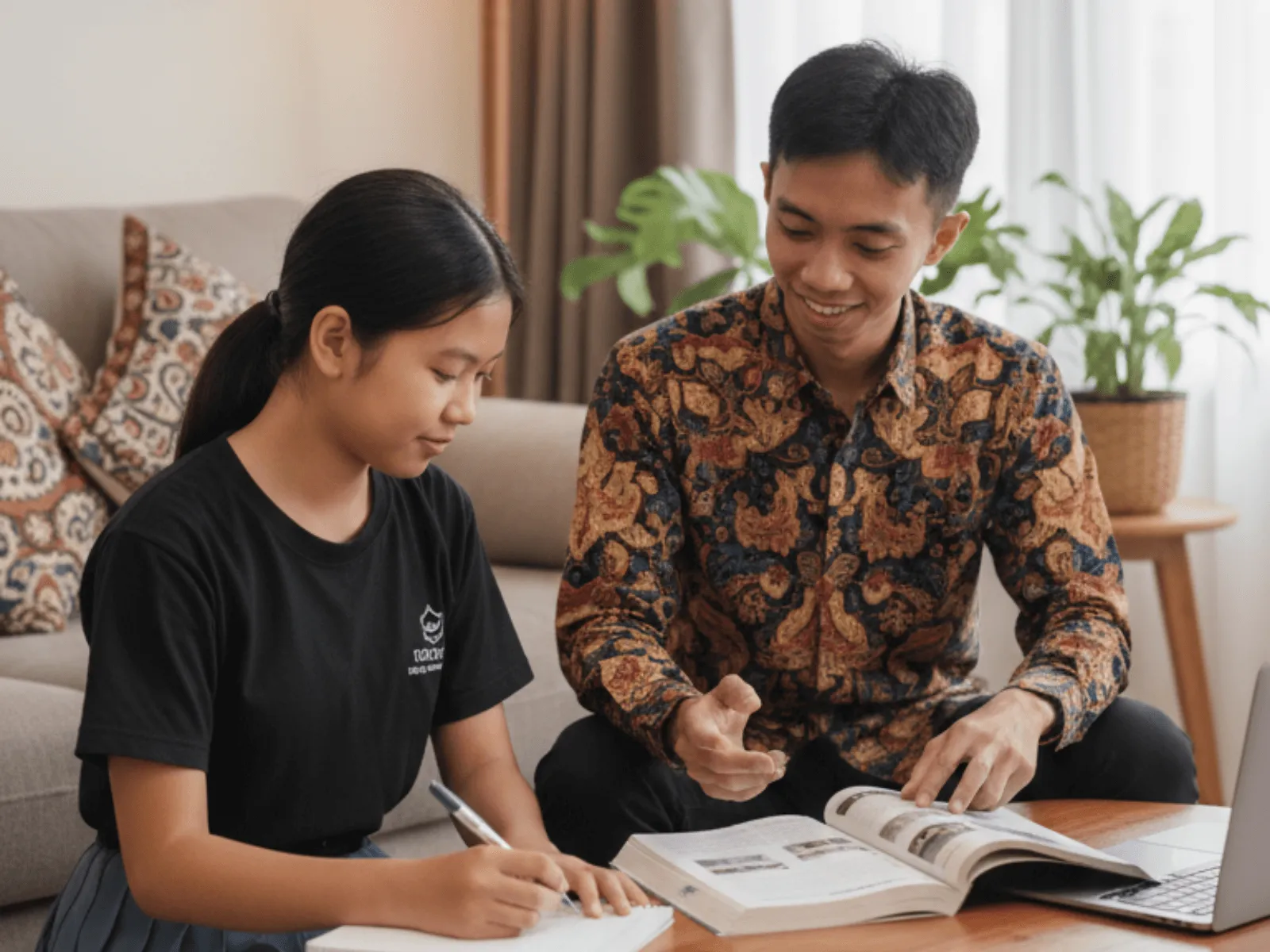
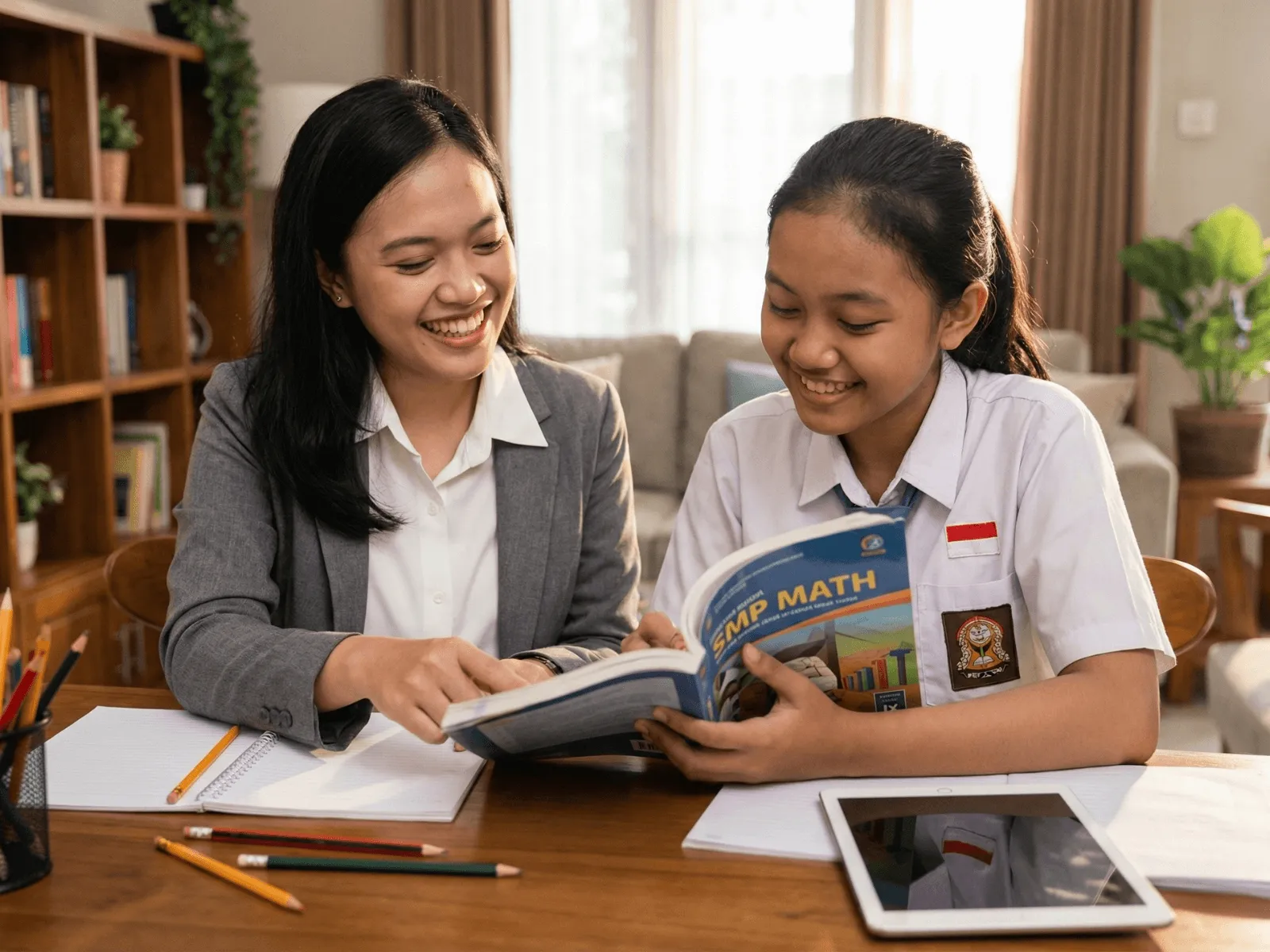
The photographs below were taken during Japanese tutoring in Bali sessions with learners on the island.



Service Area
Where Edupola Japanese Tutors Travel in Bali
Tutors for Japanese tutoring in Bali travel to the location you choose, from Denpasar, Badung, and Gianyar through to Tabanan, Buleleng, Klungkung, Bangli, Karangasem, and Jembrana. A table and a quiet hour are what the session needs, since handwriting and listening both suffer from interruption.
The match here turns on the goal. A learner aiming at a work placement needs workplace register and a test level; a learner reading manga needs volume and vocabulary; a child needs frequency and short sessions. Learners preparing for a specific employer are matched, where possible, with a tutor who has worked in that industry.
The Edupola office is not used as a lesson venue. Where no tutor is available near you, sessions run online. This programme runs online with one adjustment for handwriting, described next. Ask the admin about tutor coverage at your location in Bali.
Online Sessions
Online Japanese Sessions in Bali and Checking Handwriting
Online sessions for Japanese tutoring in Bali run over Zoom or Google Meet, and conversation, grammar, listening, and timed reading all transfer without loss. Learners overseas preparing to arrive in Bali use this route regularly.
Handwriting needs one arrangement: a camera above the page so the tutor sees the strokes as they happen. Checking a finished character tells you the shape; watching it being written tells you the order, and the order is what makes the shape repeatable.
The part learners underestimate is how well typed Japanese works online. Input method practice, dictionary lookup by handwriting, and reading on screen are all closer to how the language gets used day to day. Fees for online sessions match face-to-face sessions.
Frequently Asked
Questions From Japanese Learners in Bali
What does private Japanese tutoring in Bali cost?
Fees start from IDR 174,100 for a 60-minute session, the shortest option. Sessions of 90 and 120 minutes are available with the fee following the length. The final fee follows session length and the number of sessions per month, between 4 and 28. The admin sends the breakdown in writing before the first payment. Notebooks, pencils, and any textbook are prepared by the learner and not included in the fee.
Do I have to learn the scripts before speaking?
You can speak without them in Bali and you will stop progressing quickly. Without kana a learner cannot read their own notes, a message from a colleague, or a menu, and vocabulary learned only by ear tends to blur. Hiragana takes two to three weeks of short daily writing, which is a small cost against everything it unlocks.
How many kanji do I need to memorise?
Fewer than the total and more than feels fair, in Bali as anywhere. A few hundred characters cover most of daily life, and those are taught first by frequency instead of alphabetically. The test levels ask for more: roughly a thousand by N3 and about two thousand by N2. Characters are learned in context, because lists learned in isolation do not survive the month.
Does the programme prepare candidates for the JLPT?
Yes, as a separate kind of work. The test is multiple choice under a clock with no speaking and no written production, so timed reading is trained specifically because most candidates run out of clock instead of knowledge. The plan is built backwards from the test date, and learners whose real goal is work are told when test preparation would pull them away from it.
Can school-age learners take this programme?
Yes, and sessions in Bali are shaped differently: shorter blocks, more writing, and material drawn from what the learner already watches or reads. At that age the scripts respond strongly to frequency, so short daily practice matters more than session length, and the tutor sets it with the parent.
How is a Japanese tutor matched to a learner?
The schedule is settled first during the consultation, covering days, times, session length, and sessions per month. The Edupola team then looks for a tutor whose travel to your location in Bali stays short, and that search runs 1 to 5 working days. The goal matters here: work placement, reading volume, and school-age learning are matched to different tutors. If the first 2 weeks feel like a poor fit, a replacement is arranged at no extra cost.
Related Programmes
Languages Often Taken Alongside Japanese in Bali
Learners taking Japanese tutoring in Bali often add one other language, usually one that shares the characters or the workplace.
-

Korean Tutoring in Bali
Learners who follow both cultures often come here for a script that comes easier than this one.
-

Mandarin Tutoring in Bali
Chosen by learners who want the characters to pay off in a second language.
-
English Tutoring in Bali
Often added by learners in tourism who serve guests from several countries.
Get Started
Start From the Script
Tell us why you are learning, your test date if there is one, and how much you can already read. A tutor in Bali is matched within 1 to 5 working days.