
Private Mandarin Tutoring in Bali
Mandarin Tutoring in Bali: Four Tones Decide the Meaning
Mandarin tutoring in Bali from Edupola pairs one tutor with one learner at a place you choose. One syllable carries 4 different meanings depending on its pitch, and Indonesian does not work that way. So the ear is trained before the mouth. Fees from IDR 174,100 per 60-minute session.

Rating and fees for Mandarin tutoring in Bali
| Programme | Mandarin Tutoring in Bali |
|---|---|
| Provider | Edupola |
| Description | Private Mandarin tutoring in Bali, one tutor per learner: the four tones trained by ear first, then pinyin and characters, sentences for the learner's own use, and HSK preparation. |
| Fee | From Rp174,100 per session |
| Session Length | 60, 90, or 120 minutes per session |
| Schedule | Flexible, by agreement |
| Rating | 4.9 out of 5, based on 119 reviews |
Programme at a Glance
Mandarin Tutoring in Bali That Starts From Tone
Mandarin tutoring in Bali runs one tutor with one learner, at your home, your workplace, or over a screen. The language puts its hardest demand at the very beginning, which is why the first sessions can feel odd: they are mostly listening.
In Mandarin the pitch of a syllable is part of the word. The same sound said four ways produces four unrelated meanings, so a learner with perfect vocabulary and no tone control is not speaking with an accent; they are saying different words. And because Indonesian uses pitch for emphasis instead of meaning, the distinction is genuinely new, which is different from being hard.
So the ear comes before the mouth: hearing the four tones apart, then producing them, with a recording as the check. Pinyin, characters, sentences for the learner's own use, and HSK preparation follow. Fees start from IDR 174,100 per 60-minute session, with 4 to 28 sessions a month. This programme holds a 4.9 out of 5 rating across 119 learner reviews in Bali.
The Tones
Six Things About Tone and Training the Ear
These are the first sessions of Mandarin tutoring in Bali. Nothing here needs characters, and all of it needs a recording device.
-
First Tone, High and Level
Held flat and high, like a note sustained instead of spoken. Learners from Indonesian usually let it drift downward, which turns it into a different word.
-
Second Tone, Rising
Rising from middle to high, which sounds like a question to an Indonesian ear. That resemblance is the trap: learners use it only when asking something.
-
Third Tone, Falling Then Rising
Dipping down and coming back up, the one most often flattened. In connected speech it changes shape depending on what follows, and that rule is taught early.
-
Fourth Tone, Sharply Falling
Dropping hard and short, which can read as anger to a new learner. Many hold back from it for that reason and are heard as using no tone at all.
-
Training the Ear First
Hearing the four apart before producing them, because you cannot correct what you cannot hear. This is the part that feels slow and makes everything after it faster.
-
Recording and Comparing
The learner records a syllable, plays the tutor's version, and plays their own. The gap is audible immediately and invisible without the recording.
Two Systems
Pinyin as Sound and Characters as Writing
Mandarin tutors use this to settle a question learners ask in the first week. The third column is the honest limit of each system.
| System | What it does | Its limit |
|---|---|---|
| Pinyin | Writes the sounds and tones in Latin letters | Nothing in China is written in it, so reading stays impossible |
| Characters | Carries meaning, and is what everything is written in | Says little about pronunciation, so it has to be learned with sound |
| Radicals | Components that hint at meaning and allow lookup | Hints only; guessing a meaning from a radical misleads as often as it helps |
| Simplified forms | Used in mainland China and Singapore | Differs from traditional forms used in Taiwan and Hong Kong |
| Typing by pinyin | How most text actually gets written today | Lets a learner produce characters they cannot write by hand |
Levels
Ability Levels by the Standard Test
The Mandarin level a learner starts at is set by a listening check in the first session, and never by how many words they can recite.
-
Beginner
HSK 1 and 2
Tones under control, a few hundred words, simple sentences, and the first characters. Most learners in tourism and service work stop comfortably here and use it daily.
- Tones under control
- Everyday sentences
- First characters
-
Intermediate
HSK 3 and 4
Conversation that holds, reading short texts, and writing by typing. This is the level employers in Bali treat as usable, and where business vocabulary starts.
- Conversation that holds
- Reading short texts
- Business vocabulary
-
Advanced
HSK 5 and 6
Reading news and documents, negotiating, and writing formally. Taken by learners needing a scholarship, a degree, or professional work in Mandarin.
- News and documents
- Negotiating
- Formal writing
Why It Is Hard
Why Tone Is Difficult for Indonesian Speakers
There is a specific reason tone feels harder here than in some other places, and Mandarin tutoring in Bali names it in the first session so learners stop blaming themselves. Indonesian uses pitch for emphasis and for questions, never to distinguish one word from another. The ear is therefore trained to treat pitch as decoration and to filter it out.
That filter is the obstacle. A learner hears two syllables as the same word said with different feeling, which is a reasonable interpretation in their own language and simply wrong in Mandarin. Until the filter loosens, correction is useless: the learner cannot hear the difference being pointed at.
What loosens it is listening in contrast and in quantity. Pairs of syllables that differ only in tone, played repeatedly, with the learner saying which one they heard before producing anything. Most learners cross this in a few weeks of short daily listening, and the moment it happens is unmistakable: tones stop being a rule to remember and become part of hearing the word.
Who It Is For
Learners Who Take Mandarin Lessons in Bali
Every session holds one learner, so the vocabulary is built from sentences that learner will actually say.
-
Business Owners Trading With China
Learners in Bali dealing with suppliers and buyers. Numbers, negotiation, and written messages come first, since that is where the money moves.
-
Hotel and Tourism Staff
Learners in Bali serving Chinese guests. Greetings, numbers, and directions reach usefulness within weeks, well before any characters.
-
Tour Guides
Learners guiding visitors around the island. Explaining a place in Mandarin is the target, and it is reached through speaking volume instead of grammar depth.
-
Scholarship and Degree Applicants
Learners in Bali needing a test level by a date. The plan is built backwards from the application deadline, with timed practice late on.
-
Parents of Children in Chinese-Medium Schools
Learners in Bali who want to follow their child's homework. Characters matter here earlier than for most learners.
-
Learners of Chinese Descent
Learners who grew up hearing a southern dialect at home. Vocabulary often transfers and tone usually does not, so the first session measures both.
One Session
Inside a 60-Minute Session While Tone Is Being Built
This is the division used while tone is still being built. The ear test opens every session, before any speaking.
-
10 minutes
An Ear Test
Pairs of syllables differing only in tone, with the learner naming which they heard. No production at all, which is the point.
-
15 minutes
Record Then Listen Back
The learner records, hears the tutor's version, then hears their own. The comparison does the teaching; the tutor only chooses what to compare.
-
15 minutes
Characters and Their Radicals
A small group of characters with the components that let them be looked up and remembered. Written by hand, in context, never as an alphabetical list.
-
15 minutes
Sentences From the Learner's Work
Phrases the learner will actually use: a price, a check-in question, a supplier message. Practised until they come out without assembly.
-
5 minutes
Setting the Recording List
Three or four syllables or sentences to record daily before the next session. Short and daily, because tone is a listening habit.
A 90 or 120 minute session has room for one full-length listening exercise, and that is what learners working towards the HSK in Bali take.
Used by the Learner
What the Learner Uses Between Sessions
The admin confirms these once the schedule for Mandarin tutoring in Bali is agreed. A recorder, character cards, and any textbook are prepared by the learner and not included in the fee.
-
A Voice Recorder
Your phone is enough. Tone cannot be self-corrected from memory, and the recording is the only honest feedback available between sessions.
-
Character Cards
Physical cards, written by hand by the learner. Writing them is itself the practice, which is why ready-made sets are less useful than they look.
-
A Keyboard With Pinyin Input
Set up on your phone or laptop. Typing by pinyin is how most Mandarin gets written today, and it lets a learner send a real message long before they can write by hand.
-
A List of Sentences You Use Often
The things you say at work: prices, directions, a greeting, a question about an order. These become the material, which is why progress feels immediately useful.
-
Something You Watch or Read
A drama, a channel, or a feed you already follow. Listening volume is what loosens the tone filter, and material you chose gets replayed.
If you have never heard the tones named out loud, say so during the consultation. The first session is a listening check and nothing else, which is where almost everyone starts.
The Test
What to Know Before Taking the HSK
The HSK is useful for a specific purpose and misleading for another, and Mandarin tutoring in Bali separates the two before a learner books anything. It is required for scholarships, some degree programmes, and certain employers, and it is a reasonable signal of reading and listening ability at the level it certifies.
What it does not measure is speaking, which surprises learners and employers alike. A candidate can pass a middle level and be unable to hold a conversation, because the paper tests recognition under time instead of production. In Bali this matters practically: hotel and guide work needs speaking, and the certificate is not evidence of it.
So the recommendation depends on the goal. Learners who need the certificate prepare for it specifically, with timed sections and the vocabulary list, because the test rewards familiarity with its own format. Learners who need the language for work are usually better served by speaking volume, and they are told so plainly instead of being sold a test preparation course.
What Learners Say
Stories From Mandarin Learners in Bali
The quotes below come from learners in Bali who completed the Mandarin programme at Edupola, with their situation and what changed.
-
★★★★★
I needed Mandarin for business with China. Lessons at Edupola were effective because they went straight to business language and negotiation.
Trading comfortably with China
Wirawan
Import and export business owner · Verified learner
-
★★★★★
Six months of HSK 4 preparation and I passed first time. My Edupola tutor was patient with the tones that always confused me.
Passed HSK 4 and studying in Beijing
Kartika
Scholarship student · Verified learner
-
★★★★★
Hospitality work needs basic Mandarin for guests from China. Private lessons got me to greetings, numbers, and simple directions quickly.
Chinese guests appreciate being served in their language
Budi S.
Five-star hotel employee · Verified learner
-
★★★★★
I learned Mandarin alongside my child who attends a Chinese-medium school. I can help with homework now and watch drama without subtitles.
Able to help with homework
Ayu L.
Parent at home · Verified learner
-
★★★★★
Mandarin was a clear advantage at interview. The HSK 3 certificate from my preparation at Edupola impressed the recruiter immediately.
Hired at a multinational
Agus D.
Fresh graduate · Verified learner
-
★★★★★
Plenty of Chinese visitors come to Bali, so I took Mandarin lessons. I can guide in Mandarin now and the tips are better.
Better tips from Chinese visitors
Suci
Freelance tour guide · Verified learner
How to Register
Four Steps to the First Mandarin Session
The opening consultation carries no fee. The admin asks what you need Mandarin for and whether a test date is involved.
-
Name What You Need It For
Guests, suppliers, a scholarship, or a child's homework. That answer decides whether characters come early or late, and how much tone work is needed first.
-
Agree the Schedule
Days, times, session length, and sessions per month are agreed with the admin, following the minutes you can give to daily recording and listening.
-
Matching the Tutor
The team looks for a tutor whose travel to your location in Bali stays short, and that search runs 1 to 5 working days. Business language, hospitality, and test preparation are matched to tutors who work in them.
-
The First Session
A listening check decides the starting point, one tone pair is drilled, and the recording list for the week is set.
Need help? Contact our admin on WhatsApp for a free consultation.
Documentation
Mandarin Lessons With Edupola in Bali
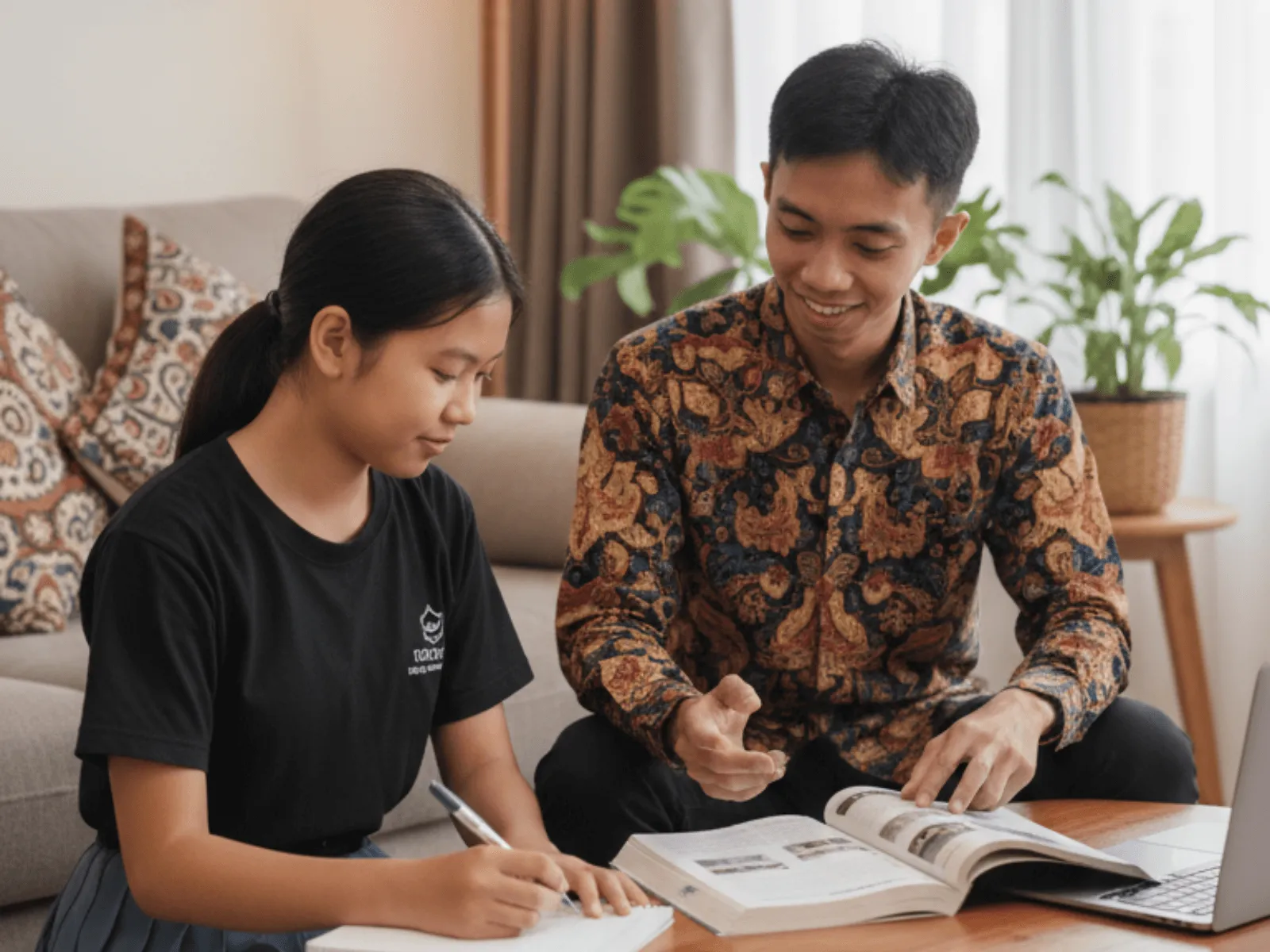
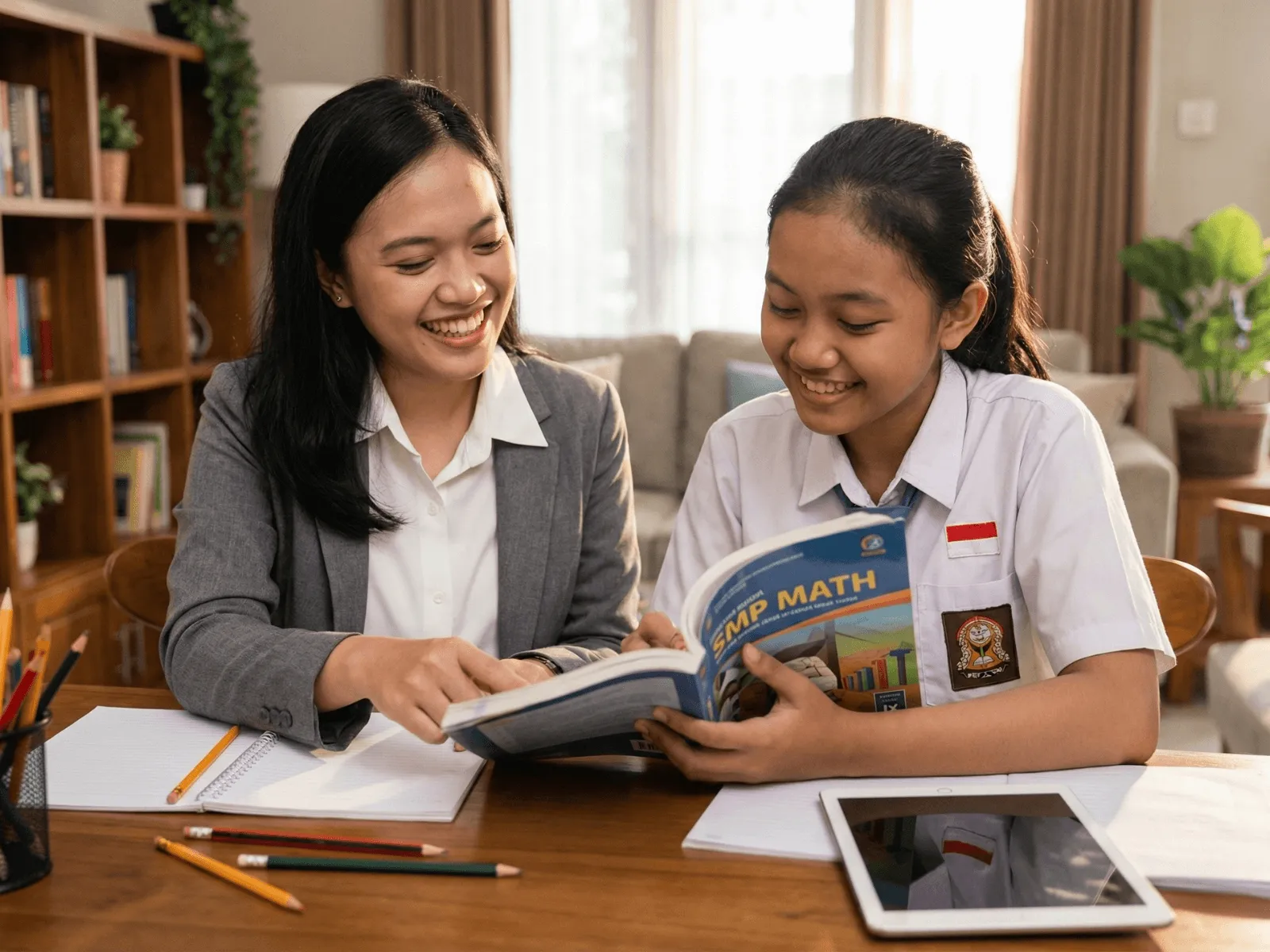
The photographs below were taken during Mandarin tutoring in Bali sessions with learners on the island.



Service Area
Where Edupola Mandarin Tutors Travel in Bali
Tutors for Mandarin tutoring in Bali travel to the location you choose, from Denpasar, Badung, and Gianyar through to Tabanan, Buleleng, Klungkung, Bangli, Karangasem, and Jembrana. A quiet room matters more here than in most subjects, because tone work is listening work and background noise defeats it.
The match turns on the purpose. Business learners need numbers, negotiation, and written messages; hospitality learners need service register and speed; parents need characters early. Learners of Chinese descent who grew up with a southern dialect are a separate case again, since their vocabulary transfers and their tones usually do not.
The Edupola office is not used as a lesson venue. Where no tutor is available near you, sessions run online. The online route works with one honest limit about audio, described next. Ask the admin about tutor coverage at your location in Bali.
Online Sessions
Online Mandarin Sessions in Bali and the Limit of Audio
Online sessions for Mandarin tutoring in Bali run over Zoom or Google Meet, and vocabulary, characters, grammar, reading, and typing all transfer without loss. Learners overseas and learners outside tutor coverage use this route regularly.
Tone is the part with a real limit, and it is stated instead of worked around. Call audio compresses exactly the pitch detail being taught, so a third tone can arrive flattened by the connection instead of by the learner. Tutors therefore have the learner record on their phone and send the file, since a recording keeps detail a live stream discards.
That workaround turns out to suit the subject. Recording and comparing is the core practice anyway, so an online learner does more of it than a face-to-face learner typically would. Fees for online sessions match face-to-face sessions.
Frequently Asked
Questions From Mandarin Learners in Bali
What does private Mandarin tutoring in Bali cost?
Fees start from IDR 174,100 for a 60-minute session, the shortest option. Sessions of 90 and 120 minutes are available with the fee following the length. The final fee follows session length and the number of sessions per month, between 4 and 28. The admin sends the breakdown in writing before the first payment. A recorder, character cards, and any textbook are prepared by the learner and not included in the fee.
Are the tones really that important?
Yes, because tone is part of the word and not an accent. The same syllable said four ways gives four unrelated meanings, so a learner with good vocabulary and no tone control is saying different words from the ones they intend. Indonesian uses pitch for emphasis, which is why the ear has to be trained before the mouth.
How many characters do I need to memorise?
It depends entirely on your goal in Bali, and for many learners the answer is very few. Hotel, guide, and service work runs on speaking, so some learners stay almost entirely in sound. Reading messages from a supplier needs a few hundred; the middle test levels ask for around a thousand to two thousand. Characters are learned in context, with radicals for lookup.
Can I stop at pinyin without learning characters?
For speaking, yes, and plenty of learners in Bali do exactly that. The limit is honest: nothing in China is written in pinyin, so a learner who stops there cannot read a menu, a sign, or a message. Typing by pinyin is a middle path, since it produces characters you can send without being able to write them by hand.
Can learners of Chinese descent join with existing family dialect?
Yes, and in Bali it is a common and useful starting point. Vocabulary and some grammar usually transfer from a southern dialect spoken at home, while the tones often do not, because the dialect's tone system is different. The first session measures both separately, so the sessions build on what is already there instead of starting over.
How is a Mandarin tutor matched to a learner?
The schedule is settled first during the consultation, covering days, times, session length, and sessions per month. The Edupola team then looks for a tutor whose travel to your location in Bali stays short, and that search runs 1 to 5 working days. The purpose matters here: business language, hospitality, and test preparation are matched to tutors who work in them. If the first 2 weeks feel like a poor fit, a replacement is arranged at no extra cost.
Related Programmes
Languages Business Owners Add After Mandarin in Bali
Learners taking Mandarin tutoring in Bali often add one other language, usually because their visitors come from several countries.
-

Japanese Tutoring in Bali
Taken by learners whose characters give them a head start in a second language.
-

Korean Tutoring in Bali
Chosen by learners in tourism serving visitors from across East Asia.
-
English Tutoring in Bali
Often added by learners whose work needs both languages daily.
Get Started
Start From the Four Tones
Name what you need Mandarin for, any test date, and what you can already hear. A tutor in Bali is matched within 1 to 5 working days.