Private Korean Tutoring in Bali
Korean Tutoring in Bali: Two Systems of Numbers at Once
Korean tutoring in Bali from Edupola pairs one tutor with one learner at a place you choose. Hangeul is as easy as its reputation says, and that is the trap. The wall sits behind it, starting with 2 number systems used for different things. Fees from IDR 174,100 per 60-minute session.
Rating and fees for Korean tutoring in Bali
| Programme | Korean Tutoring in Bali |
|---|---|
| Provider | Edupola |
| Description | Private Korean tutoring in Bali, one tutor per learner: Hangeul first, then the wall behind it, two number systems, counters, politeness levels, and TOPIK preparation. |
| Fee | Fees start from Rp174,100 per session. |
| Session Length | Sessions run 60, 90, or 120 minutes. |
| Schedule | Flexible, shaped around the learner's needs. |
| Start | Lessons begin once the tutor and materials are ready. |
| Sessions per Month | 4 to 28 sessions per month, as needed. |
| Rating | 4.9 out of 5, based on 100+ reviews |
Programme at a Glance
Korean Tutoring in Bali and the Easy Script That Misleads
Korean tutoring in Bali runs one tutor with one learner, at your home, your workplace, or over a screen. The language has a reputation for an easy alphabet, and the reputation is accurate. That accuracy is what makes self-taught learners stop two months later with no idea why.
Hangeul takes most learners a week or two: the letters are built into syllable blocks on a logical system, and reading aloud follows quickly. Then the actual language arrives. Two number systems used for different purposes, a different counting word for different kinds of object, verb endings that change with who you are addressing, verbs at the end of the sentence, and sounds that shift where words meet.
So the script is taught quickly and the wall behind it is named in the first session instead of discovered alone. Fees start from IDR 174,100 per 60-minute session, with 4 to 28 sessions a month. This programme holds a 4.9 out of 5 rating across 100 learner reviews in Bali.
Numbers
How the Two Korean Number Systems Are Used
Korean tutors drill this early. The third column holds the detail learners most often miss, which is usually the one that produces a blank look.
| Purpose | System used | The note most often missed |
|---|---|---|
| Counting objects and people | Native Korean numbers | They change form slightly before a counter, which is easy to miss |
| Telling the hour | Native numbers for the hour | Minutes take the other system, so one clock reading uses both |
| Telling the minutes | Sino-Korean numbers | Mixing them up is the most common beginner error with time |
| Prices and money | Sino-Korean numbers | Large amounts are grouped in ten thousands instead of thousands |
| Dates and months | Sino-Korean numbers | Month names are simply the number plus a word, which is a relief |
| Age | Native numbers, with a counter | The traditional count and the current legal count differ |
The Wall
Six Things That Stop Learners After Hangeul
These are named in the first session of Korean tutoring in Bali, because a learner who knows the shape of the wall climbs it instead of concluding they have no aptitude.
-
Two Number Systems
One set of numbers for some situations and an entirely separate set for others. Learning only one works until the first time you order food or tell the time, and then it stops.
-
A Different Counter per Kind of Object
People, flat things, bottles, and animals each take their own counting word. Learners who ignore counters are understood and sound like a tourist reading from a phrase list.
-
Politeness Chooses the Sentence Ending
The verb ending changes with the person you are speaking to, so the same sentence has several forms. It cannot be postponed, because every sentence needs one.
-
The Verb Comes Last
The sentence ends with the action, so a listener has to hold the whole thing before the meaning lands. Learners from Indonesian find this the hardest habit to rebuild.
-
Role Markers Attach to Words
Small particles stuck to the end of a word tell you what it does in the sentence. Dropping them in speech is normal; dropping them in writing is a mistake.
-
Sounds Change Where Words Meet
Letters shift when a word runs into the next one, so a sentence read aloud sounds unlike the spelling. This is why reading Hangeul correctly can still produce speech nobody recognises.
Levels
Material Levels by the Standard Proficiency Test
The Korean level a learner starts at is set by what they can say, and never by whether they can read the script.
-
Beginner
Levels 1 and 2
Hangeul, both number systems, common counters, polite sentence endings, and everyday exchanges. Most learners serving guests in Bali work comfortably at this level.
- Both number systems
- Common counters
- Polite endings
-
Intermediate
Levels 3 and 4
Conversation that holds, reading short texts, and the formal endings used at work. The level most employers and scholarships treat as the threshold.
- Conversation that holds
- Workplace register
- Reading short texts
-
Advanced
Levels 5 and 6
News, documents, and academic or professional writing. Taken by learners heading to a degree or to professional work conducted in Korean.
- News and documents
- Formal writing
- Professional use
-
Separate track
Work Placement Language
Vocabulary and safety language for a specific industry, taken by learners heading to a placement programme. Planned against the departure date instead of a test level.
- Industry vocabulary
- Safety language
- Planned to a date
Who It Is For
Learners Who Take Korean Lessons in Bali
Each Korean session in Bali holds one learner, so the balance between conversation, grammar, and exam preparation is set to follow that learner's target.
-
Future Workers in Korea
Learners in Bali preparing for a placement overseas. Industry vocabulary and safety language come first, planned against the departure date.
-
Prospective Students
Learners aiming at a Korean university or scholarship. The required test level and its deadline set the whole plan.
-
Guest-Facing Staff
Learners in Bali serving Korean visitors on the island. Numbers, counters, and service register reach usefulness within weeks.
-
Followers of Korean Music and Drama
Learners in Bali who already listen a great deal. Listening is ahead and production is behind, so sessions push speaking from the start.
-
Learners Who Stopped Self-Studying
Learners in Bali who learned Hangeul from an app and stalled. The wall is named, and the stall usually turns out to be counters or endings.
-
School Pupils and Teenagers
Younger learners in Bali. Sessions are shorter and built on songs and drama they already follow, which carries the vocabulary.
One Session
Inside a 60-Minute Korean Session
This is the division used at beginner level. Reading aloud opens the session because the sound changes are only audible in connected speech.
-
10 minutes
Reading Last Week's Sentences Aloud
The sentences from the previous session, read out. The tutor listens for the sound changes where words meet, which silent reading hides completely.
-
10 minutes
Numbers and Counters Drill
Both systems, with counters attached to real objects in the room. Short and daily, because this is the part that decays fastest.
-
15 minutes
One Grammar Point
A single ending or particle, built from examples the learner says aloud. One per session, since Korean endings interfere with each other when stacked.
-
15 minutes
Conversation and Listening
A short exchange at natural speed, with the tutor answering unpredictably. Scripted dialogue produces learners who freeze at the first unexpected reply.
-
10 minutes
Writing and Setting the Memory Work
A few sentences written by hand or typed in Hangeul, then the week's vocabulary set with the counters it needs.
In a 90 or 120 minute session, the reading section of the TOPIK exam can be done in full with its review, and that is what learners whose exam date is already booked take.
Prepared by the Learner
Lists the Learner Draws Up Themselves
The admin confirms these once the schedule for Korean tutoring in Bali is agreed. A notebook, a recorder, and any textbook are prepared by the learner and not included in the fee.
-
A List of Things You Count
What you actually count at work or at home: rooms, guests, bottles, orders, people. Each takes its own counter, and starting from your own list means learning the ones you will use.
-
A List of People You Speak To
Who you address and your relation to them: a guest, a manager, a friend, a child. Politeness endings are chosen from that list, so it decides which form is taught first.
-
A List of Sentences That Sound Odd
Lines from drama or songs you half understand. They usually contain exactly the endings and particles that are missing, which makes them efficient material.
-
A Hangeul Keyboard
Set up on your phone. Typing Hangeul is how most learners will use the language, and the keyboard layout follows the same syllable logic as the script itself.
-
A Voice Recorder
Your phone is enough. The sound changes where words meet cannot be self-corrected from memory, and a recording makes them audible.
If you already read Hangeul from an app, say so during the consultation. The first session then skips the script and goes straight to where the stall actually is.
Politeness
Choosing the Level of Politeness Before the Sentence Is Spoken
Korean asks for a decision before a sentence can be finished, and Korean tutoring in Bali trains that decision as a reflex. The ending of the verb changes with the listener, so a speaker has to know their relation to the person in front of them before they can close the sentence.
Learners from Indonesian find the concept familiar and the execution unfamiliar. Indonesian adjusts vocabulary and address terms for politeness; Korean adjusts the grammar itself, at the end of every sentence, including sentences where nothing polite is being discussed. There is no neutral form to hide in.
The programme teaches one form properly first, the everyday polite ending, because it is wrong in the fewest situations and buys a learner time. The formal and casual forms follow at intermediate level, taught as a pair so the contrast is visible. Learners heading to a workplace get the formal endings earlier, since using a casual form with a manager is the error that gets remembered.
What Learners Say
Stories From Korean Learners in Bali
The quotes below come from learners in Bali who completed the Korean programme at Edupola, with their situation and what changed.
-
★★★★★
I used to sing along without knowing what it meant and now I understand it. My Edupola tutor taught with K-pop songs, which made it enjoyable.
Understands lyrics without subtitles
Ayu D.
Devoted K-pop listener · Verified learner
-
★★★★★
Korean made me the trusted link with our head office in Seoul. My Edupola tutor concentrated on practical business language.
Promoted to a liaison role
Bagus
Employee at a Korean company · Verified learner
-
★★★★★
From nothing to TOPIK 4 in 10 months. The method at Edupola was genuinely effective. I am now an undergraduate at Seoul National University.
Passed TOPIK 4 and studying in Seoul
Ratna S.
Scholarship student · Verified learner
-
★★★★★
I learned Korean to make content about Korean culture. I can interview Korean artists directly now and my audience grew because the material is original.
Audience grew substantially
Yoga P.
Video content creator · Verified learner
-
★★★★★
Plenty of Korean visitors come to Bali, so I took Korean lessons. I guide Korean groups now at a premium rate. Thank you Edupola.
Korean clients of my own
Citra
Tour guide specialising in Korean visitors · Verified learner
-
★★★★★
I work at an authentic Korean restaurant in Bali. Once my Korean was fluent I was offered 3 months of training in Seoul.
Three months of training in Seoul
Arya P.
Chef at a Korean restaurant · Verified learner
The Script
Hangeul and How Syllables Are Assembled
Hangeul deserves its reputation, and it is worth understanding why so learners use the advantage properly. The letters are few, the shapes are built from a small set of strokes, and each syllable is assembled into a block: a consonant, a vowel, sometimes a final consonant. Learn the pieces and the blocks read themselves.
Most learners in Korean tutoring in Bali read aloud within one or two weeks of short daily practice. What that does not give them is comprehension, and the gap between the two surprises people: a learner can read a whole page correctly and understand none of it, which is a strange and discouraging experience if nobody warned them.
There is one genuine complication inside the script, and it is taught early instead of left as a surprise. Spelling preserves the shape of a word while pronunciation shifts where words meet, so what you read and what you say diverge. Learners who skip this read fluently and are not understood, which is why reading aloud opens every session instead of silent reading.
How to Register
Four Steps From Naming Your Listeners
The opening consultation for Korean lessons in Bali carries no fee. Its first question is particular to this programme: who you will be speaking Korean with, because the answer decides which politeness level is practised first.
-
Name Your Listeners and the Purpose
Guests, a manager, a scholarship panel, or drama you want to follow. That answer decides which politeness form comes first and which counters you learn.
-
Agree the Schedule
Days, times, session length, and sessions per month are agreed with the admin, following the minutes you can give to daily number and counter drills.
-
Matching the Tutor
The team looks for a tutor whose travel to your location in Bali stays short, and that search runs 1 to 5 working days. Placement language, test preparation, and hospitality are matched to tutors who work in them.
-
A Check in the First Session
What you can read, what you can say, and where the stall is. Learners who already know Hangeul start from the wall behind it.
Need help? Contact our admin on WhatsApp for a free consultation.
Documentation
Korean Lessons With Edupola in Bali
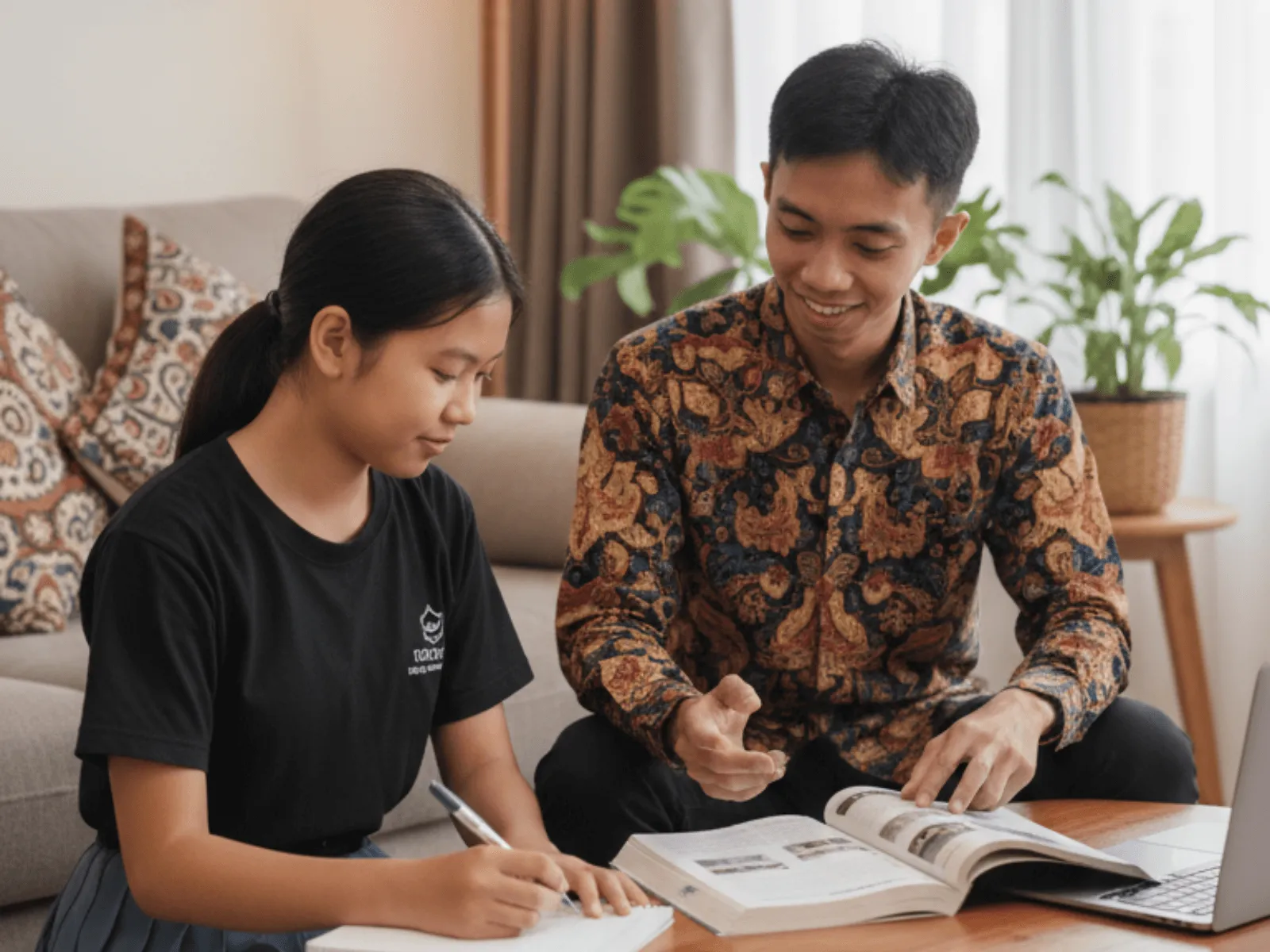
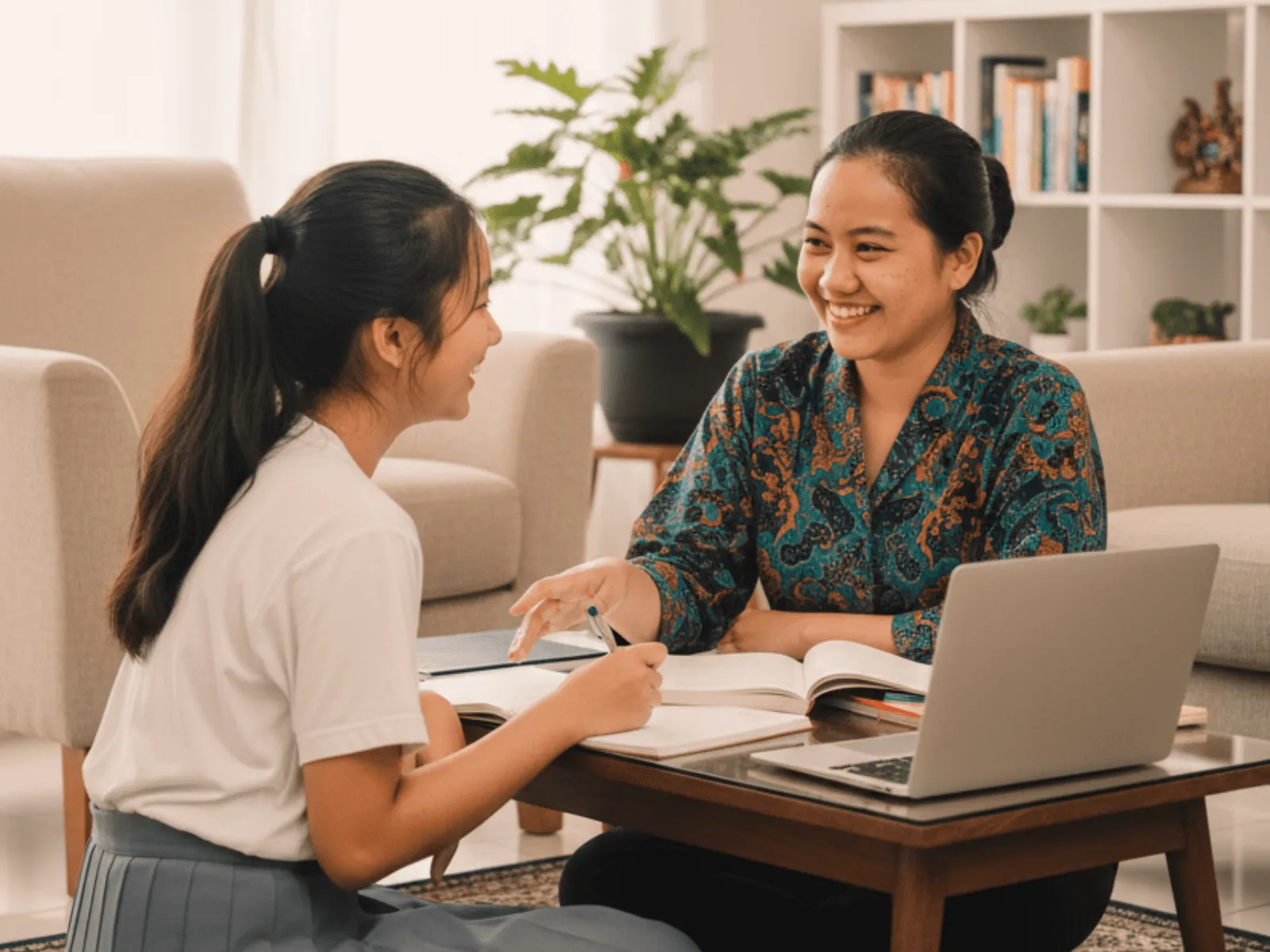
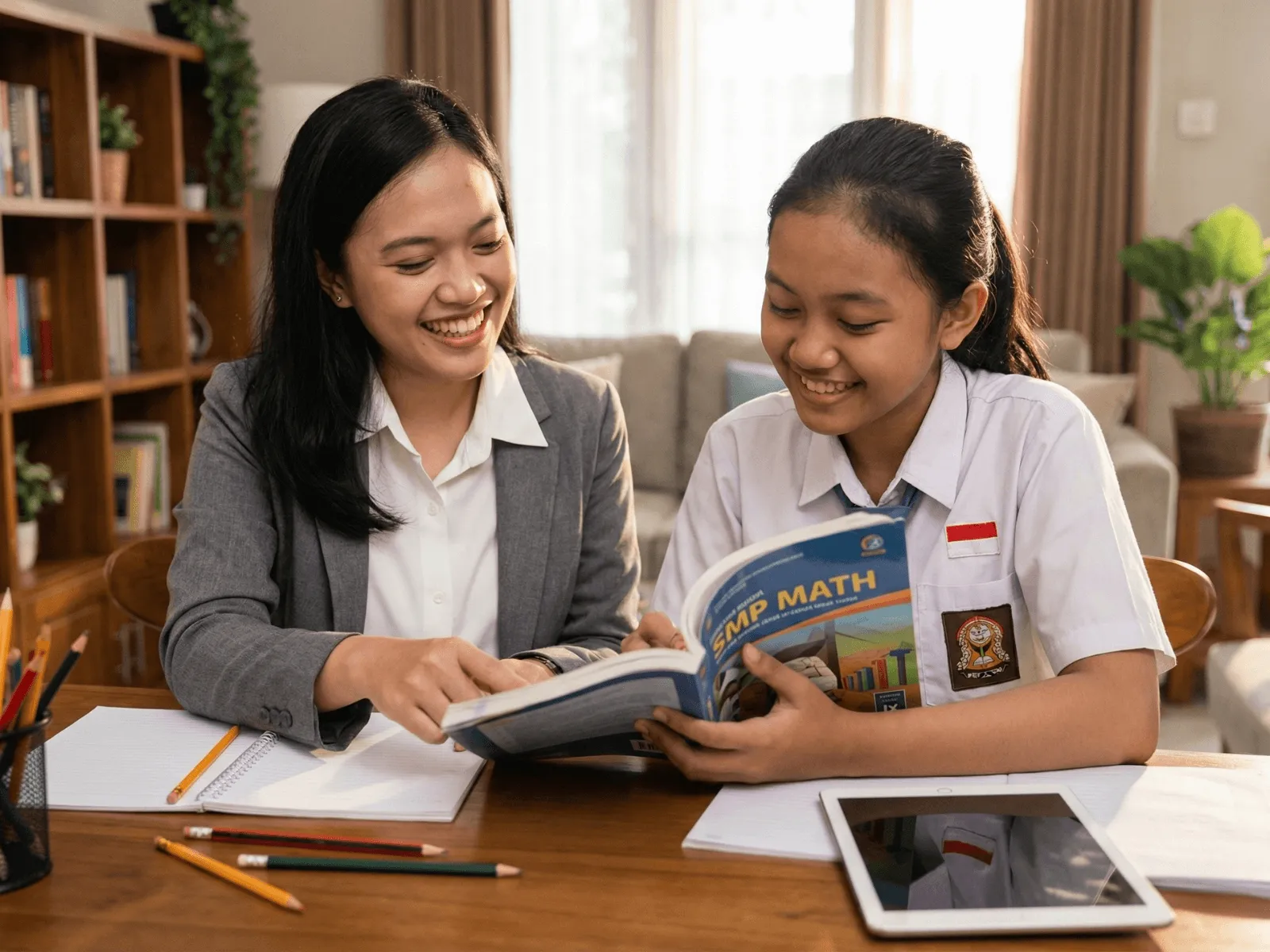
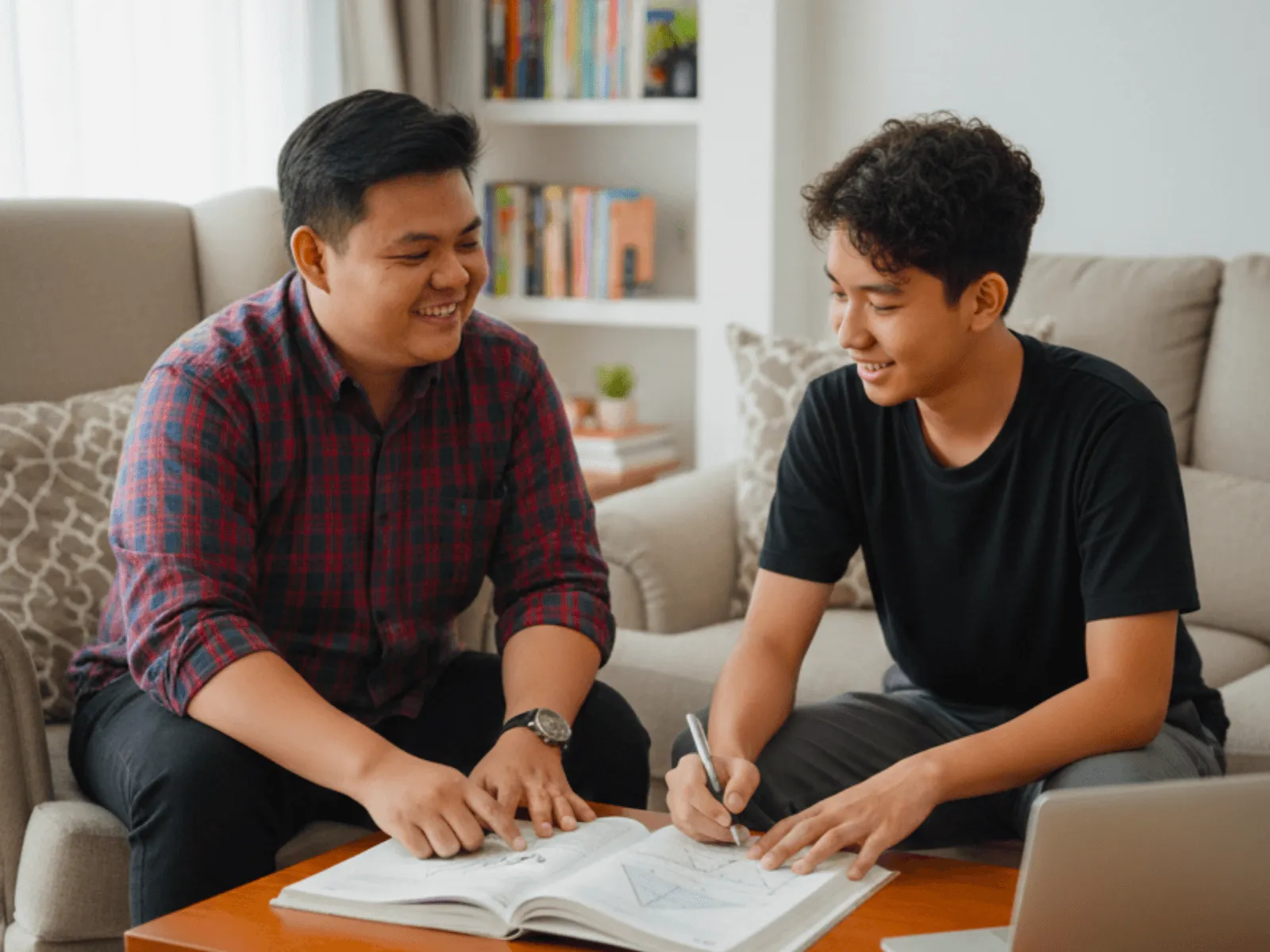
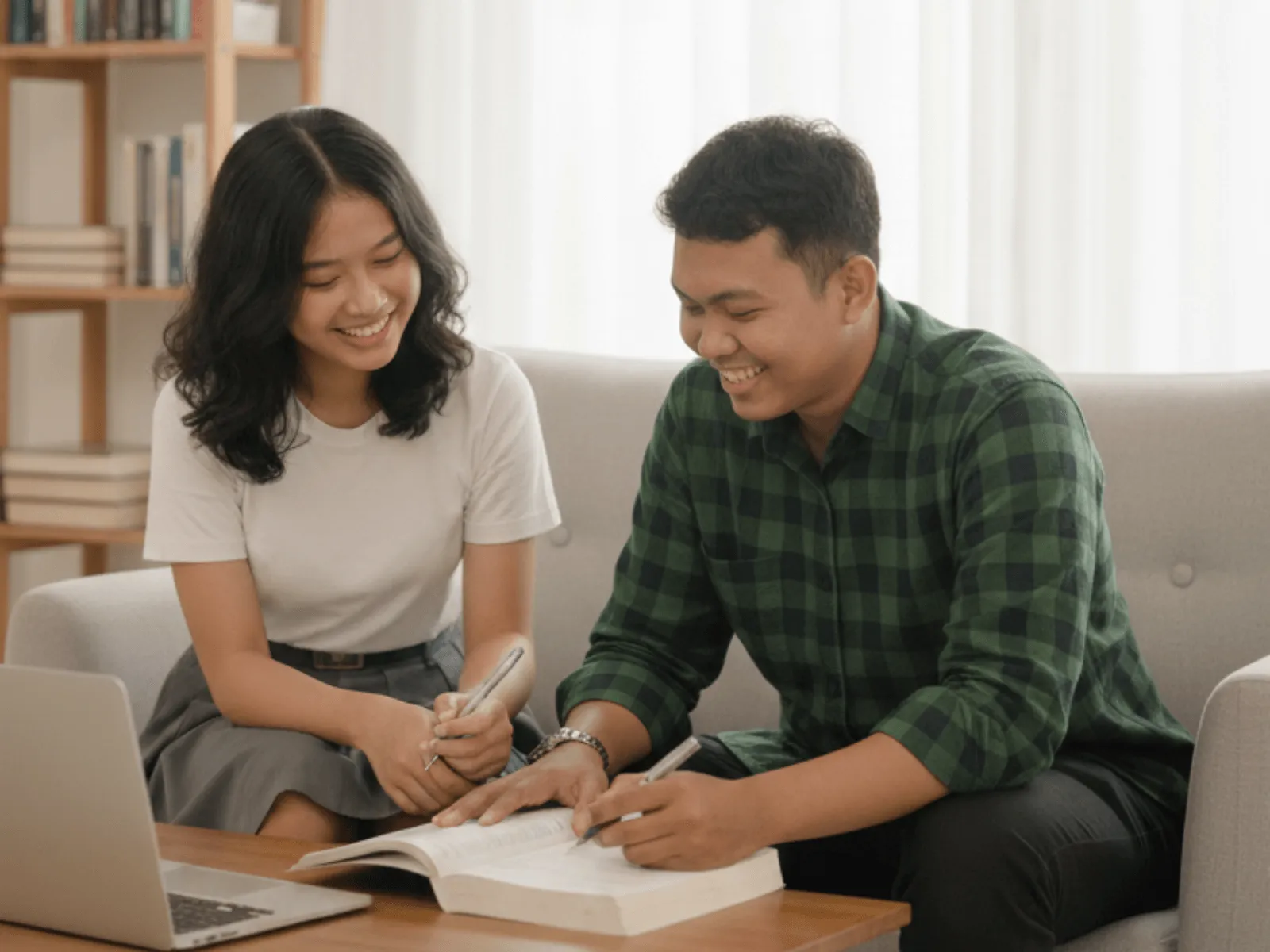
The photographs below were taken during Korean tutoring in Bali sessions with learners on the island.
Service Area
Where Edupola Korean Tutors Travel in Bali
Tutors for Korean tutoring in Bali travel to the location you choose, from Denpasar, Badung, and Gianyar through to Tabanan, Buleleng, Klungkung, Bangli, Karangasem, and Jembrana. A quiet table is what the session needs, since reading aloud and listening carry most of the hour.
Scheduling has a wrinkle specific to this programme. Many learners are hospitality staff whose shifts rotate, and the people they need to practise with are guests who arrive at particular hours. Sessions are therefore often placed before a shift instead of after it, and the admin asks about the rota before fixing a time.
The Edupola office is not used as a lesson venue. Where no tutor is available near you, sessions run online. Typing Hangeul is one of the few things that works better online, as the next section explains. Ask the admin about tutor coverage at your location in Bali.
Online Sessions
Typing Hangeul Is More Legible Through a Screen
Online sessions for Korean tutoring in Bali run over Zoom or Google Meet, and one part of this language is genuinely better that way. Hangeul typed in a chat is unambiguous, while handwritten blocks photographed on a phone often are not, and a learner's spacing mistakes show up clearly in typed text.
Conversation, listening, grammar, and timed reading all transfer. The counters and number drills work equally well, since they need objects named instead of objects present, and a tutor can hold up anything to hand.
The one adjustment is reading aloud. Call audio flattens the sound changes where words meet, which are the thing being corrected, so tutors have learners record a few sentences on their phone and send the file. Fees for online sessions match face-to-face sessions.
Frequently Asked
Questions From Korean Learners in Bali
What does private Korean tutoring in Bali cost?
Fees start from IDR 174,100 for a 60-minute session, the shortest option. Sessions of 90 and 120 minutes are available with the fee following the length. The final fee follows session length and the number of sessions per month, between 4 and 28. The admin sends the breakdown in writing before the first payment. A notebook, a recorder, and any textbook are prepared by the learner and not included in the fee.
I can already read Hangeul from an app. Where do I start?
At the wall behind it, in Bali as anywhere, which is where almost every self-taught learner stalls. The first session checks what you can say instead of what you can read, and the stall is usually one of three things: the two number systems, counters, or the sentence endings that politeness chooses. None of them appear in the part an app teaches well.
Is Hangeul really as easy as people say?
Yes, and the reputation causes a problem. The letters are few and syllables assemble logically, so most learners read aloud within one or two weeks. What that does not give is comprehension, and reading a page correctly while understanding none of it is discouraging if nobody warned you. Spelling also preserves word shapes while pronunciation shifts where words meet.
How long before I can take the proficiency test?
For the beginner levels, several months of steady work is realistic for most learners in Bali. The intermediate levels, which are what scholarships and employers usually ask for, are counted in a year or more depending on hours. Working back from the test date shapes the plan, and timed reading gets its own slot because the clock beats most candidates before the material does.
I am studying to follow drama and music. Is that a valid goal?
Yes, and in Bali it comes with a predictable profile: listening well ahead of speaking, vocabulary absorbed in casual register, and endings learned by imitation. Sessions push production from the start and introduce the polite form early, because a learner who only has casual register will use it with a stranger and be heard as rude without intending it.
How is a Korean tutor matched to a learner?
The consultation settles the schedule first: which days, what times, how long a session runs, and how many fall in a month. Matching then favours a tutor who can reach you in Bali without a long trip, and it takes 1 to 5 working days. What you need the language for steers the choice as well, since placement language, test preparation, and hospitality each go to tutors who work in them. If the first 2 weeks feel like a poor fit, a replacement is arranged at no extra cost.
Related Programmes
Languages Learners Add After Korean in Bali
Many Korean learners here keep a second language running at the same time, because the guests and employers they deal with do not all come from one country.
-
Japanese Tutoring in Bali
Taken by learners who follow both cultures and want a second East Asian language.
-
Mandarin Tutoring in Bali
Chosen by learners in tourism whose guests come from across the region.
-
English Tutoring in Bali
Often added by learners whose workplace runs in English and Korean together.
Get Started
Start From the Wall Behind the Script
Name who you need to speak to, what for, and what you can already read. A tutor in Bali is matched within 1 to 5 working days.