
Private Video Editing Tutoring in Bali
Video Editing Tutoring in Bali: What You Cut Decides the Result
Video editing tutoring in Bali from Edupola pairs one editor with one learner, working on your own footage. Learners arrive asking about transitions and effects. The 6 decisions that actually shape a finished piece are all about what gets removed. Fees from IDR 224,100 per session.
Rating and fees for video editing tutoring in Bali
| Programme | Video Editing Tutoring in Bali |
|---|---|
| Provider | Edupola |
| Description | Private video editing tutoring in Bali, one editor per learner, worked on the learner's own footage: file organisation and a rough cut, then audio, then colour, then titles and export. |
| Fee | Fees start from Rp224,100 per session. |
| Session Length | Sessions run 60, 90, or 120 minutes. |
| Schedule | Flexible, following the learner's calendar. |
| Start | Lessons can start any time after registration. |
| Sessions per Month | 4 to 20 sessions per month, as needed. |
| Rating | 4.8 out of 5, based on 140 reviews |
Programme at a Glance
Video Editing Tutoring in Bali and the Work of Removing
Video editing tutoring in Bali runs one tutor with one learner, at your home, your workplace, or over a screen. Learners arrive with a list of things to add: transitions, effects, title animations, a grade that looks like a film. The programme spends most of its time on subtraction, and that reversal is the point.
A finished piece is shaped by what is absent. A beautiful shot that does not move the story forward costs the viewer attention and gives nothing back. A sentence left in because it was hard to film makes the middle sag. Audience attention is the budget being spent, and every unnecessary second is spent from it.
So sessions work on the learner's own footage, in order: organising files and a rough cut, then audio levelled and cleaned, then colour matched and graded, then titles and the export settings for where it will be watched. Fees start from IDR 224,100 per 60-minute session, with 4 to 28 sessions a month. This programme holds a 4.8 out of 5 rating across 140 learner reviews in Bali.
The Decisions
Six Decisions That Shape the Finished Piece
These are practised from the first sessions of video editing tutoring in Bali, on material the learner shot themselves, which is what makes them hard.
-
Removing a Good Shot That Is Not Needed
The hardest cut in editing is a shot you are proud of that the piece does not require. Keeping it costs the viewer attention that the next scene needed, and nothing in the frame repays it.
-
Cutting Earlier Than Feels Comfortable
Most learners hold a shot one or two seconds past its usefulness. Cutting while the viewer still wants more is what makes a piece feel brisk, and it feels abrupt to the editor long before it does to the audience.
-
Keeping One Line of Story
One thread, carried from start to end. Material that belongs to a second thread is either promoted to its own piece or removed, since two half-told threads read as confusion.
-
Levelling the Audio First
Levels matched and noise cleaned before any colour work. Viewers forgive a mediocre image and stop watching unusable sound, so the order follows the viewer and not the fun.
-
Music Following the Cut
The cut is built first and the music placed under it, instead of footage being bent to fit a track. Music chosen first produces a piece that looks like a montage of someone else's rhythm.
-
Text Readable in One Breath
Any on-screen line short enough to read once, at the size it will be watched. Titles written for a laptop and watched on a phone are the most common avoidable failure.
Video Map
Kinds of Video and the Part That Decides Them
Video editing tutors in Bali use this to sequence a learner's work. The third column is what eats the hours, which is rarely the part learners expect.
| Kind of video | The part that decides it | What eats the most time |
|---|---|---|
| Short social video | The first two seconds | Rebuilding the opening five or six times |
| Wedding film | One story line through a long day | Watching all the material before cutting anything |
| Company profile | A clear claim and the proof of it | Rounds of client revisions with no version control |
| Training or tutorial | Pacing and removing dead air | Cleaning the audio of a long single take |
| Property or venue tour | Order of rooms and continuity of light | Matching colour across shots filmed hours apart |
| Event highlight | Choosing the few moments that carry it | Finding those moments inside hours of footage |
Learning Path
The Order of Material From the Rough Cut to Export
The editing stage a learner starts at is set by what their last finished piece did, and never by the software they own.
-
Stage 1
Organising Files and a Rough Cut
Footage named and sorted, then a first assembly that is deliberately too long. Learners who start by polishing a scene usually never finish the piece, and the rough cut prevents it.
- Named and sorted
- Assembly first
- Too long on purpose
-
Stage 2
Audio Levelled and Cleaned
Levels matched across takes, background noise reduced, and music placed under the finished cut. This stage changes how watchable a piece is more than any visual work.
- Levels matched
- Noise reduced
- Music under the cut
-
Stage 3
Colour Matched Then Graded
Shots matched to each other first, which is unglamorous and necessary, then a grade applied with a purpose. Grading before matching produces a piece that shifts colour at every cut.
- Match before grade
- One look, applied
- Checked on a phone
-
Stage 4
Titles and Export Settings
On-screen text that is readable where it will be watched, and export settings chosen for the platform instead of copied from a tutorial.
- Readable titles
- Export per platform
- Checked after upload
Who It Is For
Learners Who Take Video Editing Lessons in Bali
Every session holds one learner, so the timeline on screen holds that learner's own footage.
-
Content Makers
Learners in Bali editing their own posts for an audience here. The first two seconds and a short edit time per piece carry the weight, since a slow edit stops the posting.
-
Wedding Video Editors
Learners in Bali working through a long day of footage. Choosing one story line and watching everything before cutting are the trained habits.
-
Hotel Marketing Staff
Learners producing promotional video for properties in Bali. Colour matching across rooms and readable text are the practical problems.
-
Film Students
Learners in Bali with coursework or a festival deadline. Pacing, cutting on action, and defending each choice out loud are what sessions drill.
-
Agency Editors
Learners in Bali editing to a brief with revisions. Version control and managing changing requests are taught alongside the craft.
-
Freelancers Raising Their Rate
Learners in Bali whose work is competent and undifferentiated. Sound and colour discipline are usually what separate their reel from a higher rate.
One Session
Inside a 60-Minute Video Editing Session
This is the division used once a learner has a project in progress. The block where they cut alone is where the judgement actually forms.
-
10 minutes
Watching Last Week's Result
The piece is watched in full without pausing, as a viewer would. Stopping to explain is the habit tutors interrupt, since viewers never get an explanation.
-
15 minutes
Removing Material Together
The editor and learner cut, with the learner saying out loud why each piece goes. Saying it is the exercise; the timeline is only the record of it.
-
20 minutes
The Learner Edits Alone
Hands off the keyboard on the tutor's side. Watching an experienced editor work is enjoyable and teaches very little about deciding.
-
10 minutes
Tidying the Audio
Levels matched and one noise problem addressed, every session. Doing a little each week prevents the audio pass that nobody ever gets round to.
-
5 minutes
Setting the Work to Do
The editor sets one passage to cut alone, with a time limit on it, so that drawing an edit out never becomes a habit.
In a 90 or 120 minute session, a whole short piece is taken from rough cut to export in one sitting, which is what learners with a delivery date usually choose.
Prepared by the Learner
What to Have Ready Before the First Session
The admin confirms these once the schedule for video editing tutoring in Bali is agreed. A laptop, headphones, external storage, and any software subscription are prepared by the learner and not included in the fee.
-
A Laptop That Can Edit
Video editing is demanding, and a machine that stutters turns every session into waiting. The tutor can say whether yours is sufficient before you spend anything on upgrades.
-
Raw Footage From One Project
All of it, including the takes you consider failures. Those are where the decisions get practised, and a pre-trimmed selection removes the lesson before it starts.
-
Headphones You Can Trust
Wired headphones that do not flatter the sound. Laptop speakers hide the hum and the level mismatch that your viewers will hear immediately.
-
External Storage
A drive with room for the project. Video fills a machine quickly, and an editor working on a full disk spends the session managing space.
-
Where the Piece Will Be Watched
Which platform and on what screen. Export settings, title size, and pacing all follow from that, and guessing it afterwards means exporting twice.
If you are unsure which software to learn, say so during the consultation. The choice follows where you work and what your clients expect, and the tutor will say plainly when it does not matter.
Priorities
Viewers Forgive the Picture and Never Forgive the Sound
A rule of priority runs through video editing tutoring in Bali and it decides the order of every project: audio before colour, every time. It is not a matter of taste. A viewer will watch a slightly flat, slightly dark image to the end and will close a video whose sound hisses, jumps in level, or buries a voice.
That ranking feels wrong to learners because colour is the visible, shareable, enjoyable part of editing, while audio work is invisible when done properly. Nobody compliments levelled dialogue. They simply keep watching, which is the only outcome that matters for a piece made to be watched.
In practice the stage takes less time than learners fear. Matching levels across takes, reducing a steady background noise, and placing music under the finished cut cover most of it. The remaining audio problems usually came from the shoot, and when that is the case the honest answer is that the next shoot fixes it, not this edit.
What Learners Say
Stories From Video Editing Learners in Bali
The quotes below come from learners in Bali who completed the video editing programme at Edupola, with their situation and what changed.
-
★★★★★
I used to upload raw video with no proper editing. After 10 sessions at Edupola I can handle colour grading, cinematic transitions, and sound mixing.
Video quality rose sharply and subscribers multiplied
Arta W.
YouTuber and content creator · Verified learner
-
★★★★★
I learned editing from the beginning at Edupola and now run my own wedding videography business in Bali. My tutor taught visual storytelling technique.
Built her own wedding videography business
Ayu L.
Wedding video editor · Verified learner
-
★★★★★
The motion graphics and effects skills I learned at Edupola applied directly at work. My manager noticed the improvement in my output.
Promoted to senior editor within 6 months
Dharma P.
Editor at an advertising agency · Verified learner
-
★★★★★
My Edupola tutor taught cinematic editing that my campus never covered. The pacing, cutting on action, and colour grading made the difference.
Short film selected for a student festival
Ratna S.
Film and cinematography student · Verified learner
-
★★★★★
As a social media manager I needed video content for the hotel I work at. After lessons at Edupola I can edit promotional video myself.
Video engagement rose substantially
Surya P.
Social media manager at a hotel · Verified learner
-
★★★★★
Our company used to outsource video editing at considerable cost. After taking lessons at Edupola I handle the company profile and training videos myself.
Saved the company's outsourcing budget
Sinta P.
Corporate video producer · Verified learner
Revisions
Changing Requests Are Managed With Versions
Learners who edit for clients bring the same problem to video editing tutoring in Bali, and it is not a craft problem. The request changes after the piece is finished, then changes back, and the editor ends up with one timeline that has been overwritten four times and no way to return to the version the client preferred.
The remedy is mechanical and it is taught as a procedure. A new version is saved before each round of changes, numbered and dated, with one line saying what was asked for. Nothing is overwritten. The old version costs disk space and buys the ability to say honestly that the second version was what they approved.
There is a second half that learners find more useful than the first: agreeing the number of revision rounds before starting. Two rounds, with changes collected and sent at once instead of arriving as they occur. Editors who work without that agreement are not being asked for edits; they are being asked for unlimited time, and the version numbers make that visible to everyone.
How to Register
Four Steps to the First Editing Session
The opening consultation carries no fee. The admin asks what kind of video you edit and where it gets watched.
-
Name the Kind of Video and the Platform
What you edit and where it is watched. Those two set the order of the material, the export settings, and how long a piece should run.
-
Agree the Schedule
Days, times, session length, and sessions per month are agreed with the admin, following the hours you can give to cutting between sessions.
-
Matching the Editor
The team looks for a tutor whose travel to your location in Bali stays short, and that search runs 1 to 5 working days. Wedding work, agency work, and social video are matched to editors who do that kind of editing.
-
The First Session
Your last finished piece is watched in full without pausing, your raw footage is organised, and a rough cut is started.
Need help? Contact our admin on WhatsApp for a free consultation.
Documentation
Video Editing Lessons With Edupola in Bali
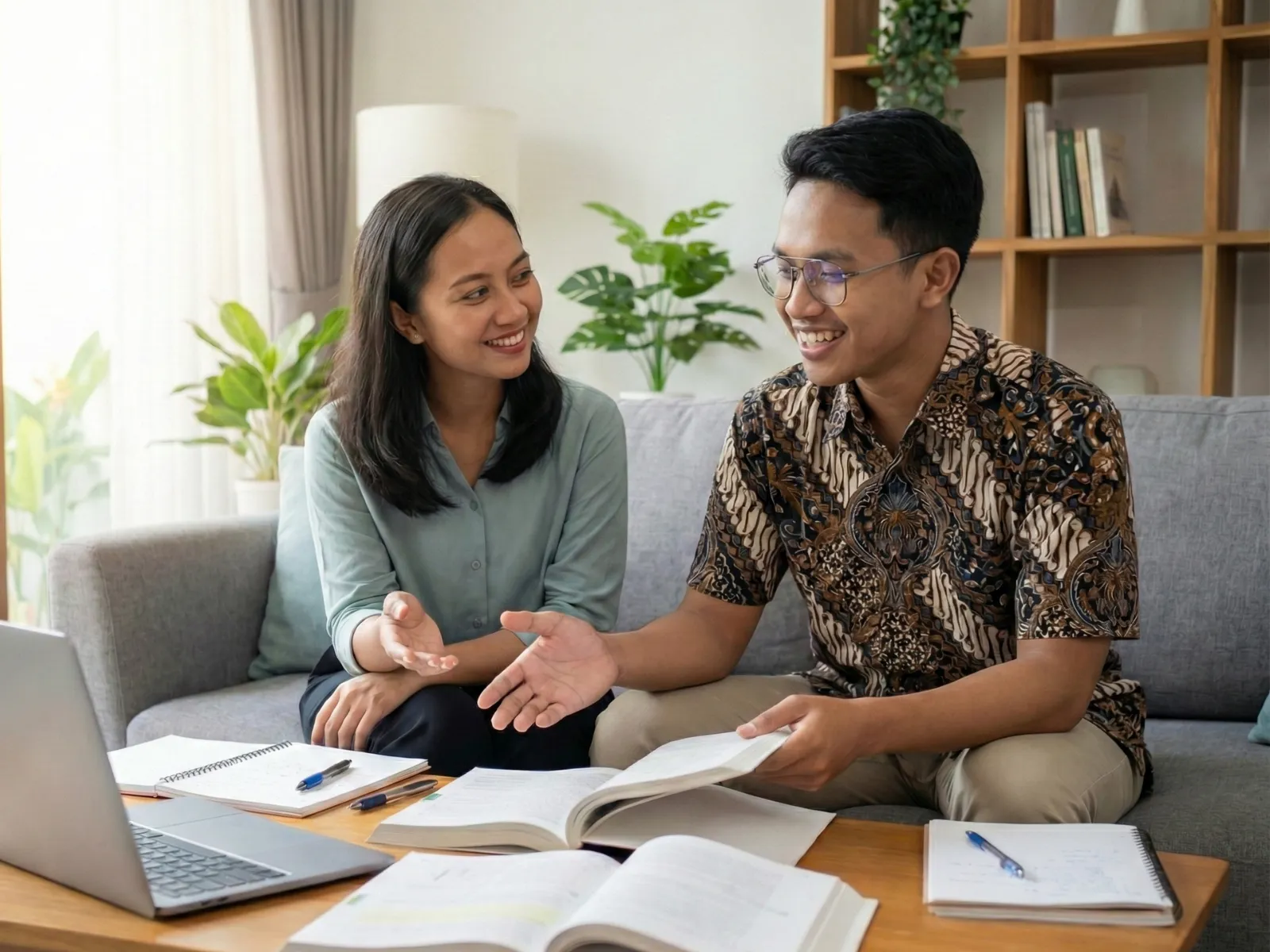
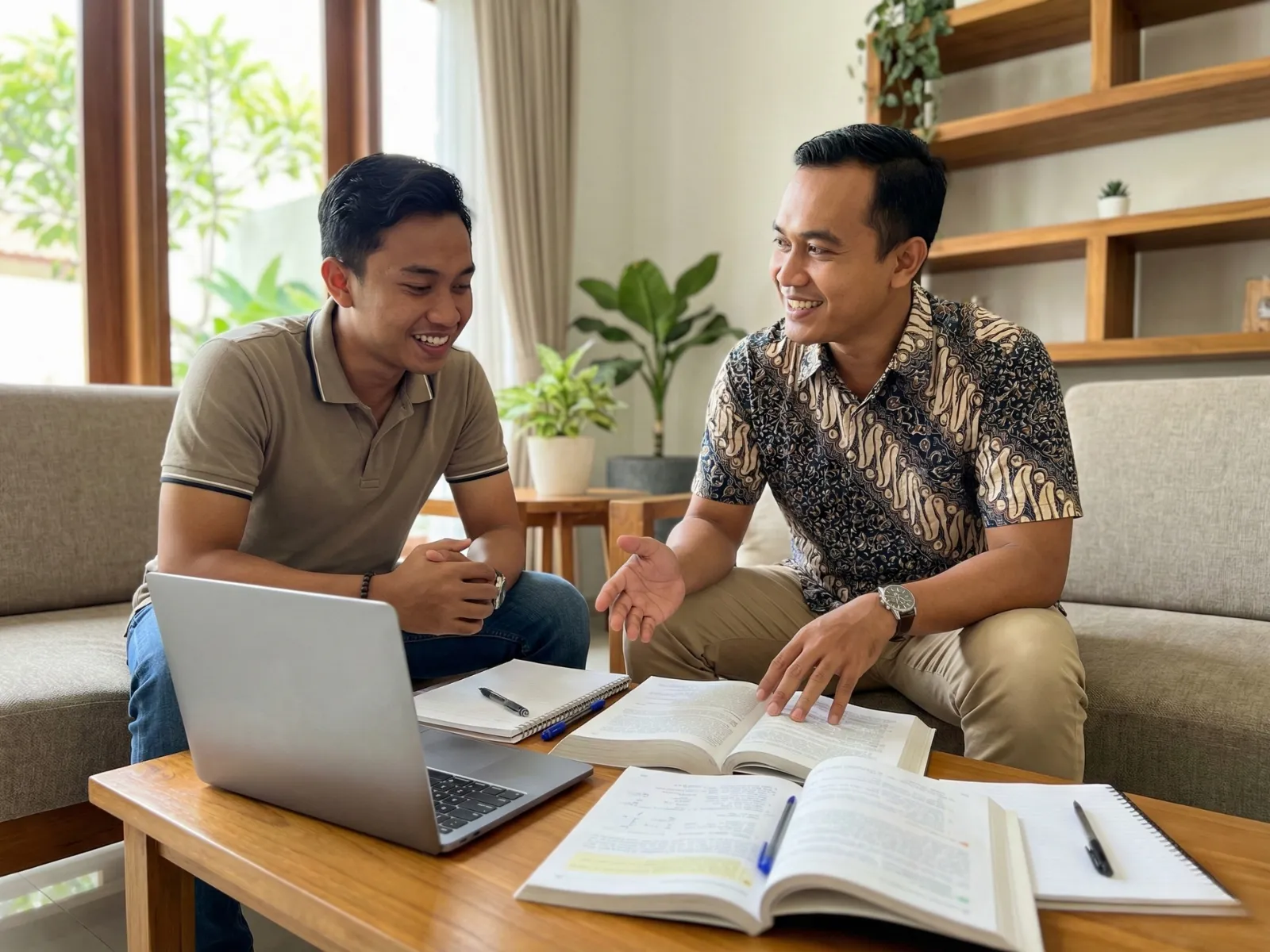
The photographs below were taken during video editing tutoring in Bali sessions with learners on the island.



Service Area
Where Edupola Video Editors Travel in Bali
Tutors for video editing tutoring in Bali travel to the location you choose, from Denpasar, Badung, and Gianyar through to Tabanan, Buleleng, Klungkung, Bangli, Karangasem, and Jembrana. The session happens wherever the learner's own machine and storage are, since the project cannot travel without them.
The match here turns on the kind of editing. Wedding work, agency work with revision rounds, and short social video are three different trades with different habits, and a learner is matched to someone who does theirs. Software matters less than learners expect, because the decisions transfer between applications.
The Edupola office is not used as a lesson venue. Where no tutor is available near you, sessions run online, and the one thing that changes is how sound and colour are judged, since they look and sound different on each screen. Ask the admin about editor coverage at your location in Bali.
Online Sessions
Online Sessions in Bali and Footage Sent in Advance
Online sessions for video editing tutoring in Bali run over Zoom or Google Meet, and the one adjustment is that material travels before the session instead of during it. A sample of the raw footage and the current cut are sent in advance, because video does not stream across a call usefully.
With that done the route works well. The learner shares their editing screen and keeps the keyboard, and the tutor guides the cuts by describing them. An editor who has already watched the material spends the hour on decisions instead of on loading clips.
Audio review needs one condition: both people on wired headphones, and the learner exporting a short section to send instead of playing it down the call. Compressed call audio hides exactly the faults being looked for. Fees for online sessions match face-to-face sessions.
Frequently Asked
Questions From Video Editing Learners
What does private video editing tutoring in Bali cost?
Fees start from IDR 224,100 for a 60-minute session, the shortest option. Sessions of 90 and 120 minutes are available with the fee following the length. The final fee follows session length and the number of sessions per month, between 4 and 28. The admin sends the breakdown in writing before the first payment. A laptop, headphones, external storage, and any software subscription are prepared by the learner and not included in the fee.
Which editing software is taught?
Whichever one your work in Bali expects, since the decisions transfer between applications and the menus are the smallest part of the skill. Learners editing short social video often stay in a mobile editor; agency and wedding work usually means a desktop application because clients expect project files they can reopen. The choice is made during the consultation from where you work.
My video drags in the middle. What causes that?
Almost always material kept for reasons that have nothing to do with the viewer: a shot that was hard to get, a sentence that took four takes, a scene that cost money. The repair is a pass through the middle with one question asked of every clip, which is what the viewer gains from it. Most pieces lose a quarter of their length and improve.
Why is audio discussed before colour?
Because viewers behave differently about the two. A slightly flat or dark image gets watched to the end, while sound that hisses, jumps in level, or buries a voice gets closed. Colour is the visible, enjoyable part and audio work is invisible when done properly, which is exactly why it comes first in the order of every project.
My client keeps asking for changes. Is that covered?
Yes, as a procedure instead of a complaint. A numbered version is saved before each round with one line recording what was asked, and nothing is overwritten, so the version the client approved can always be returned to. The second half is agreeing the number of revision rounds in advance, with changes collected and sent at once.
How is an editor matched to a learner?
The schedule is settled first during the consultation, covering days, times, session length, and sessions per month. The Edupola team then looks for a tutor whose travel to your location in Bali stays short, and that search runs 1 to 5 working days. The trade matters here: wedding work, agency work with revision rounds, and short social video are matched to editors who do that work. If the first 2 weeks feel like a poor fit, a replacement is arranged at no extra cost.
Related Programmes
Other Programmes Learners Add in Bali
Learners taking video editing tutoring in Bali often add one other programme, usually because the material arriving at the timeline is the limit.
-
Videography Tutoring in Bali
Taken by learners whose edits are limited by what the shoot gave them.
-
Content Creator Mentoring in Bali
Chosen by learners who need a posting rhythm as well as an edit.
-

Adobe Premiere Tutoring in Bali
Often added by learners who need that specific application for their work.
Get Started
Start From One Project You Need to Finish
Name the kind of video, where it gets watched, and the project sitting unfinished. A tutor in Bali is matched within 1 to 5 working days.