
Private Jaritmatika Tutoring in Bali
Jaritmatika Tutoring in Bali: Fingers First Then Let Go
Jaritmatika tutoring in Bali from Edupola works with one child per session in your home. Fingers serve as a counting aid, and one point is agreed with parents from the start: the aid is let go gradually, so the child does not depend on it at the next level. Fees from IDR 107,600 per 60-minute session.
Rating and fees for jaritmatika tutoring in Bali
| Programme | Jaritmatika Tutoring in Bali |
|---|---|
| Provider | Edupola |
| Description | Private jaritmatika tutoring in Bali for children aged 5 to 12. Addition, subtraction, multiplication, and division are done with the fingers, which are then let go in stages towards counting in the head. |
| Fee | Fees start from Rp107,600 per session. |
| Session Length | Every session runs 60, 90, or 120 minutes. |
| Schedule | Flexible, following the child's school hours. |
| Start | Lessons begin once the child's counting has been checked. |
| Sessions per Month | 4 to 28 sessions per month, as the child needs. |
| Rating | 4.9 out of 5, based on 124 reviews |
Programme at a Glance
Jaritmatika Tutoring in Bali and the Plan to Let Go of the Fingers
Jaritmatika tutoring in Bali is led by one tutor for one child, at the table in your own home. The age range is 5 to 12. Jaritmatika is a counting method that uses the fingers as a calculating aid: each finger stands for a set value, so addition and subtraction can be done quickly without paper.
One point is discussed openly in the first session, because it decides whether the method helps the child in the long run: the fingers are let go gradually. An aid that is held on to for good makes a child slower once school questions call for column arithmetic or large numbers. So every stage has a letting-go target: from the fingers, to imagined fingers, and then to counting in the head.
The material covers addition, subtraction, multiplication, and division with the fingers, followed by the move to counting without the aid. Fees for the private jaritmatika course start from IDR 107,600 per 60-minute session, with 4 to 28 sessions a month. This programme holds a 4.9 out of 5 rating across 124 parent reviews in Bali.
Stage Map
Stages of Finger Use and the Target for Letting Go
The jaritmatika tutoring in Bali tutor uses this list to set the child's stage. The last column names the sign that the child is ready to let go of part of the aid.
| Stage | What is worked on | Sign of readiness to let go |
|---|---|---|
| Learning the finger values | Setting the value of each finger and its basic movement | The child names finger values without looking at the hands |
| Single-digit addition | Adding with fluent finger movements | The finger movements shrink and stop being visible |
| Single-digit subtraction | Subtracting without counting again from the start | The child answers before the fingers finish moving |
| Two-digit addition | Adding two-digit numbers with the fingers | The child chooses which questions to do without fingers |
| Multiplication and division | Using the fingers for some numbers alongside remembered times-table results | The child gives times-table results without a pause for numbers that come up often |
| Counting in the head | Working without the fingers or the image of them | Speed equal to or better than with the fingers |
Letting Go of the Fingers
Six Points About Using the Fingers and Then Letting Go
These six points are discussed by the jaritmatika tutoring in Bali tutor with parents. All six concern the limits of the method, and talking about them in advance avoids disappointment at the next school level.
-
The Fingers Are an Aid, Not the Goal
The skill being built is counting quickly and accurately, and the fingers are a route there. A child who has mastered the finger movements but cannot count without them has not reached the target.
-
The Imagined Fingers Stage
Once the movements are fluent, the child is asked to picture the fingers without moving them. This is the stage most often skipped, and without it the letting go never happens.
-
A Limit With Large Numbers
The method is strong within a certain range and slows down with large numbers. Column arithmetic on paper is still taught, because school questions require it.
-
Multiplication Needs Two Routes
Finger multiplication helps with some numbers, and memory of times-table results is still built. The two routes are used in turn, and the child picks whichever is faster.
-
Understanding of Quantity Is Still Checked
The child is asked to explain why the answer comes out that way, using objects where needed. Correct finger movements without an understanding of quantity produce a skill that collapses on word problems.
-
Speed Is Measured, Never Forced
Working time is recorded so progress can be seen, and the child is never asked to chase a particular number. Chasing speed before accuracy produces mistakes that stick.
Material Ladder
The Order of Material in Jaritmatika Tutoring in Bali
The tutor sets the starting point after the child works through a few counting questions in their own way, and never from school year or age.
-
Stage 1
Finger Values and Basic Movements
The value of each finger is set and the basic movements are practised until fluent. Practice is short and repeated, because what is being built is movement memory, and it grows from frequent repetition.
- Value of each finger
- Basic movements
- Short repeated practice
-
Stage 2
Addition and Subtraction
Single-digit addition and subtraction are done with the fingers, with two-digit numbers following. Understanding of quantity is checked with objects at every new topic.
- Single digits
- Two digits
- Checked with objects
-
Stage 3
Imagined Fingers
The child is asked to picture the fingers without moving them, starting with questions that are already very fluent. This stage is the bridge to counting in the head, and it is never skipped.
- Picturing the fingers
- Starting from fluent questions
- Bridge to the head
-
Stage 4
Multiplication, Division, and Letting Go
Multiplication and division are done by two routes: the fingers for some numbers, remembered results for those that come up often. Column arithmetic on paper is taught for school questions.
- Two routes to multiplication
- Remembered times tables
- Column arithmetic
Who It Is For
Children Who Take Jaritmatika Lessons in Bali
Every session of jaritmatika tutoring in Bali holds one child, so the stage and the pace are set by that child's own situation.
-
Children Afraid of Maths Lessons
Children who refuse to open their maths book. The fingers give them a way to work questions without paper, and the first success usually changes their attitude within a few sessions.
-
Children Who Count by Drawing Strokes
Children who still draw lines to add. The fingers replace those strokes with a faster way, which is then let go in stages towards counting in the head.
-
Children Entering Fast Counting Contests
Children taking part in quiz competitions in Bali. Speed is trained with a timer, with accuracy secured first before the speed goes up. Contests of this kind run every year in several regencies in Bali.
-
Children Who Have Not Memorised Times Tables
Children in years 4 to 6 who do not yet know their times-table results. Two routes are used in turn: the fingers for some numbers, and memory for the numbers that come up often.
-
Twins or Several Siblings
Families who want more than one child to take part. Each child still gets their own session, because two children are almost always at different stages even at the same age.
-
Teachers and Parents
Adult learners who want to teach the method themselves. The order of stages and the plan for letting go of the fingers are taught, because the letting go is the part most often lost when the method is taught without guidance.
One Session
Order of 60 Minutes of Jaritmatika at the Addition Stage
This layout is used at the addition stage of jaritmatika tutoring in Bali. The part that checks understanding of quantity is always there, even when its share is small.
-
10 minutes
Quick Finger Movement Drill
The basic movements are repeated quickly without questions. This part builds movement memory, and it is done at the start while the child's attention is still full.
-
15 minutes
A New Topic With Objects
A new counting topic is introduced with objects the child can hold first, and only then with the fingers. That order keeps the child understanding the quantity, and the movement alone is never enough.
-
15 minutes
Timed Questions
A few questions are done against a timer, and the result is recorded. Accuracy comes first: a wrong answer does not count, however fast it was.
-
10 minutes
Trying Without the Fingers
A few questions that are already very fluent are done by picturing the fingers, or with no fingers at all. This share is small and stays in place from the second stage onwards.
-
10 minutes
A Counting Game and a Note for Parents
One counting game is played, then the tutor passes on one short exercise for home together with a note on the child's stage.
For children aged 5 to 6, the timed questions are shortened and replaced with a game, because a timer at that age often adds tension without adding results.
Prepared by the Family
What to Have Ready Before the First Session
The admin confirms these five items once the schedule for jaritmatika tutoring in Bali is agreed. Stationery and counting objects are prepared by the family and are not included in the fee.
-
How Your Child Counts Now
Describe how your child counts at present: drawing strokes, using their own fingers, or memorising. That information sets the starting stage and changes the order of material.
-
The School Maths Book
The maths book used at your child's school. School questions are still worked in this programme, because their format decides whether the method gets used in class.
-
About Twenty Counting Objects
Bottle caps, marbles, or small toys, around twenty of them. The objects are used to check understanding of quantity at every new topic, and pictures on a worksheet cannot replace them.
-
A Simple Timer
The timer on a phone is enough, used to record progress. For children under seven its use is reduced so the session does not feel tense.
-
An Hour When Your Child Is Still Fresh
Fast counting needs full attention, so choose an hour before your child gets tired. A session at the wrong hour produces results that read as if the child has not mastered the work.
If your child has already learned this method somewhere else, mention it during the consultation. The tutor checks the stage first, because the order of finger values can differ from one place to another.
The Letting-Go Plan
The Plan to Let Go Is Discussed From the First Session
This part is what most separates jaritmatika tutoring in Bali from teaching the method without guidance. Counting with the fingers produces results that show quickly, and that is where the risk lies: parents and child are both pleased, and the letting go is never done.
The consequence shows up a few years later. In years 4 to 6, questions call for column arithmetic, large numbers, and word problems with many steps. A child who still depends on the fingers slows down there, and some conclude that they cannot do maths, when what has happened is that the aid has gone past the point where it helps.
So every stage in this programme has a written letting-go target, and the tutor reviews it with parents every few weeks. The imagined fingers stage is done properly, and the share of trying without fingers is there from the second stage, small as it is. Children who go through this order usually use their fingers only to check, and no longer to count.
Parents in Bali use one simple record to follow the letting go without guessing. Every two weeks, the child does five already fluent questions with no fingers at all, and the number correct is written down with the date. That number is read together with the tutor at the next session. If it has not moved over several records, the share of the imagined fingers stage is raised before a new topic is introduced, and the gap is not left to build up.
What Parents Say
Stories From Jaritmatika Families in Bali
The six quotes below were written by the families of Edupola jaritmatika learners in Bali themselves, along with what their children achieved.
-
★★★★★
My son used to cry every time he was told to do sums. After 3 months of jaritmatika lessons at Edupola, he now likes showing off his fast counting in front of the family. The instructor is very patient and knows how to approach a child who is afraid of numbers.
The child now counts faster than a calculator
Ayu K.
Mother of a 7-year-old who used to hate maths · Verified participant
-
★★★★★
I learned jaritmatika at Edupola and now I can do multiplication with my fingers very fast. In the quiz competition I could answer first because I had trained with the finger technique. Thank you Edupola!
1st place in a district-level quiz competition
Dharma P.
Year 4 pupil who won a maths competition · Verified participant
-
★★★★★
As a mother who homeschools, I needed a counting method that is fun and effective. Jaritmatika from Edupola was the right answer. Both my son and daughter can now multiply without having to memorise: they just use the finger technique the instructor taught.
Both children mastered multiplication without memorising
Ratna D.
Homeschooling mother of 2 children · Verified participant
-
★★★★★
I took jaritmatika lessons at Edupola to widen my teaching methods at the kindergarten. The instructor taught techniques that children find very easy to understand. Now my kindergarten pupils are keen to learn counting with their fingers every day.
Applied jaritmatika in the classroom
Eka W.
Kindergarten teacher who wanted to teach fast counting · Verified participant
-
★★★★★
My twin sons always used to get failing marks in maths. After 4 months of jaritmatika lessons at Edupola, both moved up in class rank and their marks are above average. This finger method really changed the way they look at numbers.
Both children moved up in class rank
Suardana
Father of 8-year-old twins · Verified participant
-
★★★★★
My daughter used to get stressed before every maths test. Since taking jaritmatika at Edupola, she is much calmer and more confident. The finger counting technique helps her finish questions faster and she no longer depends on scribbles on paper.
The child now faces tests with confidence
Ayu L.
Mother of a child who used to fear maths tests · Verified participant
Fast and Accurate
Accuracy Is Secured Before Speed
The appeal of this method is its speed, and that appeal brings a trap we meet again and again: a child chases speed before the movements are accurate. Mistakes repeated quickly turn into habits, and correcting a movement habit takes longer than building it properly from the start.
The order in this programme is therefore fixed: accurate first, fast after. Timed questions are still used so progress can be seen, with one rule held to, namely that a wrong answer does not count even when it was done fast. The child sees for themselves that the recorded number only goes up when the answers are right.
For children entering fast counting contests in Bali, this is discussed with parents from the start. A contest adds time pressure, and that pressure magnifies the mistakes already there. In the weeks before a contest the share does move towards speed, but only after accuracy holds at a moderate pace.
How to Register
Four Steps to the First Session
The opening consultation carries no fee. The admin for jaritmatika tutoring in Bali asks three things: your child's age, how they count today, and the hours when they are still fresh.
-
Give Your Child's Age and Way of Counting
Tell us your child's age and how they count now: drawing strokes, using their own fingers, or memorising. That information sets the starting stage.
-
Agree the Schedule
Days and times are agreed with the admin, with your child's school hours and tired hours as the main consideration.
-
Matching the Tutor
The search uses two conditions: someone used to your child's age range, and a reasonable travel distance to your home in Bali. The process takes 1 to 5 working days.
-
The First Session
Your child works a few questions in their own way, the starting stage is set, and the plan for letting go of the fingers is explained to parents.
Need help? Contact our admin on WhatsApp for a free consultation.
Documentation
Edupola Jaritmatika Learning Sessions
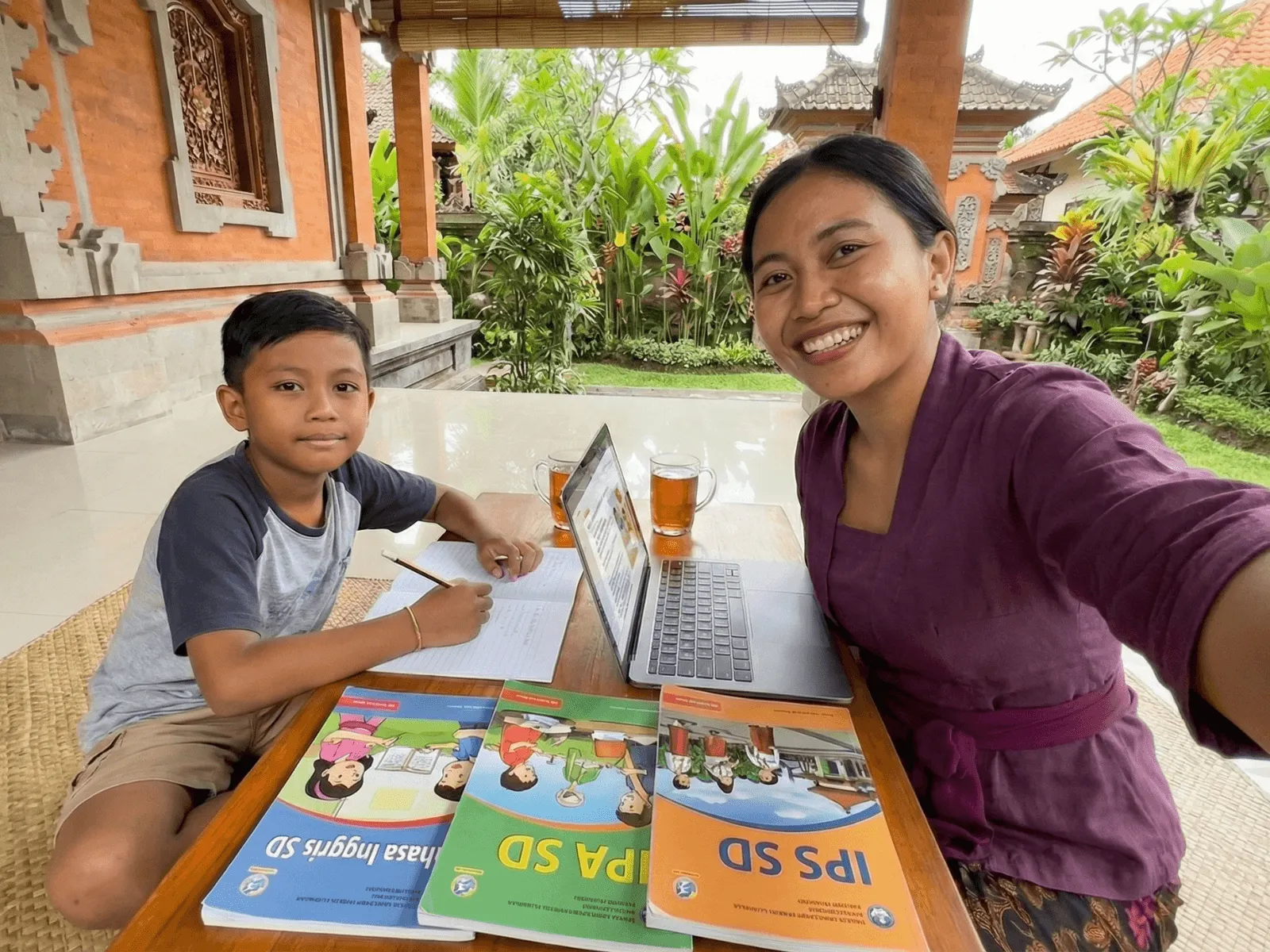
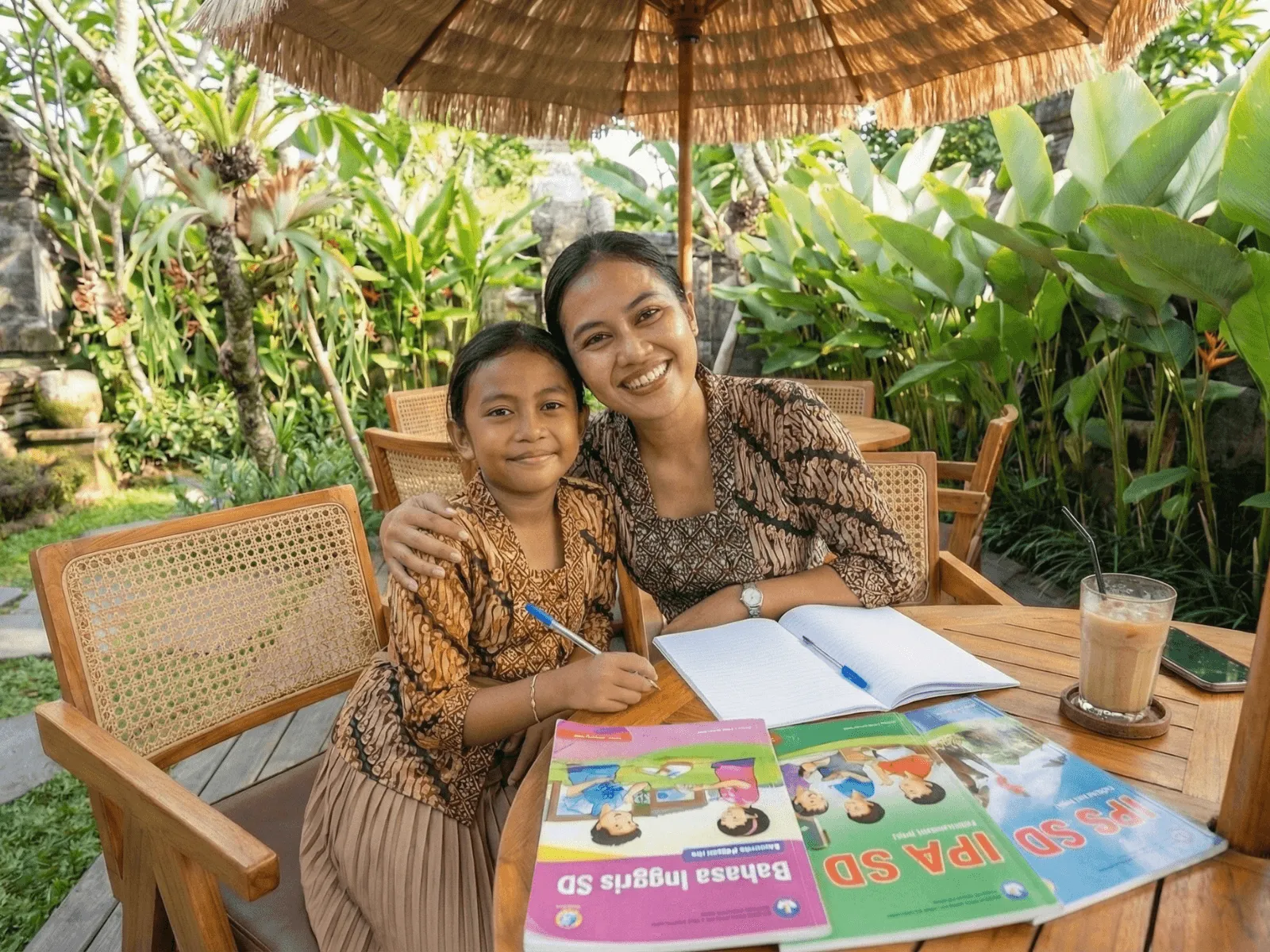
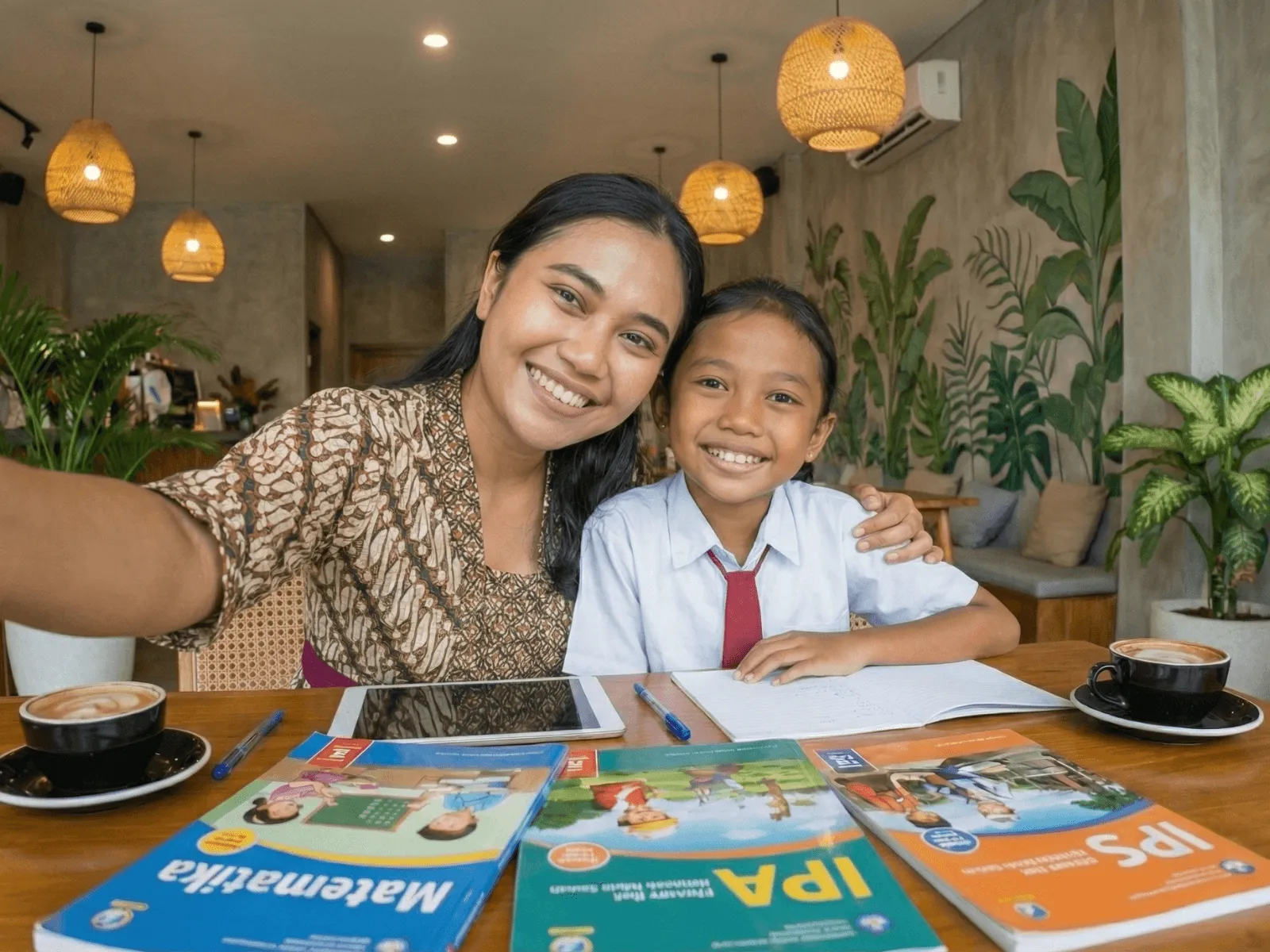
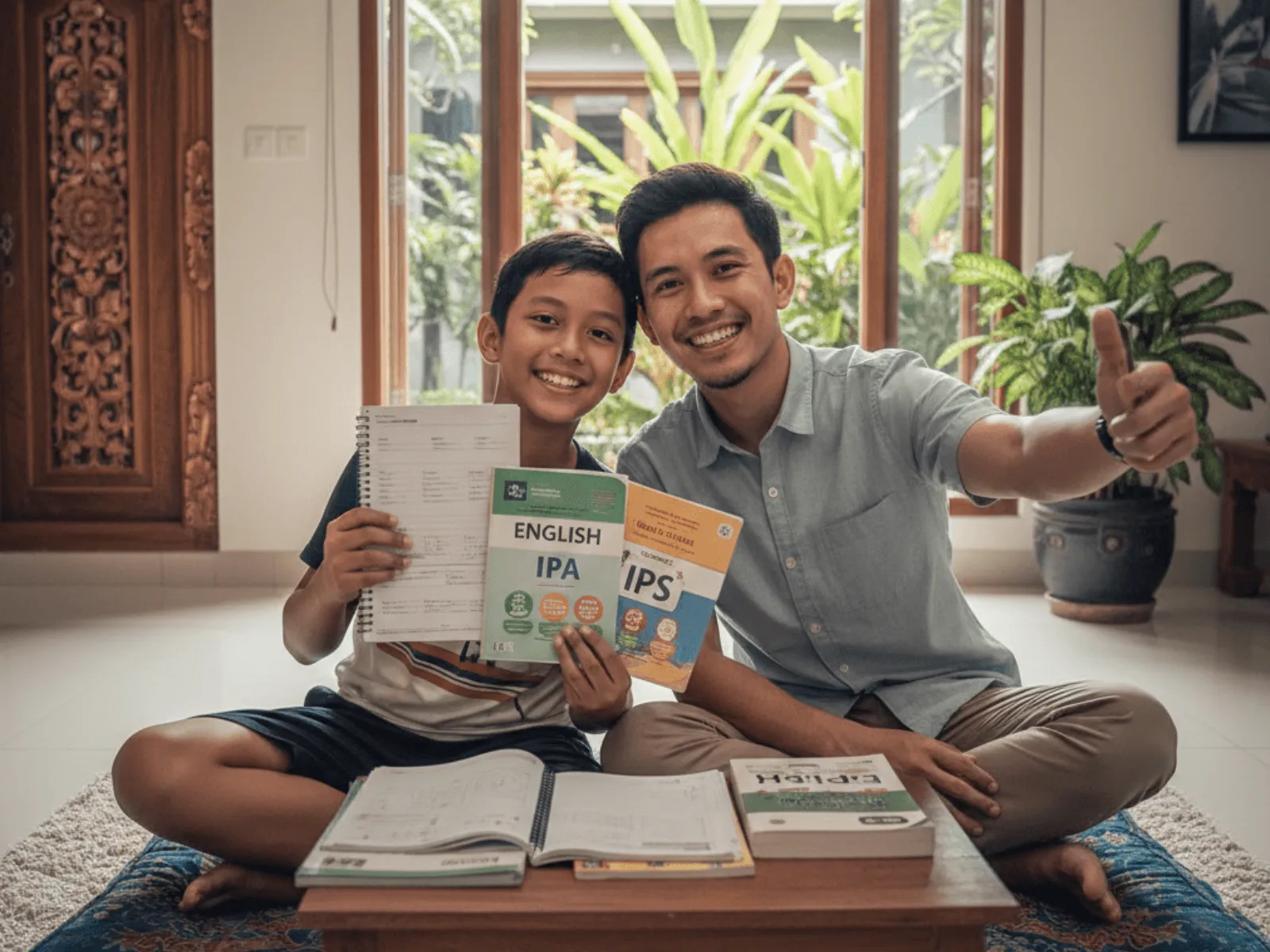
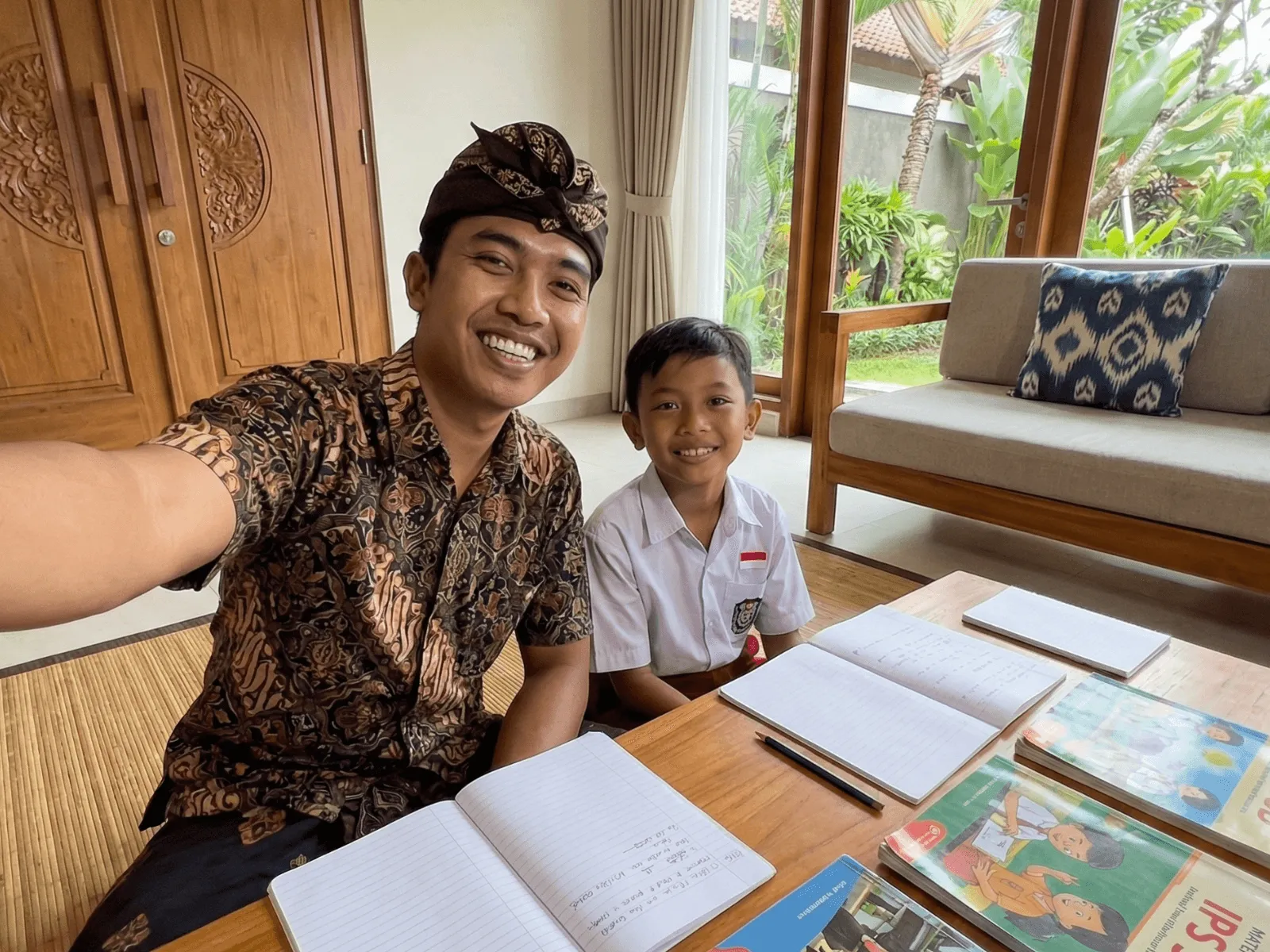
The photographs below were taken during jaritmatika tutoring in Bali sessions with children on the island.
Service Area
Where Edupola Jaritmatika Tutors Travel in Bali
Jaritmatika tutoring in Bali comes to your child's home: Denpasar, Badung, Gianyar, Tabanan, Buleleng, Klungkung, Bangli, Karangasem, and on to Jembrana. One condition applies to the place, namely a table and seat that leave both of the child's hands free to move.
One point specific to this programme concerns the method the child already uses. Some schools and learning centres in Bali teach finger counting with a different order of values, and a child who receives two orders at once often mixes them up. The tutor first checks the order the child already uses, then chooses to continue it or replace it, and never teaches both at the same time.
The Edupola office is not used as a lesson venue. Where no tutor is available yet, sessions run online. You can ask the admin about tutor availability at your location in Bali.
Online Sessions
Online Sessions and the Hands That Need to Be Seen
Online sessions for jaritmatika tutoring in Bali run over Zoom or Google Meet, and one thing decides whether they work: both of the child's hands need to be visible on screen. The camera is placed a little high and pointed at the table, not at the face, because what the tutor checks is the finger movement.
Once the angle is right, almost all of the material works: basic movements, timed questions, and the imagined fingers stage. A parent sits alongside children under seven, and the counting objects are set out on the child's table beforehand.
One part is genuinely slower: correcting hand movements that are wrong. Face to face, the tutor fixes finger position by pointing directly; online, the correction relies on demonstrated examples and repetition. For children whose movements are still often mixed up, we recommend face-to-face sessions. Fees for online sessions match face-to-face sessions.
Frequently Asked
Questions From Parents in Bali About Jaritmatika
What does private jaritmatika tutoring in Bali cost?
A 60-minute session is priced from IDR 107,600, and that length is the one most families choose. Other lengths are available and are more often chosen by children preparing for a contest. The final fee follows session length and the number of sessions per month, in the range of 4 to 28. The admin sends the breakdown in writing before the first payment.
Will my child come to depend on the fingers?
No, as long as the letting go is done, and that is part of the programme from the first session. Every stage has a written letting-go target: from the fingers, to imagined fingers, and then to counting in the head. The share of trying without fingers is there from the second stage, small as it is. The sign of success is a child who uses the fingers to check the answer, and no longer to work it out.
At what age should a child start?
This programme is for children aged 5 to 12, and readiness is what decides. A child needs to understand quantity with objects before the fingers are used, because correct finger movements without an understanding of quantity produce a skill that collapses on word problems. The tutor checks this in the first session with a few questions using objects.
Does this method conflict with the way school teaches?
It does not conflict, but it needs to be connected. School questions call for column arithmetic on paper and word problems, and both are still taught in this programme. Your child's textbook is used as material so the counting method gets used in class. What we avoid is teaching two different orders of finger values at once, because that leaves a child mixing them up.
My child is afraid of maths lessons. Does this method help?
It often helps, and the reason can be explained: the fingers give a way to work questions without paper, and the first success comes sooner. A change in attitude usually shows within a few sessions. One thing is guarded: speed is never forced at the start, because a child who is already afraid pushes back harder when time pressure comes too early.
How is a jaritmatika tutor matched with a child?
The consultation establishes your child's age, how they count now, and the schedule, with school hours and tired hours taken into account. The Edupola team then looks for a tutor used to that age range and within reach of your home in Bali, with the search taking 1 to 5 working days. A replacement is found at no extra cost if the first 2 weeks feel like a poor fit.
Related Programmes
Other Programmes Families Take in Bali
Some families in jaritmatika tutoring in Bali take one other programme, usually when the child's counting needs to be connected to school material.
-
Numeracy Tutoring in Bali
Taken by families whose child needs to move on to column arithmetic and word problems.
-
Calistung Tutoring in Bali
A choice for children whose reading and writing also need support.
-
SD Tutoring in Bali
Often taken by families whose child also needs support in other primary school subjects.
Get Started
Start From the Way Your Child Counts Now
Give your child's age, how they count now, and the hours when they are still fresh. A jaritmatika tutoring in Bali tutor is matched within 1 to 5 working days.