
Private Calistung Tutoring in Bali
Calistung Tutoring in Bali: Three Skills Three Different Speeds
Calistung tutoring in Bali from Edupola pairs one tutor with one child at home. The name joins 3 skills into one word, and that is where the trouble starts. Reading, writing, and counting mature at separate times, so each is taught at the pace it is ready for. Fees from IDR 107,600 per session.
Rating and fees for calistung tutoring in Bali
| Programme | Calistung Tutoring in Bali |
|---|---|
| Provider | Edupola |
| Description | Private calistung tutoring in Bali for young children, one tutor per child. Reading, writing, and early numeracy are treated as three separate skills that arrive at different speeds. |
| Fee | From Rp107,600 per session |
| Session Length | 60, 90, or 120 minutes per session |
| Schedule | Flexible, by agreement |
| Rating | 4.8 out of 5, based on 142 reviews |
Programme at a Glance
Calistung Tutoring in Bali and Three Skills Kept Apart
Calistung tutoring in Bali runs one tutor with one child, usually at the family home. The word itself bundles reading, writing, and counting together, and that bundling causes most of the worry parents arrive with. The three are separate abilities and they do not mature at the same time.
A child of five who recognises every letter may still hold a pencil with a whole fist, because reading needs eyes and ears while writing needs hand muscles that are still developing. Another child counts to twenty confidently and cannot yet say which of two groups has more, since reciting numbers and understanding quantity are different things.
So the programme measures the three separately and moves each at its own pace. Pushing the slowest one hardest is the most common mistake, and it usually slows all three. Fees start from IDR 107,600 per 60-minute session, with 4 to 28 sessions a month. This programme holds a 4.8 out of 5 rating across 142 learner reviews in Bali.
For Parents
Seven Things Worth Knowing Before Lessons Begin
These come up in nearly every first meeting with parents in calistung tutoring in Bali. None of them indicate a problem with a child.
-
A Hand May Not Be Ready to Write
Forming letters needs small hand muscles that develop on their own schedule. A child who reads well and writes shakily is not being careless, and the work goes to hand strength through drawing and play instead of more letter practice.
-
Confusing Similar Letters Is Ordinary
Reversing letters that mirror each other is expected at this age and usually resolves with time and reading. It is treated as a normal stage and never as a label.
-
Counting Starts With Objects
Numbers mean quantity before they mean symbols. Stones, bottle caps, and fruit come before anything written, because a child who counts objects first understands what the written number refers to.
-
Attention Spans Are Still Short
Children of this age concentrate in short bursts. A 60-minute session is therefore built from several short activities with movement between them, and not from one long sitting.
-
Comparing Slows Things Down
A child who hears that a cousin reads already tends to withdraw from reading. Progress is reported against where that child was last month, which is the only comparison that helps.
-
Worksheets Are Not the Measure
A completed worksheet shows a task finished, not a skill gained. What gets checked instead is whether the child can do the same thing with different material a week later.
-
Sleep and Food Change the Day
A tired or hungry child performs well below their actual level, and a session at the wrong hour measures the hour instead of the child. Choosing a good time of day is one of the most useful decisions a parent makes.
Readiness Map
Signs of Readiness for Each Skill
Calistung tutors use this in the first session with each child. The third column names what is postponed when a child is not ready yet, and postponing it is deliberate.
| Skill | Signs the child is ready | Postponed if not ready yet |
|---|---|---|
| Hearing sounds | Can tell when two words start with the same sound | Letter names, until sounds can be heard apart |
| Blending into words | Can join two or three sounds said slowly | Whole-word reading, which otherwise becomes guessing from pictures |
| Holding a pencil | Can hold a crayon with fingers instead of a fist | Writing letters, with drawing and hand play taking its place |
| Forming letters | Can copy simple shapes such as a cross or a square | Joined writing and lined paper, until shapes are steady |
| Quantity | Can say which of two groups has more without counting | Written sums, until quantity is understood with objects |
| Number symbols | Can match a written number to that many objects | Addition on paper, which otherwise becomes memorised answers |
Learning Path
The Order of Material From Sounds to Short Sentences
The starting stage of calistung work is set by what each child can already do, and never by their age in years.
-
Stage 1
Sounds and Objects
Hearing sounds inside words, and counting real objects. No letters and no written numbers yet, which surprises parents and is the stage that makes everything afterwards faster.
- Hearing first sounds
- Counting objects
- Hand play and drawing
-
Stage 2
Blending and Mark-Making
Joining sounds into short words, and making controlled marks on paper. Big tools on big paper, because the muscles being trained are in the shoulder and arm as much as the fingers.
- Joining sounds
- Large tools
- Shapes before letters
-
Stage 3
Words, Letters, and Number Symbols
Reading short words, writing letters at a size the hand can manage, and matching written numbers to quantities already understood with objects.
- Short words
- Letters by hand
- Numbers as symbols
-
Stage 4
Short Sentences and Simple Sums
Reading and writing short sentences, and adding or taking away with objects still present. This is the level a child needs for the first year of primary school.
- Short sentences
- Adding with objects
- Reading for meaning
Who It Is For
Children Who Take Calistung Lessons in Bali
Each session holds one child, so the pace follows that child instead of a class timetable.
-
Children About to Start Primary School
Children in their last kindergarten year in Bali. The target is the level the first year of school assumes, reached without pressure before term begins.
-
Children Who Know Their Letters
Children in Bali who can name every letter and cannot yet read a word. The missing step is usually blending sounds, and it is quick once identified.
-
Children Whose Hands Are Still Developing
Children in Bali who read ahead of their writing. Sessions move to hand strength through drawing and play, and letter practice waits.
-
Children Who Resist Sitting Down
Children in Bali who have decided that learning is unpleasant. The early sessions rebuild willingness through games, and the material follows afterwards.
-
Home-Schooled Children
Home-schooling families in Bali who want a second pair of eyes on progress. Sessions report on each of the three skills separately.
-
Children With Two Languages at Home
Children in Bali hearing Balinese or English alongside Indonesian. Sounds are kept separate by language, which prevents the confusion parents often worry about.
One Session
Inside a 60-Minute Calistung Session
This division suits a child learning all three at once, because it keeps moving. Each block is short, with movement between them.
-
5 minutes
An Opening Game
A short game with no learning content, to settle the child and let the tutor see what mood they are in today. The session adjusts from what this shows.
-
15 minutes
Reading or Blending Sounds
Depending on the stage, either hearing sounds inside words or reading short words aloud. Stopped before the child tires, always.
-
15 minutes
Writing or Hand Training
Letters for children whose hands are ready, and drawing, cutting, or shaping for children whose hands are not. Both count as writing work at this age.
-
15 minutes
Counting With Objects
Quantity worked with real things in hand. Written sums appear only once the child can say which group has more without counting.
-
10 minutes
Finishing on a Game, and the Note Home
The session ends on a game the child enjoys. The parent then hears two things: what was done today, and the one short activity to try at home.
Most children at this stage manage a 60-minute session. For the youngest, two shorter sessions a week often work better, and the admin sets that up when the tutor recommends it.
Prepared by the Family
What to Have Ready Before the First Session
Once the schedule for calistung tutoring in Bali is agreed, the admin confirms these. Pencils, paper, and any books are prepared by the learner and not included in the fee.
-
An Hour When Your Child Is Fresh
Not straight after school and not close to bedtime. A session at a tired hour measures the hour and not the child, and this single choice changes results more than anything else on this list.
-
A Place With Few Distractions
A table away from a television, with other children occupied elsewhere. It does not need to be a study; a dining table in a quiet half hour works well.
-
Large Writing Tools
Thick pencils or crayons, and paper bigger than a notebook. Small tools demand finger control that is still developing, and they make writing feel like failure.
-
Objects to Count
Anything countable from around your house in Bali: bottle caps, buttons, small stones, pieces of fruit. Familiar objects work better than any purchased set.
-
Notes From School or a Teacher
If your child attends kindergarten, anything their teacher has said about reading, writing, or holding a pencil. It saves a session of discovery.
If you are unsure what your child can already do, say so during the consultation. The first session is spent measuring the three skills separately, which is exactly what that session is for.
Pace
Pushing the Slowest Skill Hardest Slows All Three
The pattern that brings most families to calistung tutoring in Bali looks sensible and works badly. A child reads well and writes untidily, so writing practice is doubled. Within a few weeks the child resists the pencil, then resists the table, and then resists reading as well, even though reading was never the problem.
What happened is that the hardest activity became the main experience of learning. Children of this age have not yet separated a task from the whole situation, so an unpleasant twenty minutes with a pencil attaches itself to books, tables, and the adult sitting beside them. The reading loss is collateral and it is common.
The programme handles it by keeping the strong skill in play. A child who reads well keeps reading in every session, because that is where their confidence lives, while the writing work shrinks to a short block and moves to hand strength instead of letters. Progress on the weaker skill is usually faster this way, which looks counterintuitive until you have watched it happen.
What Parents Say
Stories From Calistung Families in Bali
The quotes below come from parents in Bali whose children completed the calistung programme at Edupola, with their situation and what changed.
-
★★★★★
My child used to struggle with reading and is now fluent after 3 months of lessons at Edupola. The tutor was very patient with an active child.
Rina P.
Parent of a senior kindergarten pupil · Verified parent
-
★★★★★
I was worried at first because my child started primary school without reading fluently. After the calistung lessons she can follow the work at school.
Dewi M.
Parent of a first-year primary pupil · Verified parent
-
★★★★★
The way they teach is enjoyable and my child is keen to learn now. It is not like other lessons that leave a child bored and reluctant.
Agus S.
Parent of a junior kindergarten pupil · Verified parent
-
★★★★★
The tutor is creative with games and flashcards. My child used to find it hard to concentrate and is now interested in learning.
Maya S.
Parent of a senior kindergarten pupil · Verified parent
-
★★★★★
My child was finding basic maths difficult and now understands addition and subtraction. Thank you Edupola!
Budi H.
Parent of a second-year primary pupil · Verified parent
-
★★★★★
Private lessons at home help us a great deal because we both work. There is no dropping off and collecting; the tutor comes to us.
Sri W.
Parent of a senior kindergarten pupil · Verified parent
At Home
A Single Short Activity at Home Is Enough
Parents regularly ask how much to do at home, and the answer in calistung tutoring in Bali is less than they expect. One short activity, five to ten minutes, on most days. Beyond that the returns fall quickly, because the limit at this age is attention and not exposure.
What the activity is matters less than that it is short and the same each day. Counting the plates while laying the table, finding things in the room that start with a sound, reading two pages at bedtime. Those all work, and they work because they sit inside something the family already does instead of becoming a second school.
There is one request tutors make of parents, and it is about correction. When a child reads a word wrongly, waiting a few seconds before helping lets them notice it themselves, and noticing is the skill being built. Correcting immediately is faster in the moment and teaches the child to wait for an adult, which is the opposite of what reading needs.
How to Register
Four Steps to the First Session
The opening consultation carries no fee. The admin asks how old your child is, and which letters and numbers they can already handle.
-
Describe Your Child's Age and Situation
Their age, what they can already do, and what you have noticed. Reading, writing, and counting are discussed separately, since they rarely sit at the same level.
-
Agree the Schedule
Days, times, session length, and sessions per month are agreed with the admin, chosen around the hours your child is freshest.
-
Matching the Tutor
The search narrows on two things: a tutor who has taught the three skills side by side, and a place close enough to your location in Bali. It runs 1 to 5 working days.
-
The First Session
The three skills are measured separately through games, the starting stage is set for each, and one home activity is agreed with you.
Documentation
Calistung Lessons With Edupola in Bali
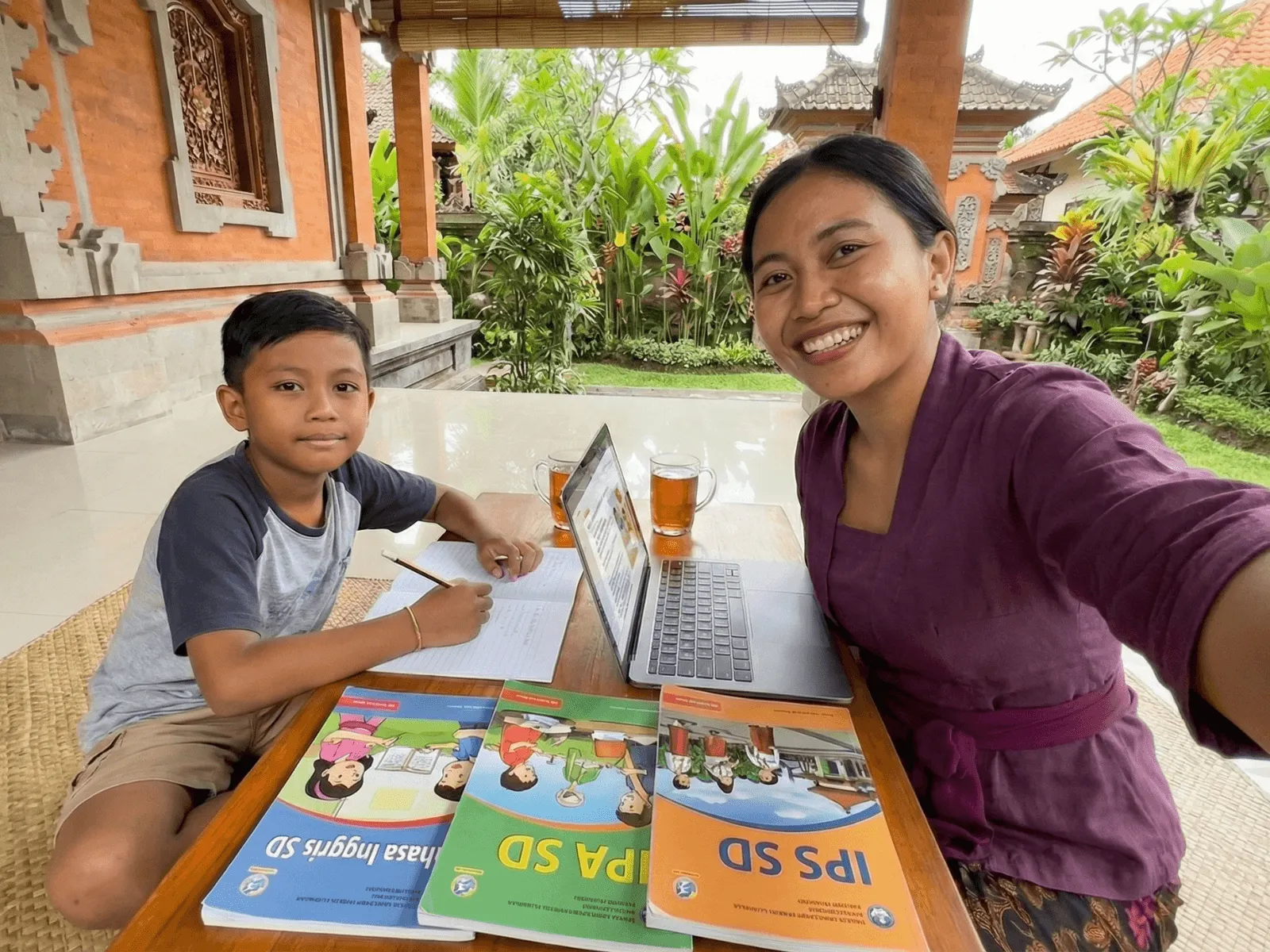
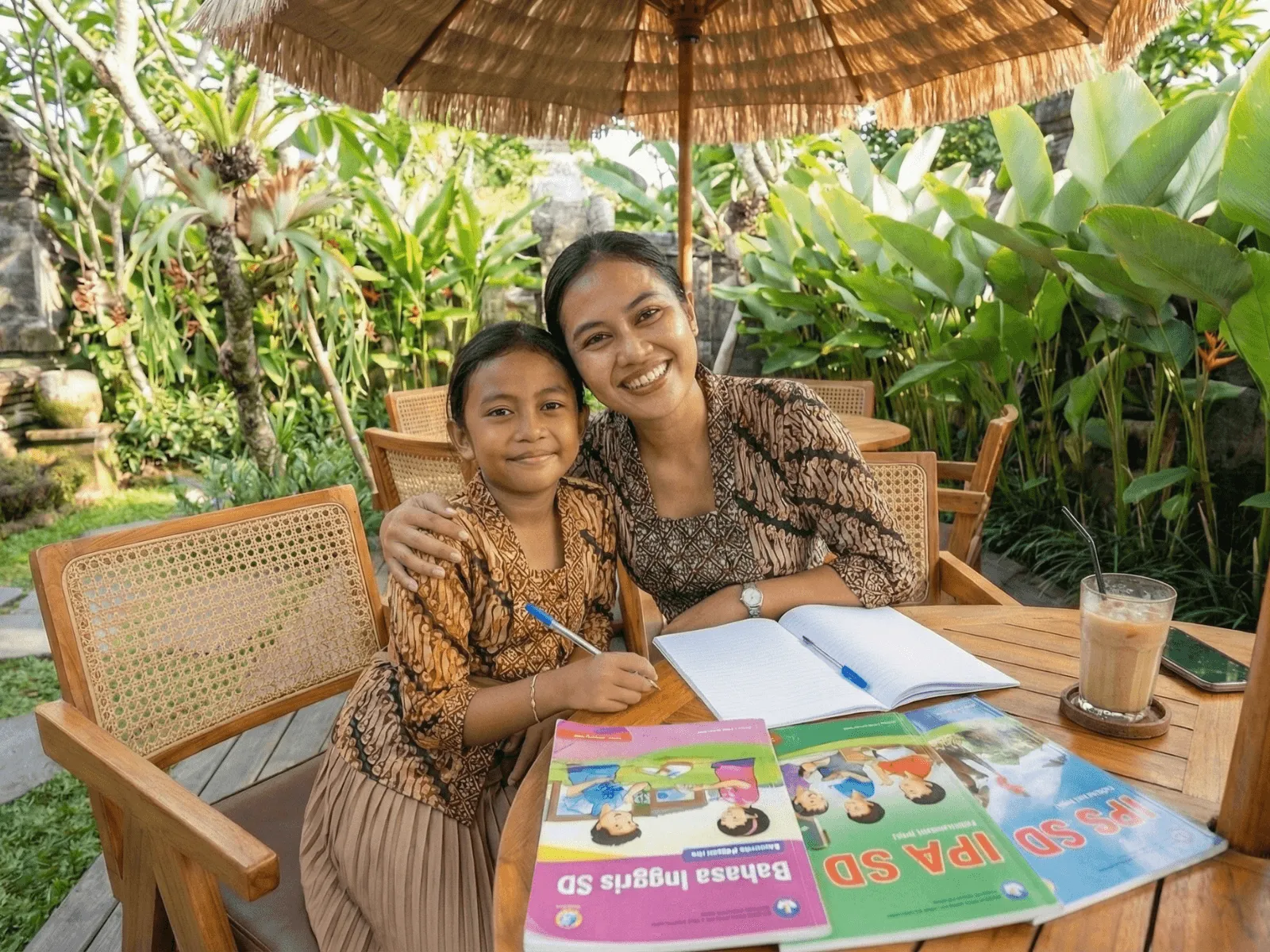
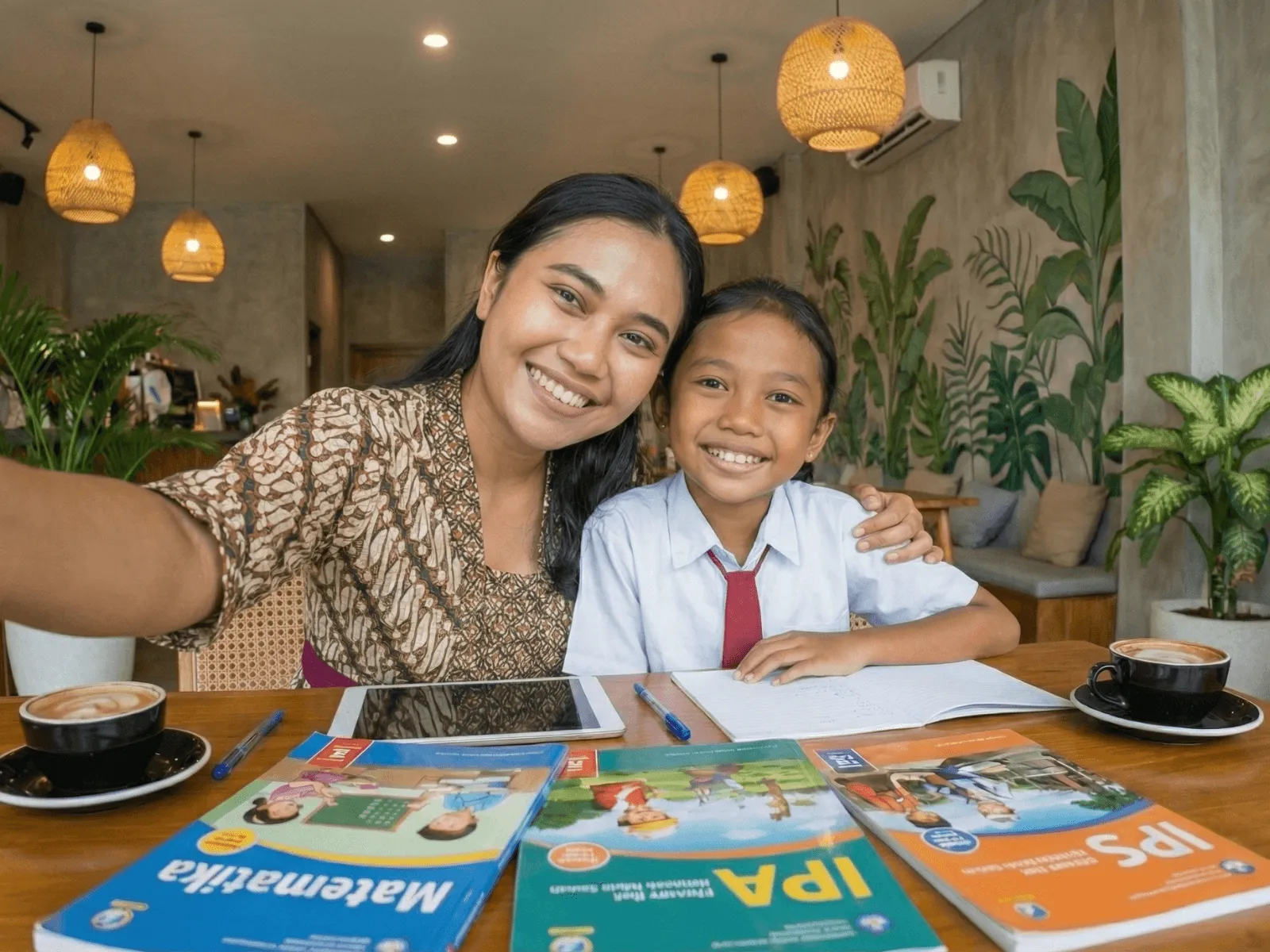
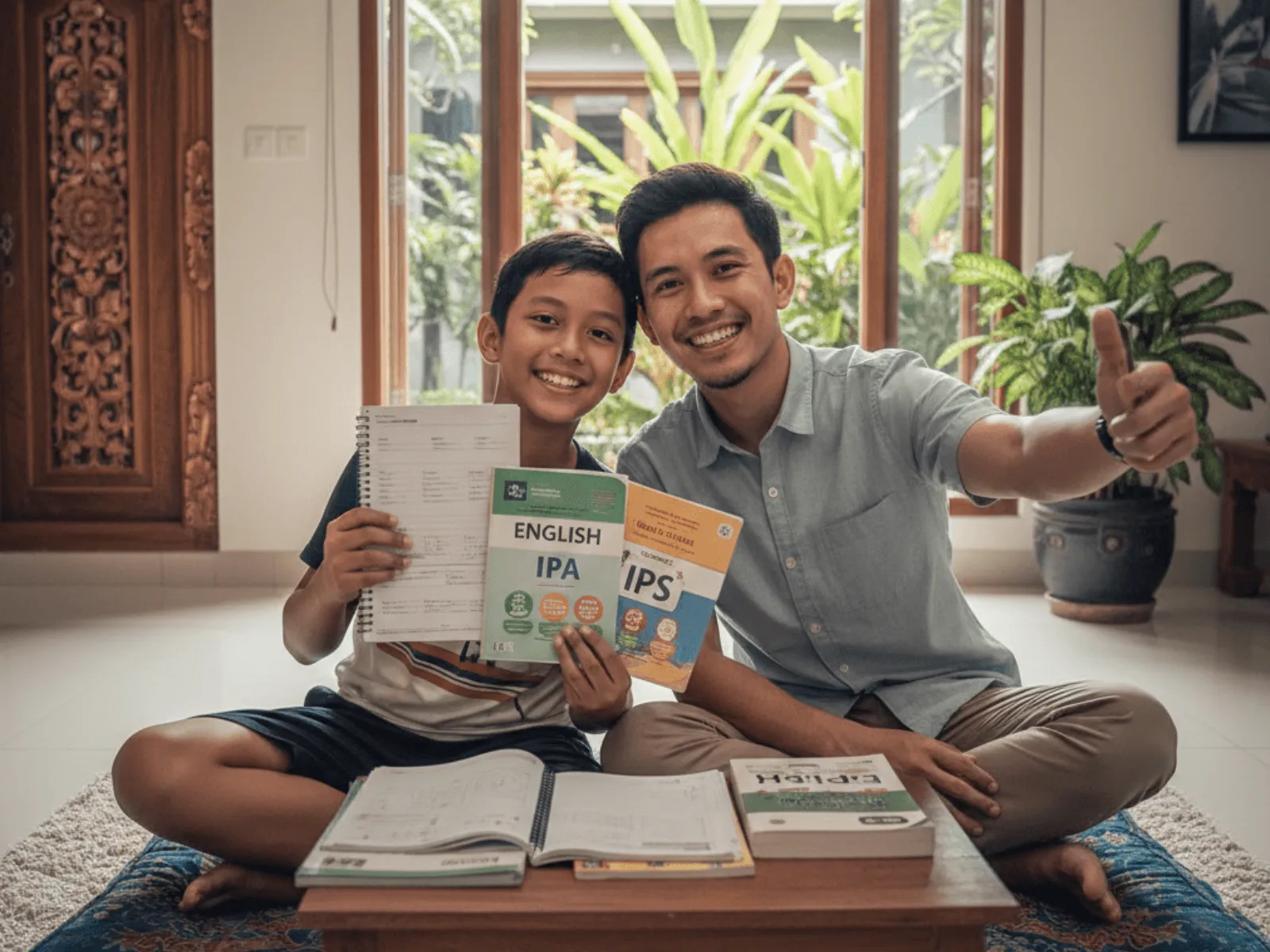
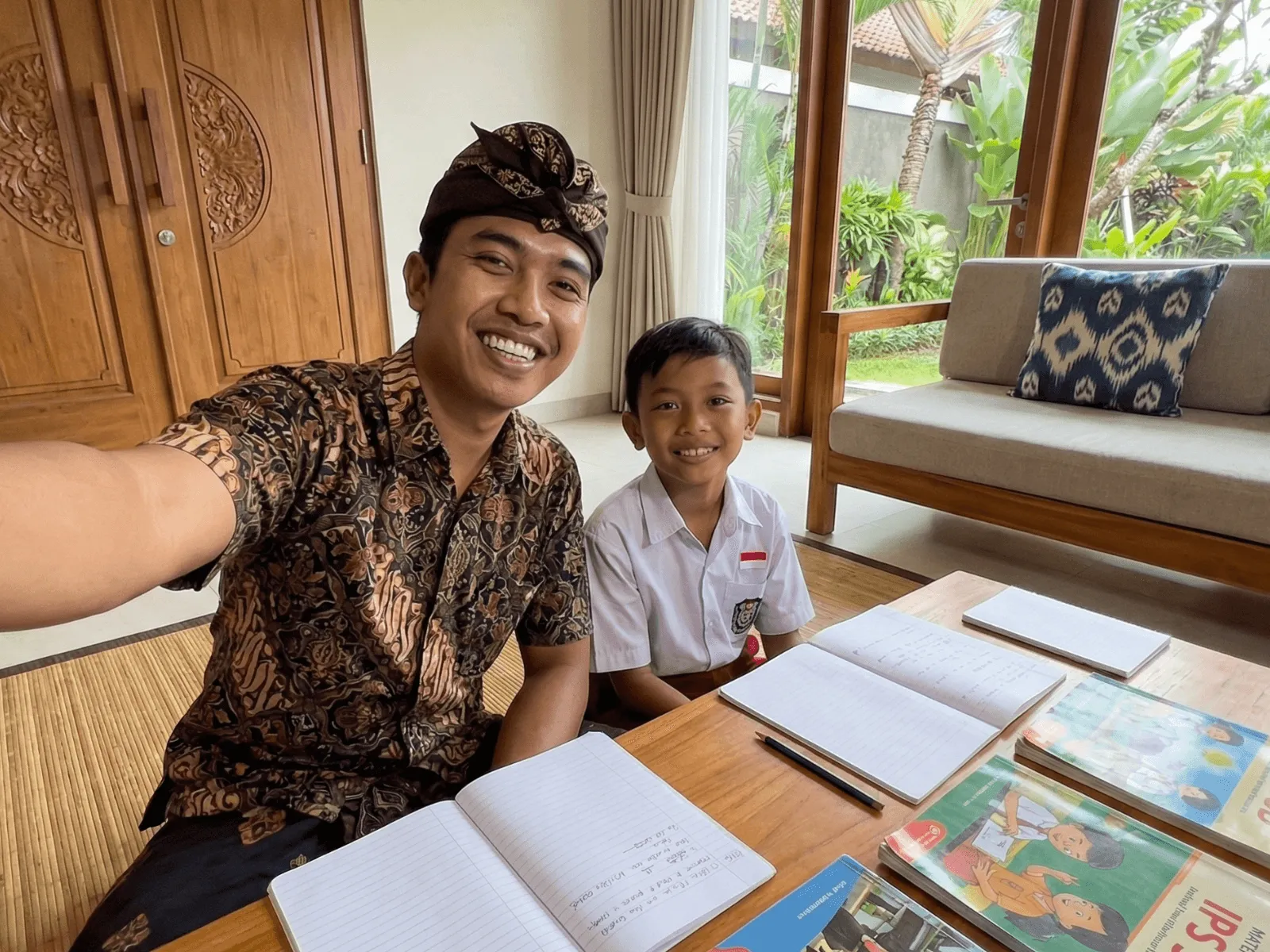
The photographs below were taken during calistung tutoring in Bali sessions with children on the island.
Service Area
Where Edupola Calistung Tutors Travel in Bali
Tutors for calistung tutoring in Bali travel to the family home, from Denpasar, Badung, and Gianyar through to Tabanan, Buleleng, Klungkung, Bangli, Karangasem, and Jembrana. At this age home is usually the right place, because a familiar room costs the child no settling time.
One thing shapes scheduling for this programme more than location does: the hour. Children of this age have a narrow window when they are alert, and it is often late afternoon or a weekend morning. Those hours are in demand, so families who are flexible about the day usually get a better hour.
The Edupola office is not used as a lesson venue. Where no tutor is available near you, sessions run online. For children of this age the online route has real limits, which the next section sets out. Ask the admin about tutor coverage at your location in Bali.
Online Sessions
Online Sessions in Bali and Their Limits at This Age
Online sessions for calistung tutoring in Bali are possible and they are not the first recommendation for children of this age. Attention through a screen is shorter, and two of the three skills need a tutor's hands: guiding a pencil grip and moving objects while counting.
Where the online route does work is as a supplement. Families who already have face-to-face sessions sometimes add a short online block for reading practice, which transfers well since the child reads aloud and the tutor listens. Those blocks run around 30 minutes, which is nearer the limit of a young child's attention through a screen.
For families outside tutor coverage, the arrangement usually involves a parent sitting in. The parent handles the objects and the pencil while the tutor directs, which works but asks more of the parent. Fees for online sessions match face-to-face sessions.
Frequently Asked
Questions From Parents About Calistung
What does private calistung tutoring in Bali cost?
Fees start from IDR 107,600 for a 60-minute session, the shortest option. Sessions of 90 and 120 minutes are available with the fee following the length. The final fee follows session length and the number of sessions per month, between 4 and 28. The admin sends the breakdown in writing before the first payment. Pencils, paper, and any books are prepared by the learner and not included in the fee.
At what age should a child start calistung lessons?
There is no single age, which is why the first session in Bali measures readiness instead of asking for a birth date. Most children arrive in their last kindergarten year, and some arrive in the first year of primary school. What matters is whether a child can hear sounds apart, hold a crayon with their fingers, and compare two groups of objects. Those three signs decide the starting point.
My child knows all the letters but cannot read. Why?
Because naming letters and blending sounds are different skills, and the second one is the actual reading step. A child can recite the alphabet perfectly and still be unable to join three sounds into a word. The work goes to blending, usually with sounds said slowly and joined together, and reading often follows within weeks once that step is in place.
My child's letters keep changing shape. Should I be worried?
Not at this age. Letters that mirror each other are reversed by most children for a while, and shapes stay unsteady while the small hand muscles are still developing. What helps is large tools on large paper and more drawing, not more letter practice. If it persists well into primary school, the tutor will say so plainly.
Will my child be given homework?
One short activity, five to ten minutes on most days, and nothing resembling a worksheet pile. Beyond that the returns fall off quickly because attention is the limit at this age. The activity is usually something that fits inside what your family already does, such as counting plates at the table or finding objects that start with a sound.
How is a calistung tutor matched to a child?
The consultation fixes days, times, session length, and how many sessions fall in a month. After that the team needs a tutor who has carried all three skills before and who can reach you in Bali without a long trip; finding one takes 1 to 5 working days. If the first 2 weeks feel like a poor fit, a replacement is arranged at no extra cost.
Related Programmes
Three Basics That Usually Follow Calistung in Bali
Families taking calistung tutoring in Bali often continue with one of these once a child is reading and writing short sentences.
-
Reading Tutoring in Bali
Taken by children who can decode words and need to understand what they read.
-

Handwriting Tutoring in Bali
Chosen when a pencil grip or unsteady letters need work on their own.
-

Numeracy Tutoring in Bali
Often added when counting is secure and written arithmetic begins at school.
Get Started
Start From the Hour Your Child Is Freshest
Tell us your child's age, what they can already do with letters and numbers, and the hour they are most alert. A tutor in Bali is matched within 1 to 5 working days.