
Private Reading Tutoring in Bali
Reading Tutoring in Bali: Fluent and Understanding
Reading tutoring in Bali from Edupola pairs one tutor with one learner at home. Fluency and comprehension are 2 separate abilities, and a learner can have the first without the second. So the first session measures them apart, because the two have opposite remedies. Fees from IDR 107,600 per 60-minute session.

Rating and fees for reading tutoring in Bali
| Programme | Reading Tutoring in Bali |
|---|---|
| Provider | Edupola |
| Description | Private reading tutoring in Bali, one tutor per learner. Fluency and comprehension are measured separately, from letter sounds and syllables through to long texts and reading habits. |
| Fee | Fees start from Rp107,600 per session. |
| Session Length | Every session runs 60, 90, or 120 minutes. |
| Schedule | Flexible, following the learner's free hours. |
| Start | Enrolment is open year round. |
| Sessions per Month | 4 to 28 sessions per month, as needed. |
| Rating | 4.8 out of 5, based on 152 reviews |
Programme at a Glance
Reading Tutoring in Bali and Two Abilities Measured Apart
Reading tutoring in Bali runs one tutor with one learner, at your home, your workplace, or over a screen. The subject contains a trap that catches parents and teachers equally. Reading aloud smoothly and understanding what was read are separate abilities, and the first one is visible while the second is not.
A child who reads a page without stumbling appears to be reading. Ask what happened in that page and the answer may be nothing at all. The reverse exists too: a learner who stumbles over words while following the story perfectly, whose difficulty is mechanical and not comprehension.
The two have opposite remedies, which is why they are measured separately in the first session. Smoothness is built with sounds, syllables, and repeated practice; understanding is built by stopping, asking, and pointing at the line that answers. Fees start from IDR 107,600 per 60-minute session, with 4 to 28 sessions a month. This programme holds a 4.8 out of 5 rating across 152 learner reviews in Bali.
Learner Map
Learner Situations and Where the Weight Goes
Reading tutors use this to divide a session. The third column names what is deliberately postponed, and postponing it is what makes the first column move.
| Learner situation | Where the weight goes first | What is postponed |
|---|---|---|
| Does not know letter sounds yet | Sounds and syllables, spoken before written | Whole words and books, which would become guessing from pictures |
| Reads haltingly, word by word | Repeated reading of short familiar texts | New vocabulary, until the mechanics stop taking all the attention |
| Fluent but understands little | Stopping to ask and pointing at the line | Reading speed, which is already ahead of understanding |
| Understands but stumbles | Syllable splitting and letter patterns | Comprehension questions, which are already secure |
| Loses the thread in long texts | Summarising each section before continuing | Short passages, which hide the actual difficulty |
| Adult wanting to read faster | Removing subvocalising and backtracking | Dense technical material, until the habit is rebuilt |
Reading the Signs
Six Signs That Separate Fluent From Understanding
Tutors look for these in the first session of reading tutoring in Bali, while the learner reads aloud from a text they have not seen.
-
Guessing From the First Letters
A learner who reads the opening letters and supplies a plausible word. It sounds fluent and the word is often wrong, which means the mechanics were never secure and the meaning follows the guess.
-
Stopping Inside a Word
A break in the middle of a longer word, where syllable boundaries are not yet seen. Practice goes to splitting words into parts, and smoothness returns quickly once that is in place.
-
Running Past Punctuation
Reading through full stops and commas without pausing. The sentence boundaries carry much of the meaning, so ignoring them produces fluent noise.
-
Cannot Say What a Paragraph Said
Smooth reading followed by nothing when asked what it was about. This is the clearest sign that attention was on pronunciation and not on content.
-
Answering From Guesswork
Answers that sound reasonable but are not in the text. The repair is asking the learner to point at the line that answers, every time, until pointing becomes automatic.
-
Losing the Thread in Long Texts
Comprehension that holds for a paragraph and dissolves over three pages. This is a separate skill from either of the others, and it is the one older learners most often need.
Learning Path
The Order of Material From Sounds to Long Texts
The starting stage of reading work is set by what the first session measures, and never by the learner's school year.
-
Stage 1
Letter Sounds and Syllables
Sounds first, spoken and heard before they are seen written. Learners who skip this stage read by memorising word shapes, which holds until the words get longer and then stops working.
- Sounds before letters
- Syllable splitting
- Blending aloud
-
Stage 2
Words and Short Sentences
Reading short sentences with punctuation observed, repeated until they are smooth. Repetition of familiar text is what builds fluency, and new text every session prevents it.
- Repeated reading
- Punctuation as meaning
- Familiar texts
-
Stage 3
Paragraphs and Questions About Content
Reading a paragraph, then answering questions by pointing at the line that answers. Pointing is the requirement, because it makes the difference between remembering and guessing visible.
- Questions answered by pointing
- Retelling in order
- One paragraph at a time
-
Stage 4
Long Texts and Reading Habits
Holding the thread across chapters, summarising as you go, and reading something chosen by the learner. The target here is a habit that continues after the lessons end.
- Summarising sections
- Chosen reading
- A habit that lasts
Who It Is For
Learners Who Take Reading Lessons in Bali
Every session holds one learner, so the texts used are chosen for that learner instead of for a class.
-
Children Meeting Letters
Children in Bali starting to recognise letters. Sounds come before written letters, which is the order that prevents guessing habits forming later.
-
Early-Year Pupils Who Stumble
Children in Bali in the first school years reading word by word. Repeated reading of short familiar texts is the method, and progress is usually visible within weeks.
-
Fluent Readers Who Understand Little
Learners in Bali who read smoothly and cannot say what they read. Sessions slow the reading down deliberately and require pointing at the answering line.
-
Learners With Specific Difficulties
Learners in Bali with dyslexia or a related diagnosis. A multi-sensory approach is used and the pace follows the learner, with any school assessment read beforehand.
-
Parents and Teachers
Adults in Bali who want to teach reading themselves. Sessions cover the stages and the method so it can be used with a class or at home.
-
Adults Reading Faster
Working adults in Bali facing documents daily. The work removes backtracking and inner speech, with comprehension checked at each new speed.
One Session
Inside a 60-Minute Reading Session
This is the division used once a reading level is established. Reading aloud comes first because it is the measurement.
-
10 minutes
Reading Aloud
The learner reads from a familiar text while the tutor notes the kind of error, not the count. Which kind of error it is decides what the rest of the session does.
-
15 minutes
Practising Today's Error Type
One error type is worked on: syllable breaks, a letter pattern, or punctuation. One type per session, because two leaves the learner correcting nothing.
-
15 minutes
A New Text
Something not seen before, chosen slightly above the learner's current level so there is something to work at without the text becoming a wall.
-
15 minutes
Questions and Pointing at the Line
Questions about content, answered by pointing at the line that answers. Retelling in order comes next, which is the harder and more useful version.
-
5 minutes
Setting the Reading for Home
A short reading assignment with one question to answer. Short and daily works better here than long and weekly.
In a 90 or 120 minute session, a longer text is read in one sitting so the thread has to be held across sections, which is what learners working on long texts usually choose.
Prepared by the Family
What to Have Ready Before the First Session
The admin confirms these once the schedule for reading tutoring in Bali is agreed. Books, paper, and pencils are prepared by the learner and not included in the fee.
-
Two Books the Learner Likes
Books chosen by the learner, whatever the level, from your own shelves in Bali. A text someone wants to read is worth more than a correctly levelled one they do not, and the first session often uses one of these.
-
Notes From School
Anything a teacher has said about reading, including report comments. Teachers see the learner in a group, which shows things a home session does not.
-
Any Assessment Results
If there has been a reading or learning assessment, bring it. The method is adjusted from it, and the tutor will not repeat testing that has already been done.
-
A Seat With Enough Light
A table with good light and a chair at the right height. Reading difficulties sometimes turn out to be seeing difficulties, and poor light makes every learner look worse than they are.
-
An Hour When the Learner Is Fresh
Not straight after school and not at bedtime. Reading is demanding work, and an hour chosen badly measures tiredness instead of reading.
If reading has become a point of conflict at home, say so during the consultation. The first sessions then start from a text the learner picked, which is usually enough to reopen it.
The Trap
Fluent Reading Can Hide a Problem
The most frequent reason families arrive at reading tutoring in Bali is a report that does not match what they see at home. The learner reads aloud beautifully and cannot answer a question about the paragraph. Nobody at school flagged it, and that is not negligence: fluency is what gets heard, and it sounds like success.
What happens mechanically is that attention is finite. A learner still working out words spends their attention on pronunciation, leaving none for meaning, and the result can be perfectly smooth. The smoothness is sometimes genuine skill and sometimes a memorised performance of the text; both sound the same from across a room.
The remedy runs against instinct, because it means slowing a learner down. Reading is interrupted deliberately, questions are asked mid-paragraph, and every answer has to be found by pointing at the line. Learners dislike this for about two sessions and then start doing it unprompted, which is the point at which comprehension begins to move.
Choosing Texts
Texts Are Chosen Slightly Above the Learner's Level
Text choice decides more about progress in reading tutoring in Bali than method does, and the rule is narrow: slightly above where the learner is. A useful check is a page with a handful of words they cannot read. Fewer than that and the session practises what is already known; many more and the learner spends the hour decoding and understands nothing.
Interest overrides level more often than parents expect. A learner reading about something they care about will work through harder words than a correctly levelled text about something they do not. Tutors therefore ask what a learner likes before asking what they can read, and comics, sports reports, and instruction manuals all count.
There is one adjustment for learners whose difficulty is comprehension and not mechanics. For them the text is kept easy on purpose, because the work is understanding and a hard text reintroduces decoding as a distraction. Parents sometimes read an easy book as a step backwards, so tutors explain the reason, and the explanation is usually enough.
What Learners Say
Stories From Reading Learners in Bali
The quotes below come from learners in Bali who completed the reading programme at Edupola, with their situation and what changed.
-
★★★★★
My daughter did not know her letters at all before lessons at Edupola. Her reading tutor was very patient teaching phonics from the beginning. Four months on, she reads short storybooks to herself before bed. The progress has been remarkable.
Reading storybooks on her own within 4 months
Ayu L.
Mother of a 5-year-old · Verified learner
-
★★★★★
As a teacher I learned a great deal from my Edupola tutor about structured reading instruction. The phonics approach they use is very effective. I apply the same techniques with my own pupils who struggle with reading at school.
Using the Edupola phonics method in her own class
Dharma P.
Primary school teacher · Verified learner
-
★★★★★
My son was diagnosed with mild dyslexia and found reading very hard. His Edupola tutor understood the condition and adjusted the method. With great patience and a multi-sensory approach my son can now read short paragraphs.
Reading ability improved significantly
Eka W.
Mother of a child with mild dyslexia · Verified learner
-
★★★★★
My work means reading a great many documents and reports every day. After 3 months on the Edupola speed reading programme my reading rate rose sharply with no loss of understanding. My working time is far more efficient now.
Reading speed up from 200 to 500 words a minute
Bayu A.
Office worker on the speed reading programme · Verified learner
-
★★★★★
I home-school my three children and needed support in teaching reading. My Edupola tutor taught the children and also equipped me with the right techniques. I am much more confident supporting them now.
All three children reading fluently with phonics
Sari D.
Home-schooling mother · Verified learner
-
★★★★★
As a kindergarten teacher I felt I needed to strengthen how I teach reading. Lessons at Edupola gave me a deep understanding of phonics and the stages of early reading. The method is practical and I could apply it in class immediately.
Her pupils recognise letters and read sooner
Rai K.
Kindergarten teacher in Denpasar · Verified learner
How to Register
Four Steps to the First Session
The opening consultation carries no fee. The admin asks how the learner reads now and what you have noticed.
-
Describe the Reading as It Is Now
Say what happens when the learner reads aloud and what happens when you ask about the content. Those two answers are treated separately, because they usually differ.
-
Agree the Schedule
Days, times, session length, and sessions per month are agreed with the admin, following the hours the learner is freshest, since reading is demanding work.
-
Matching the Tutor
The team looks for a tutor whose travel to your location in Bali stays short, and that search runs 1 to 5 working days. Learners with a specific diagnosis are matched with a tutor experienced in that approach.
-
The First Session
The learner reads aloud from an unseen text, fluency and comprehension are measured separately, and a starting stage is set for each.
Need help? Contact our admin on WhatsApp for a free consultation.
Documentation
Reading Lessons With Edupola in Bali
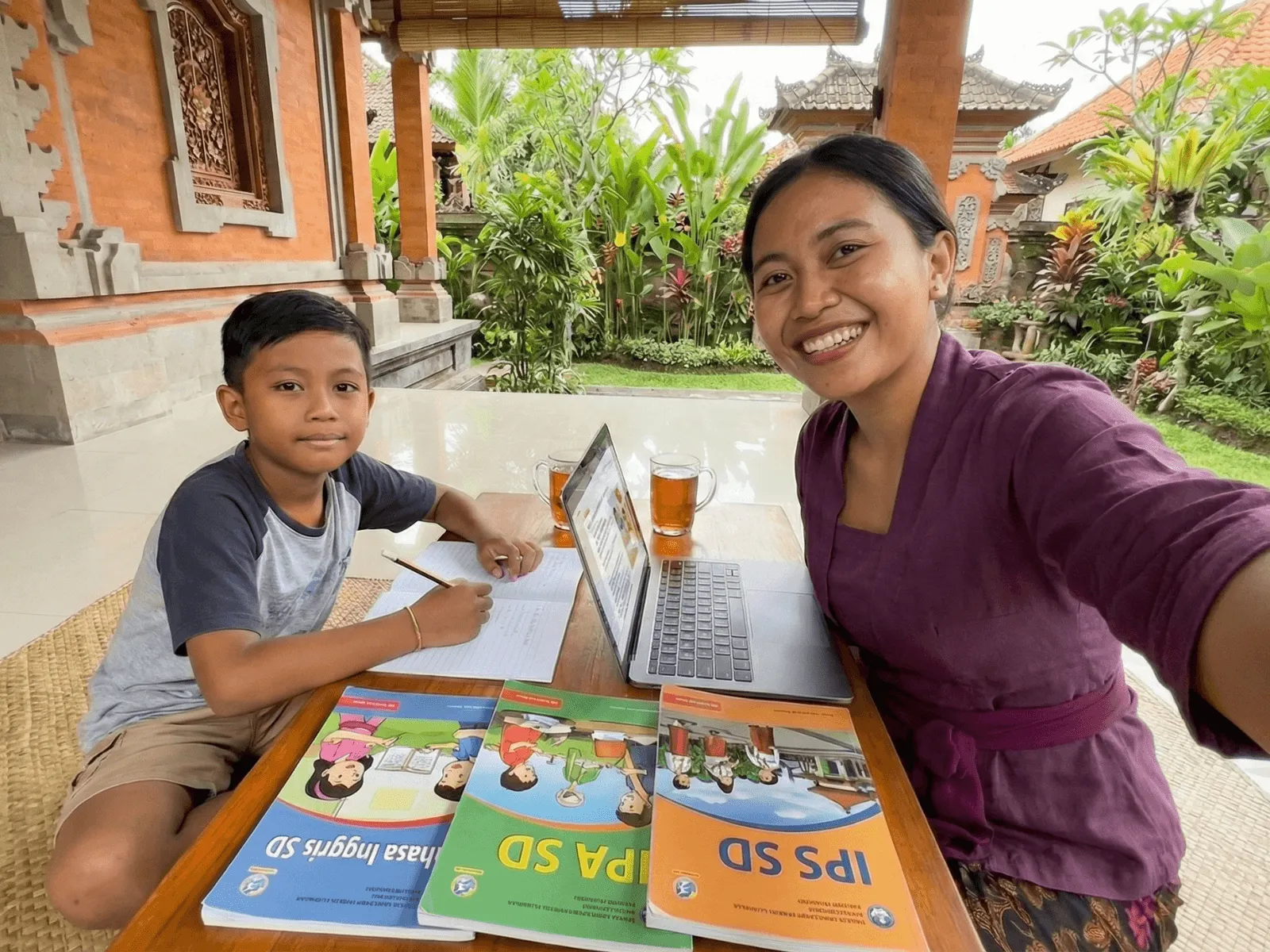
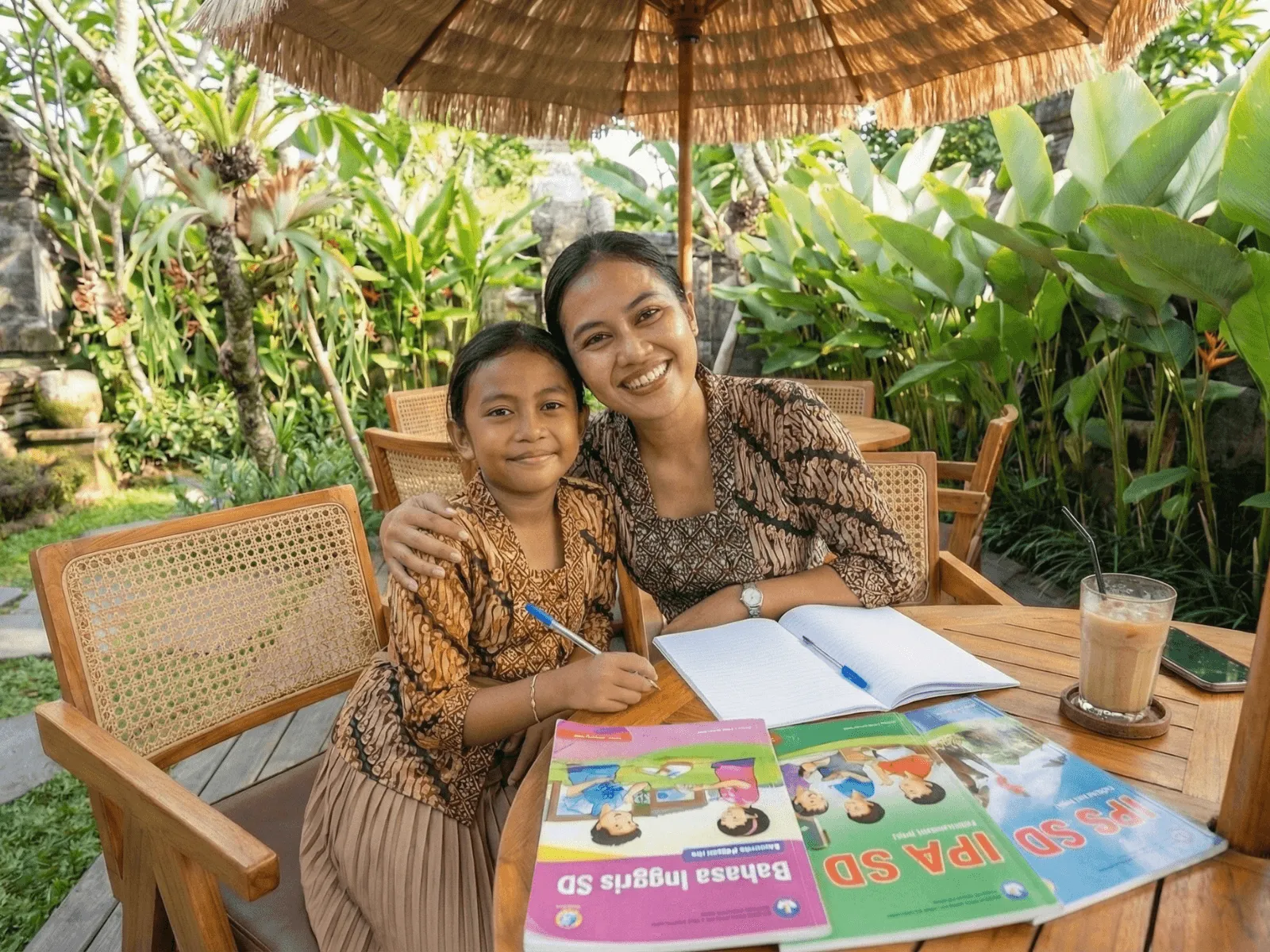
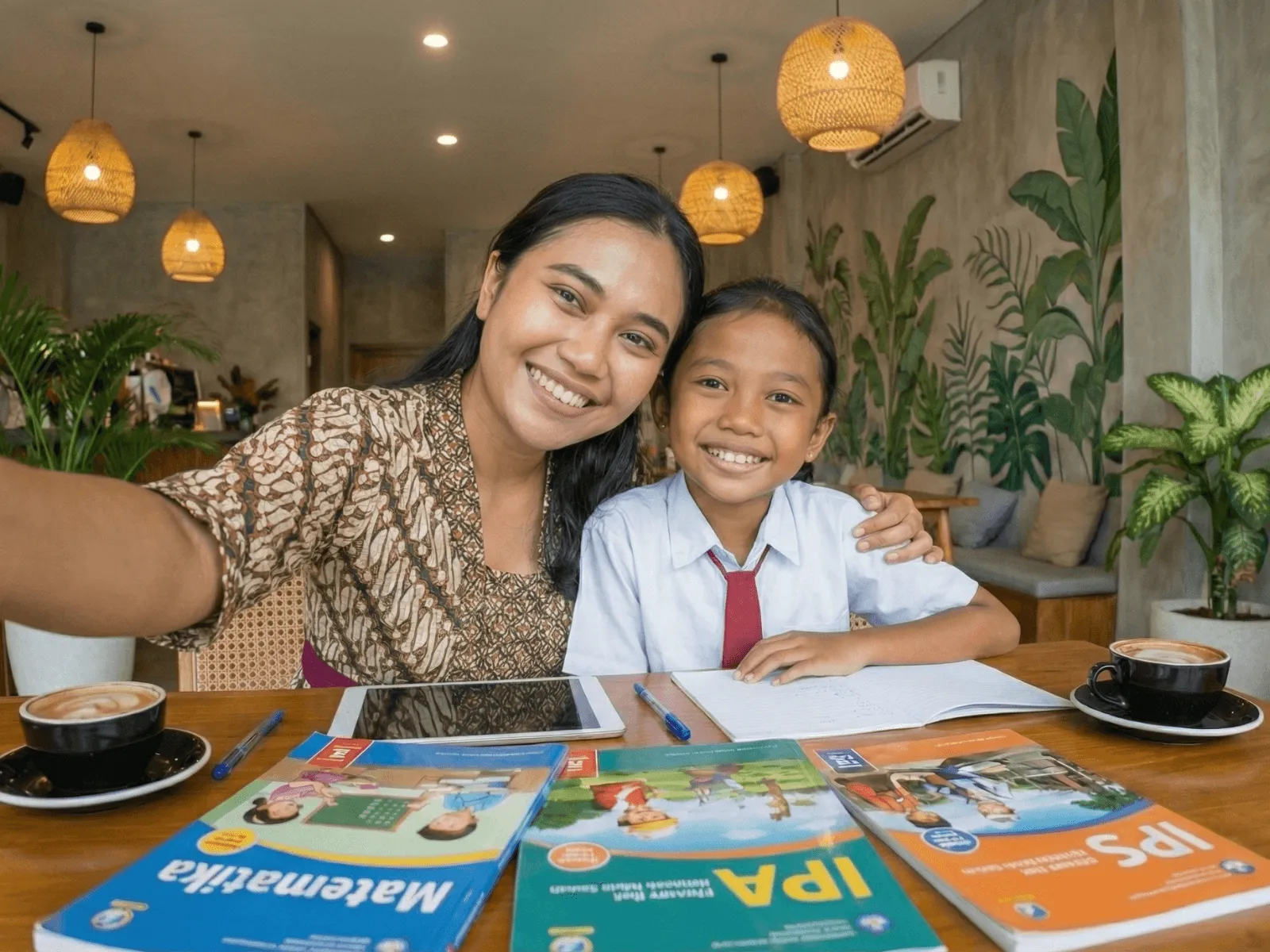
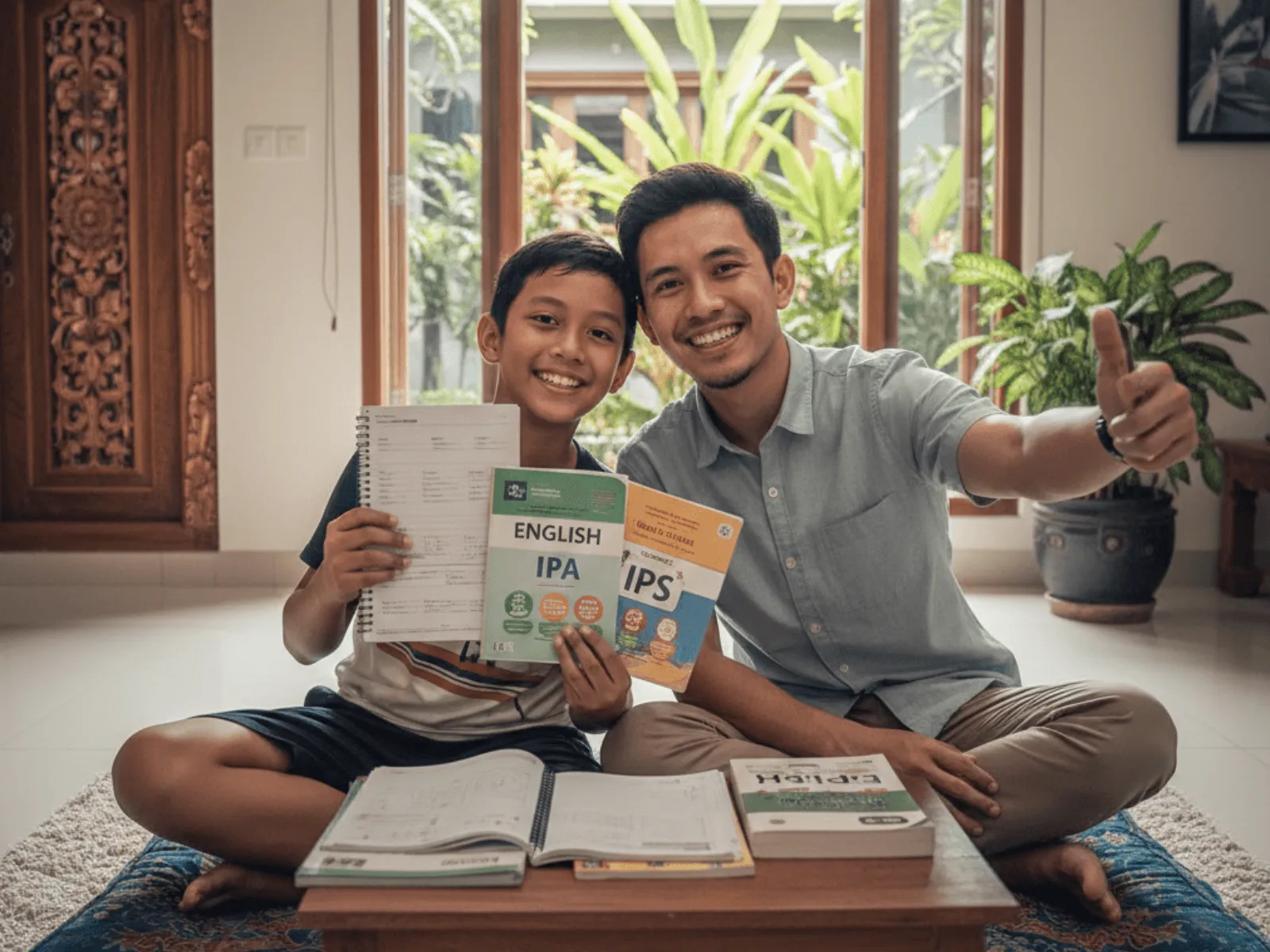
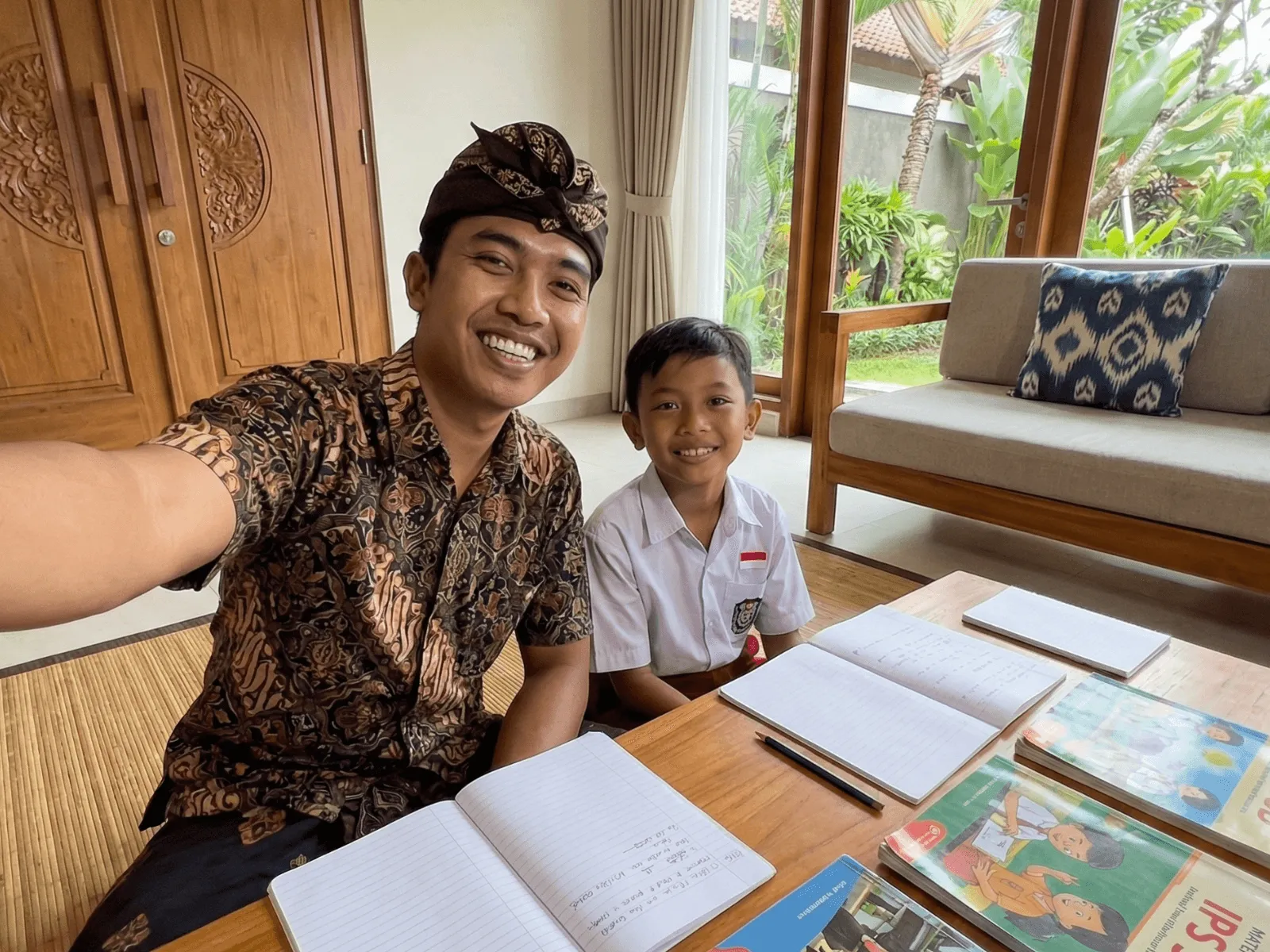
The photographs below were taken during reading tutoring in Bali sessions with learners on the island.
Service Area
Where Edupola Reading Tutors Travel in Bali
Tutors for reading tutoring in Bali travel to the location you choose, from Denpasar, Badung, and Gianyar through to Tabanan, Buleleng, Klungkung, Bangli, Karangasem, and Jembrana. Sessions are usually at the family home, which suits this subject because the books the learner already owns are there.
One thing shapes the match here more than distance. Reading work divides into early reading, specific difficulties, and adult speed reading, and those call for different tutors. A learner with a dyslexia assessment is matched to someone who works that way, and an adult facing daily documents is matched to someone who teaches that, which sometimes means a wider travel radius.
The Edupola office is not used as a lesson venue. Where no tutor is available near you, sessions run online. Most of this programme transfers online, with the detail in the next section. Ask the admin about tutor coverage at your location in Bali.
Online Sessions
Online Sessions in Bali and Texts Shared on Screen
Online sessions for reading tutoring in Bali run over Zoom or Google Meet, with the text shared on screen so both people are looking at the same lines. Reading aloud, questions, pointing at a line, and summarising all work on this route, and some learners concentrate better without someone beside them.
Two parts need adjusting. Pointing at a line becomes reading the line number aloud, which works and takes a session to get used to. Younger children lose attention through a screen sooner, so their online sessions run shorter and more often instead of a single long one.
For adult speed reading the online route is the usual choice, since the material is documents on a screen anyway. Fees for online sessions match face-to-face sessions.
Frequently Asked
Questions About Reading Lessons
What does private reading tutoring in Bali cost?
Fees start from IDR 107,600 for a 60-minute session, the shortest option. Sessions of 90 and 120 minutes are available with the fee following the length. The final fee follows session length and the number of sessions per month, between 4 and 28. The admin sends the breakdown in writing before the first payment. Books, paper, and pencils are prepared by the learner and not included in the fee.
My child reads fluently but understands little. What is happening?
Attention is finite, and a learner still working out words spends all of it on pronunciation with none left for meaning. The reading can be perfectly smooth while nothing is retained. The remedy is to slow the reading down on purpose: questions mid-paragraph, every answer found by pointing at the line, and retelling in order. Learners resist it for about two sessions and then do it unprompted.
What method is used for a child who does not know letters yet?
Phonics, in Bali as anywhere, with the sounds spoken and heard before they are seen written. The order matters because a learner who starts from whole word shapes reads by memory, which holds until words get longer and then stops working. Blending two or three sounds into a word comes next, and that step is the actual beginning of reading.
How do I choose books for my child?
Slightly above where they are now, and school lists in Bali are a starting point and not a rule. which in practice means a page with a handful of words they cannot read. Fewer than that practises what is already known. Interest outranks level: a learner will work through harder words on a subject they care about, so comics, sports reports, and manuals all count. For learners whose difficulty is comprehension, the text is kept easy on purpose.
Is this programme suitable for a child with dyslexia?
Yes, with a tutor matched for it and a multi-sensory approach where sounds are seen, heard, and traced by hand. Any assessment you already have is read first so testing is not repeated. The pace follows the learner, and progress is reported against where that learner was, since comparison with classmates is neither useful nor kind.
How is a reading tutor matched to a learner?
The schedule is settled first during the consultation, covering days, times, session length, and sessions per month. The Edupola team then looks for a tutor whose travel to your location in Bali stays short, and that search runs 1 to 5 working days. Which kind of reading work it is matters here: early reading, a specific difficulty, and adult speed reading call for different tutors. If the first 2 weeks feel like a poor fit, a replacement is arranged at no extra cost.
Related Programmes
Programmes That Run Alongside Reading Tutoring in Bali
Families taking reading tutoring in Bali often add one other programme, usually alongside or just after it.
-

Calistung Tutoring in Bali
Taken by younger children who need writing and counting alongside reading.
-

Handwriting Tutoring in Bali
Chosen when pencil grip and letter shapes need their own focused work.
-

Primary School Tutoring in Bali
Often added when reading is secure and school subjects need support.
Get Started
Start From One Short Text and a Few Questions
Tell us the learner's age, how their reading stands now, and the reading subjects they like. A reading tutor in Bali is matched within 1 to 5 working days.