
Private Handwriting Tutoring in Bali
Handwriting Tutoring in Bali: The Hand Comes Before Letters
Handwriting tutoring in Bali from Edupola pairs one tutor with one child at home. Untidy letters are usually a symptom, and the cause sits in the hand. So session 1 checks grip, pressure, and strength before any letter is practised, which is why 6 signs are examined first. Fees from IDR 120,900 per session.

Rating and fees for handwriting tutoring in Bali
| Programme | Handwriting Tutoring in Bali |
|---|---|
| Provider | Edupola |
| Description | Private handwriting tutoring in Bali for children, one tutor per child. Hand readiness comes before letters: grip, lines, print letters, then joined writing, numerals, and speed. |
| Fee | Fees start from Rp120,900 per session. |
| Session Length | Sessions run 60, 90, or 120 minutes. |
| Schedule | Flexible, arranged around the family schedule. |
| Start | Lessons can start any time after registration. |
| Sessions per Month | 4 to 16 sessions per month, as needed. |
| Rating | 4.9 out of 5, based on 138 reviews |
Programme at a Glance
Handwriting Tutoring in Bali and the Hand That Has to Be Ready
Handwriting tutoring in Bali runs one tutor with one learner, at your home, your workplace, or over a screen. Parents arrive asking for neater letters, and the first session usually looks at something else entirely: how the pencil is held, how hard it is pressed, and which part of the arm is doing the moving.
The reason is mechanical. Forming a letter needs small muscles in the fingers working independently while the wrist stays steady and the shoulder holds the arm in place. When those are not ready, a child compensates by gripping with the whole hand and moving the whole arm, and no amount of letter practice makes the result neat.
So the programme checks readiness first and sometimes postpones letters for a few weeks while hand strength is built. The sequence runs from pre-writing through grip and lines, then print letters with guides, then joined writing, numerals, and speed. Fees start from IDR 120,900 per 60-minute session, with 4 to 28 sessions a month. This programme holds a 4.9 out of 5 rating across 138 learner reviews in Bali.
Stage Map
Writing Stages and the Sign a Child Is Ready to Move On
Handwriting tutors use this to place a child. The third column is the gate: without that sign, the next stage produces frustration and no improvement.
| Stage | What the child does | Sign of readiness to move on |
|---|---|---|
| Before the pencil | Squeezing, threading, tearing, and picking up small objects | Can pick up small items with two fingers without using the palm |
| Grip and lines | Holding a short pencil correctly, drawing straight and curved lines | Can draw a line between two guides without the arm swinging |
| Shapes | Copying a cross, a square, a triangle, a diagonal | Can copy all four shapes recognisably from a model |
| Print letters | Letters inside lined guides, in groups by similar movement | Letters stay on the line and keep a similar height |
| Words and spacing | Short words with gaps between them | Words are separated without being reminded |
| Joined writing and speed | Joining letters, writing numerals, copying at pace | Can copy a short sentence at a usable speed and still read it back |
Readiness
Six Signs a Child's Hand Is Not Ready to Write
Tutors look for these in the first session of handwriting tutoring in Bali, while the child writes something ordinary and not a test.
-
The Pencil Held in a Whole Fist
A grip that uses the whole hand instead of a few fingers. It is normal at a younger age and it makes letter shapes impossible to control, so grip work comes before letters.
-
Pressing Very Hard
Marks that show through the page and a hand that tires within minutes. Heavy pressure usually means the child is stabilising with force because the small muscles are not yet doing it.
-
The Whole Arm Moving
Letters drawn from the shoulder instead of the fingers. The arm has the strength and none of the precision, which is why letters come out large and uneven.
-
The Other Hand Not Holding the Paper
A free hand resting in the lap while the paper slides. Both hands have a job in writing, and a sliding page makes consistent letters impossible regardless of grip.
-
Letters Riding Above and Below the Line
Writing that ignores the line even when the child is trying. This is usually about seeing the space and controlling height, and lined guides are used until it settles.
-
Copying Very Slowly
A child who can copy accurately but takes several times longer than their classmates. Speed matters at school because slow copying means missing the rest of the lesson, and it is trained separately.
Learning Path
The Order of Practice According to Hand Readiness
The starting stage of handwriting work is set by what the hand can do, and never by the child's school year.
-
Stage 1
Before the Pencil
Squeezing, threading, tearing paper, and picking up small objects with two fingers. No writing at all, which surprises parents and shortens everything that comes afterwards.
- Finger strength
- Two-finger pick-up
- Play with purpose
-
Stage 2
Grip and Lines
A short pencil held with the fingers, then straight lines, curves, and diagonals between guides. Short pencils are used deliberately because they are hard to hold with a fist.
- Short pencils
- Lines between guides
- Steady wrist
-
Stage 3
Print Letters With Guides
Letters taught in groups that share a movement instead of in alphabetical order, each inside lined guides, then used in a short word the same session.
- Groups by movement
- Lined guides
- Used in a word
-
Stage 4
Joined Writing, Numerals, and Speed
Joining letters, writing numerals consistently, and copying at a usable pace. Speed is trained last, because speed before control produces fast writing nobody can read.
- Joining letters
- Numerals
- Speed with control
Who It Is For
Children Who Take Handwriting Lessons in Bali
Every session holds one learner, so the pace follows that child's hand instead of a class timetable.
-
Children Starting School
Children in Bali about to begin primary school here on the island. Grip and line control are the target, reached before the volume of copying at school increases.
-
Children Whose Writing Is Hard to Read
Children in Bali whose teachers have commented on legibility. The first session looks for the cause in the hand before changing anything about the letters.
-
Children Who Write Very Slowly
Children in Bali who can form letters accurately and cannot keep up with a lesson. Speed with control is trained separately, and it is a real and common need.
-
Left-Handed Children
Children in Bali who write with the left hand. Paper angle, grip position, and seating are adjusted, since the standard advice is written for right hands.
-
Children Referred by a Therapist
Children in Bali referred for fine motor practice. Any report is read first and the tutor works within it instead of starting over.
-
Home-Schooled Children
Children learning at home in Bali whose parents want a sequence to follow. The stages and the signs of readiness are explained to the parent as well as taught to the child.
One Session
Inside a 60-Minute Handwriting Session
This division suits children of this age because it starts with movement. The grip check at the beginning decides what the rest of the session does.
-
10 minutes
Hand Warm-Up Without a Pencil
Squeezing, threading, and finger games. It looks like play and it is the part that makes the writing block possible, especially for a child whose hand tires quickly.
-
5 minutes
Checking the Grip
How the pencil sits, how hard it is pressed, and whether the other hand holds the paper. Corrected at the start, because a wrong grip practised for forty minutes is forty minutes of practice at being wrong.
-
20 minutes
One Group of Letters
Letters that share a movement, practised inside guides. One group per session, since a child who practises six unrelated letters remembers none of them.
-
15 minutes
Used Inside a Short Word
Today's letters put into a real word, usually something the child cares about such as their own name or a sibling's. Letters practised in isolation do not transfer by themselves.
-
10 minutes
A Closing Game and a Note for Parents
A game to end on something enjoyable, then two sentences to the parent: what was worked on, and the short activity to try at home.
A 60-minute session suits most children. Children whose hands tire very quickly often do better with 2 shorter sessions a week, and the admin arranges that on the tutor's recommendation.
Prepared by the Family
Writing Tools and Seating That Need to Be There
The admin confirms these once the schedule for handwriting tutoring in Bali is agreed. Pencils, paper, and any worksheets are prepared by the learner and not included in the fee.
-
Short Pencils With Flat Sides
Pencils cut short, ideally hexagonal. A short pencil is difficult to hold in a fist, so it corrects grip without anyone having to nag, and the flat sides give the fingers a place to sit.
-
Small Objects to Pinch
Clothes pegs, beads, buttons, or dried beans. The warm-up uses these, and household objects work better than anything bought because they are already there.
-
Lined and Unlined Paper
Both kinds, with lines wider than a school exercise book. Wide lines are used while height is still being learned, and unlined paper is used for the line and shape work.
-
A Table and Chair at the Child's Height
Feet flat on the floor and forearms resting on the table without lifting the shoulders. A child reaching up to an adult table writes with their shoulder, and the grip cannot be fixed while that is happening.
-
Light From the Right Direction
Light coming from the side opposite the writing hand, so the hand does not cast a shadow over the letters. For a left-handed child that means light from the right.
If you are unsure what to prepare, say so during the consultation. The tutor brings what is needed for the first session and advises on the rest afterwards.
Left Hands
Writing With the Left Hand and the Adjustments It Needs
Roughly one child in ten writes with the left hand, and almost every piece of handwriting advice is written for the other nine. Handwriting tutoring in bali treats left-handed writing as a different set-up and not as a problem to correct, which starts with never changing the hand a child has chosen.
Three adjustments do most of the work. The paper is angled the other way, so the wrist stays straight instead of hooking. The grip sits slightly further up the pencil, which keeps the fingers from covering what has just been written. And the light comes from the right, so the writing hand does not shadow the line.
There is one problem specific to left hands and worth naming: the hand travels over what it has just written, so wet ink smudges and the child cannot see their own work. Pencil instead of pen helps while letters are being learned, and a slightly steeper paper angle keeps the hand below the line. Tutors who work with left-handed children usually sit on the child's left, which also keeps their own hand out of the way during demonstrations.
Reversals
Letters That Get Swapped and When It Is Worth Attention
Letters that mirror each other get swapped by most young children, and parents in handwriting tutoring in Bali ask about it more than anything else. At kindergarten age and in the first year of school it is an ordinary stage: the shapes are identical and only the direction differs, which is a distinction children learn over time and through quantity of reading and writing.
What helps is specific and small. Practising the two letters separately instead of side by side, because practising them together is practising the comparison that confuses them. Giving each one a movement cue the child says aloud while writing it. And more reading, since the letters are met in words where only one version makes sense.
There is a point where it is worth looking more closely, and it is honest to name it. If reversals are still frequent and automatic well into the second or third year of school, especially alongside difficulty hearing sounds in words, the tutor will say so and suggest an assessment. That is a referral and not a diagnosis, and it is made to the family instead of noted and left unsaid.
What Parents Say
Stories From Handwriting Families in Bali
The quotes below come from learners in Bali who completed the handwriting programme at Edupola, with their situation and what changed.
-
★★★★★
Gede found it hard to hold a pencil properly at first. After 8 sessions at Edupola his grip is good and he can write his own name. The tutor was very patient with a kindergarten-age child.
Writing his own name neatly
Ayu K.
Mother of Gede, aged 5 · Verified parent
-
★★★★★
As a kindergarten teacher I often recommend Edupola to parents whose children need extra writing practice. Their method is very structured and the worksheets are good for practice at home.
Recommends it for pupils with untidy writing
Dwi S.
Kindergarten teacher in Denpasar · Verified parent
-
★★★★★
Our child was referred by an occupational therapist for handwriting lessons. The Edupola tutor understood how to work with a child who needs extra fine motor practice. Kadek can write now without crying.
A child with weak fine motor control now writes fluently
Sudiarta
Referred by an occupational therapist · Verified parent
-
★★★★★
Ayu's teacher often complained that her writing could not be read. After 12 intensive sessions at Edupola it changed completely. She is praised now for having the neatest writing in her class.
Writing that was a mess is now neat and legible
Ratna D.
Mother of Ayu, aged 7 · Verified parent
-
★★★★★
Made struggled with the joined writing taught at school. His Edupola tutor took it step by step with templates that were easy to follow. Within 2 months his joined writing was fluent.
Fluent joined writing within 2 months
Oka M.
Father of Made, aged 6 · Verified parent
-
★★★★★
We home-school and needed systematic guidance on teaching handwriting. Edupola provided a complete sequence from pre-writing through to joined letters. It helps a great deal as a parent teaching at home.
A structured handwriting curriculum for home schooling
Sri W.
Home-schooling parent · Verified parent
How to Register
Four Steps From Naming the Hand Your Child Uses
The opening consultation carries no fee. The admin asks which hand your child writes with and what the complaint is.
-
Name the Hand and the Complaint
Which hand your child writes with, and what has been said about the writing at home or at school. Left-handed set-up and slow copying are different problems with different work.
-
Agree the Schedule Around That Hour
Days, times, session length, and sessions per month are agreed with the admin, following the hours your child still has energy, since writing is physically tiring at this age.
-
Matching the Tutor
The team looks for a tutor whose travel to your location in Bali stays short, and that search runs 1 to 5 working days. Children referred by a therapist are matched with a tutor who works that way.
-
The Check in the First Session
Grip, pressure, posture, and paper position are examined while your child writes something ordinary, and the starting stage follows from that.
Need help? Contact our admin on WhatsApp for a free consultation.
Documentation
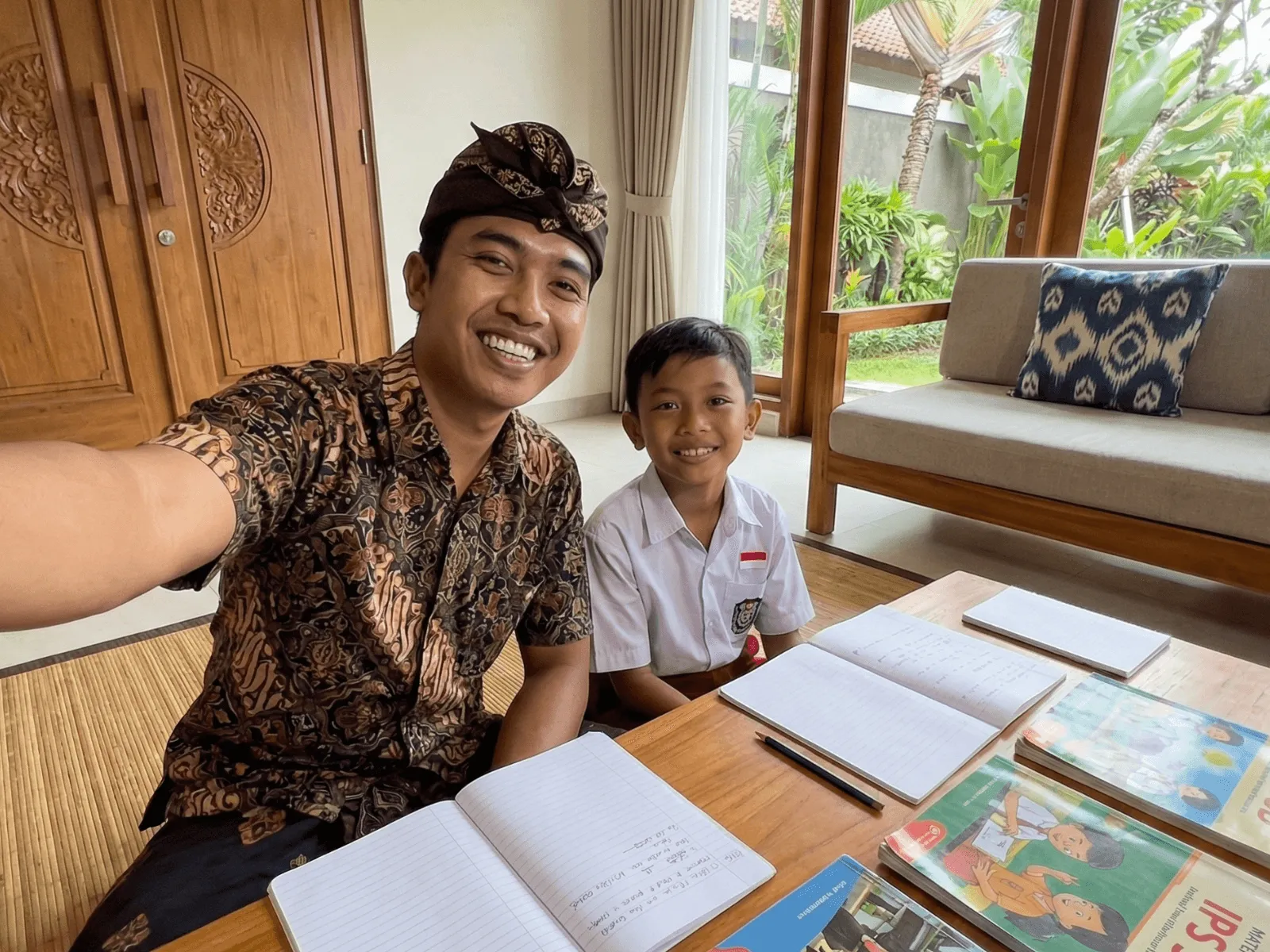
Handwriting Lessons With Edupola in Bali
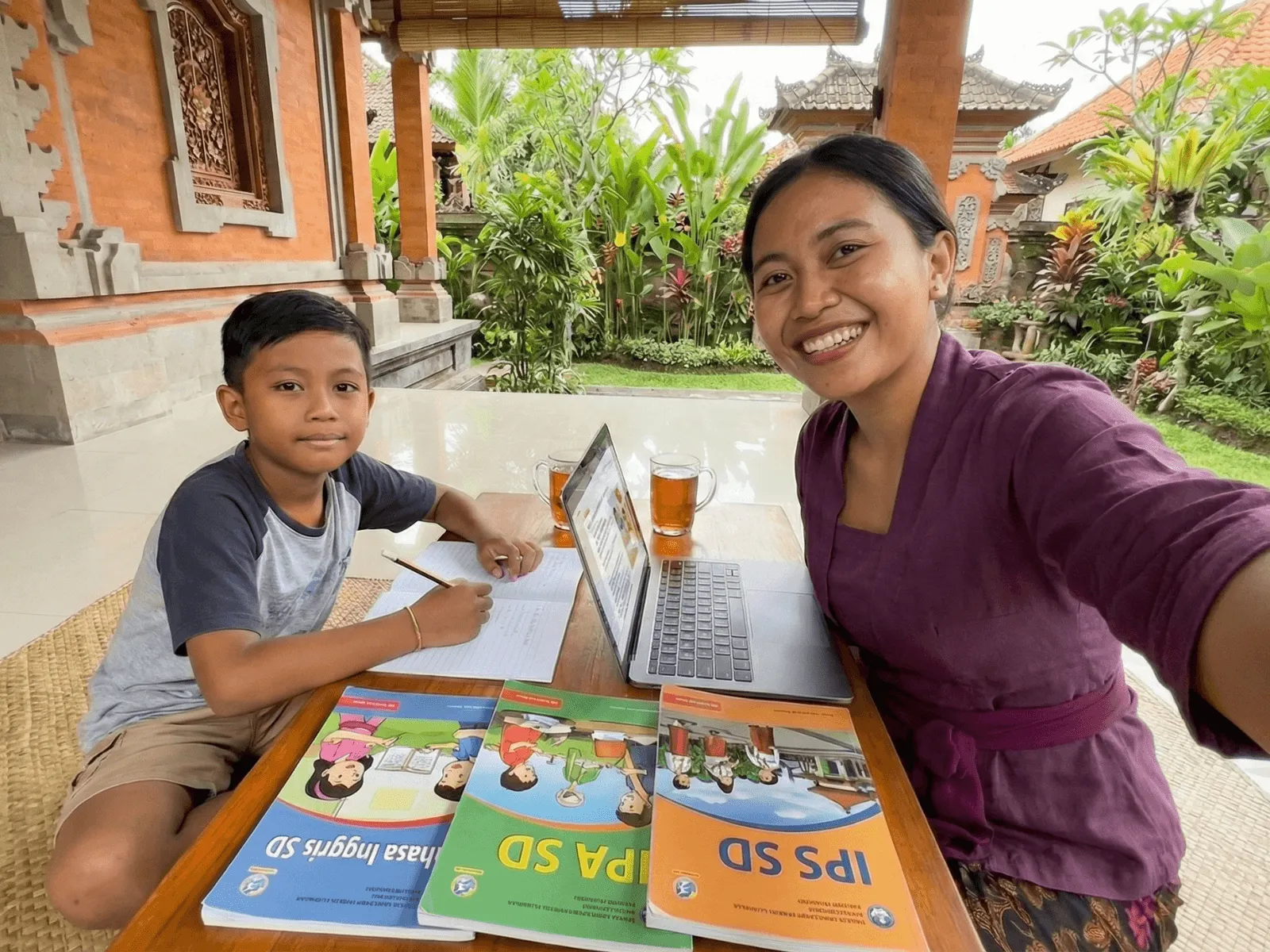
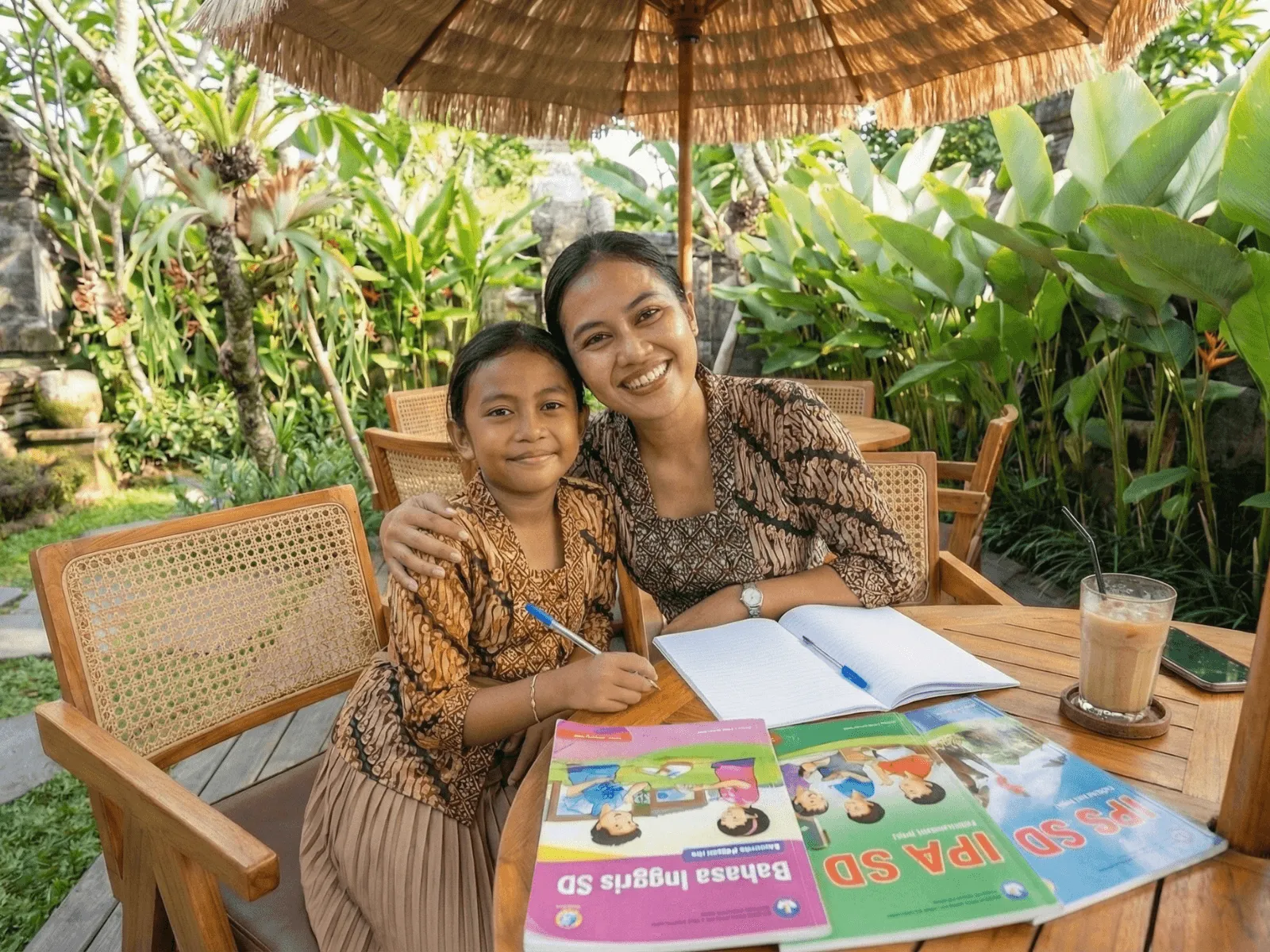
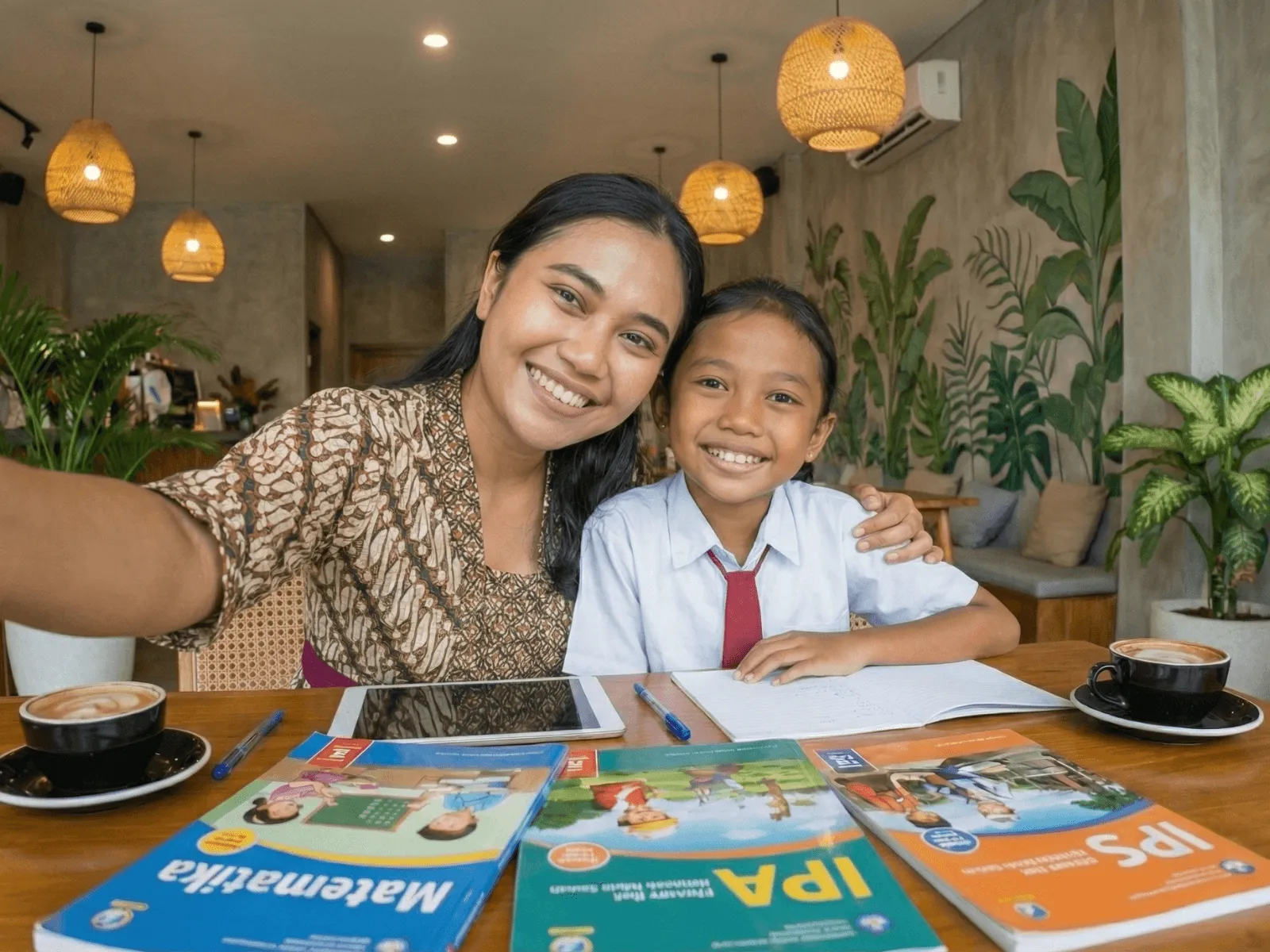
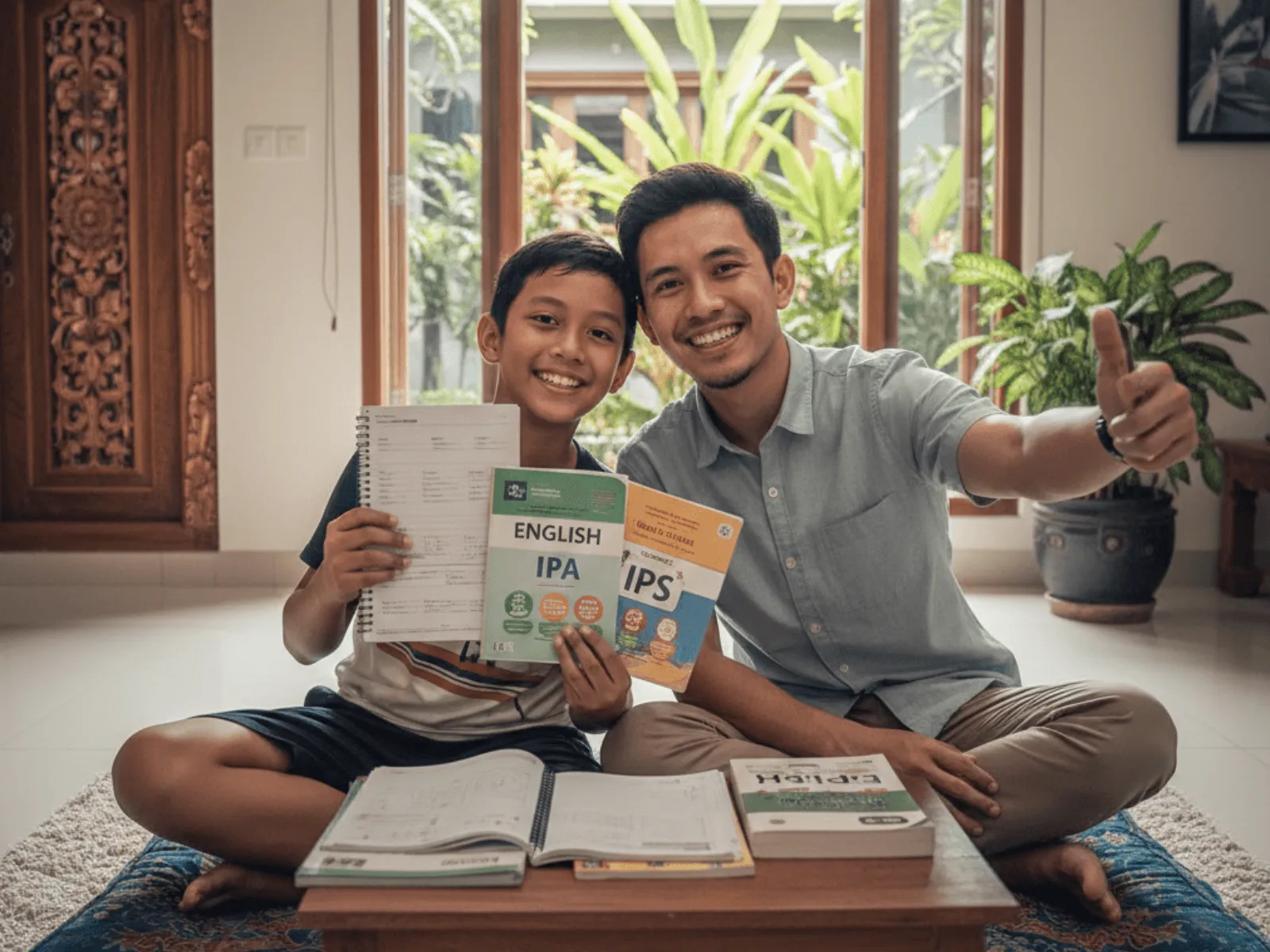
The photographs below were taken during handwriting tutoring in Bali sessions with learners on the island.
Service Area
Where Edupola Handwriting Tutors Travel in Bali
Tutors for handwriting tutoring in Bali travel to the location you choose, from Denpasar, Badung, and Gianyar through to Tabanan, Buleleng, Klungkung, Bangli, Karangasem, and Jembrana. Sessions are at the family home almost always, and there is a practical reason beyond convenience: the table and chair the child uses every day are part of what is being assessed.
Seating turns out to matter as much as grip. A child writing at an adult table with their feet off the floor stabilises with their shoulder, and the grip cannot be corrected while that is happening. A tutor at your home can see the actual setup and suggest a cushion, a footrest, or a different chair, which is a repair no session elsewhere could make.
The Edupola office is not used as a lesson venue. Where no tutor is available near you, sessions run online. For this programme the online route has clear limits, set out in the next section. Ask the admin about tutor coverage at your location in Bali.
Online Sessions
Online Sessions in Bali and the Camera Angle on the Hand
Online sessions for handwriting tutoring in Bali run over Zoom or Google Meet, and they can work for this programme with one condition that is not negotiable: the camera has to show the hand. A view of the child's face tells a tutor nothing about grip, pressure, or paper position.
The usual arrangement is a phone propped at the side of the table, angled down at the page from slightly above the writing hand. Parents set this up in the first minutes and it becomes routine. With that view a tutor can see the grip, the pressure marks, and whether the other hand is holding the paper.
What does not transfer is the hand-over-hand guidance used with younger children, where a tutor moves the child's hand through a letter. In those cases a parent sits in and does that part while the tutor directs. Fees for online sessions match face-to-face sessions.
Frequently Asked
Questions From Parents About Handwriting Lessons in Bali
What does private handwriting tutoring in Bali cost?
Fees start from IDR 120,900 for a 60-minute session, the shortest option. Sessions of 90 and 120 minutes are available with the fee following the length. The final fee follows session length and the number of sessions per month, between 4 and 28. The admin sends the breakdown in writing before the first payment. Pencils, paper, and any worksheets are prepared by the learner and not included in the fee.
Why does the first session not start with letters?
Because untidy letters are usually a symptom and the cause sits in the hand. Forming a letter needs small finger muscles working while the wrist stays steady, and a child who is not there yet compensates by gripping with the whole hand. Practising letters on top of that practises the compensation. The first session checks grip, pressure, posture, and paper position, and the starting stage follows from what it finds.
My child is left-handed. Is that handled differently?
Yes, in three specific ways in Bali as anywhere, and the hand is never changed. The paper is angled the other way so the wrist stays straight, the grip sits slightly higher up the pencil so the fingers do not cover the writing, and the light comes from the right so the hand casts no shadow. Pencil is preferred over pen while letters are being learned, because a left hand travels over wet ink.
My child still swaps b and d. Should I be worried?
Not at kindergarten age or in the first year of school in Bali, where it is an ordinary stage. The two shapes are identical and only the direction differs. What helps is practising them separately instead of side by side, a spoken movement cue for each, and more reading. If it is still frequent well into the second or third year, especially with difficulty hearing sounds in words, the tutor will suggest an assessment.
How long before the writing changes?
Grip usually changes within a handful of sessions in Bali, since it is a habit and a short pencil does much of the work. Letter shapes follow over weeks, and the order matters: a corrected grip makes the letters improve, while corrected letters on a poor grip do not hold. Children whose hands need strengthening first spend a few weeks there before letters start, and the tutor says so at the first session.
How is a tutor matched to my child?
The schedule is settled first during the consultation, covering days, times, session length, and sessions per month. The Edupola team then looks for a tutor whose travel to your location in Bali stays short, and that search runs 1 to 5 working days. Experience with children of this age is part of the match, and children referred by a therapist are matched with a tutor who works within that report. If the first 2 weeks feel like a poor fit, a replacement is arranged at no extra cost.
Related Programmes
Early Years Programmes That Accompany Handwriting in Bali
Families taking handwriting tutoring in Bali often add one other programme, usually once the grip is settled.
-

Calistung Tutoring in Bali
Taken when reading and early counting need work alongside the writing.
-

Numeracy Tutoring in Bali
Chosen when numerals are being written and quantity needs building too.
-

Reading Tutoring in Bali
Often added because more reading is itself part of settling letter reversals.
Get Started
Start By Having the Grip Looked At
Tell us which hand your child writes with, what has been said about the writing, and the hour they are freshest. A tutor in Bali is matched within 1 to 5 working days.