
Private Painting Tutoring in Bali
Painting Tutoring in Bali: The Medium Decides the Method
Painting tutoring in Bali from Edupola pairs one teacher with one learner at home. Which paint you choose is not a preference, it is a working method. Watercolour forgives almost nothing while oil forgives for days, so 6 seeing skills come first. Fees from IDR 120,900 per session.

Rating and fees for painting tutoring in Bali
| Programme | Painting Tutoring in Bali |
|---|---|
| Provider | Edupola |
| Description | Private painting tutoring in Bali, one teacher per learner: the medium decides the working method, and seeing is trained before brush technique. |
| Fee | Fees start from Rp120,900 per session. |
| Session Length | 90 minutes |
| Schedule | Flexible, weekends included |
| Level | Beginner to advanced |
| Rating | 4.9 out of 5, based on 115 reviews |
Programme at a Glance
Painting Tutoring in Bali and the Medium You Choose
Painting tutoring in Bali runs one tutor with one learner, at your home. The first decision is which paint, and it is a bigger decision than beginners expect because it dictates how a session is structured.
Watercolour dries in minutes and cannot be lifted off, so the whole painting is planned before the first mark and worked light to dark. Acrylic dries fast and can be painted over, which rewards layering. Oil stays workable for days, so a painting is revisited and adjusted, and the session order follows what the paint is doing instead of what the learner wants to do next.
Underneath all of them sits the same foundation: seeing. Light and shade before colour, shape as an arrangement of areas, proportion measured instead of assumed. Fees start from IDR 120,900 per 60-minute session, with 4 to 28 sessions a month. This programme holds a 4.9 out of 5 rating across 115 learner reviews in Bali.
Media
Painting Media and the Method Each Demands
Painting teachers use this with a learner choosing. The third column is what surprises people, and it is the usual reason a medium gets abandoned.
| Medium | The working method it demands | What surprises people |
|---|---|---|
| Pencil and charcoal | Light and shade in one colour, erasable | How much of painting is decided here, before colour exists |
| Watercolour | Plan first, work light to dark, accept what happens | It cannot be corrected, so the planning is the skill |
| Gouache | Opaque layers that can cover, but stay fragile | It reactivates when wet, so later layers can lift earlier ones |
| Acrylic | Fast layering, corrections by painting over | It dries while you are mixing, especially in Bali's heat |
| Oil | Thick over thin, revisited across days | A painting occupies space for a week, and the room needs air |
| Digital painting | Layers and unlimited undo | Unlimited undo removes the decisions that teach you most |
Seeing
Six Things Trained Before Brush Technique
These are the first sessions of painting tutoring in Bali, whichever medium was chosen. None of them involve a brush.
-
Light and Shade Before Colour
A painting that reads from across the room reads because of its values, not its colours. Learners train this in pencil first, where there is nothing else to hide behind.
-
Shape as an Arrangement of Areas
Seeing a subject as a few large shapes before any detail. Beginners start with detail in one corner and discover the composition has nowhere left to go.
-
Distance and Proportion
Measuring relationships by eye against a reference instead of drawing the remembered size of a thing. This is the skill most often mistaken for talent.
-
One Consistent Light Direction
Choosing where the light comes from and keeping it for the whole painting. Shadows pointing in several directions is the fault that makes a painting feel wrong without anyone naming it.
-
Hard Edges and Soft Edges
Deciding which boundaries are crisp and which dissolve. Everything equally sharp flattens a painting, and edges are how depth is produced.
-
Stopping in Time
Recognising when a painting is finished, which is usually earlier than a learner believes. More paintings are lost to overworking than to being left too soon.
Learning Path
The Order of Material in Painting Lessons
The painting stage a learner starts at is set by what their pencil studies show, and never by the medium they are most excited about.
-
Stage 1
Pencil and Values
Light and shade in one colour, on simple objects from the learner's own house. Unglamorous and the stage that decides how everything after it looks.
- Values in one colour
- Real objects
- Measured proportion
-
Stage 2
The First Medium and Basic Strokes
Handling the chosen paint: how much water, how much pressure, how it behaves as it dries. Small studies instead of a finished work, so mistakes cost nothing.
- Handling the paint
- Small studies
- How it dries
-
Stage 3
Mixing Colour
Making the colour you see instead of using the colour in the tube. Mixing from a small palette teaches more than owning many colours, which is why the first list is short.
- A small palette
- Matching what you see
- Greys and neutrals
-
Stage 4
A Whole Work and Finishing It
One complete painting from plan to finish, including the decision to stop. Finishing one is worth more than starting five, and it is where learners first feel like painters.
- From plan to finish
- Deciding to stop
- Varnish or framing
Who It Is For
Learners Who Take Painting Lessons in Bali
Every session holds one learner, so the subject and the medium are chosen with that learner.
-
Primary School Children
Younger learners in Bali. Sessions are shorter and built on finishing small works, with the materials chosen for easy cleaning.
-
Competition Entrants
Learners in Bali with a contest date. Composition and finishing under time carry the sessions, since an unfinished entry is marked on what is there.
-
Adults Starting From Nothing
Learners in Bali who never painted. Pencil values come first, and a first small painting is usually finished within a month.
-
Pupils Aiming at Art School
Learners in Bali preparing a portfolio. Observation work from life carries the most weight in an entrance assessment and is practised most.
-
Architects and Designers
Learners who need fast sketching and rendering. Perspective and shading are the target, and the medium is chosen for speed.
-
Learners Who Want to Sell
Learners in Bali hoping to sell work. Consistency, finishing, and photographing a painting honestly are addressed alongside technique.
One Session
Inside a 60-Minute Painting Session
This is the division used once a learner is working in paint. The tidying block is inside the session on purpose.
-
10 minutes
Looking at Last Week's Work
The study or painting from the previous session, read for one pattern instead of marked everywhere. The learner says what they see first.
-
15 minutes
A Seeing Exercise
A short exercise with no finished work attached: values, edges, or proportion. It is where the actual improvement happens.
-
25 minutes
Working on the Painting
The current work, with the teacher demonstrating on their own paper when something needs showing instead of touching the learner's painting.
-
5 minutes
Clearing the Materials
Brushes washed and the palette dealt with, inside the session. Ruined brushes are the most common avoidable cost in this subject.
-
5 minutes
Setting the Home Practice
One short study to do before the next session, with the subject named so nothing has to be decided at home.
In a 90 or 120 minute session, a whole painting is taken from plan to finish while the light and the drying stay consistent, which is what learners working in watercolour or oil usually choose.
Prepared by the Learner
What to Have Ready Before the First Session
The admin confirms these once the schedule for painting tutoring in Bali is agreed. Paper, pencils, and the materials for your chosen medium are prepared by the learner and not included in the fee.
-
The Medium You Are Aiming At
Decided, or decided with the teacher in the consultation. It determines the materials list and the shape of every session, so it is worth settling before anything is bought.
-
A Table and Enough Light
A surface you can work on with light from the side opposite your painting hand, so your hand casts no shadow. Daylight is better than a single overhead bulb for judging colour.
-
Somewhere Paint Is Allowed
A spot where spills are acceptable. Learners who paint somewhere precious paint cautiously, and cautious painting is a technique problem of its own.
-
A Ventilated Room for Oil
If you choose oil, a room with moving air, because solvents need it. This single requirement rules oil out for some learners, and better to know in advance.
-
Two Paintings You Like
Two works you admire, with a sentence on why. They tell the teacher more about where you are heading than any amount of discussion.
If you have not chosen a medium, say so during the consultation. Most learners start in pencil and watercolour, and the teacher advises before any materials are bought.
Drying
Drying Time Sets the Order of Work
Every medium in painting tutoring in Bali imposes a schedule, and learners who fight it produce muddy paintings and blame their technique. Drying time is the schedule, and it cannot be hurried or ignored.
Watercolour is the strictest. Paint applied to a damp area spreads and blends, which is either the effect you planned or the accident that ruins the passage, and there is no way to remove it. So a watercolour is worked in stages with waiting built in, and the waiting is part of the method instead of wasted time. Acrylic has the opposite problem in Bali's heat: it dries on the palette while you mix, so small amounts are mixed often.
Oil reverses everything. A painting stays workable for days, which allows adjustment and demands patience, and it means thin layers go underneath thicker ones so the surface dries in the right order. A learner who works thick first gets a painting that cracks months later, which is the kind of mistake nobody notices until it is permanent.
What Learners Say
Stories From Painting Learners in Bali
The quotes below come from learners in Bali who completed the painting programme at Edupola, with their situation and what changed.
-
★★★★★
My child always liked to scribble, and after lessons at Edupola the technique became directed. She can work properly now.
Won a district painting competition
Ayu C.
Parent of an 8-year-old · Verified learner
-
★★★★★
At 42 I started painting as a hobby. My Edupola tutor was very patient. I now have 5 finished paintings and sold one.
Sold a first painting
Suartana
Adult learner, aged 42 · Verified learner
-
★★★★★
I took painting lessons at Edupola to prepare for a design course entrance. My tutor helped me assemble the portfolio.
Accepted onto a visual design degree
Ratna S.
Senior secondary pupil, aged 17 · Verified learner
-
★★★★★
As an architect I needed quick sketching skills. Lessons at Edupola helped me with perspective and shading, which clients respond to.
Hand rendering improved
Dian P.
Architect, aged 31 · Verified learner
-
★★★★★
My child used to spend too long on a screen. Since the painting lessons he has something productive to do and concentrates better.
More focus and more creative
Sukma W.
Parent of a 12-year-old · Verified learner
-
★★★★★
After retiring I looked for something enjoyable. I chose watercolour at Edupola and have no regrets; the house is filling with paintings.
A new hobby worth having
Artini
Retired teacher, aged 58 · Verified learner
Climate
Humidity in Bali Changes How Paint Behaves
The same materials behave differently here, and painting tutoring in Bali plans around it instead of treating it as a learner's error. Humidity slows drying for water-based paint and heat speeds it on the palette, which sounds contradictory and is not: the thin film on paper stays damp while the thick blob on the palette skins over.
For watercolour that means a wash takes longer to set than any tutorial filmed elsewhere suggests, so learners who touch it too early spoil the edge. For acrylic it means mixing small and often, keeping a lid or a damp sheet over the palette, and accepting that a large smooth area is harder here than in a dry climate.
Oil has its own local problem, and it is storage instead of painting. A canvas drying for days in a humid room with little air collects dust and dries unevenly, and in the wet season it can stay tacky far longer than expected. Teachers therefore settle where a work will sit between sessions before the first oil painting is started, since a damaged drying painting cannot be rescued.
How to Register
Four Steps to the First Painting Session
The opening consultation carries no fee. Which medium you want, and what you want to paint, is what the admin asks.
-
Name the Medium and the Subject
Which paint you want to work in and what you want to paint. Those two answers set the materials list and the order of the sessions.
-
Agree the Schedule
Days, times, session length, and sessions per month are agreed with the admin, following the hours you can give to short studies between sessions, and the drying time your medium needs.
-
Matching the Teacher
The team looks for a tutor whose travel to your location in Bali stays short, and that search runs 1 to 5 working days. Watercolour, oil, and portfolio preparation are matched to teachers who work in them.
-
The First Session
Your two chosen paintings are discussed, a short pencil study is made, and the medium is confirmed before anything is bought.
Need help? Contact our admin on WhatsApp for a free consultation.
Documentation
Painting Lessons With Edupola in Bali
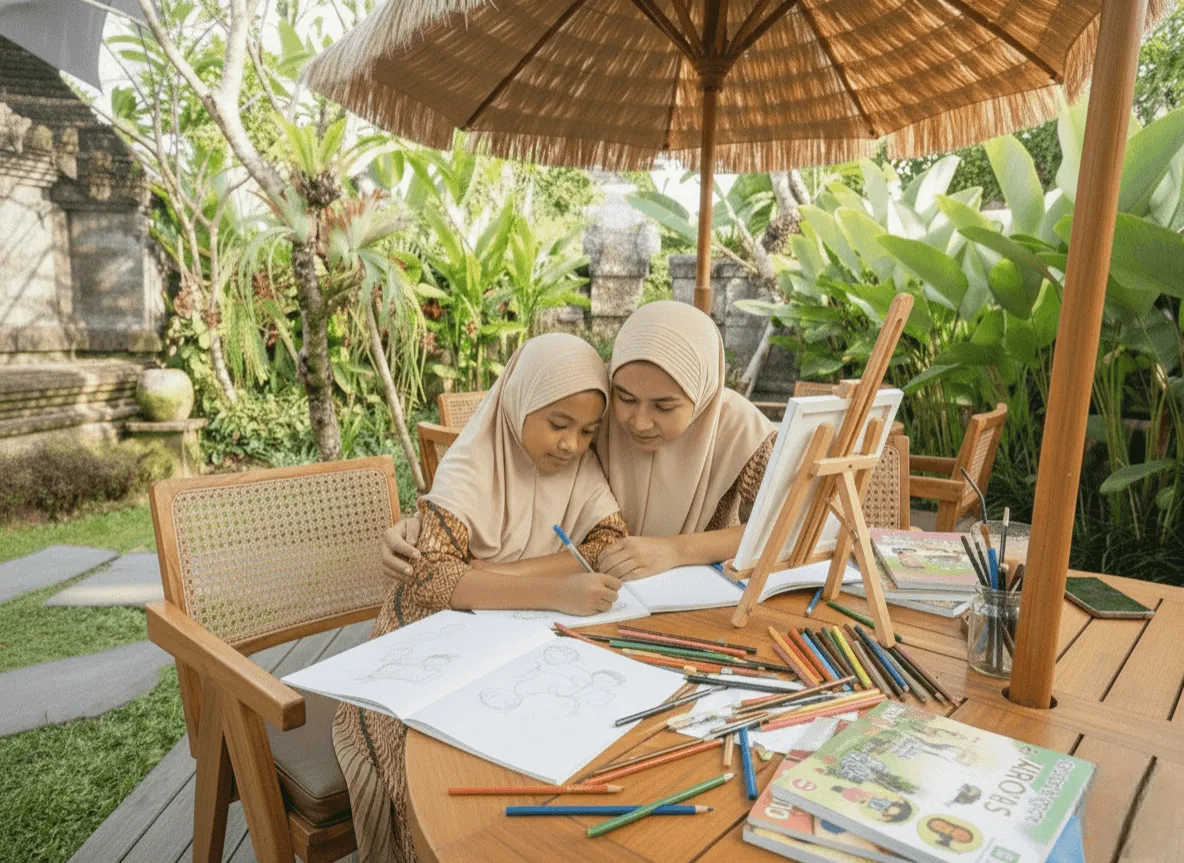
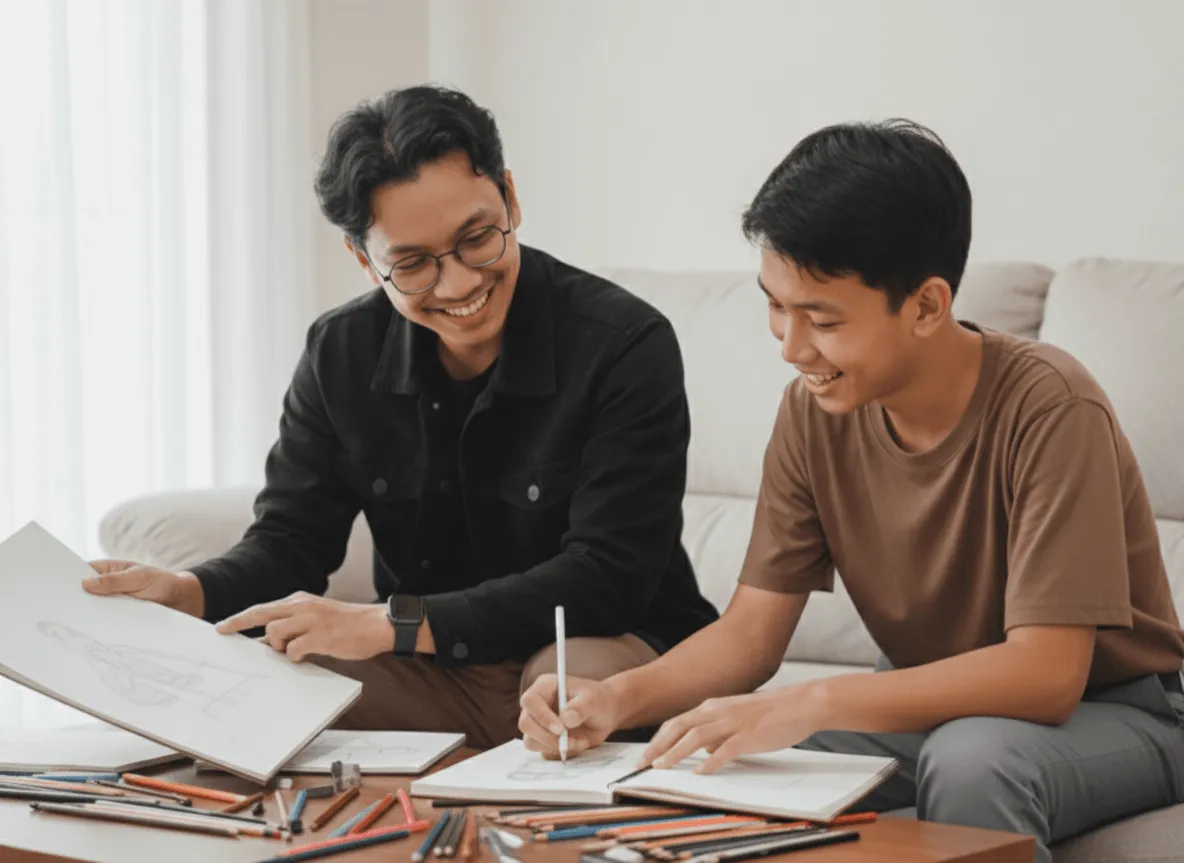
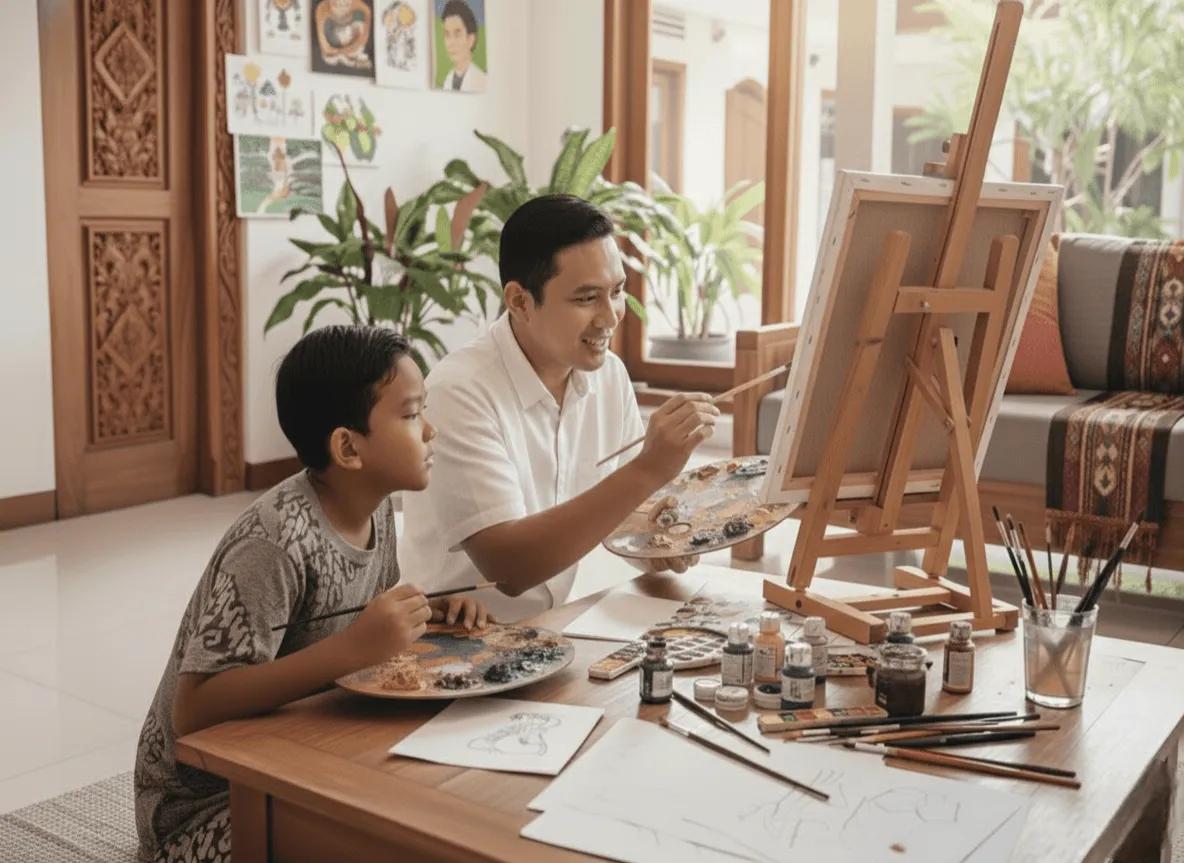
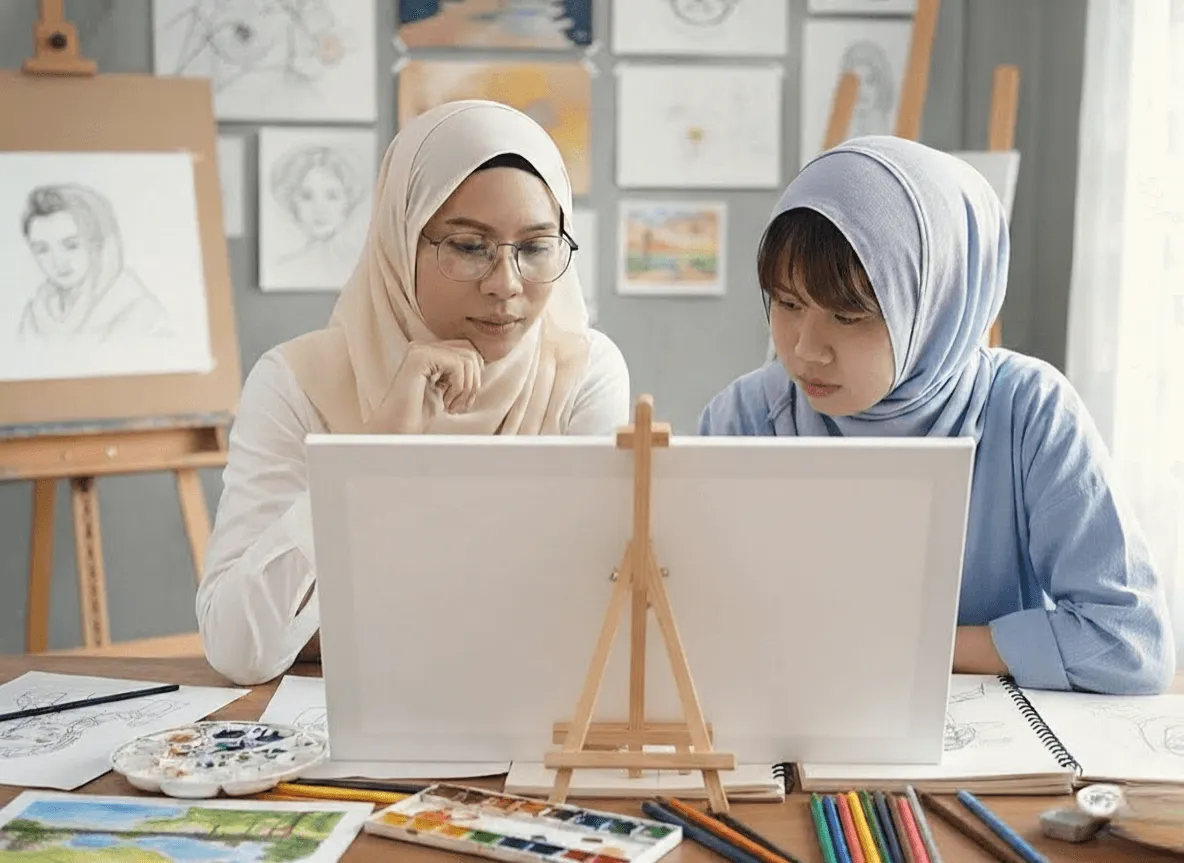
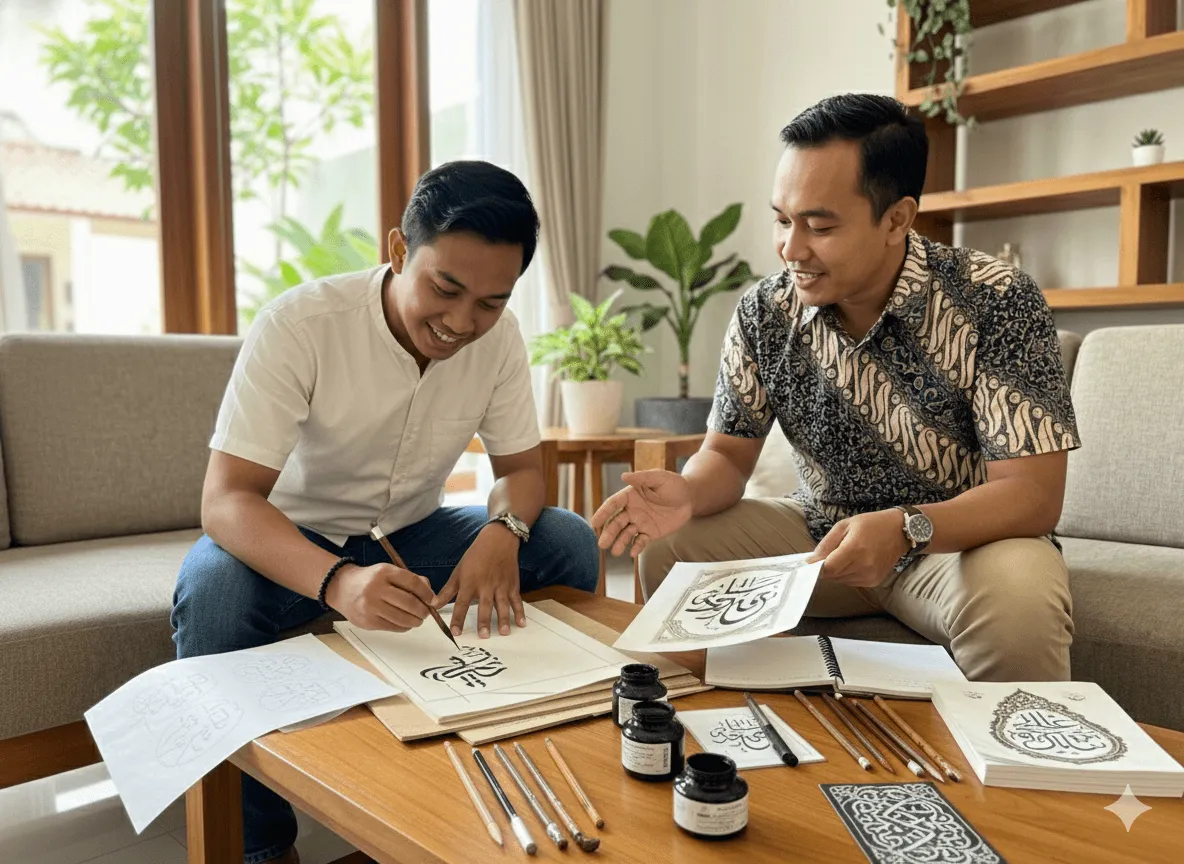
The photographs below were taken during painting tutoring in Bali sessions with learners on the island.
Service Area
Where Edupola Painting Teachers Travel in Bali
Tutors for painting tutoring in Bali travel to the location you choose, from Denpasar, Badung, and Gianyar through to Tabanan, Buleleng, Klungkung, Bangli, Karangasem, and Jembrana. The session happens where paint is allowed, with light from the side and a table that can take a spill.
The medium decides the match as much as the distance. Pencil, watercolour, and acrylic are taught by most teachers; oil by fewer, partly because it needs a ventilated room and a place for a canvas to dry for days. Learners preparing an art school portfolio are matched to teachers who have assembled one.
The Edupola office is not used as a lesson venue. Where no tutor is available near you, sessions run online. Part of this programme transfers online and colour does not, as the next section explains. Ask the admin about teacher coverage at your location in Bali.
Online Sessions
Online Sessions in Bali and Colour on a Screen
Online sessions for painting tutoring in Bali run over Zoom or Google Meet, and this subject divides sharply. Drawing, values, composition, planning a painting, and reviewing finished work all transfer well with a camera above the paper.
Colour does not, and the limit is a physical one, not a technical one. Two screens never show the same colour, so a teacher cannot confirm a mix through a stream. What the online route does instead is work on the decisions: which colour is too warm, where the value is wrong, whether the edge should soften, all of which can be judged from relationships instead of exact hues.
Learners painting in colour usually alternate: online for drawing, planning, and review, in person for the sessions where mixing is taught. Fees for online sessions match face-to-face sessions.
Frequently Asked
Questions From Painting Learners
What does private painting tutoring in Bali cost?
Fees start from IDR 120,900 for a 60-minute session, the shortest option. Sessions of 90 and 120 minutes are available with the fee following the length. The final fee follows session length and the number of sessions per month, between 4 and 28. The admin sends the breakdown in writing before the first payment. Paper, pencils, and the materials for your chosen medium are prepared by the learner and not included in the fee.
Which medium should a beginner choose?
Pencil first for everyone, then usually watercolour or acrylic. Watercolour cannot be corrected, which makes it demanding and an excellent teacher of planning; acrylic forgives by letting you paint over, and dries fast in Bali's heat. Oil is the most forgiving to paint and the most demanding to house, since it needs air and a week of drying space.
At what age can a child start painting lessons?
From around 6, with short sessions and materials that clean up easily. At that age the aim is handling the medium and finishing something, not accurate observation; measured proportion work usually starts around 9 or 10. Where a particular child actually is comes out in the first session, and age alone decides nothing.
Do I need to be able to draw first?
You need to be learning to see, which is what the first stage trains, and that is not the same as being able to draw well. Values, proportion, and edges are trainable and they are what make a painting read. Learners who arrive unable to draw spend a few sessions in pencil and then start painting, which is the same route everyone takes.
How long does one painting take?
A small watercolour study can be finished in a session; a larger watercolour usually takes two or three because of the waiting between stages. Acrylic is faster to finish and slower to plan. Oil runs across weeks by nature, since layers have to dry in order. Teachers set the first project small deliberately, because finishing one work matters more than starting an ambitious one.
How is a painting teacher matched to a learner?
The schedule is settled first during the consultation, covering days, times, session length, and sessions per month. The Edupola team then looks for a tutor whose travel to your location in Bali stays short, and that search runs 1 to 5 working days. The medium matters here: watercolour, oil, and portfolio preparation are matched to teachers who work in them. If the first 2 weeks feel like a poor fit, a replacement is arranged at no extra cost.
Related Programmes
Other Programmes Learners Add in Bali
Learners taking painting tutoring in Bali often add one other programme, usually once a first work is finished.
-
Drawing Tutoring in Bali
Taken by learners who want the pencil foundation strengthened further.
-

Graphic Design Tutoring in Bali
Chosen by learners whose work needs to sit inside a layout.
-
Sculpture Tutoring in Bali
Often added by learners who want to work in three dimensions.
Get Started
Start From Two Paintings You Like
Name the medium you want, what you want to paint, and where paint is allowed in your house. A tutor in Bali is matched within 1 to 5 working days.