
Private Cooking Tutoring in Bali
Cooking Tutoring in Bali: In Your Kitchen, On Your Own Stove
Cooking tutoring in Bali from Edupola sends one teacher to one learner's kitchen. A dish learned on someone else's equipment often fails at home, so the session happens on your stove, your oven, and 5 knife skills come first. Fees from IDR 136,200 per session.
Rating and fees for cooking tutoring in Bali
| Programme | Cooking Tutoring in Bali |
|---|---|
| Provider | Edupola |
| Description | Private cooking tutoring in Bali, held in the learner's own kitchen with the equipment already there, so the recipe still works after the session ends. |
| Fee | Fees start from Rp136,200 per session. |
| Session Length | Sessions run 60, 90, or 120 minutes. |
| Schedule | Flexible, following the learner's calendar. |
| Start | Lessons can start any time after registration. |
| Sessions per Month | 4 to 20 sessions per month, as needed. |
| Rating | 4.9 out of 5, 128 reviews |
Programme at a Glance
Cooking Tutoring in Bali in the Learner's Own Kitchen
Cooking tutoring in Bali from Edupola is one teacher and one learner, and the venue is not negotiable: it is your kitchen. Every other arrangement teaches a dish that works once.
A gas ring that burns hotter than average, an oven with one side warmer than the other, a knife that needs sharpening, a work surface too narrow to lay ingredients out. Those four facts decide the result more than the recipe does, and none of them exist in a teaching kitchen. So the teacher adapts the technique to the equipment that is actually there.
The ingredients are yours too, bought at the market near you, because availability differs across Bali and a recipe built on something you cannot find is a recipe you will not repeat. Fees start from IDR 136,200 per 60-minute session, with 4 to 28 sessions a month. This programme holds a 4.9 out of 5 rating across 128 learner reviews in Bali.
Dishes
What You Want to Cook and the Technique Behind It
Learners choose from this at the consultation. The third column is where that route usually fails, and it is different for each one.
| What you want to cook | The technique trained | What most often goes wrong |
|---|---|---|
| Everyday family meals | Fast even cutting, controlling the flame, frying aromatics until cooked through | Aromatics taken off half cooked, so the taste is sharp and the dish tastes raw |
| Indonesian and Balinese dishes | Building a spice base, seasoning in stages, long cooking over a low flame | Everything added at once, so the layers of flavour disappear |
| Western dishes | Controlling how far meat is cooked, making a sauce from the pan, roasting | Meat cut before it rests, so the juices run out and the texture dries |
| Cakes and bread | Weighing ingredients, kneading to the right point, learning your own oven | The oven assumed to be even, when every home oven has a hotter side |
| Dishes for a business | Standardising a recipe, costing portions, preparing ahead, plating tidily | The recipe never written with exact quantities, so the taste differs day to day |
Knife Skills
Five Knife Skills Trained Before Anything Else
These open every route in cooking tutoring in Bali. They are also the part learners are most tempted to skip.
-
Holding the Knife and the Food
How to hold the knife and where the guiding hand sits so the fingertips stay away from the blade. This is drilled slowly first, because speed built on a bad grip is the one habit that ends in an injury.
-
Pieces of One Size
Food cut to one size cooks at one speed. Mixed sizes mean some pieces collapse while others are still raw, and no amount of flame control rescues it.
-
Several Shapes of Cut
Dice, thin slices, fine chopping, and batons. Each shape has a reason: more surface means faster cooking and more browning, less surface means the piece holds its shape.
-
Looking After the Edge
A blunt knife crushes food and tears the cut, especially on anything watery. Simple sharpening and how to store a knife are covered, since storage is what blunts most home knives.
-
The Order of Preparation
Everything cut and arranged before the flame is lit. This single habit is what separates cooking you control from cooking that is chasing you.
Learning Path
Cooking Techniques and the Order of Learning Them
The cooking stage a learner starts at is set by one dish cooked in the first session, not by how many recipes they have read.
-
Stage 1
Preparing and Cutting
Knife skills, laying out ingredients before the flame is lit, and getting to know the equipment in the learner's own kitchen. The stage that feels furthest from cooking.
- Knife skills
- Laying out first
- Your own equipment
-
Stage 2
Controlling the Heat
Telling frying, deep frying, boiling, and steaming apart, with the flame each one needs. Learners practise reading the signs that food is ready to turn or lift.
- Four methods
- The right flame
- Reading the signs
-
Stage 3
Building Flavour
The spice base, the order ingredients go in, and seasoning in stages. What is trained is tasting at several points and adding a little at a time.
- The spice base
- Order of adding
- Tasting in stages
-
Stage 4
Plating and Repeating
Arranging the dish, then writing the recipe with exact quantities so the result can be repeated. This stage matters most to learners cooking for a business.
- Arranging a dish
- Exact quantities
- Repeatable results
Who It Is For
Learners Who Take Cooking Lessons in Bali
Every session holds one learner, so the dishes are chosen by that learner and cooked on their own equipment.
-
Running a Household Kitchen
Learners in Bali cooking for a family daily who want more variety. Sessions favour dishes that can be repeated quickly on a weekday.
-
Food Business Owners
Owners of a shop, catering, or home business in Bali. The work is standardising recipes, costing portions, and preparing ahead.
-
Learners Newly Living Alone
Learners in Bali managing a kitchen for the first time. Knife skills, heat control, and a few repeatable dishes fill the early sessions.
-
Future Kitchen Staff
Learners in Bali preparing for commercial kitchen work. Speed of preparation and clean working practice take the larger share.
-
Baking Enthusiasts
Learners in Bali whose focus is the oven. This route demands accurate weighing and learning one oven's own behaviour.
-
Families Cooking Together
Learners in Bali taking the programme alongside a family member. One person holds the work each session and the others assist.
One Session
Inside a 60-Minute Cooking Session in the Kitchen
This is the division used once ingredients arrive prepared. Every session ends with a dish on a plate and a written recipe.
-
5 minutes
Checking the Ingredients and Equipment
The teacher checks what the learner has bought and what equipment is available, then adjusts the plan if something is missing.
-
15 minutes
Preparing and Cutting
Everything is cut and arranged before the flame is lit, while the teacher corrects the knife grip and the evenness of the pieces.
-
25 minutes
Cooking the Dish
The learner cooks while the teacher stays alongside, naming the signs that food is ready to turn or lift, and asking for a taste at several points.
-
10 minutes
Plating and Tasting
The dish is arranged and tasted together. The teacher asks what the learner finds lacking, then names which step decided it.
-
5 minutes
Writing the Recipe
The recipe is written with exact quantities so it can be repeated, and one dish is set to practise alone before the next session.
In a 90 or 120 minute session, a dish with long cooking or a baking project fits without being rushed at the end, which is what learners cooking for a business or focusing on the oven usually choose.
Prepared by the Learner
The Ingredients and Equipment the Learner Provides
The admin confirms these once the schedule for cooking tutoring in Bali is agreed. Ingredients from the list, a sharp knife, and a board are prepared by the learner and not included in the fee.
-
Ingredients From the List
The list is sent a few days before the session so you can buy at the market or shop near you. Fresh ingredients are best bought on the day, and the list says which ones those are.
-
A Knife That Is Still Sharp
A blunt knife crushes food and tears the cut, especially on watery things like tomatoes. One sharp general-purpose knife is enough to start, and sharpening is covered in the session.
-
A Board and Small Bowls
A board wide enough to work on and several small bowls to hold what has been cut. Those bowls are what make laying everything out beforehand possible at all.
-
Scales for the Baking Route
Learners focused on cakes and bread need kitchen scales. Baking demands exact quantities, and cup measures vary with how the flour was packed into them.
-
A Kitchen Free at That Hour
Make sure the kitchen is usable at the agreed hour, including its heat source. Sessions with an oven need it heating earlier, so the time is set with that in mind.
If you are unsure what your equipment can do, say so during the consultation. The teacher plans the first dish around what is already in the kitchen instead of asking for anything new.
The Venue
Why the Session Happens in the Learner's Kitchen
Almost every cooking course runs in the provider's kitchen, with uniform equipment and ingredients already prepared. The result feels satisfying on the day, and learners across Bali then fail to repeat it at home. The cause is not a poor memory: it is that the equipment was different, and the equipment is a large part of the technique.
So cooking tutoring in Bali runs in the learner's kitchen. The teacher fits the technique to what is there, lowering the flame on a ring that burns hot, or turning a tray halfway through on an oven with one warmer side. That adjustment is the lesson as much as the recipe is, and it cannot be taught anywhere else.
There is a practical consequence as well: the ingredients are bought by the learner at their own market. Availability differs between areas across Bali, and teachers work with what a learner can actually find, so the recipe stays usable after the programme ends.
What Learners Say
Stories From Cooking Learners in Bali
The quotes below come from learners in Bali who completed the cooking programme at Edupola, with their situation and what changed.
-
★★★★★
At first I only wanted to learn some menu variety for the family. After 10 sessions at Edupola I found the courage to open a home catering business. The chef was so patient teaching me from nothing, and my catering now serves 30 regular customers every week.
Opened a home catering business within 3 months
Ayu S.
Homemaker, now a catering owner · Verified learner
-
★★★★★
I did not go to university and had no idea what to do. After taking cooking lessons at Edupola, the chef trained me in saute, grill, and hotel-standard plating. Now I officially work in the kitchen of a five-star hotel in Nusa Dua. A dream come true.
Hired into a star hotel kitchen after 16 sessions
Adi N.
School leaver, now a cook at a five-star hotel · Verified learner
-
★★★★★
My shop had been running for 5 years but the menu was always the same. The Edupola chef helped me develop 8 new dishes that turned out to sell well. Customers say the cooking has moved up a class. Revenue is up by almost half compared with before the lessons.
More dishes on the menu and revenue up 40 per cent
Eka D.
Owner of a rice shop in Denpasar · Verified learner
-
★★★★★
As a food vlogger I realised I had to actually be able to cook, not only review. Lessons at Edupola taught me knife skills and plating that made my content far more professional. My Instagram followers have doubled since I started posting my own cooking videos.
Cooking content more credible, followers growing fast
Krisna W.
Food vlogger and content creator · Verified learner
-
★★★★★
After retiring I needed a productive activity. I tried pastry lessons at Edupola and got hooked. The chef taught me everything from making basic dough to decorating birthday cakes. Now I sell cakes online and the orders keep growing every month.
Found a new passion and sells cakes online
Sri R.
Retired civil servant, now a home baker · Verified learner
-
★★★★★
The teacher at school said my technique was already neat but I needed an extra mentor to prepare for a competition. The Edupola chef trained me intensively over 8 sessions, focusing on speed cooking and food presentation. Alhamdulillah, I won 1st place in an all-Bali cooking competition.
1st place in a Bali provincial cooking competition
Surya P.
Tourism vocational high school student · Verified learner
Progress
How Long Before You Can Cook Without a Recipe
What changes fastest in cooking tutoring in Bali is usually knife skills and heat control, because both show their result inside the same session. Building flavour moves more slowly for learners in Bali, since it requires tasting repeatedly and adjusting a little at a time, and that judgement is built over weeks.
The sign that a learner is coming free of recipes is simple: they can swap one ingredient for another that is available without the dish failing. In Bali that ability grows out of understanding what each ingredient is doing, which is why teachers explain the reason for a step instead of only the step.
Edupola promises no particular level of skill in a particular number of sessions. What the programme provides is a clear order of techniques, recipes written with exact quantities so they can be repeated, and adjustment to the equipment that makes those recipes work in your kitchen.
For learners cooking for a business the measure is different again: what matters is sameness of taste between days, and that is read off a recipe already written with exact quantities. A learner whose recipe is fixed can hand the work to someone else, which is the point at which a kitchen stops depending on one person.
How to Register
Four Steps to the First Cooking Session
The opening consultation carries no fee. The admin asks which dishes you want and what equipment your kitchen has.
-
Name the Dishes and the Equipment
A few dishes you want to be able to cook, plus what is in your kitchen, including whether there is an oven. Both decide the route.
-
Agree the Schedule
Days, times, session length, and sessions per month are agreed with the admin, following the hours your kitchen is genuinely free, which is the binding constraint in this programme.
-
The Ingredient List Is Sent
The admin sends the list a few days before the session so you can buy at the market or shop near you, with the fresh items marked.
-
The First Session
The teacher checks the equipment and the flame in your kitchen, drills knife skills, then cooks one dish with you.
Need help? Contact our admin on WhatsApp for a free consultation.
Documentation
Cooking Lessons With Edupola in Bali
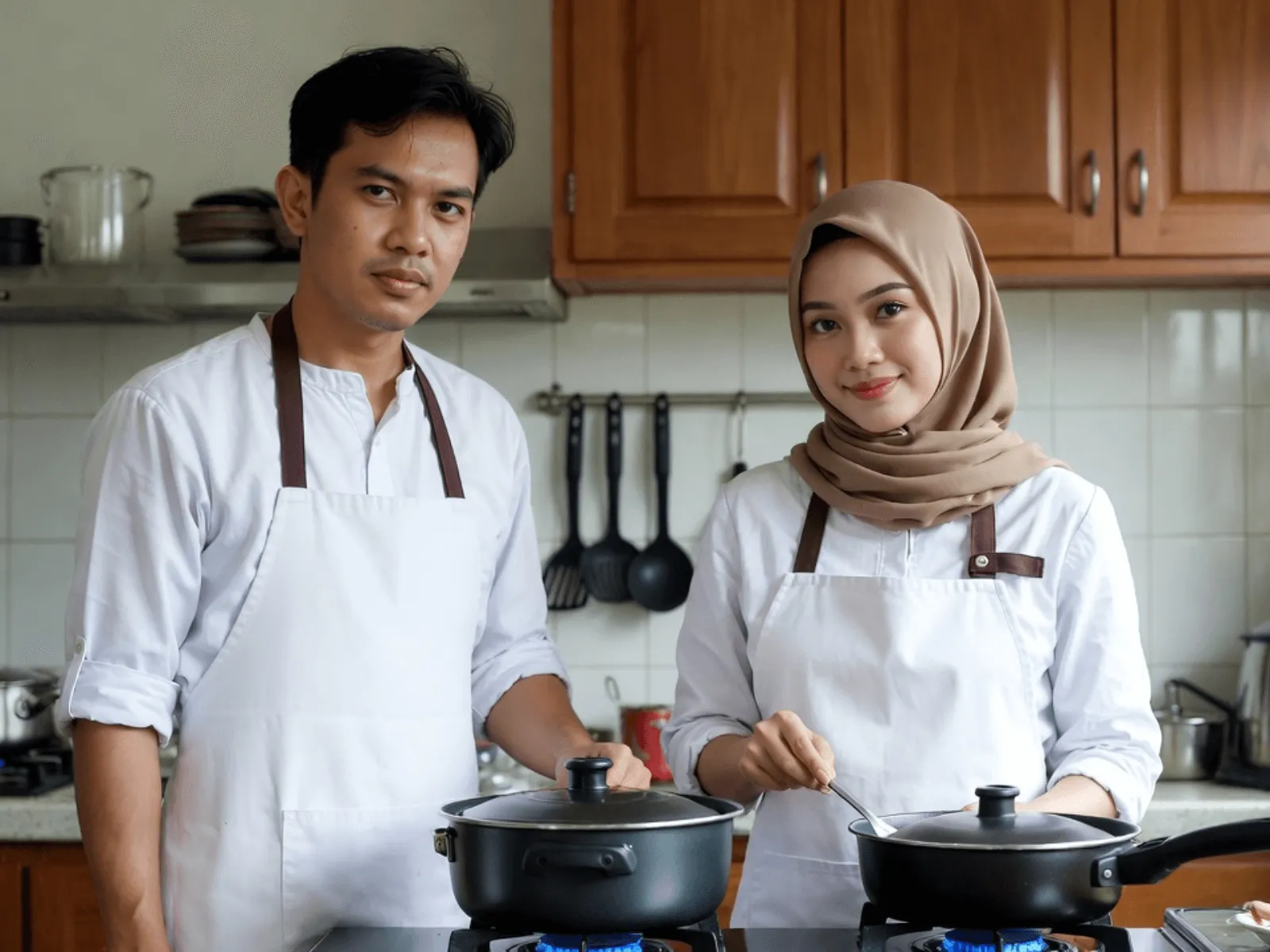
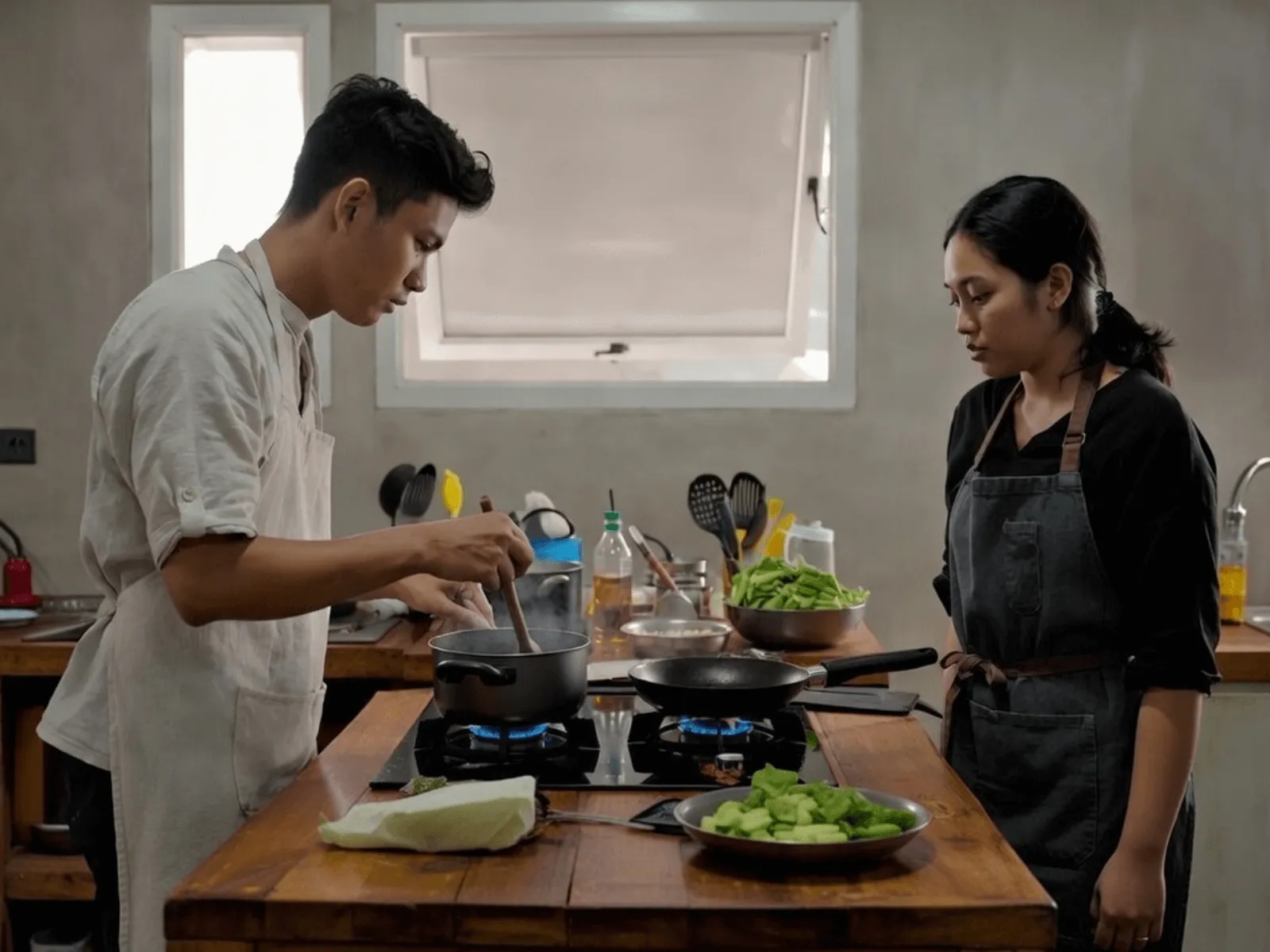
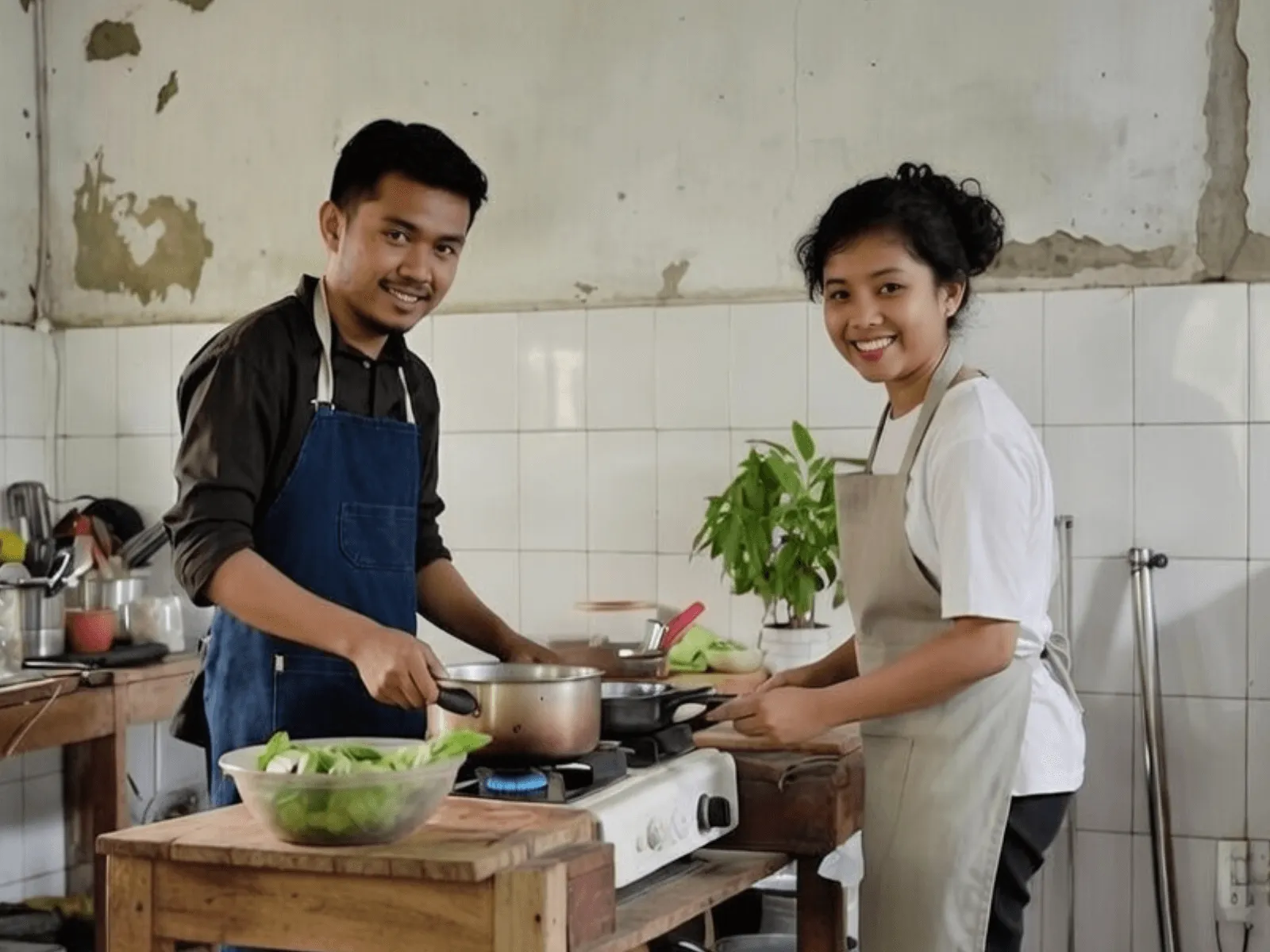
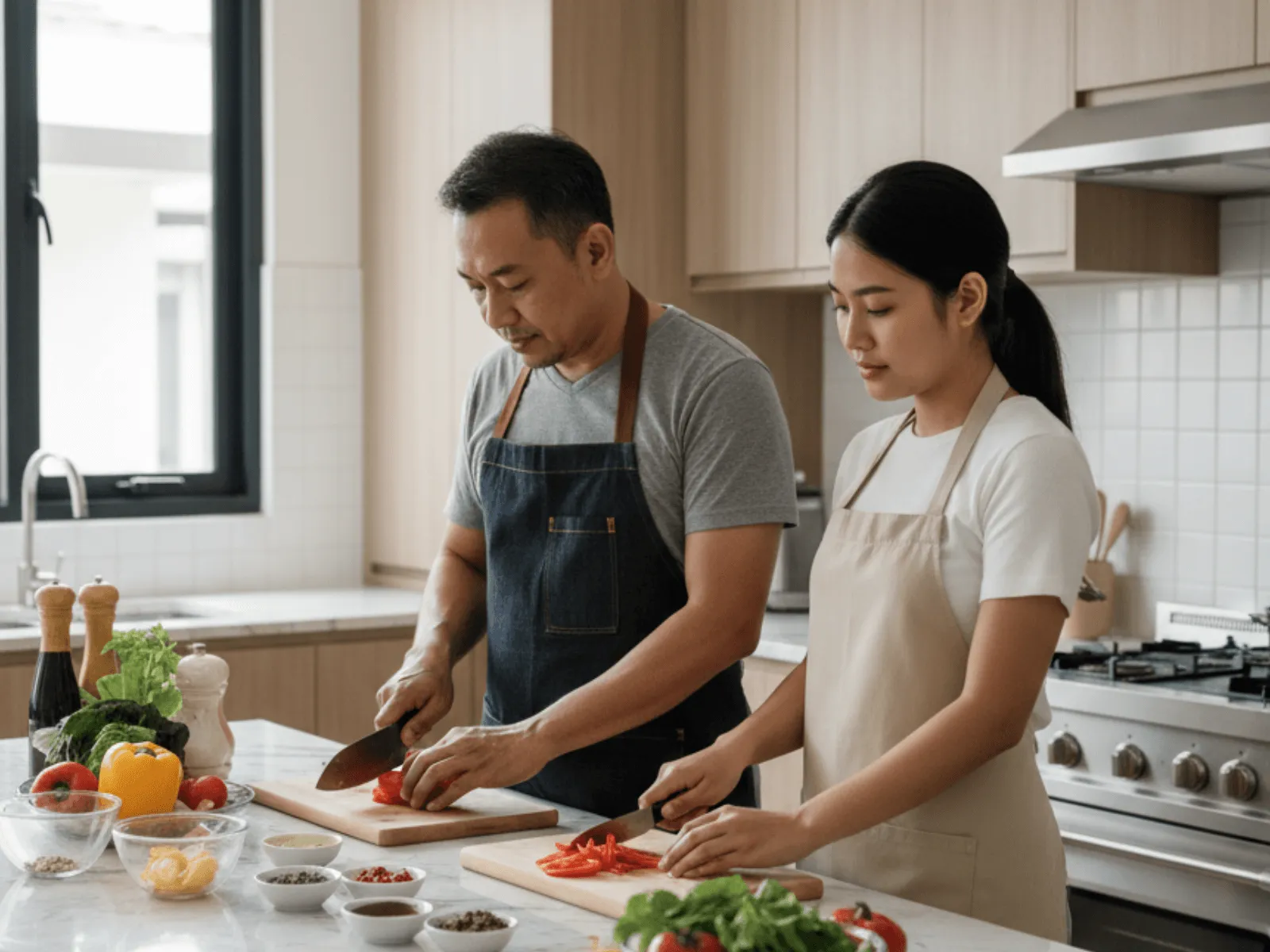
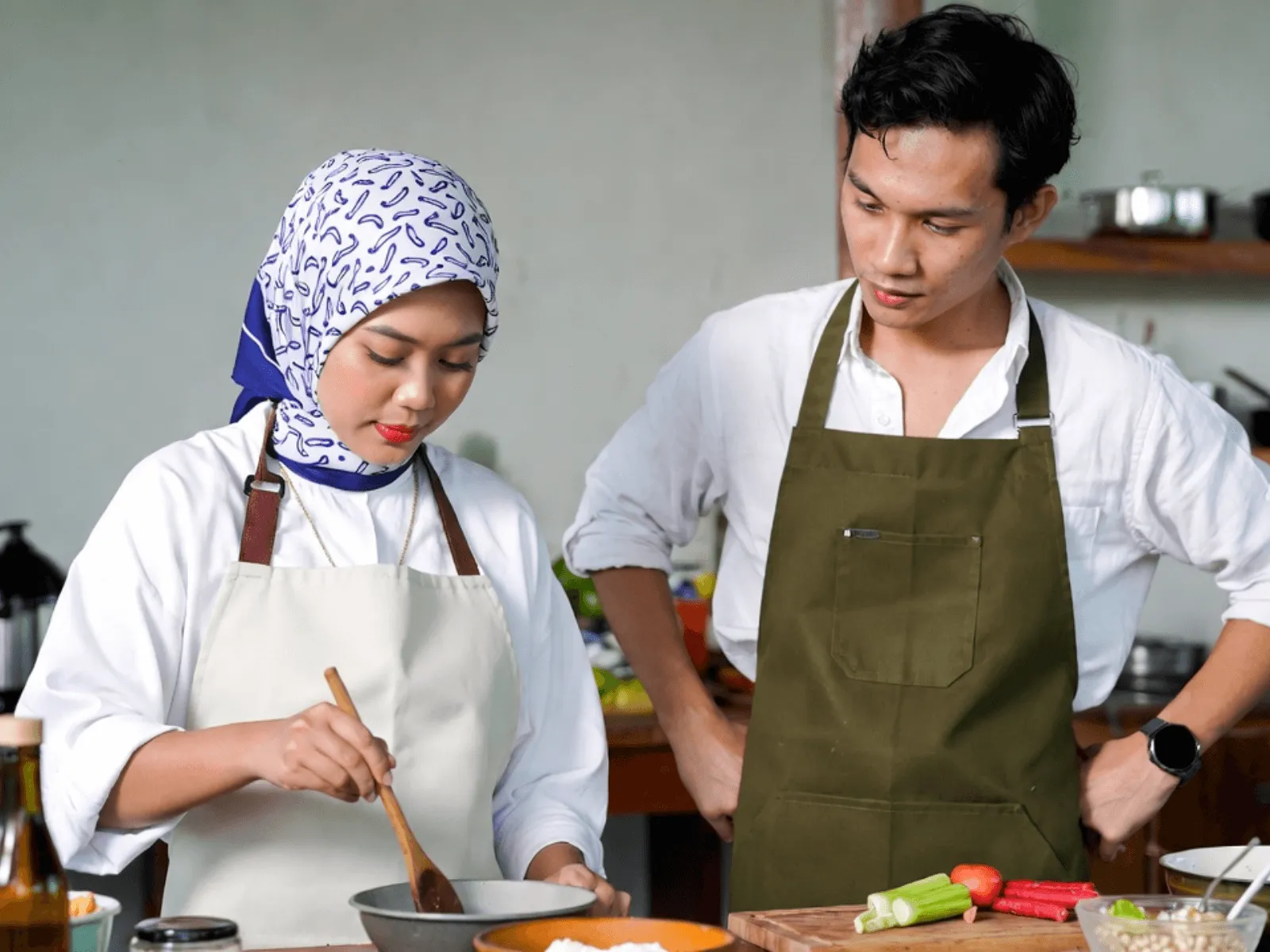
The photographs below were taken during cooking tutoring in Bali sessions with learners on the island.
Service Area
Where Edupola Cooking Teachers Travel in Bali
Teachers for cooking tutoring in Bali come to your kitchen, from Denpasar, Badung, and Gianyar through to Tabanan, Buleleng, Klungkung, Bangli, Karangasem, and Jembrana. Because the venue is the learner's own kitchen, what is counted is the distance to that house.
Ingredient availability differs between areas of Bali, and it helps decide which dishes are chosen. In Denpasar and Badung, ingredients for Western dishes and for baking are easier to find. In Gianyar, Tabanan, and Buleleng, fresh market produce is stronger and cheaper, and teachers build the dishes around that.
This programme has no full online route, because the teacher needs to see the ingredients, taste the result, and correct the position of a hand directly. The Edupola office is not used as a lesson venue. For learners outside the travel range, the admin can set out which options exist.
Frequently Asked
Questions About Cooking Lessons in Bali
What does private cooking tutoring in Bali cost?
Fees start from IDR 136,200 for a 60-minute session, the shortest option. Sessions of 90 and 120 minutes are available with the fee following the length. The final fee follows session length and the number of sessions per month, between 4 and 28. The admin sends the breakdown in writing before the first payment. Ingredients from the list, a sharp knife, and a board are prepared by the learner and not included in the fee.
Does Edupola supply the ingredients?
No, the learner buys them. The list is sent a few days ahead with the fresh items marked so they can be bought on the day. This is deliberate: buying at your own market is what keeps the recipe usable afterwards, since availability differs between areas and a dish built on something you cannot find will not be repeated.
Why does the session happen in the learner's kitchen?
Because the equipment is part of the technique. A gas ring that burns hot, an oven with one warmer side, a narrow work surface: each changes the result, and none of them exist in a teaching kitchen. Learners who cook somewhere else and then fail at home are not forgetting, they are using different equipment. The teacher adapts to yours.
Can a complete beginner cook a particular dish straight away?
Often yes, with the teacher alongside, and that is how the first session usually goes. What a beginner cannot yet do is repeat it unaided, which depends on knife skills and heat control instead of on the dish. So the first sessions put time into those two, and the dish the learner asked for is cooked within them instead of being postponed.
Is this programme suitable for a food business?
Yes, and the material shifts noticeably for it. Standardising a recipe with exact quantities, costing portions, preparing ahead, and plating tidily take the larger share, while variety matters less. The measure is sameness of taste between days, and a learner whose recipe is fixed can hand the cooking to someone else.
How is a cooking teacher matched to a learner?
The schedule is settled first during the consultation, covering days, times, session length, and sessions per month. The Edupola team then looks for a tutor whose travel to your location in Bali stays short, and that search runs 1 to 5 working days. The route matters most here: baking, Balinese dishes, Western dishes, and business standardisation are matched to teachers who work in them. If the first 2 weeks feel like a poor fit, a replacement is arranged at no extra cost.
Related Programmes
Other Programmes Learners Often Take Alongside
Learners taking cooking tutoring in Bali often add one other programme, usually once a few dishes are fixed.
-

Photography Tutoring in Bali
Often taken by food business owners who photograph their own dishes for a menu and for social media.
-

Digital Marketing Tutoring in Bali
A choice for learners whose dishes are settled and who want to market them regularly themselves.
-
Sewing Tutoring in Bali
Another hand-skill programme, often taken by learners who like work whose result is visible straight away.
Get Started
Start Cooking Lessons From the Dishes You Choose
Name a few dishes you want to cook and what your kitchen already has. A tutor in Bali is matched within 1 to 5 working days.