
Private Vocal Tutoring in Bali
Vocal Tutoring in Bali: An Instrument You Cannot Swap
Vocal tutoring in Bali from Edupola pairs one coach with one learner at a place you choose. Every other instrument can be put down, replaced, or lent out. Yours cannot, and 5 consequences follow from that, starting with the fact that pain is a stop signal. Fees from IDR 120,900 per session.

Rating and fees for vocal tutoring in Bali
| Programme | Vocal Tutoring in Bali |
|---|---|
| Provider | Edupola |
| Description | Private vocal tutoring in Bali, one coach per learner: breath and technique built around an instrument that lives inside the body, with range extended only as far as it is safe. |
| Fee | Fees start from Rp120,900 per session. |
| Session Length | Sessions run 60, 90, or 120 minutes. |
| Schedule | Flexible, following the learner's calendar. |
| Start | Lessons can start any time after registration. |
| Sessions per Month | 4 to 20 sessions per month, as needed. |
| Rating | 4.9 out of 5, based on 117 reviews |
Programme at a Glance
Vocal Tutoring in Bali and the Instrument You Cannot Replace
Vocal tutoring in Bali runs one tutor with one learner, at your home, your workplace, or over a screen. Singing is unlike every other instrument in one respect, and the whole programme follows from it: the instrument is inside you.
A guitarist with a dull guitar changes the strings. A singer who slept badly, who is recovering from a cold, or who shouted at a football match last night has a different instrument today than last week, and no setting adjusts it. Training therefore has to account for the state of the body, which is why the first few minutes of every session are spent listening to where the voice is.
It also means that pain is never pushed through. Soreness in the throat is a signal to stop, not an obstacle to show character against, because the damage is to the instrument itself. The work covers breath, technique, range extended safely, repertoire, and the daily habits that keep a voice usable. Fees start from IDR 120,900 per 60-minute session, with 4 to 28 sessions a month. This programme holds a 4.9 out of 5 rating across 117 learner reviews in Bali.
Consequences
Five Consequences of an Instrument Inside the Body
These shape how every session in vocal tutoring in Bali is run, and the last one is the reason a coach cannot simply demonstrate the fix.
-
Your Day Shapes Your Voice
Sleep, hydration, illness, and how much you talked yesterday all change what the voice can do today. Sessions start by finding out, instead of assuming last week's range.
-
Pain Is a Stop Signal
Throat soreness during singing means stopping that exercise, not pushing on. Pushing through is how learners acquire the injuries that take months of silence to heal.
-
Range Has a Physical Limit
The comfortable range can be extended, and not without end. A coach who promises any note is promising something anatomy decides, and chasing it is how voices get damaged.
-
Your Own Hearing Misleads You
You hear your voice through your own skull, which is why recordings sound wrong to everyone. The recording is the truth, and learning to trust it is part of the training.
-
Nobody Can Do It For You
A coach cannot adjust your larynx the way a teacher adjusts a wrist. Everything is taught through sensation, imagery, and demonstration, which is why describing what you feel matters.
Technique Map
Vocal Techniques and the Problem Each One Solves
Vocal coaches use this to decide what a session works on. The third column is the error that recurs with that technique, and it is corrected before the technique is pushed.
| Technique | The problem it solves | The error that recurs |
|---|---|---|
| Breath support | Running out of air and going flat at phrase ends | Lifting the shoulders, which reduces the air taken in |
| Posture and alignment | A tight throat and a thin tone | Pushing the chin forward on high notes, which closes the throat |
| Resonance placement | A voice that disappears in a room | Forcing volume from the throat instead of letting the sound carry |
| Register transition | The break in the middle of the range | Jumping volume at the transition, which makes the break audible |
| Pitch accuracy | Notes that land near instead of on | Correcting after the note instead of hearing it before singing |
| Microphone technique | A good live voice that records badly | Standing at a fixed distance regardless of how loud the phrase is |
Range
The Order of Extending Range Safely
Learners usually want the top of their vocal range first. The order below exists because starting there is how voices get hurt.
-
Step 1
Finding the Comfortable Range
The notes that already work without effort, mapped honestly. Most learners are surprised by how wide this is, and by the fact that their favourite songs sit outside it.
- Mapped honestly
- No effort
- Songs checked against it
-
Step 2
Strengthening the Middle
The part of the range used in almost every song, built with breath and resonance. Unglamorous and the reason everything above it becomes possible.
- Breath support
- Resonance
- Most of the work
-
Step 3
Repairing the Break
The transition between registers, smoothed with exercises that cross it gently. This is the point most learners describe as their ceiling, and it is usually a coordination problem.
- Crossing gently
- No volume jump
- Mixed quality
-
Step 4
Extending the Edges
The top and bottom, added last and in small increments, with soreness treated as a stop. An extension gained in a week is usually borrowed from the voice's health.
- Small increments
- Soreness stops it
- Last in order
Who It Is For
Learners Who Take Vocal Lessons in Bali
Every session holds one learner, so the songs are chosen from that learner's own list and checked against their range.
-
Cafe and Event Singers
Learners in Bali singing several sets a night at venues here. Stamina and recovery matter more than range, since the voice has to last until the last song.
-
Worship and Ensemble Singers
Learners in Bali leading singing weekly. Warm-ups, breathing, and not losing the voice by the third song carry the sessions.
-
Learners Who Want to Sing Comfortably
Learners who enjoy singing and strain doing it. The fix is usually breath and posture, and the change is audible within a few sessions.
-
Competition Entrants
Learners in Bali with a contest date. Song choice against the actual range is the decision that matters most, and it is made early.
-
Content Makers and Recording Singers
Learners whose voice has to work through a microphone. Distance, control, and layering are separate skills from singing in a room.
-
Learners With Past Voice Problems
Learners in Bali who have lost their voice before or been hoarse for weeks. Sessions start conservatively, and medical advice is respected where it exists.
One Session
Inside a 60-Minute Vocal Session
This is the division used once a learner is working on repertoire. The check at the start decides what the rest of the hour can safely do.
-
5 minutes
Checking Where the Voice Is
A few notes and a short phrase, with the coach listening for tiredness or hoarseness. The session adjusts to this instead of to the plan.
-
10 minutes
Breath Warm-Up
Breathing and gentle sound, never skipped. A voice taken straight into a song is how the hoarseness after a session happens.
-
15 minutes
One Technique Practised Apart
A single technique drilled away from any song: breath support, the register transition, or resonance. Isolated, so the sensation is identifiable.
-
20 minutes
A Song From the Learner's List
The technique applied in a real song, in the key that suits the learner's range instead of the key of the recording.
-
10 minutes
Record and Listen Back
A recording, played back together. Your own hearing misleads you, so this is the only honest feedback available between sessions.
In a 90 or 120 minute session, two or three songs are worked through and recorded as a short set, which is what learners preparing to perform or record usually choose.
Daily Habits
Daily Habits Discussed in This Programme
The admin confirms these once the schedule for vocal tutoring in Bali is agreed. A recorder, water, and any sheet music or chord charts are prepared by the learner and not included in the fee.
-
Sleep Before Performing
A tired voice sits lower, tires faster, and loses the top of its range. Of all the habits on this list, sleep is the one that changes a performance most and gets ignored most.
-
Enough Water
Steady hydration through the day instead of a glass before singing, since the tissue takes hours to respond. Caffeine and alcohol both work against it.
-
Avoiding Shouting
A night shouting over music costs more than a week of practice gains. Singers in Bali working in bars and events are taught how to be heard without shouting.
-
Warming Up and Cooling Down
Before and after singing, both. The cool-down is the one everyone skips, and it is what prevents the next morning's hoarseness after a long set.
-
Stopping When It Hurts
Pain means stop, that day. Singing through throat pain is the single most reliable way to acquire a problem that silences you for weeks.
If your voice has been hoarse for more than two weeks, say so during the consultation. That is a medical question before it is a technique question, and coaches will say so.
Genre
How Genre Changes the Technique
There is no single correct way to sing, and vocal tutoring in Bali chooses the technique from the music the learner actually performs. Classical singing asks for a consistent resonance and a legato line with no microphone. Pop and ballad singing is built around a microphone, which allows a quieter, closer, more conversational delivery. Musical theatre asks for a mixed quality that carries words at volume.
That changes the exercises as well as the repertoire. A learner training for pop who is taught a purely classical placement will sound stiff on their own songs and conclude that lessons made them worse. A learner preparing a conservatory audition who only trains with a microphone will be inaudible in the hall.
The one thing every genre shares is breath, and it is why breath work opens every session regardless of style. Learners who sing across genres, which in Bali means almost anyone performing at events, are taught the differences explicitly so they can choose the delivery for the room they are in.
What Learners Say
Stories From Vocal Learners in Bali
The quotes below come from learners in Bali who completed the vocal programme at Edupola, with their situation and what changed.
-
★★★★★
I used to go off pitch on the high notes at weddings. After 10 sessions at Edupola my coach taught me head voice technique.
Bookings tripled after the training
Ayu S.
Freelance wedding singer · Verified learner
-
★★★★★
As a band vocalist I felt my voice had hit a ceiling. My Edupola coach trained mixed voice and recording technique.
The band recorded a first album
Rai P.
Indie band vocalist · Verified learner
-
★★★★★
I lead the singing every week and used to run out of voice. My Edupola coach taught warm-ups and breathing technique.
Leads without losing her voice
Krisna A.
Worship leader at a church · Verified learner
-
★★★★★
I only sang for fun and was curious about proper technique. After ear training and pitch control at Edupola I entered a competition.
Second place in a city competition
Dian P.
Karaoke enthusiast turned performer · Verified learner
-
★★★★★
The practical examination required classical technique and interpretation. My Edupola coach helped me with vibrato and phrasing.
Passed the practical vocal examination with top marks
Arya S.
Music undergraduate · Verified learner
-
★★★★★
I write my own songs and always doubted my vocal quality when recording. My Edupola coach trained microphone technique and vocal layering.
Released a first single
Ratna S.
Independent singer-songwriter · Verified learner
How Long
How Long Before the Change Is Audible
Breath and posture produce the fastest audible change in vocal tutoring in Bali: most learners hear a difference in their own recordings within three or four sessions, usually as phrase ends that no longer sag and a tone that carries further without more effort.
The register transition takes longer, typically a few months, because it is coordination instead of strength. Learners describe it as a ceiling and treat it as a limit of their voice, and it is almost never that. What it needs is repeated gentle crossing at low volume, which is undramatic work that happens in short daily doses.
Range extension is the slowest and the one worth being impatient about least. A note gained in a week is usually borrowed against the voice's health, and the bill arrives as hoarseness. Coaches add the edges in small increments over months, stop at the first soreness, and say plainly when a learner's favourite song sits outside what their anatomy will comfortably allow.
How to Register
Four Steps to the First Vocal Session
The opening consultation carries no fee. The admin asks what bothers you about your voice and what you sing.
-
Name the Problem and the Songs
What goes wrong when you sing and three songs you want to perform. Those two answers set the technique order and the genre.
-
Agree the Schedule
Days, times, session length, and sessions per month are agreed with the admin, following the hours your voice is freshest, which for most singers is not late at night.
-
Matching the Coach
The team looks for a tutor whose travel to your location in Bali stays short, and that search runs 1 to 5 working days. Classical, pop, and recording work are matched to coaches who sing in them.
-
The First Session
Your comfortable range is mapped honestly, one phrase is recorded, and the songs on your list are checked against what the range allows today.
Need help? Contact our admin on WhatsApp for a free consultation.
Documentation
Vocal Lessons With Edupola in Bali
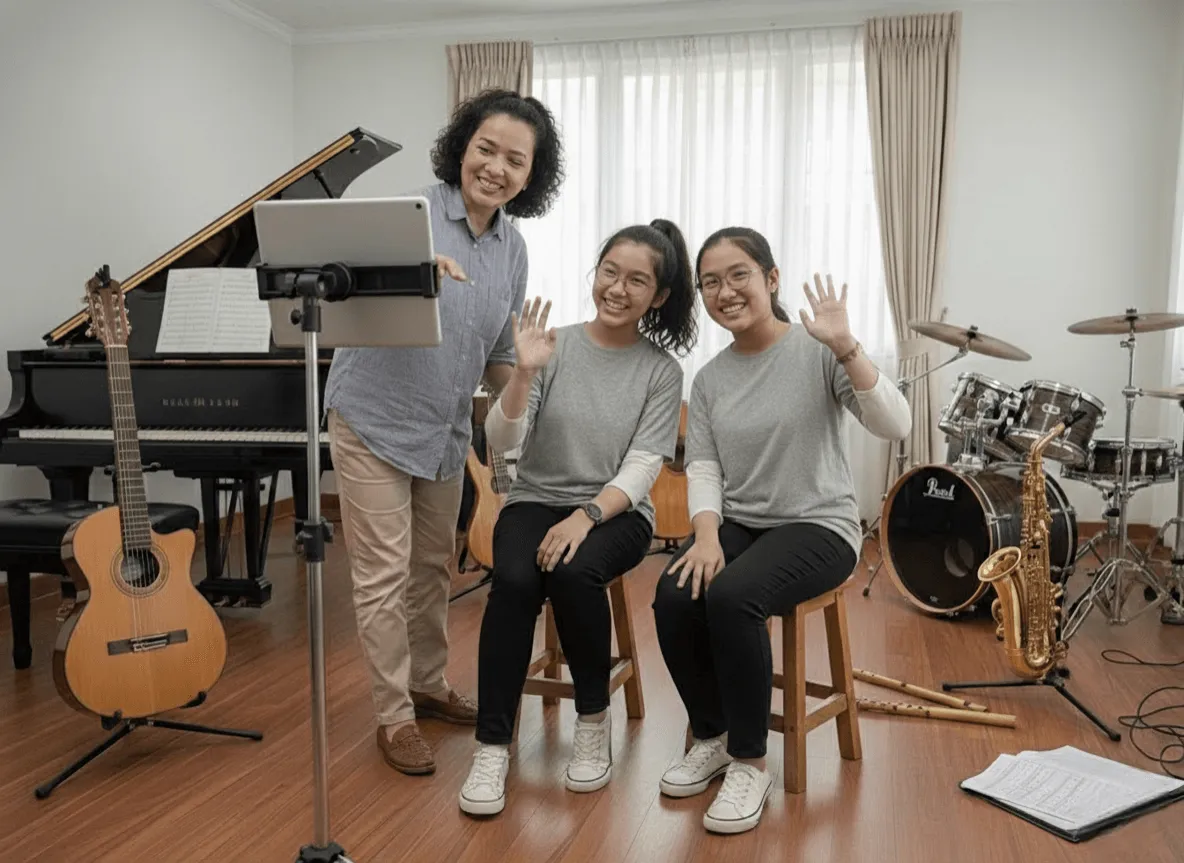
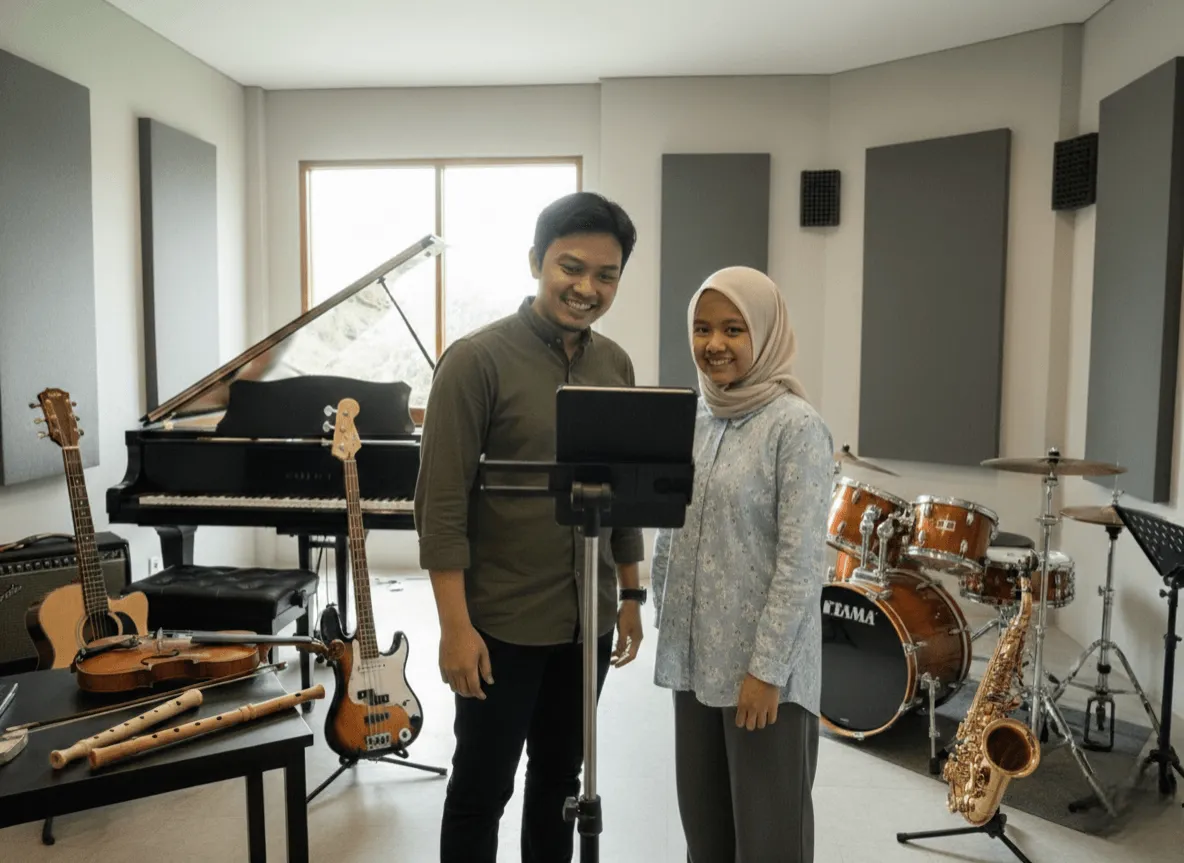
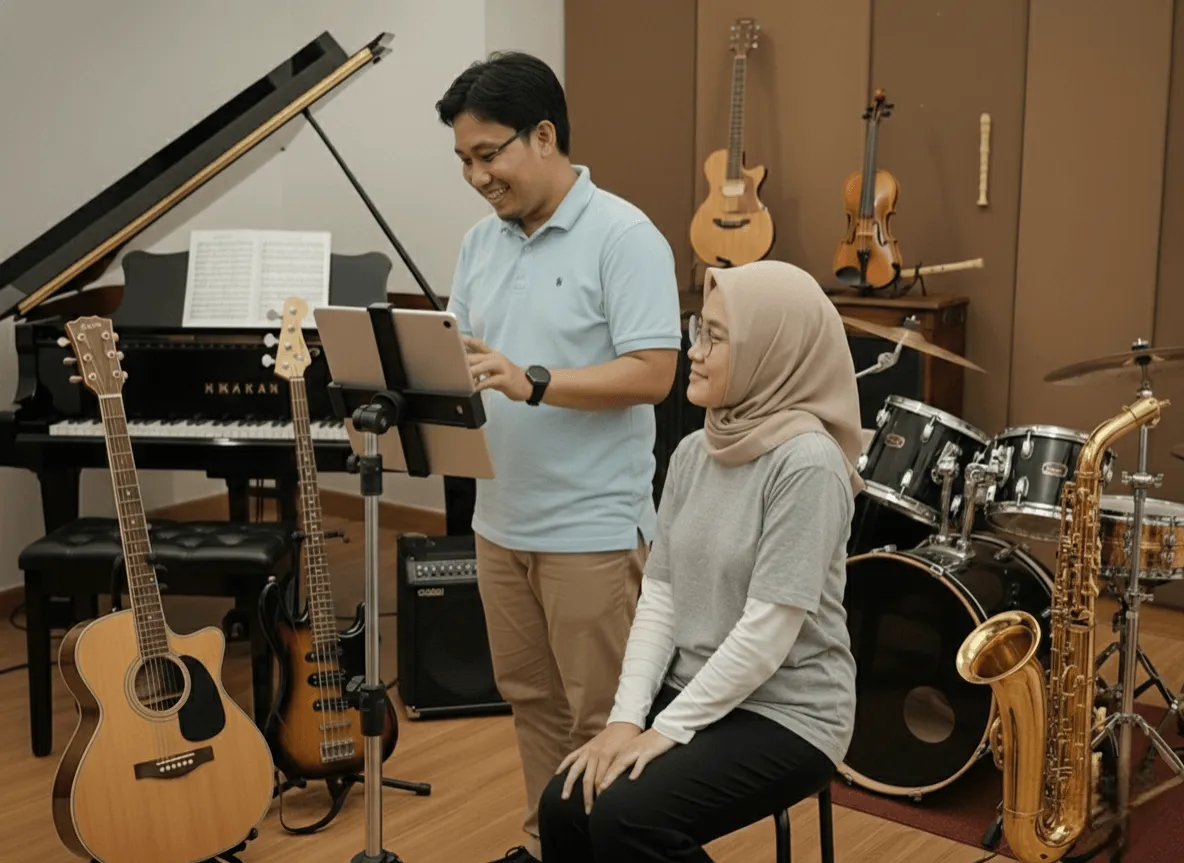
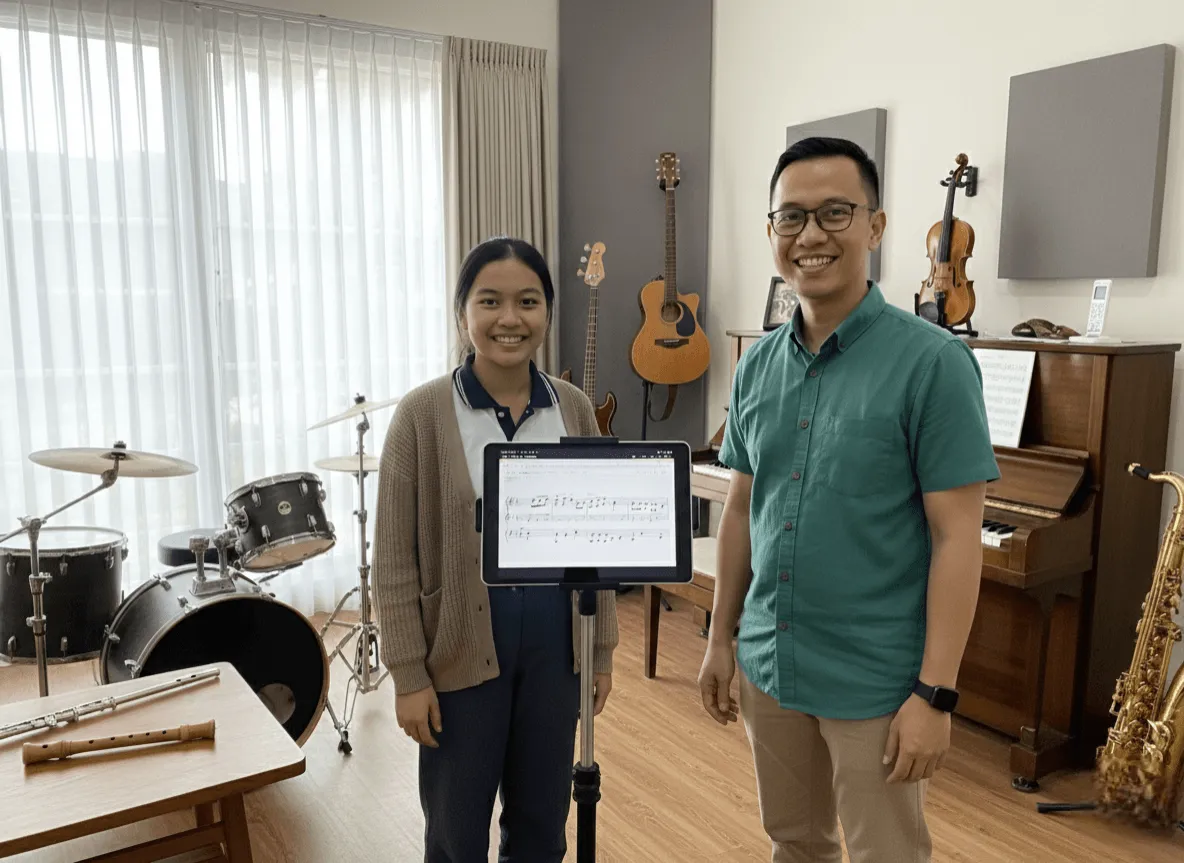
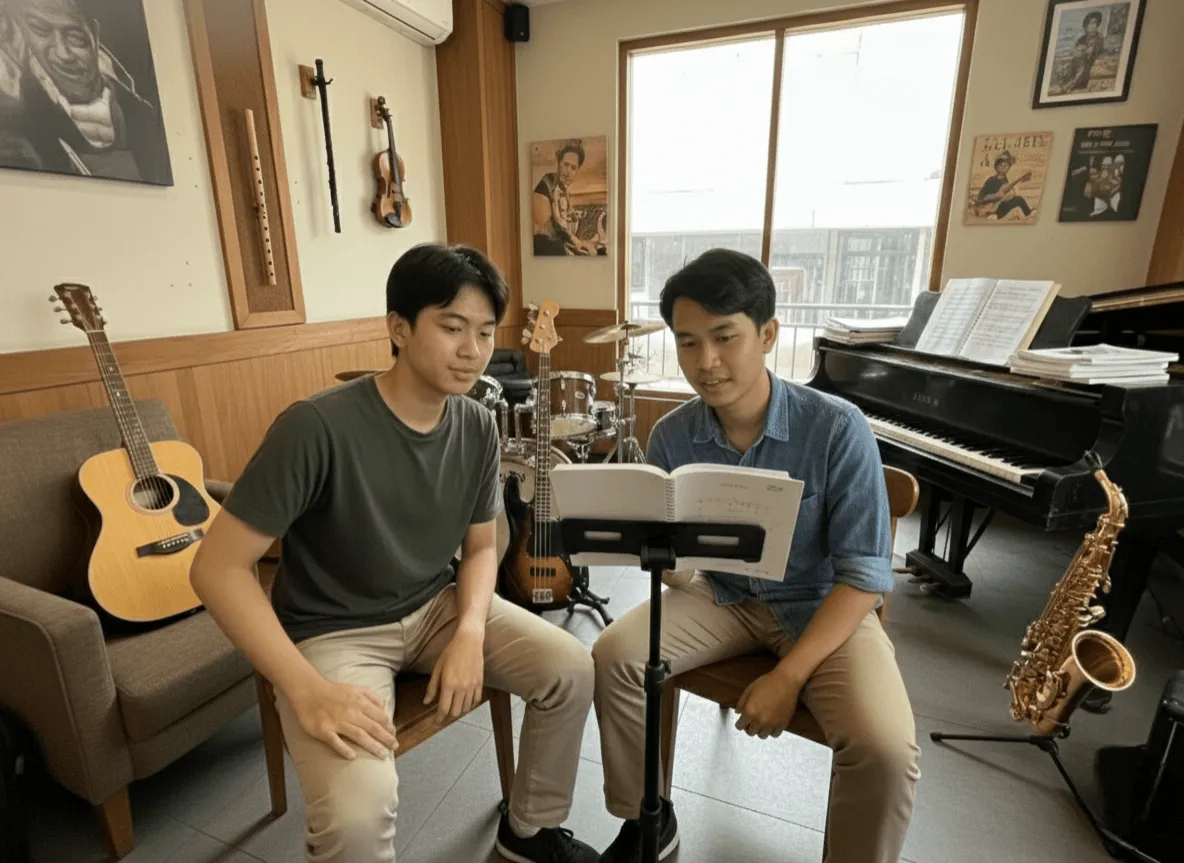
The photographs below were taken during vocal tutoring in Bali sessions with learners on the island.
Service Area
Where Edupola Vocal Coaches Travel in Bali
Tutors for vocal tutoring in Bali travel to the location you choose, from Denpasar, Badung, and Gianyar through to Tabanan, Buleleng, Klungkung, Bangli, Karangasem, and Jembrana. What the room needs is somewhere you can make sound without worrying about neighbours, because a learner holding back the volume cannot be assessed.
The match turns on genre and on purpose. Classical technique, pop delivery, worship leading, and recording work are taught differently, and a coach strong in one is not automatically right for another. Learners with a performance date are matched where possible with coaches who perform, since stamina across a set is learned from someone who has sung one.
The Edupola office is not used as a lesson venue. Where no tutor is available near you, sessions run online. Online vocal sessions have a real limit worth knowing in advance, set out next. Ask the admin about coach coverage at your location in Bali.
Online Sessions
The Limits of Online Vocal Sessions Worth Knowing
Online sessions for vocal tutoring in Bali run over Zoom or Google Meet, and this is the programme where the honest limits are largest. Call audio compresses dynamics and alters tone, which are precisely the things being judged, so a coach hears a processed version of the voice.
What transfers well is still substantial: breathing exercises, posture, pitch accuracy, song interpretation, and reading a recording together. The workaround for tone is the same one the programme already relies on: the learner records a phrase properly on their phone and sends the file, which keeps detail the live stream discards.
Where learners have a performance coming up, the recommendation is at least one face-to-face session near the date. Resonance in a room, carrying without a microphone, and stamina across a set are all judged in person. Fees for online sessions match face-to-face sessions.
Frequently Asked
Questions From Vocal Learners in Bali
What does private vocal tutoring in Bali cost?
Fees start from IDR 120,900 for a 60-minute session, the shortest option. Sessions of 90 and 120 minutes are available with the fee following the length. The final fee follows session length and the number of sessions per month, between 4 and 28. The admin sends the breakdown in writing before the first payment. A recorder, water, and any sheet music or chord charts are prepared by the learner and not included in the fee.
Does singing require natural talent?
Pitch accuracy, breath support, and resonance are trainable, and most learners who describe themselves as tuneless turn out to have a listening problem instead of a voice problem. What anatomy does decide is the comfortable range and some of the timbre. So the honest answer is that almost anyone can learn to sing comfortably and in tune, and nobody can choose which voice they got.
Why does my voice sound different in a recording?
Because in Bali as anywhere you hear yourself through your own skull as well as through the air, which adds warmth nobody else receives. The recording is what your audience hears, and learning to trust it instead of your internal impression is part of the training. It is also why every session ends with a recording played back.
Does practising every day speed things up?
Short daily practice helps; long daily practice does not, and can set you back. The voice is tissue that needs recovery, so twenty focused minutes most days beats two hours twice a week. Warm up before and cool down after, and on a day when the throat is sore the correct practice is none at all.
What if my voice is hoarse on the day of a session?
Say so at the start and the session changes instead of being cancelled: breathing, posture, interpretation, listening, and song choice all continue without loading the voice. Singing through hoarseness is how a two-day problem becomes a two-month one. If hoarseness has lasted more than two weeks, that is a medical question first and the coach will say so.
How is a vocal coach matched to a learner?
The schedule is settled first during the consultation, covering days, times, session length, and sessions per month. The Edupola team then looks for a tutor whose travel to your location in Bali stays short, and that search runs 1 to 5 working days. Genre matters here: classical, pop, worship leading, and recording work are matched to coaches who sing in them. If the first 2 weeks feel like a poor fit, a replacement is arranged at no extra cost.
Related Programmes
Other Programmes Learners Add in Bali
Learners taking vocal tutoring in Bali often add one other programme, usually to accompany themselves or to use the voice beyond singing.
-

Guitar Tutoring in Bali
Taken by learners who want to accompany their own singing.
-

Piano Tutoring in Bali
Chosen by learners who prefer to accompany at a keyboard.
-

Public Speaking Coaching in Bali
Often added by learners who also have to speak in front of people.
Get Started
Start From What Bothers You Most
Name what goes wrong when you sing, three songs you want to perform, and when your voice is freshest. A tutor in Bali is matched within 1 to 5 working days.