
Private Piano Tutoring in Bali
Piano Tutoring in Bali: Your Own Instrument at Home
Piano tutoring in Bali from Edupola pairs one teacher with one learner at your home, on the instrument you will practise on every day. Progress between 2 lessons happens on that instrument, so its action and its tuning are part of the teaching. Fees from IDR 120,900 per session.
Rating and fees for piano tutoring in Bali
| Programme | Piano Tutoring in Bali |
|---|---|
| Provider | Edupola |
| Description | Private piano tutoring in Bali, one teacher per learner, on the learner's own instrument: technique, repertoire, sight reading, theory, and graded examinations where they are wanted. |
| Fee | Fees start from Rp120,900 per session. |
| Session Length | Sessions run 60, 90, or 120 minutes. |
| Schedule | Flexible, arranged around the learner's routine. |
| Start | Lessons can start any time after registration. |
| Sessions per Month | 4 to 16 sessions per month, following the goal. |
| Rating | 4.9 out of 5, based on 110 reviews |
Programme at a Glance
Piano Tutoring in Bali for Every Age With One Teacher
Piano tutoring in Bali runs one tutor with one learner, at your home, your workplace, or over a screen. Learners here range from children who have never read a note to adults starting at forty, and the programme holds them the same way: on their own instrument, with a piece they chose.
That second part is not sentiment. Technique learned without a piece attached to it decays within weeks, because nothing calls on it. A learner who wants a particular song gets the scales, the hand independence, and the sight reading that the song requires, in that order, and practises them because the song is waiting.
The first lesson is therefore a listening session: what the learner can already do, what instrument they have, and what they want to play. The material covers technique, repertoire, sight reading, theory, aural work, and graded examinations where they are wanted. Fees start from IDR 120,900 per 60-minute session, with 4 to 28 sessions a month. This programme holds a 4.9 out of 5 rating across 110 learner reviews in Bali.
Levels
Learning Levels and What Each One Contains
The piano level a learner starts at is set by what their hands can already do, and never by how many years they once had lessons.
-
Beginner
Position, Reading, and a First Piece
Hand position, posture, note reading, and a short piece finished properly. Finishing one piece completely matters more at this stage than starting five.
- Hand position
- Reading notes
- One piece finished
-
Intermediate
Hand Independence and Repertoire
The two hands doing different things, pedal, and a growing repertoire. This is where learners who return after a gap usually re-enter, and where most adults spend the longest.
- Hand independence
- Pedal
- Repertoire that grows
-
Advanced
Interpretation and Performance
Phrasing, dynamics, and playing for other people, with recording as the honest mirror. Learners preparing for graded examinations work here on the syllabus pieces.
- Phrasing and dynamics
- Playing for others
- Recording as a mirror
What Is Covered
Six Fields Covered in These Piano Lessons
A learner takes some of these and not all. The mix is set in the first lesson from what they want to be able to do.
-
Classical Repertoire
Written music played as written, which trains reading and precision harder than anything else. The route most learners preparing for examinations take.
-
Pop and Ballad
Songs from a chart or by ear, with accompaniment patterns under a melody. The most common request from adult beginners in Bali.
-
Jazz Piano
Chord voicings, substitutions, and improvising over a form. Taken by learners who already read and want to stop needing the page.
-
Sight Reading
Playing music you have never seen, which is a separate skill from playing a learned piece well. Practised in short weekly doses.
-
Theory
Keys, intervals, and chord construction, taught as the explanation of what the hands are already doing instead of as a subject on its own.
-
Aural Work
Recognising intervals and chords by ear, and finding a melody without the page. Required by graded examinations and useful for accompanying.
Schedule Map
Setting the Number of Sessions by Goal
Piano teachers use this with the admin when the schedule is agreed. Practice between lessons matters more than lesson frequency, which is why the third column exists.
| Learner goal | Sessions per month | Where the session weight goes |
|---|---|---|
| Playing for pleasure, adult beginner | 4, with daily short practice | One piece at a time, with technique attached to it |
| Child learning from the start | 4 to 8, shorter sessions | Position, reading, and finishing small pieces |
| Graded examination in a set month | 8, rising near the date | Syllabus pieces, scales, sight reading, aural |
| Accompanying singing or worship | 4 to 8 | Chord charts, transposition, and playing with others |
| Returning after years away | 4, then reassessed | Rebuilding reading and hand independence |
Who It Is For
Learners Who Take Piano Lessons in Bali
Every session holds one learner, so the repertoire is chosen with that learner from music they want to play.
-
Children and Teenagers Starting Out
Learners in Bali beginning on the family instrument. Sessions are shorter and built around finishing small pieces, which is what keeps a child at the bench.
-
Adults Starting From Nothing
Learners in Bali who always meant to learn. Reading and hand independence come at an adult pace, and a first piece is usually playable within weeks.
-
Graded Examination Candidates
Learners in Bali working to a syllabus and a date. Pieces, scales, sight reading, and aural work are planned backwards from the examination month.
-
Worship and Ensemble Players
Learners who accompany singing in Bali. Chord charts, transposition, and keeping time with other people carry the weight instead of written repertoire.
-
Teachers of Young Children
Learners in Bali who need enough piano to accompany a class. Simple chords and accompaniment patterns are the target, reached in a few months.
-
Learners With Crowded Schedules
Learners in Bali whose weeks are unpredictable. Sessions are arranged around the practice they can honestly promise, which is often fifteen minutes a day.
One Session
Inside a 60-Minute Piano Lesson
This is the division used once a learner is working on repertoire. The warm-up is never dropped, because cold hands build tension that takes months to unlearn.
-
10 minutes
Finger Warm-Up
Scales and exercises at a slow tempo, with the teacher watching the wrist and shoulder instead of the fingers.
-
15 minutes
The Technique Being Built
One specific difficulty from the current piece, practised apart from the piece until it stops being the obstacle.
-
20 minutes
Repertoire
The piece itself, in sections. Playing from the beginning every time means the opening is polished and the middle never improves.
-
10 minutes
Sight Reading or Aural Work
Something never seen before, or finding a short melody by ear. Short and weekly beats long and occasional for both.
-
5 minutes
Writing the Practice Notes
What to practise, how slowly, and how many times, written in the learner's own book so the week has a plan.
In a 90 or 120 minute session, a whole piece is worked through section by section with a recording made at the end, which is what learners preparing for an examination or a recital usually choose.
How Teachers Work
Four Habits a Piano Teacher Keeps
These are asked of the teacher. Each exists because the opposite habit is common and produces a learner who cannot practise alone.
-
Demonstrate, Then Have It Copied
The teacher plays the phrase, the learner repeats it immediately. Describing a sound in words is slower than making it and asking for it back.
-
Raise the Repertoire in Steps
The next piece is slightly harder than the last, never three steps up. A piece far beyond a learner teaches struggle and nothing else.
-
Set a Daily Routine, Not a Weekly One
Fifteen minutes most days instead of two hours on Sunday. Finger habits form by frequency, and a single long session mostly builds tension.
-
Record and Perform
A recording every few weeks and a small performance when there is something to play. Both are uncomfortable and both are what make a learner reliable.
Prepared by the Learner
Instrument and Space Needed Before the First Lesson
The admin confirms these once the schedule for piano tutoring in Bali is agreed. A piano or keyboard, a bench, and any sheet music are prepared by the learner and not included in the fee.
-
A Piano or Keyboard at Home
An acoustic piano or a keyboard with weighted keys. Practice happens between lessons, so an instrument at home decides progress more than the teacher does; a keyboard with light keys builds a touch that does not transfer.
-
A Bench at the Right Height
Elbows roughly level with the keys and feet reaching the floor. A chair too high or too low produces wrist tension that shows up months later as pain.
-
A Reasonably Quiet Room
Somewhere the learner can hear their own playing. A television in the same room makes dynamics impossible to judge and listening impossible to teach.
-
A List of Pieces You Want to Play
Three or four songs, however ambitious. The teacher works backwards from them to find what is playable now, and a learner practising towards their own list practises more.
-
A Camera and Connection for Online Lessons
If any lessons will be online, a phone that can be propped to show the hands and the keyboard together. The angle is the whole difference between a useful online lesson and a frustrating one.
If you do not own an instrument yet, say so during the consultation. The teacher advises what to look for at your budget before you buy, since a light-keyed keyboard is the most common regretted purchase here.
How Long
How Long Before a Whole Piece Can Be Played
A simple piece, played through from start to finish, is reachable within a couple of months for most adults in piano tutoring in Bali practising fifteen minutes a day. Children often take a little longer to read and a little less time to acquire the physical habit, which balances out.
What takes years is the thing learners actually mean when they say they want to play piano: sitting down and playing something they recognise, without the page, reliably. That depends on repertoire accumulated over time and on reading becoming automatic, and nothing shortens it except playing a great deal of music slightly below your limit.
There is a bottleneck worth naming because it stops people. Hand independence, the two hands doing genuinely different things, feels impossible for several weeks and then becomes ordinary. Learners who quit almost always quit inside that window. Teachers flag it in advance, slow the tempo further than feels dignified, and the window closes.
What Learners Say
Stories From Piano Learners in Bali
The quotes below come from learners in Bali who completed the piano programme at Edupola, with their situation and what changed.
-
★★★★★
My daughter started by idly pressing keys at a shopping centre. After 6 months of lessons at Edupola she played at a small recital.
Performed at her first recital after 6 months
Ratih P.
Parent of a 10-year-old · Verified learner
-
★★★★★
I always dreamed of playing piano and only started at 40. My Edupola tutor never said I was too late; she built the material around what I wanted to play.
Learning at 40 and now accompanying songs
Widiastuti
Parent at home, aged 42 · Verified learner
-
★★★★★
As a worship leader I needed solid piano to lead the singing. My Edupola tutor taught chord charts and transposition.
Able to accompany services confidently
Agus P.
Worship leader in Bali · Verified learner
-
★★★★★
I took lessons at Edupola to prepare for a graded exam. My tutor understood the standard and trained me on sight reading and aural tests.
Passed a graded examination with merit
Aditya N.
Junior secondary pupil, aged 14 · Verified learner
-
★★★★★
Working at a screen all day is stressful and the piano turned out to be the most effective escape. My Edupola tutor built a repertoire from music I actually like.
Piano as relief from the working day
Surya B.
Software engineer · Verified learner
-
★★★★★
I learned piano so I could accompany my pupils singing at school. My Edupola tutor taught simple chords and accompaniment patterns.
Able to accompany children's songs
Sari D.
Kindergarten teacher in Denpasar · Verified learner
How to Register
Four Steps to the First Piano Lesson
The opening consultation carries no fee. The admin asks what instrument you have and what you want to play.
-
Describe the Instrument and Your Experience
What you have at home and what you can already play. Those two set the level, and the instrument decides what can be practised between lessons.
-
Agree the Schedule and Practice Hours
Days, times, session length, and sessions per month are agreed with the admin, following the minutes you can honestly give to daily practice, which matters more than lesson frequency.
-
Matching the Teacher
The team looks for a tutor whose travel to your location in Bali stays short, and that search runs 1 to 5 working days. Classical, pop, jazz, and examination preparation are matched to teachers who work in them.
-
A First Listening Lesson
You play whatever you can, the instrument and bench height are checked, and the first piece is chosen from your own list.
Need help? Contact our admin on WhatsApp for a free consultation.
Documentation
Piano Lessons With Edupola in Bali
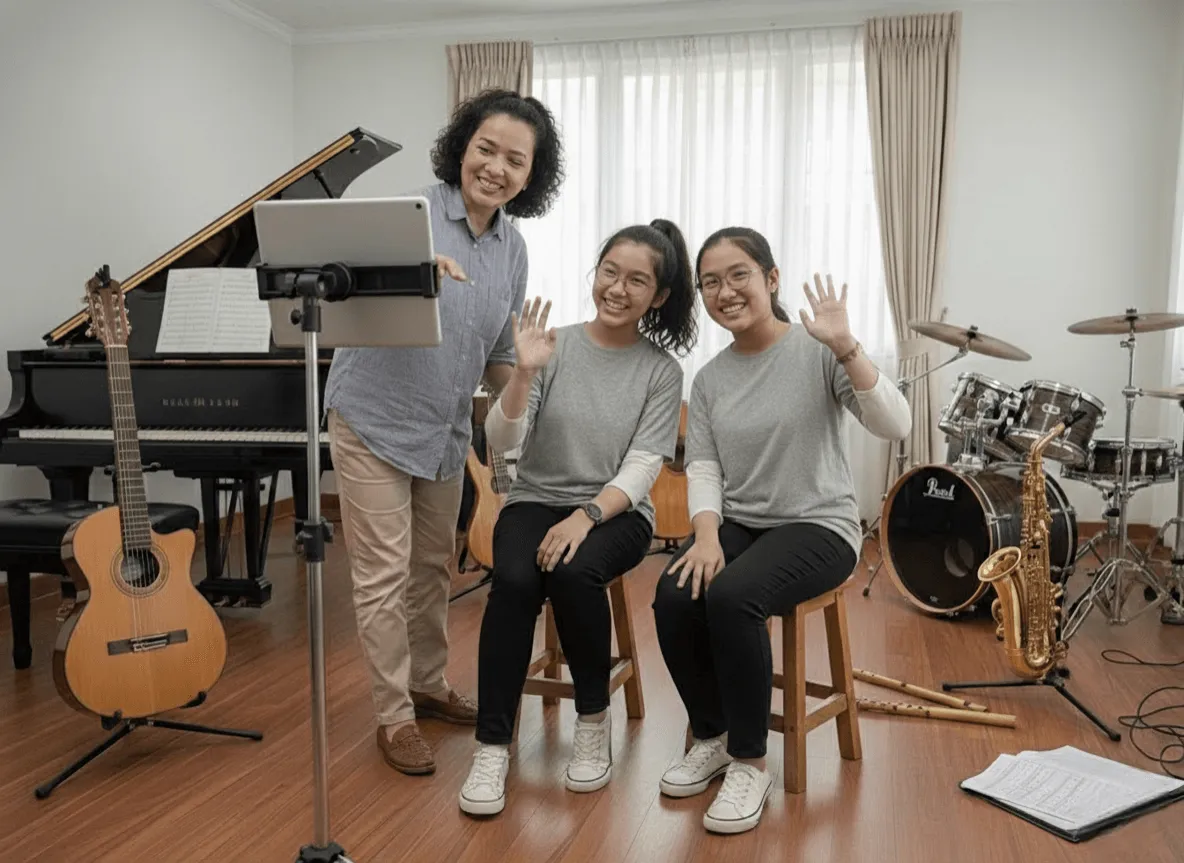
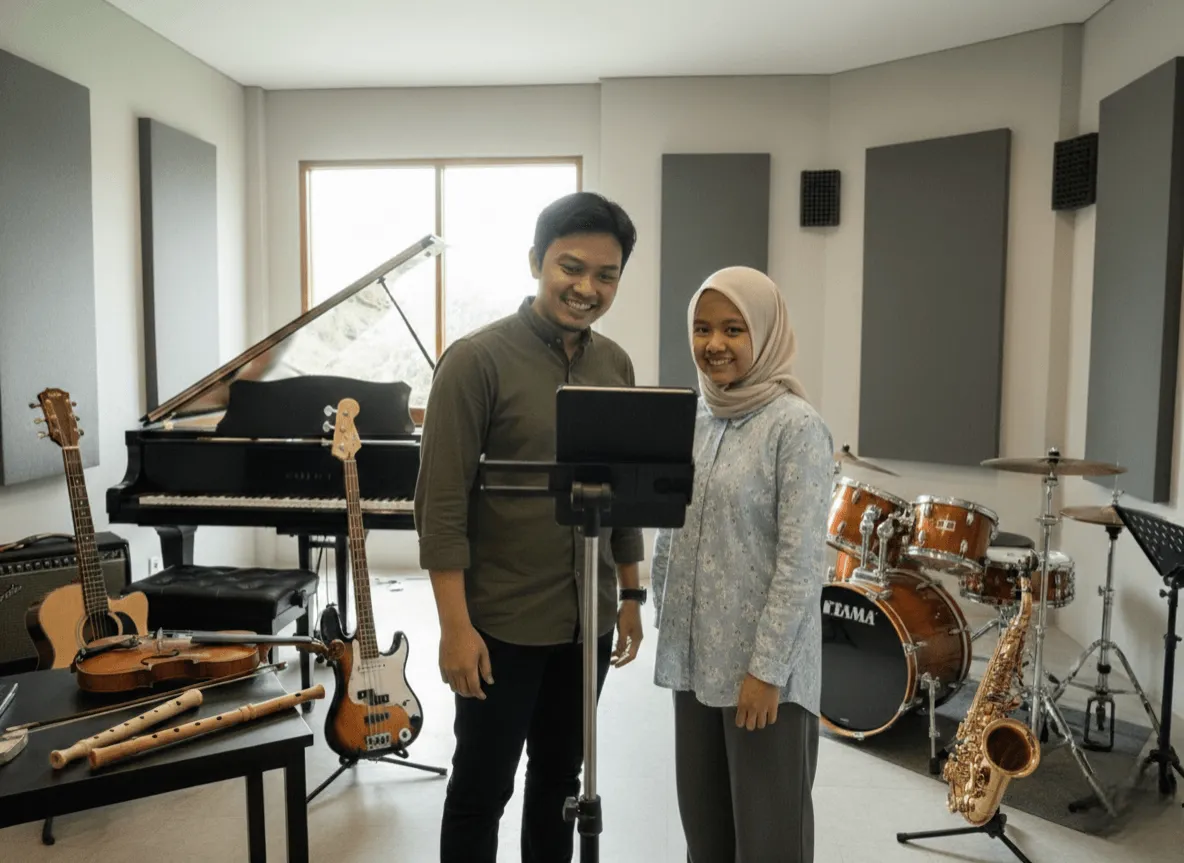
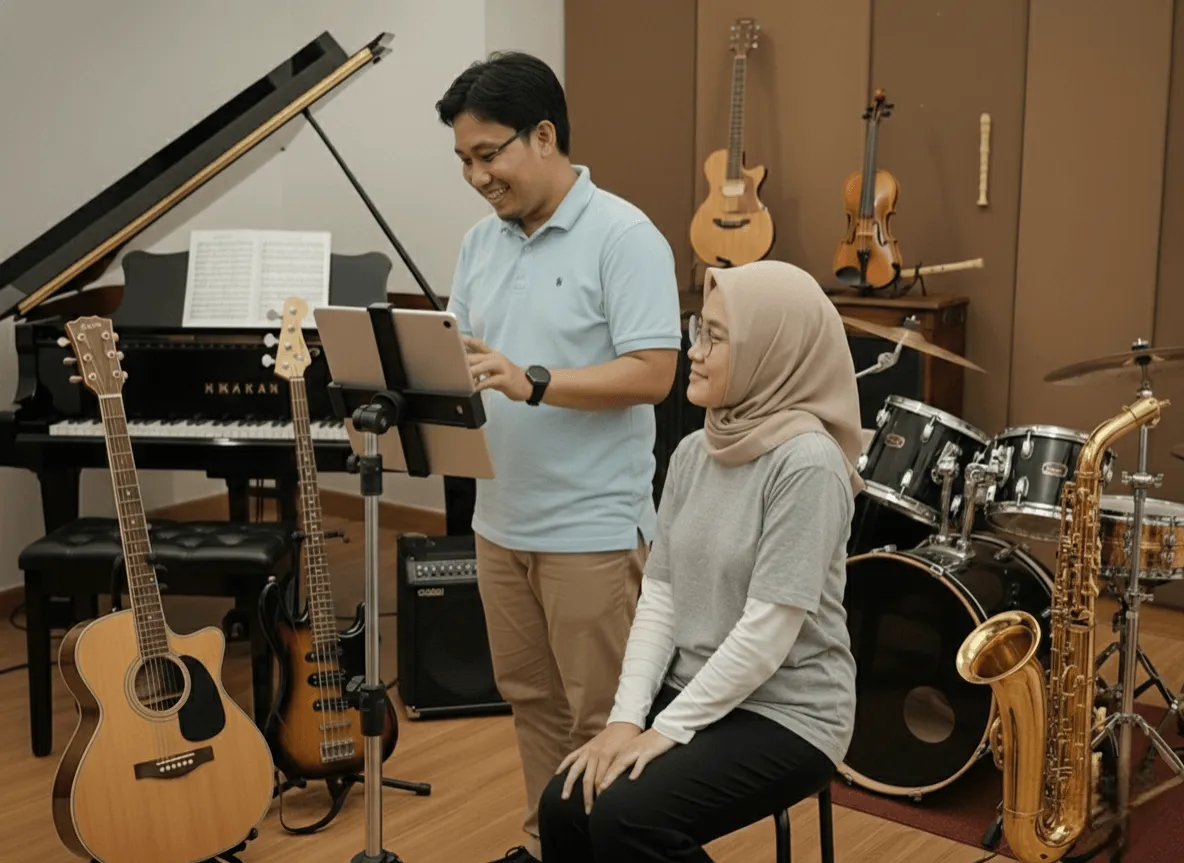
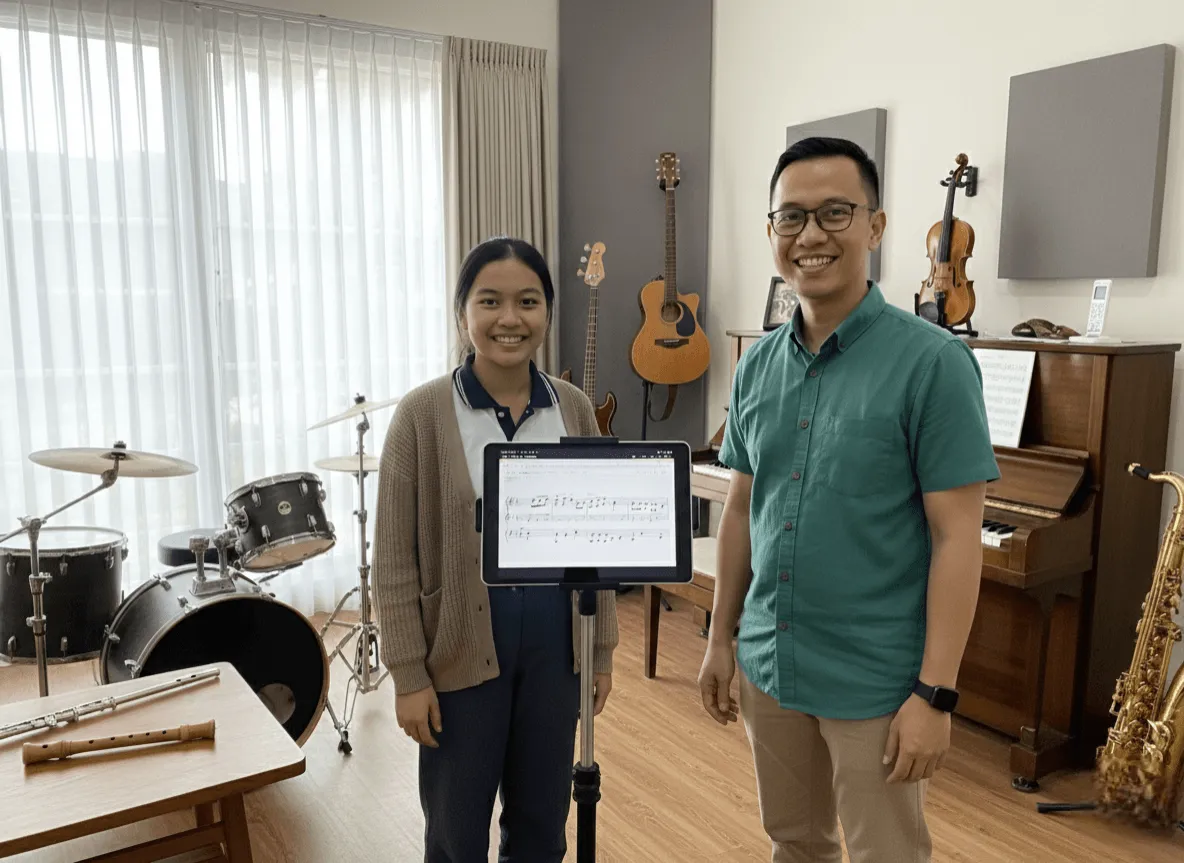
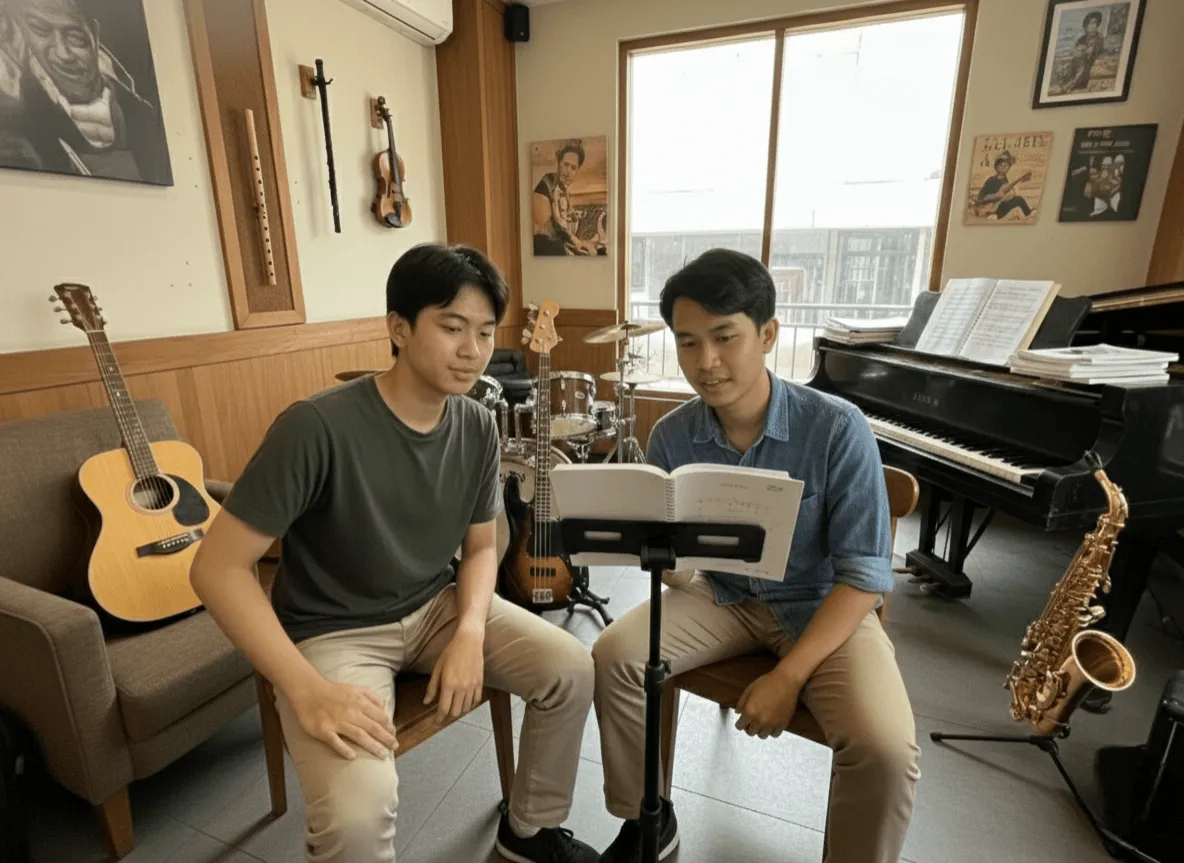
The photographs below were taken during piano tutoring in Bali sessions with learners on the island.
Service Area
Where Edupola Piano Teachers Travel in Bali
Tutors for piano tutoring in Bali travel to the location you choose, from Denpasar, Badung, and Gianyar through to Tabanan, Buleleng, Klungkung, Bangli, Karangasem, and Jembrana. The lesson happens where the instrument is, which for this subject means the learner's home almost without exception.
The instrument shapes the match as much as the travel does. An acoustic piano, a weighted digital piano, and a light-keyed keyboard are three different things to teach on, and a teacher is told which one before the first lesson. Tuning matters too: a learner practising on an instrument badly out of tune is training their ear against itself, and teachers raise it when they hear it.
The Edupola office is not used as a lesson venue. Where no tutor is available near you, sessions run online. Online piano lessons work with one condition about the camera, described in the next section. Ask the admin about teacher coverage at your location in Bali.
Online Lessons
Online Piano Lessons in Bali and Where the Camera Goes
Online sessions for piano tutoring in Bali run over Zoom or Google Meet, and one condition decides whether they are useful: the camera has to show the hands and the keys together, from above or from the side. A view of the learner's face teaches nobody anything about piano.
With that view most of a lesson transfers. Notes, rhythm, fingering, sight reading, and theory all work, and the teacher can demonstrate on their own instrument. Learners outside teacher coverage use this route for the majority of their lessons.
Two things suffer and it is fair to name them. Fine dynamics are flattened by call audio, so subtle balance between the hands is better judged in person, and a teacher cannot adjust a learner's wrist with their own hand. Most learners alternate: online for the weekly work, in person every few weeks. Fees for online sessions match face-to-face sessions.
Frequently Asked
Questions From Piano Learners in Bali
What does private piano tutoring in Bali cost?
Fees start from IDR 120,900 for a 60-minute session, the shortest option. Sessions of 90 and 120 minutes are available with the fee following the length. The final fee follows session length and the number of sessions per month, between 4 and 28. The admin sends the breakdown in writing before the first payment. A piano or keyboard, a bench, and any sheet music are prepared by the learner and not included in the fee.
Does the learner need their own piano?
Yes, something to practise on at home in Bali, and it decides progress more than anything else. Lessons are weekly and practice is daily, so an hour with a teacher cannot replace the days in between. An acoustic piano or a weighted digital piano both work; a light-keyed keyboard builds a touch that does not transfer, and the teacher advises before you buy.
At what age can a child start piano?
From around 5 or 6, when a child can sit at the bench and follow a short instruction, with lessons kept shorter at that age. What matters more than age is whether the hand can reach comfortably and whether there is an instrument at home. The first lesson finds where a particular child is instead of using their birth date.
Can an adult who has never played learn?
Yes, and adults in Bali have one real advantage: they practise deliberately. Reading comes slower than it does for children and understanding comes faster, so a simple piece is usually playable within a couple of months on fifteen minutes a day. Nobody here will tell you that forty is too late; the repertoire is simply chosen to fit the hands you have now.
Does Edupola prepare candidates for graded examinations?
Yes, for the common graded syllabuses, and the plan is built backwards from the examination month. Pieces, scales, sight reading, and aural work each get session time, and the aural part is the one candidates most often underestimate. Entry itself is made by the learner with the examination board; the teacher advises on timing and readiness.
How do online piano lessons work?
With the camera showing the hands and the keys together, from above or the side, which is the one condition that matters. Notes, rhythm, fingering, reading, and theory all transfer. Fine dynamics are flattened by call audio and a teacher cannot adjust your wrist by hand, so most learners alternate online weekly lessons with an in-person lesson every few weeks.
Related Programmes
Music Programmes Taken Alongside Piano in Bali
Learners taking piano tutoring in Bali often add one other music programme, usually once a first piece is finished.
-
Music Tutoring in Bali
Taken by learners who want theory and ear training beyond what the piano needs.
-
Vocal Tutoring in Bali
Chosen by learners who accompany their own singing.
-
Guitar Tutoring in Bali
Often added by learners who want a second instrument for playing with other people.
Get Started
Start From the Piece You Want to Play
Name the instrument you have, the pieces you want to play, and the minutes you can practise daily. A tutor in Bali is matched within 1 to 5 working days.