
Private Guitar Tutoring in Bali
Guitar Tutoring in Bali: Three Roles Decide the Technique
Guitar tutoring in Bali from Edupola pairs one teacher with one learner at home, on your own guitar. There is no single thing called playing guitar. Accompanying, melody, and a band part are 3 different jobs, so the role is chosen first. Fees from IDR 120,900 per session.
Rating and fees for guitar tutoring in Bali
| Programme | Guitar Tutoring in Bali |
|---|---|
| Provider | Edupola |
| Description | Private guitar tutoring in Bali, one teacher per learner: the playing role is chosen first, then chords, chord changes, strumming, fingerstyle, scales, and repertoire follow from it. |
| Fee | Fees start from Rp120,900 per session. |
| Session Length | Sessions run 60, 90, or 120 minutes. |
| Schedule | Flexible, shaped around the learner's needs. |
| Start | Lessons begin once the tutor and materials are ready. |
| Sessions per Month | 4 to 28 sessions per month, as needed. |
| Rating | 4.9 out of 5, based on 118 reviews |
Programme at a Glance
Guitar Tutoring in Bali That Starts From the Playing Role
Guitar tutoring in Bali runs one tutor with one learner, at your home, on your own guitar. The first question is not about level. It is which job you want the guitar to do.
Three roles pull in different directions. Accompanying a singer needs clean chord changes in time, and almost no soloing. Playing melody, including fingerstyle, needs independent fingers and the ability to carry a tune and a bass line at once. Holding a part in a band needs timing above everything, and a willingness to play less than you can.
A learner taught the wrong one practises the wrong thing for months. So the role is chosen in the first session, with the song they want as the evidence, and chords, changes, strumming, fingerstyle, scales, and repertoire follow from that choice. Fees start from IDR 120,900 per 60-minute session, with 4 to 28 sessions a month. This programme holds a 4.9 out of 5 rating across 118 learner reviews in Bali.
The Roles
Playing Roles and the Technique Each Demands
Guitar teachers use this in the first session. The third column is the kind of song usually worked on first in that role, because a role without a song is an abstraction.
| Role | The main technique | The first song usually worked on |
|---|---|---|
| Accompanying a singer | Clean chord changes in strict time | A song with four chords and a steady strum |
| Playing melody and fingerstyle | Finger independence, thumb carrying the bass | A simple arrangement with melody over a bass note |
| Holding a band part | Timing, and playing less than you can | A riff-based song where the part repeats exactly |
| Performing solo at a venue | Repertoire depth and recovering from mistakes | Three songs that can be played start to finish without stopping |
| Playing with other instruments | Listening, and leaving space | A song where the guitar enters after the first verse |
What Is Trained
Six Fields Trained Within Each Role
The mix differs by role. An accompanist spends most of their time in the first two; a fingerstyle learner spends it in the fourth.
-
Chords
The shapes themselves, pressed cleanly so every string sounds. Buzzing strings are a pressure and angle problem, and they are fixed before any new shape is added.
-
Chord Changes
Moving between shapes without stopping the rhythm. This is where almost every beginner stalls, and it is trained separately from the chords themselves.
-
Strumming Patterns
The right hand keeping time, including the upstrokes that get dropped when a learner concentrates on the left hand.
-
Fingerstyle
Thumb on the bass, fingers on the melody, both at once. Slow and rewarding, and the route most adult learners enjoy most.
-
Scales and Theory
Why the chords in a song belong together, and where a solo can go. Taught as explanation of what the hands already do instead of as a subject.
-
Improvising and Repertoire
Playing over a form without written music, and accumulating songs you can perform from memory. The stage where a learner stops needing a teacher weekly.
The First Month
The Order of the First Month of Guitar
This is the sequence almost every beginner follows, whichever role they chose. It is short on purpose: one finished song inside a month is what keeps a learner playing.
-
Week 1
Posture and a Clean Sound
How to hold the instrument, where the fretting fingers press, and getting single notes to sound without buzzing. Dull and decisive: bad posture becomes wrist pain later.
- Holding the guitar
- Finger pressure
- No buzzing strings
-
Week 2
The First Four Chords
Four shapes that between them cover a large number of songs. Pressed one at a time, checked string by string, before any attempt to move between them.
- Four shapes
- Checked string by string
- No changes yet
-
Week 3
One Strumming Pattern
A single rhythm in the right hand, practised on one chord until it runs without thought. One pattern, because two half-learned patterns produce neither.
- One rhythm
- On one chord
- Until automatic
-
Week 4
One Whole Song
The four chords and the one pattern put into a complete song, played start to finish. Finishing matters more than polish at this stage.
- Start to finish
- Chosen by the learner
- Played for someone
Who It Is For
Learners Who Take Guitar Lessons in Bali
Every session holds one learner, so the repertoire comes from songs that learner wants to play.
-
Learners Who Want to Accompany Singing
Learners in Bali who want to back themselves or someone else. Chord changes in time are the whole job, and a first song is usually playable within a month.
-
Cafe and Event Players
Learners in Bali playing for an audience. Repertoire depth and recovering from a mistake mid-song matter more than technical ceiling.
-
School Band Players
Younger learners in Bali holding a part with other people. Timing and restraint are trained, since the common fault is playing too much.
-
Fingerstyle Learners
Learners in Bali who want melody and bass at once. Progress is slower and the sessions are the most satisfying of any role here.
-
Children and Teenagers
Learners in Bali starting young. Instrument size is checked first, because a full-size guitar on a small frame teaches tension instead of technique.
-
Learners Who Stopped Before
Learners in Bali with a guitar sitting in a cupboard. The stall is almost always chord changes, and naming it is usually enough to restart.
One Session
Inside a 60-Minute Session in the Accompanying Role
This is the division used in the accompanying role. The learner plays the whole song at the end of every session, however rough it still is.
-
10 minutes
Checking the Home Practice
What was practised and what went wrong. A learner who practised the wrong thing for a week needs that caught early, not at the end of the hour.
-
10 minutes
Finger Warm-Up
Slow exercises across the strings, with the teacher watching the wrist. Tension built in the first minutes stays for the whole session.
-
15 minutes
The Change That Still Sticks
One chord change practised on its own, with a metronome slower than feels dignified. The specific change, not chords in general.
-
20 minutes
Working on the Song
The change put back into the song, in the bar where it actually occurs. Learners discover the change is fine and the bar before it is the problem.
-
5 minutes
Playing It Whole and Notes
The song start to finish without stopping for mistakes, then the week's practice written in the learner's book.
In a 90 or 120 minute session, one new song can be introduced within the same session, and that is what learners putting a setlist together for an event choose.
Prepared by the Learner
Equipment the Learner Prepares
The admin confirms these once the schedule for guitar tutoring in Bali is agreed. A guitar, strings, and a tuner are prepared by the learner and not included in the fee.
-
A Guitar of the Right Size
Sized to the player, which matters most for children. A full-size instrument on a small frame forces the shoulder up and teaches tension that takes months to undo.
-
Strings Still Worth Playing
Old strings sound dull and fight the fingers, and a beginner concludes the problem is their hand. A fresh set costs little and changes the first lesson noticeably.
-
A Tuner
A clip-on tuner or a phone application. An out-of-tune guitar trains the ear against itself, and a beginner cannot hear that it is the instrument.
-
A List of Songs You Want to Play
Three or four, however ambitious. The teacher works backwards to find what is playable now, and the list is also how the role gets chosen.
-
A Seat Without Armrests
A chair that lets the arms hang freely. An armchair changes the angle of the right arm enough to make strumming awkward for a whole session.
If you do not own a guitar yet, say so during the consultation. The teacher advises on size and type for your role before you buy, since a mismatched instrument is the most common early regret.
The Wall
Why Chord Changes Become the Stopping Point
Almost every learner who abandons guitar abandons it at the same place, and guitar tutoring in Bali is arranged around that place. Not the chords: learners master four shapes in a fortnight. The changes between them, in time, without the rhythm collapsing.
There is a mechanical reason it feels impossible. A chord change asks several fingers to move to different places simultaneously and arrive together, which is a coordination task the hand has never performed. Until it becomes automatic, each change costs full attention, and attention spent on the left hand means the right hand stops. The learner hears the music fall apart and concludes they have no rhythm.
What works is unglamorous and reliable: two chords, back and forth, slowly, with a metronome set far below the song tempo, in short bursts across the week. Ten minutes twice a day beats an hour on Saturday, because this is a habit being built in the hand instead of a fact being learned. Most learners cross it in a few weeks, and teachers tell them the timeline in advance so the slow fortnight reads as expected instead of as failure.
What Learners Say
Stories From Guitar Learners in Bali
The quotes below come from learners in Bali who completed the guitar programme at Edupola, with their situation and what changed.
-
★★★★★
My child used to struggle to concentrate and the chord work was always middling. After 3 months of lessons at Edupola the improvement was clear.
Skills rose sharply within 3 months
Dewi L.
Intermediate learner · Verified learner
-
★★★★★
My child took intensive lessons at Edupola before the course evaluation. The result was excellent: the highest mark at that level.
Passed the course evaluation with a good mark
Sudiarta
Advanced learner · Verified learner
-
★★★★★
My child used to always cry when told to study. Now the child keeps asking for more lessons because the tutor is so much fun! Learning while playing favourite songs, so the child enjoys it and the material still sinks in. Thank you Edupola!
The child came to enjoy learning
Ayu S.
Beginner level learner · Verified learner
-
★★★★★
My child was weak at Fingerstyle, and the practice skill was always below 70. After private lessons at Edupola, the skill is now consistently above 85! The tutor teaches with a method children find easy to understand.
Fingerstyle skill rose sharply
Putra
Advanced level learner · Verified learner
-
★★★★★
As a learner who is busy with work, I find it hard to help my child with practice. With Edupola, the tutor comes to the house and helps my child finish the practice correctly. My child has become more independent and confident!
practice always finished on time
Ratna
Intermediate level learner · Verified learner
-
★★★★★
My child had just started Guitar and still struggled to read tab. The Edupola tutor patiently taught until now my child reads tab fluently and counts. The fun learning method keeps my child eager to learn!
The child reads tab fluently and counts
Dharma W.
Beginner level learner · Verified learner
How to Register
Four Steps to the First Guitar Lesson
The opening consultation carries no fee. The admin asks which role you want and which songs you have in mind.
-
Name the Role and the Songs
Accompanying, melody, or a band part, and three songs you want to play. Those two answers set the technique order for the first months.
-
Agree the Schedule
Days, times, session length, and sessions per month are agreed with the admin, following the minutes you can give to short daily practice, which matters more than lesson length.
-
Matching the Teacher
The team looks for a tutor whose travel to your location in Bali stays short, and that search runs 1 to 5 working days. Accompanying, fingerstyle, and band playing are matched to teachers who do that kind of playing.
-
The First Lesson
Your guitar and its size are checked, you play whatever you can, and the role and first song are chosen together.
Need help? Contact our admin on WhatsApp for a free consultation.
Documentation
Guitar Lessons With Edupola in Bali
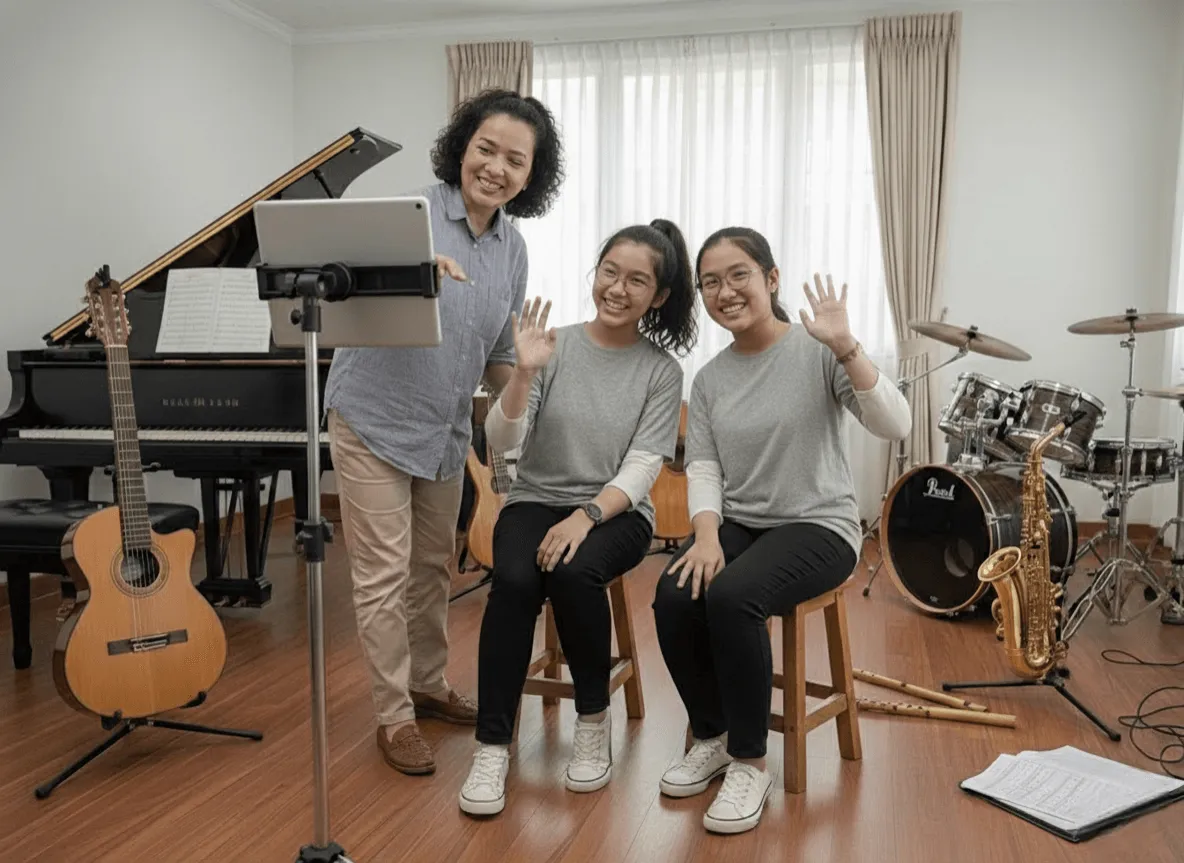
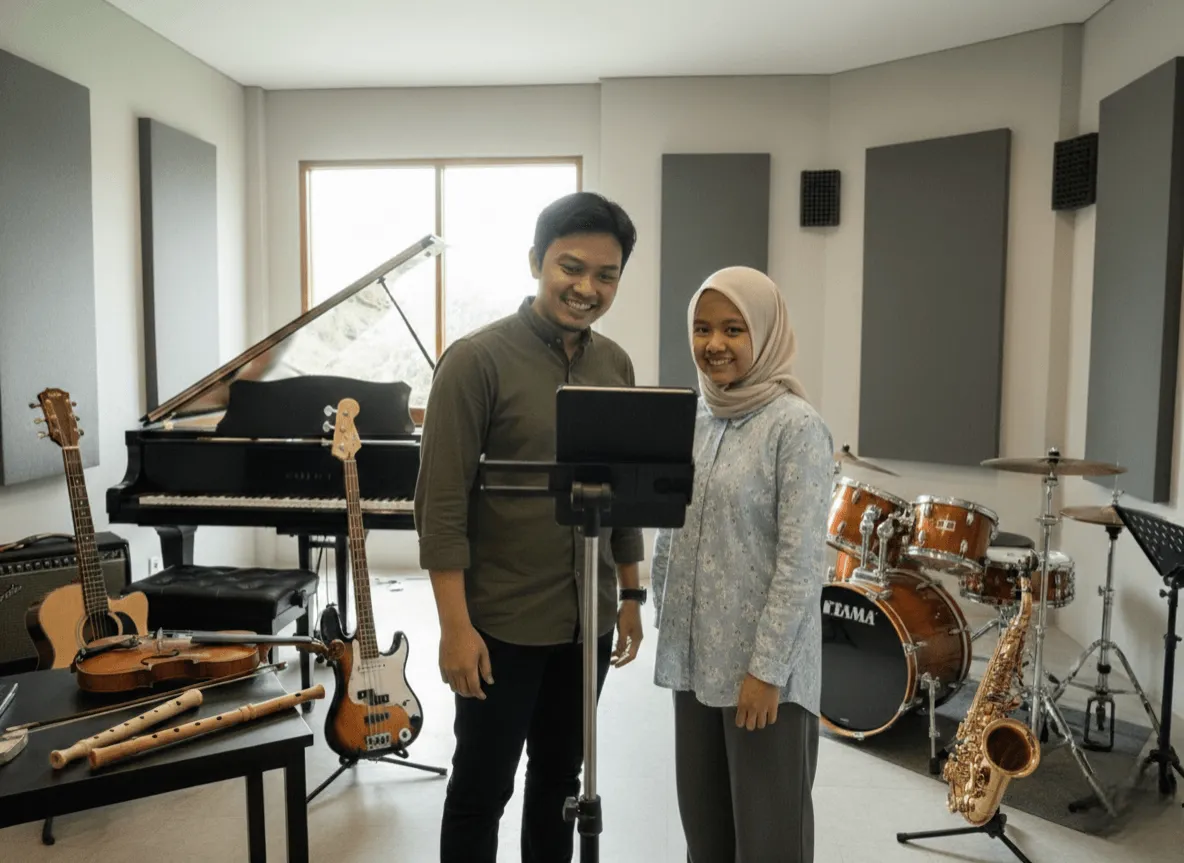
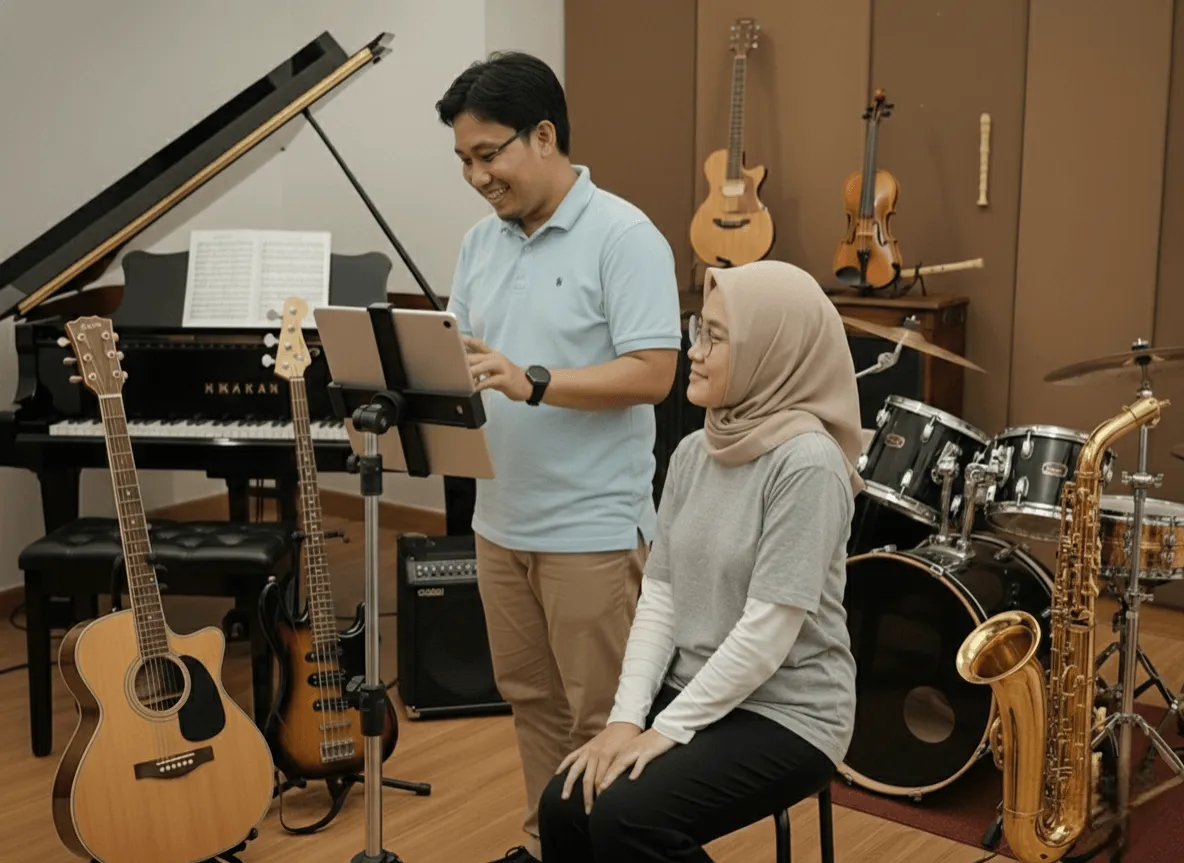
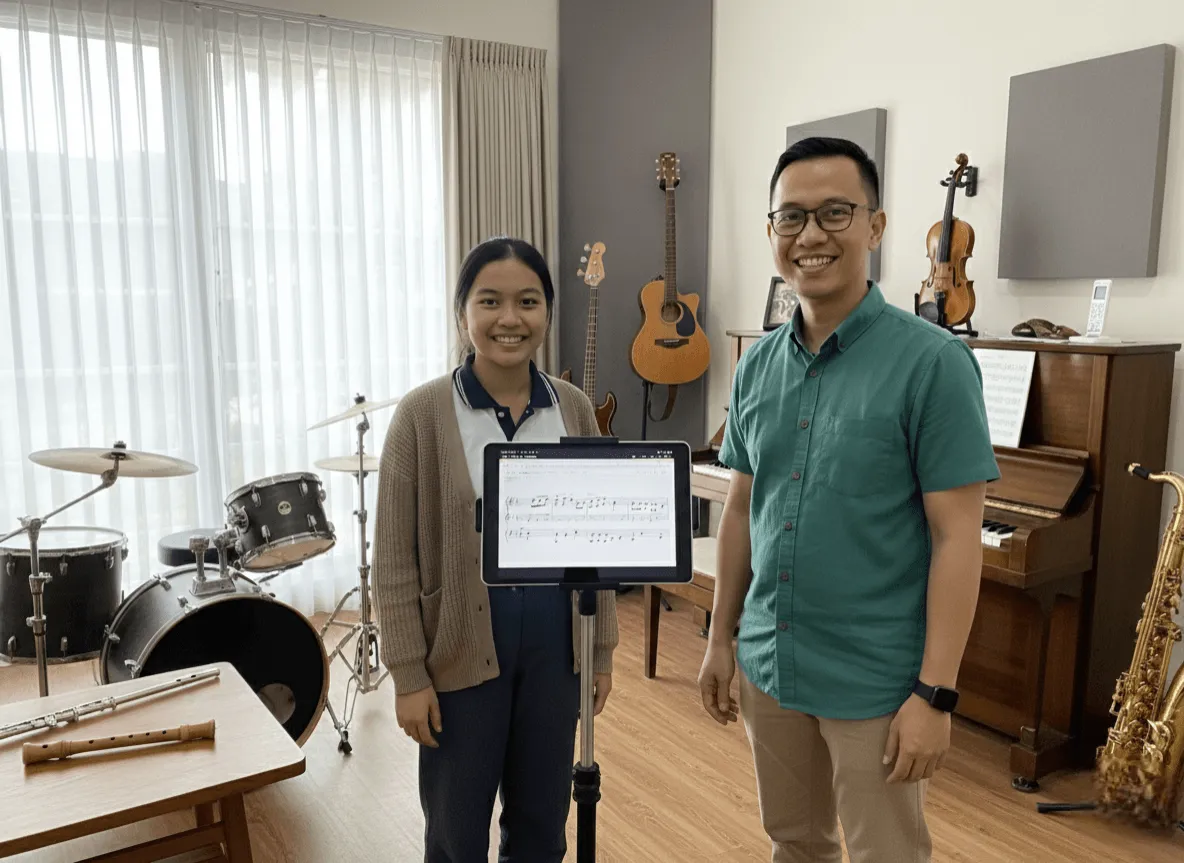
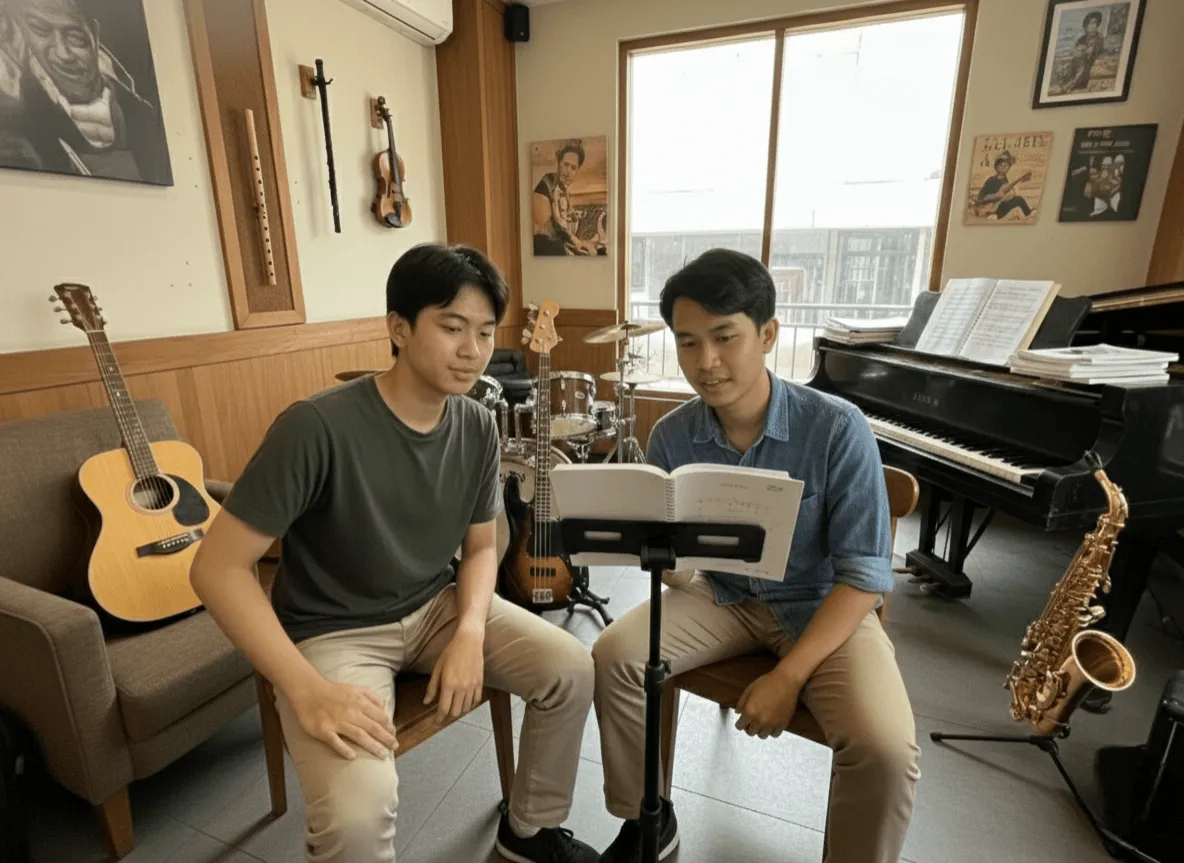
The photographs below were taken during guitar tutoring in Bali sessions with learners on the island.
Service Area
Where Edupola Guitar Teachers Travel in Bali
Tutors for guitar tutoring in Bali travel to the location you choose, from Denpasar, Badung, and Gianyar through to Tabanan, Buleleng, Klungkung, Bangli, Karangasem, and Jembrana. The lesson happens where your guitar is, which is almost always home, and the room needs nothing more than a chair without armrests.
The match turns on the role more than on the distance. Accompanying, fingerstyle, and band playing are three different trades, and a teacher who plays one well may not teach another. Learners who want to play at venues are matched where possible with teachers who perform, since recovering from a mistake in front of people is learned from someone who has done it.
The Edupola office is not used as a lesson venue. Somewhere without a tutor nearby, the sessions move online, and guitar carries one condition about the camera, described next. Ask the admin which parts of Bali currently have a teacher free.
Online Lessons
Online Guitar Lessons in Bali and Where the Camera Points
Guitar tutoring in Bali runs over Zoom or Google Meet when needed, under one condition: the camera has to show both hands, which usually means pointing it at the guitar instead of the face, from the side.
With that view most of a lesson transfers. Chord shapes, changes, strumming patterns, fingerstyle positions, and theory all work, and the teacher demonstrates on their own instrument. Learners outside teacher coverage take most of their lessons this way.
Two things suffer honestly. Call audio compresses the attack of a strum, so fine rhythm is harder to judge, and a teacher cannot reposition a learner's wrist by hand. Most learners alternate: online weekly, in person every few weeks. Fees for online sessions match face-to-face sessions.
Frequently Asked
Questions From Guitar Learners in Bali
What does private guitar tutoring in Bali cost?
Fees start from IDR 120,900 for a 60-minute session, the shortest option. Sessions of 90 and 120 minutes are available with the fee following the length. The final fee follows session length and the number of sessions per month, between 4 and 28. The admin sends the breakdown in writing before the first payment. A guitar, strings, and a tuner are prepared by the learner and not included in the fee.
Which guitar should a beginner use?
The one that matches your role in Bali, and sized to the player. Nylon-string classical guitars are gentler on the fingers and suit fingerstyle; steel-string acoustics suit accompanying and sound closer to most popular songs; electric guitars suit band playing. Size matters most for children, since a full-size instrument on a small frame teaches tension instead of technique.
How long before I can play a whole song?
About a month for most learners in Bali practising ten minutes twice a day, and the first song is deliberately chosen to be reachable: four chords and one strumming pattern. Polish comes later. Finishing a song inside the first month is what keeps learners playing, which is why the first four weeks are sequenced tightly.
Why do chord changes feel so much harder than chords?
Because a change asks several fingers to move to different places and arrive together, which the hand has never done. Until it is automatic, each change costs full attention, so the strumming hand stops and the music falls apart. The remedy is two chords back and forth, slowly, with a metronome, in short bursts across the week. Most learners cross it in a few weeks.
Can young children start guitar lessons?
Yes, from around 7 for most children in Bali, and instrument size is the deciding factor more than age. A smaller guitar with nylon strings is kinder to small fingers and keeps the shoulder down. Sessions are shorter at that age and built around finishing small pieces, since a child who finishes something shows it to someone and wants the next one.
How is a guitar teacher matched to a learner?
The schedule is settled first during the consultation, covering days, times, session length, and sessions per month. The Edupola team then looks for a tutor whose travel to your location in Bali stays short, and that search runs 1 to 5 working days. The role matters here: accompanying, fingerstyle, and band playing are matched to teachers who do that kind of playing. If the first 2 weeks feel like a poor fit, a replacement is arranged at no extra cost.
Related Programmes
Music Programmes That Accompany Guitar Tutoring in Bali
Guitar tutoring in Bali is often taken with one other music programme, usually once a first song is finished.
-

Vocal Tutoring in Bali
Taken by learners who accompany their own singing and want the voice to match.
-

Bass Tutoring in Bali
Chosen by learners who play in a band and want to cover a second part.
-

Music Tutoring in Bali
Often added by learners who want theory and ear training beyond the instrument.
Get Started
Start From the Role You Choose
Name the role you want, three songs you have in mind, and the guitar you own. A tutor in Bali is matched within 1 to 5 working days.