
Private Martial Arts Training in Bali
Martial Arts Training in Bali: Control Trained Before Power
Martial arts training in Bali from Edupola pairs one coach with one learner at a place you choose. Two things decide this programme: which discipline, and the order of training. Power comes last of 6 steps, because control is what keeps a beginner uninjured. Fees from IDR 136,200 per session.

Rating and fees for martial arts training in Bali
| Programme | Martial Arts Training in Bali |
|---|---|
| Provider | Edupola |
| Description | Private martial arts training in Bali, one coach per learner: control is trained before power, from stance and breathing through to controlled partner work and grading tests. |
| Fee | Fees start from Rp136,200 per session. |
| Session Length | Every session runs 60, 90, or 120 minutes. |
| Schedule | Flexible, following the learner's free hours. |
| Start | Enrolment is open year round. |
| Sessions per Month | 4 to 28 sessions per month, as needed. |
| Rating | 4.9 out of 5, based on 127 reviews |
Programme at a Glance
Martial Arts Training in Bali and the Two Decisions Behind It
Martial arts training in Bali runs one tutor with one learner, at your home, your workplace, or over a screen. Two decisions are made before any training begins, and both are made with the learner instead of for them.
The first is the discipline. They are not interchangeable: some ask a great deal of the knees, some involve regular impact, some are mostly standing and some mostly ground work. A learner with a bad knee and a learner who wants to compete need different answers, and choosing badly is discovered through injury.
The second is the order of training, and here the programme is firm. Control comes before power: slow movement first, stopping short of contact, distance practised separately, breathing used to regulate effort, protective equipment worn from the beginning, and full power last. Fees start from IDR 136,200 per 60-minute session, with 4 to 28 sessions a month. This programme holds a 4.9 out of 5 rating across 127 learner reviews in Bali.
Disciplines
Disciplines Available and What They Ask of the Body
Coaches use this with the learner before anything is chosen. The third column is the honest part, and it is where a wrong choice shows up weeks later.
| Discipline | What it emphasises | What it asks of the body |
|---|---|---|
| Pencak silat | Stance, footwork, and flowing movement | Hips and knees; a great deal of low work |
| Taekwondo | Kicking range and speed | Hip flexibility and balance on one leg |
| Karate | Straight lines, timing, and form | Shoulders and core, with repeated stopping movements |
| Muay thai | Clinch, knees, and conditioning | Shins and cardiovascular fitness; regular impact |
| Self-defence for everyday situations | Escaping, distance, and awareness | Least demanding physically, and the most situational |
| Grappling and ground work | Leverage, control, and position | Neck, shoulders, and tolerance for close contact |
The Order
Six Reasons Control Is Trained Before Power
This martial arts order is not softness; it is what lets a beginner train at home without getting hurt, and it is kept for competitive learners too.
-
Slow Movement First
Every technique is learned at a speed where the body can be corrected. Speed hides errors, and errors learned at speed become habits that have to be unlearned later.
-
Stopping Just Before Contact
Strikes are stopped short of the target deliberately, which is harder than hitting it. A learner who can stop can also choose not to, which is the whole point of control.
-
Distance Trained Separately
Judging range is its own skill and it is drilled without striking at all. Most accidental contact between partners comes from misjudged distance, never from intent.
-
Breathing Regulates Effort
Breath tied to movement keeps effort steady and prevents the burst of tension that causes strains. It is also what stops a nervous beginner from holding their breath entirely.
-
Protective Equipment From the Start
Pads and guards are worn in the early sessions, before they feel necessary. Equipment introduced only once contact begins arrives one session too late.
-
Full Power Last
Power is added after control, distance, and breathing are reliable. For most learners that is months in, and for learners training purely for fitness it never arrives at all.
Training Order
The Order of Training From the First Session
The martial arts stage a learner starts at is set by what their body can do today, and never by what they used to be able to do.
-
Stage 1
Stance, Stepping, and Breathing
How to stand, move, and breathe. No techniques at all, which disappoints learners for one session and then becomes visibly the foundation of everything else.
- Stance
- Footwork
- Breath tied to movement
-
Stage 2
Basic Techniques on a Still Target
Strikes, blocks, and escapes against a pad or a bag. Nothing moving back, so the learner can concentrate on their own mechanics.
- Strikes and blocks
- Still target
- Mechanics corrected
-
Stage 3
Controlled Partner Work
Working with a person, at agreed speed, stopping short of contact. Equipment on, with the coach calling the pace instead of the learners deciding it.
- Agreed speed
- Stopping short
- Coach sets the pace
-
Stage 4
Sequences and Grading Tests
Set sequences and the requirements of a grading, for learners who want one. Planned against the test date, with the sequence practised whole instead of in fragments.
- Set sequences
- Grading requirements
- Planned to a date
Who It Is For
Learners Who Take Martial Arts Lessons in Bali
Every session holds one learner, so the discipline and the pace are chosen for that learner's body and reason.
-
Learners Who Want to Feel Safer
Learners in Bali who travel home late or alone on the island. Escaping, distance, and awareness come first, because those end situations instead of winning them.
-
Learners Training for Fitness
Learners in Bali who find a gym monotonous. Pad work and conditioning carry the sessions, and full-power contact is never required.
-
Children and Teenagers
Younger learners across Bali. Sessions are shorter, contact is lighter, and the stated aims are control and attention instead of fighting ability.
-
Learners Heading for a Grading
Learners working towards a belt test. Sequences and requirements are planned backwards from the examination date.
-
Learners Returning After a Break
Learners in Bali who trained years ago. The first session measures the body as it is now, which is usually the hardest part to accept.
-
Learners With Past Injuries
Learners carrying a knee, shoulder, or back history. The discipline is chosen around the injury, and some are ruled out honestly.
One Session
Inside a 60-Minute Martial Arts Session
This is the division used once a learner is past the first stage. The warm-up is never shortened, because cold joints are where the injuries happen.
-
10 minutes
Warm-Up and Mobility
Joints taken through their range before anything loaded. Hips, knees, shoulders, and neck, in that order, with the coach watching for yesterday's stiffness.
-
10 minutes
Stance and Footwork
Standing and moving, every session, however advanced the learner. Footwork decays quietly and takes everything else with it.
-
15 minutes
Technique on a Still Target
One technique at a time against a pad, with mechanics corrected before speed. The coach holds the pad, which also controls the distance.
-
20 minutes
Controlled Partner Work
At agreed speed with equipment on, stopping short of contact. The coach calls the pace, and the pace drops the moment either learner tenses.
-
5 minutes
Cool-Down and Notes
Easy movement, then what to work on and what not to train on a sore day.
In a 90 or 120 minute session, a full sequence is worked through with conditioning afterwards, which is what learners preparing for a grading usually choose.
Prepared by the Learner
Space and Equipment Needed
The admin confirms these once the schedule for martial arts training in Bali is agreed. Loose clothing, protective equipment, and a mat are prepared by the learner and not included in the fee.
-
Enough Empty Floor
Roughly three metres by three, clear of furniture and with nothing overhead. Most home injuries in this subject come from a limb meeting a table, not from a partner.
-
A Mat or Soft Surface
Needed for anything involving going to the ground, and useful for everything else. Tile over concrete is the surface that punishes knees and ankles hardest.
-
Clothing That Moves
Loose enough for a high kick and a deep stance. A uniform is not required to start, and the coach advises later whether the discipline expects one.
-
Protective Equipment
Shin guards, gloves, or a mouthguard depending on the discipline. The coach says exactly what to buy after the first session, so nothing is bought twice.
-
Water and Health Notes
Asthma, heart conditions, recent surgery, or an existing injury. The coach needs them before the first session, since they change the discipline as well as the pace.
If you have not chosen a discipline, say so during the consultation. The admin asks about your body and your reason, and the choice follows from those two answers.
Load and Recovery
Training Load, Soreness, and Time to Recover
Two kinds of discomfort appear in martial arts training in Bali and learners are taught to tell them apart in the first weeks. Muscle soreness a day or two after training is expected and fades; sharp pain during a movement, or pain in a joint, is a signal to stop and is treated as one.
Recovery time is part of the plan here in Bali instead of an afterthought. Two sessions a week with a day between them produces better progress than three sessions crowded together, because the adaptation happens in the gap. Learners who train hard daily acquire the overuse injuries that end training altogether, and this is the most common reason an enthusiastic beginner disappears.
Coaches also adjust for the day. A learner who slept badly, is unwell, or is returning from illness trains lighter, and saying so is treated as information instead of weakness. The sessions are private, which makes that possible: nobody is keeping pace with a class, so the load can match the body in front of the coach.
What Learners Say
Stories From Martial Arts Learners in Bali
The quotes below come from learners in Bali who completed the martial arts programme at Edupola, with their situation and what changed.
-
★★★★★
My son was very shy and was often picked on at school. After 6 months of taekwondo at Edupola the change was remarkable.
His son is more confident now
Darma P.
Father of a shy 8-year-old · Verified learner
-
★★★★★
As a woman who often travels home late I wanted to be able to defend myself. The Edupola instructor taught practical techniques.
Feels safer after learning self-defence
Ayu P.
Office worker · Verified learner
-
★★★★★
My Edupola instructor trained me with real discipline. Everything from basic technique through to competition strategy was covered properly.
Second place at the Bali provincial championship
Yoga P.
Junior taekwondo athlete, aged 14 · Verified learner
-
★★★★★
I was bored with the monotony of the gym and tried muay thai at Edupola. It turned out to be genuinely enjoyable: pad work, shadow boxing, and controlled sparring.
Lost 12 kilograms in 4 months
Wijaya
Employee looking for an alternative to the gym · Verified learner
-
★★★★★
My daughter had been bullied badly enough to fear school. A psychologist suggested an activity that builds confidence, and pencak silat at Edupola did that.
Her daughter recovered her confidence
Sri H.
Mother of a 10-year-old · Verified learner
-
★★★★★
Work pressure meant I needed a healthy outlet. Karate at Edupola became meditation in movement: concentrating on technique takes the mind off everything else.
Found stress relief through martial arts
Mahendra A.
Company executive · Verified learner
Children
What Is Different in Training Children and Teenagers
Families bring children to martial arts training in Bali for reasons that are rarely about fighting: confidence, attention, or a child who has been pushed around at school. The programme takes those aims at face value and trains accordingly, which changes the content more than the intensity.
Three things differ from adult sessions. Contact stays light and partner work is introduced later, since a child's judgement of distance develops with age. The stated aim in front of the child is control, not winning, because a child who learns that power is the goal will test it at school. And the rules about where technique may be used are repeated in every session instead of mentioned once.
There is a point worth saying to parents plainly. Martial arts helps a bullied child mostly through posture, voice, and the confidence of having a skill, and only rarely through fighting back. Coaches work on the first three deliberately, and they tell parents that the change usually shows up in how the child stands and speaks before it shows up in anything physical.
How to Register
Four Steps to the First Martial Arts Session
The opening consultation carries no fee. The admin asks your aim and the state of your body.
-
Name the Aim and the Body
Why you want to train and what your knees, shoulders, and back have been through. Those two answers decide which disciplines are suitable and which are ruled out.
-
Choose the Discipline and the Schedule
The admin sets the days, the times, the session length, and how many sessions a month, working from the hours you can train and leaving a recovery day in between.
-
Matching the Coach
The team looks for a tutor whose travel to your location in Bali stays short, and that search runs 1 to 5 working days. Self-defence, competition, and children's training are matched to coaches who do that specifically.
-
The First Session
Stance, stepping, and breathing, with the coach watching how your body moves before any technique is taught.
Need help? Contact our admin on WhatsApp for a free consultation.
Documentation
Martial Arts Lessons With Edupola in Bali
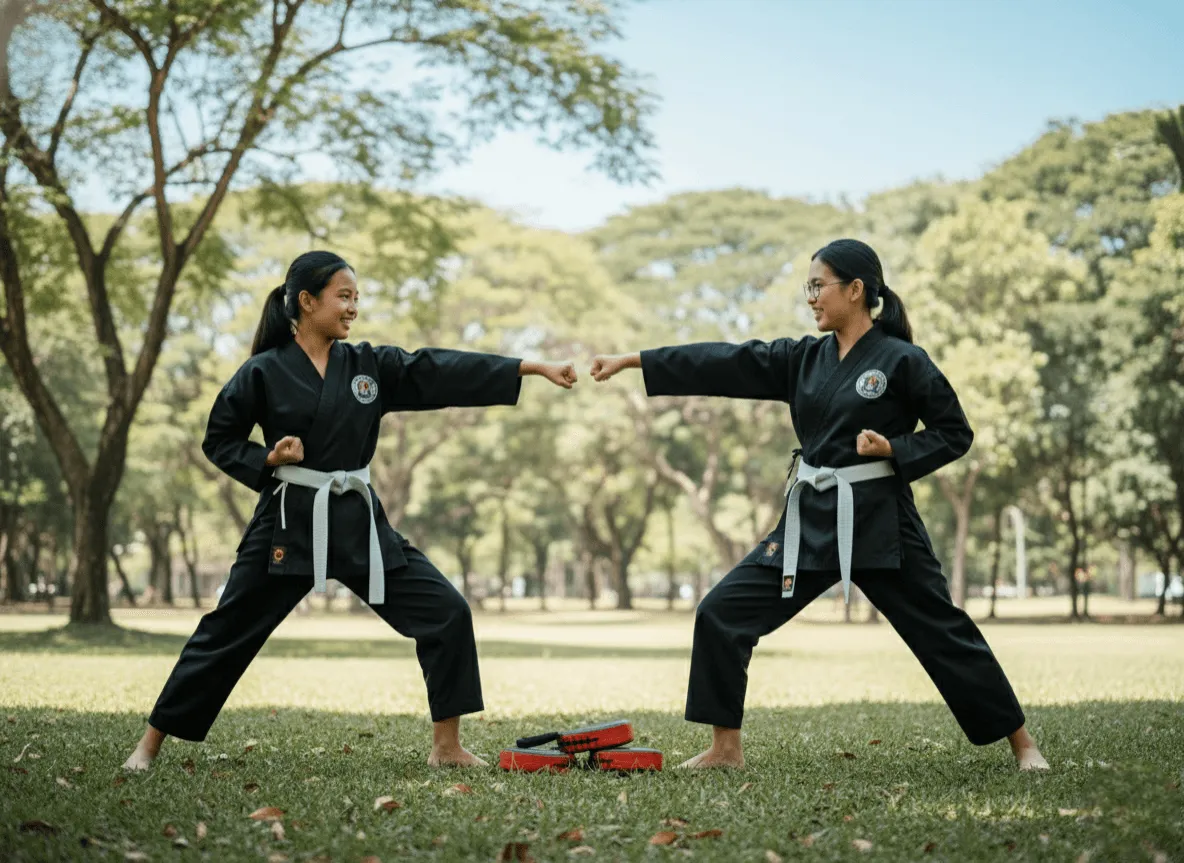
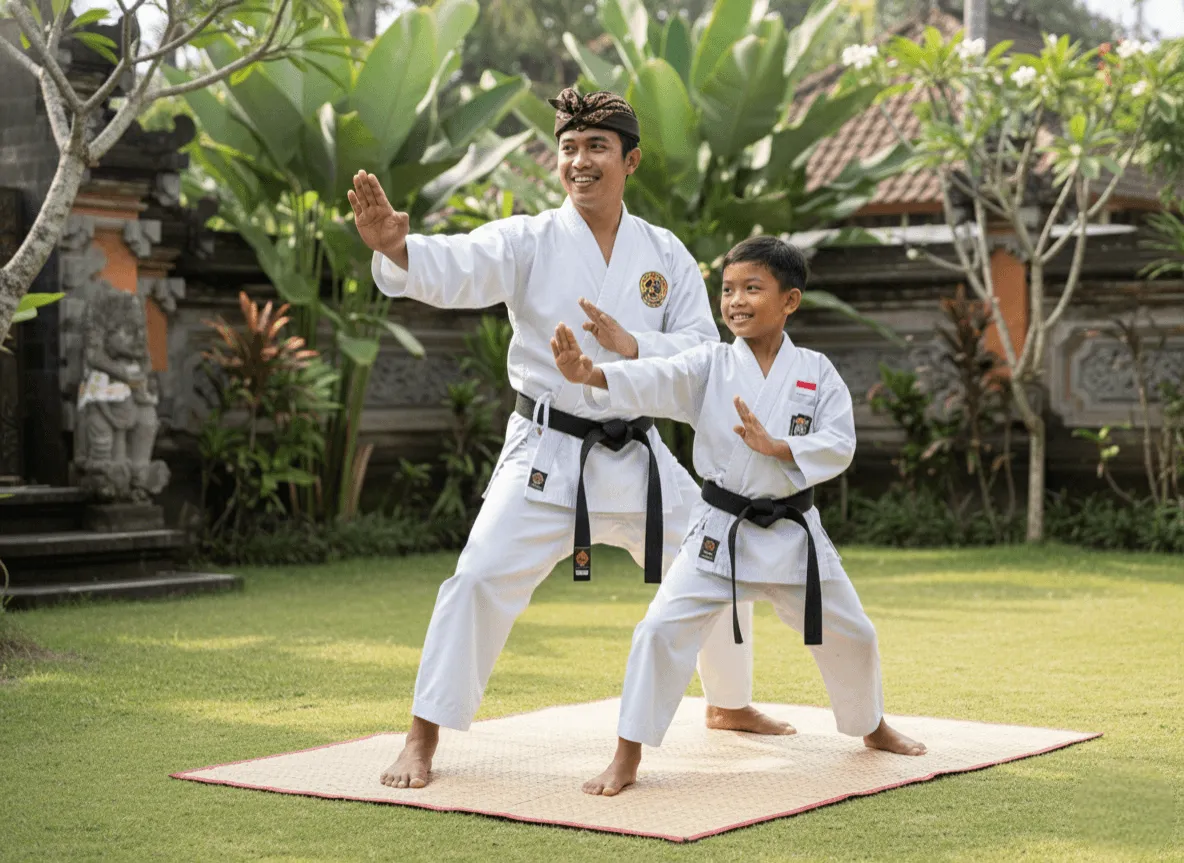
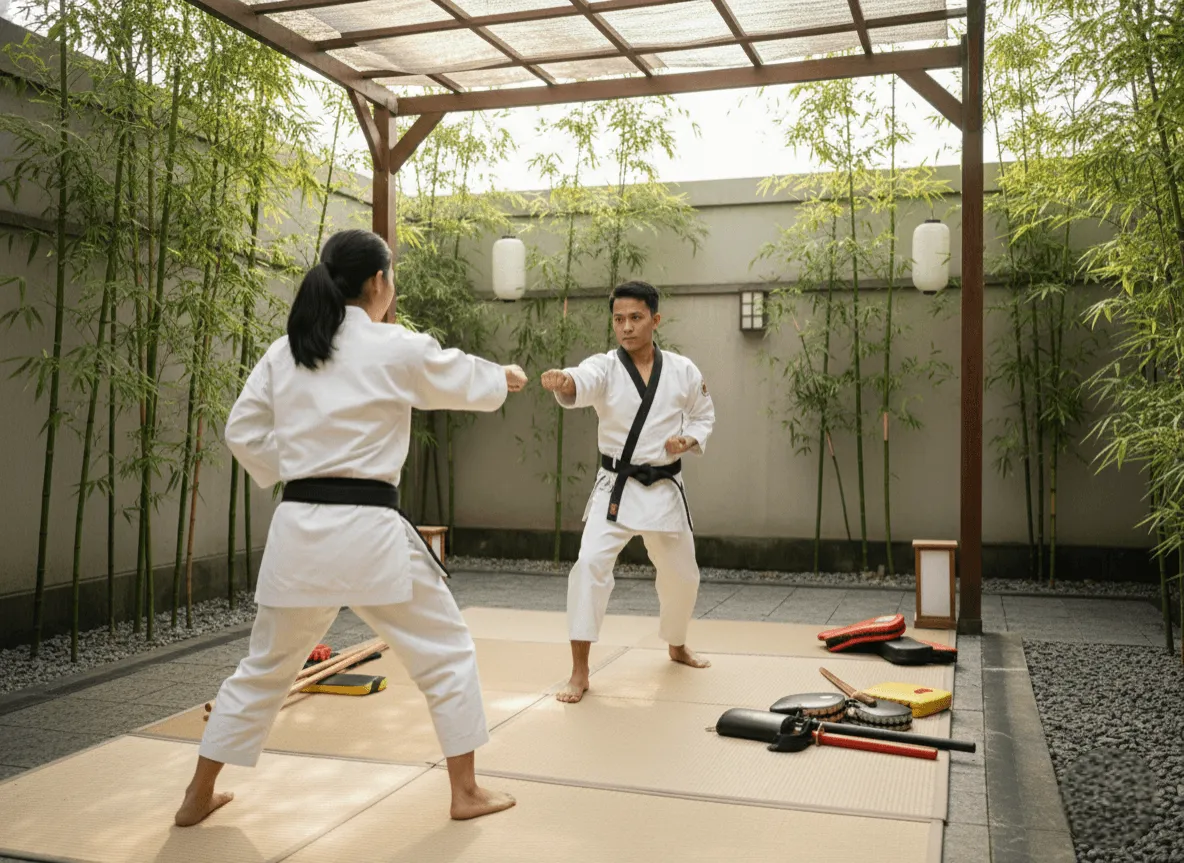
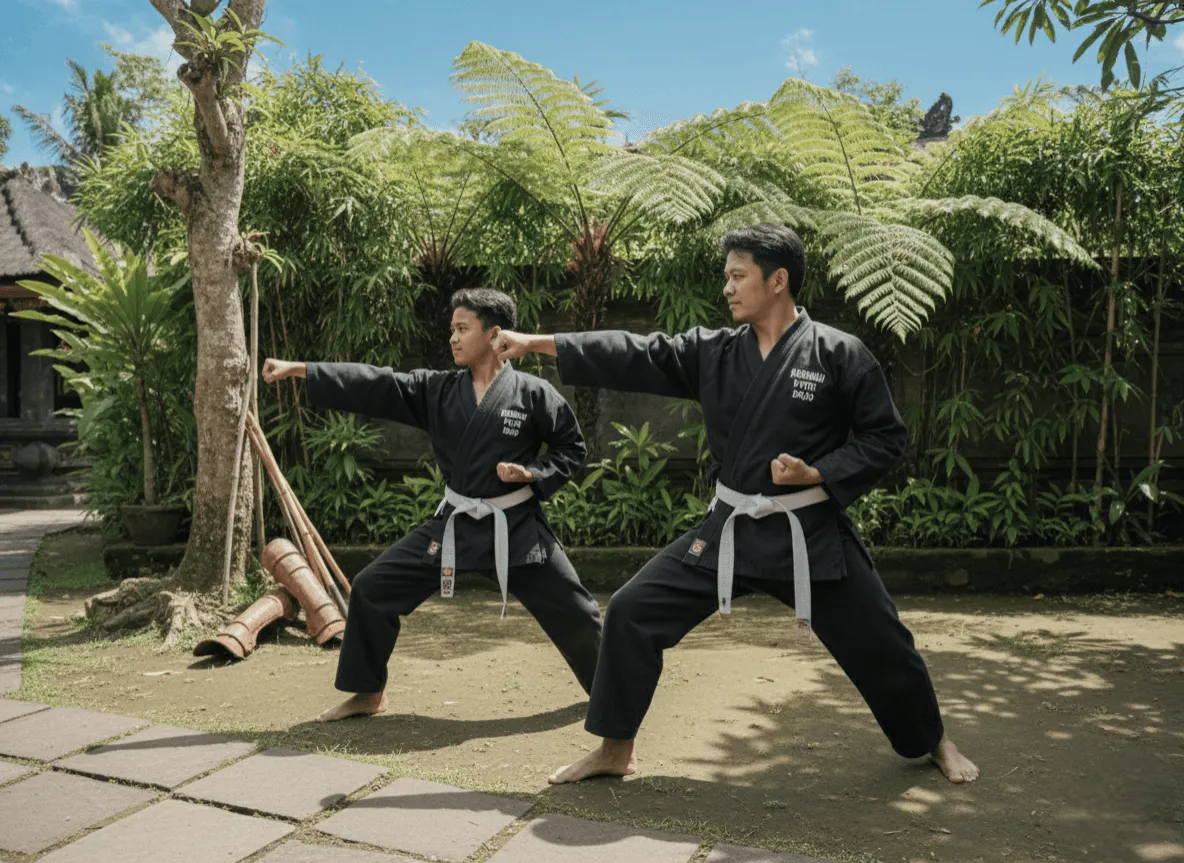
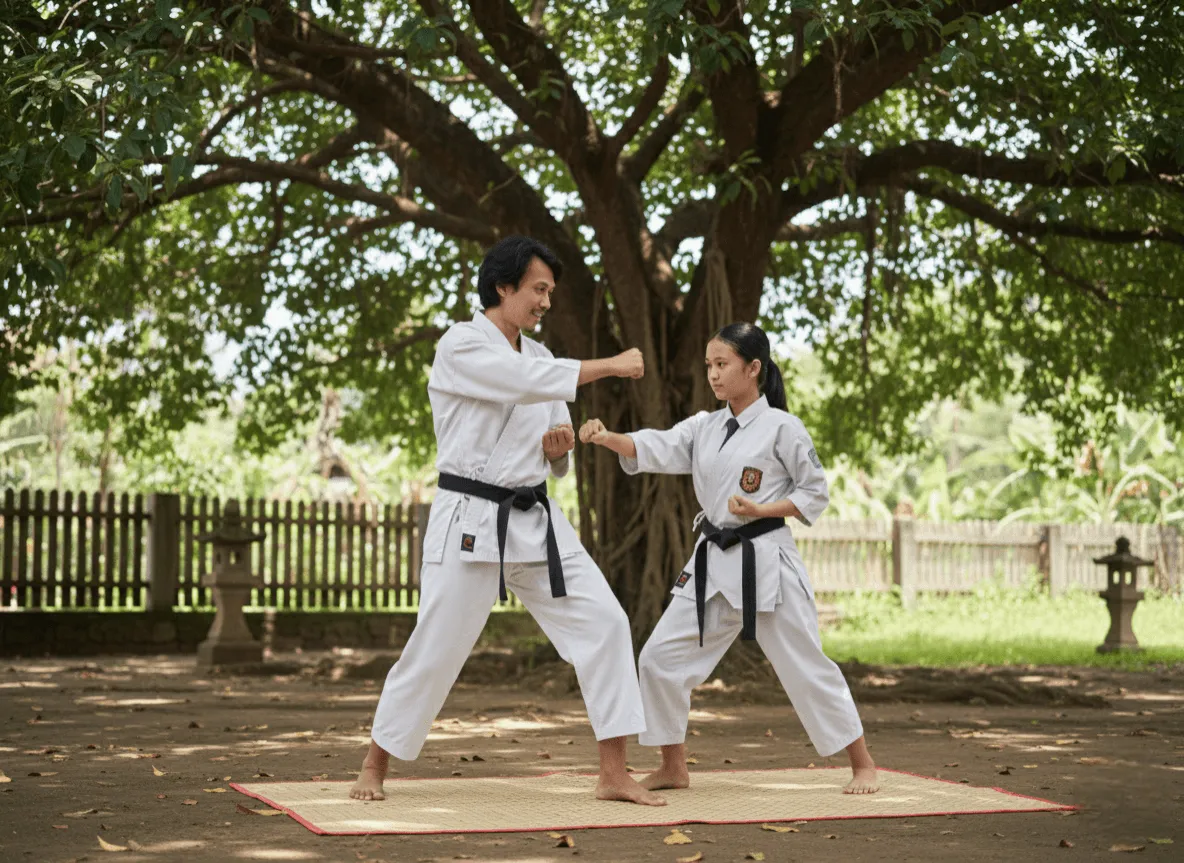
The photographs below were taken during martial arts training in Bali sessions with learners on the island.
Service Area
Where Edupola Martial Arts Coaches Travel in Bali
Coaches for martial arts training in Bali travel to the location you choose, from Denpasar, Badung, and Gianyar through to Tabanan, Buleleng, Klungkung, Bangli, Karangasem, and Jembrana. What decides this programme is the room, as much as the distance: a session needs an empty space of roughly three by three metres with no hard objects around it.
The discipline shapes the match more than the distance. Coaches specialise, and a coach who competes in one art is not automatically the right person for everyday self-defence or for a nervous eight-year-old. Learners with an injury history are matched to coaches used to adapting, which sometimes means waiting a little longer.
The Edupola office is not used as a lesson venue. Where no tutor is available near you, sessions run online. Only part of this programme can run online, and the next paragraph says which. Ask the admin about coach coverage at your location in Bali.
Online Sessions
Online Sessions in Bali and What They Cannot Cover
Online sessions for martial arts training in Bali run over Zoom or Google Meet, and the split is clean. Stance, footwork, breathing, conditioning, shadow work, and sequences practised alone all transfer, with the camera placed far enough back to show the whole body.
Partner work does not transfer, and nor does anything involving contact or being thrown. Those need a person in the room, and a coach watching through a screen cannot catch a learner who loses balance. Grading candidates therefore keep their partner sessions face to face.
The honest use of the online route here is maintenance between in-person sessions: a learner drilling footwork and conditioning with a coach watching, which is more useful than drilling it unobserved. Fees for online sessions match face-to-face sessions.
Frequently Asked
Questions From Martial Arts Learners in Bali
What does private martial arts training in Bali cost?
Fees start from IDR 136,200 for a 60-minute session, the shortest option. Sessions of 90 and 120 minutes are available with the fee following the length. The final fee follows session length and the number of sessions per month, between 4 and 28. The admin sends the breakdown in writing before the first payment. Loose clothing, protective equipment, and a mat are prepared by the learner and not included in the fee.
Which discipline should a beginner choose?
In Bali it follows from the aim and the body instead of from preference. Everyday self-defence is the least physically demanding and the most situational; taekwondo asks for hip flexibility and balance; muay thai involves regular impact and conditioning; pencak silat works low and loads the knees. The admin asks about both before anything is chosen, because choosing wrongly is usually discovered through injury.
Is martial arts training safe for children?
Yes, with three differences from adult sessions. Contact stays light and partner work comes later, since judgement of distance develops with age. The stated aim in front of the child is control instead of winning, because a child taught that power is the goal will test it at school. And the rules about where technique may be used are repeated every session.
I have an old injury. Can I still train?
Usually yes, with the discipline chosen around it and some ruled out honestly. Tell the coach before the first session: a knee history rules out the lowest stances, a shoulder history changes which strikes are trained, and a back history changes the warm-up. Private sessions make this workable, since nobody is keeping pace with a class.
How much space is needed at home?
Roughly three metres by three of clear floor, with nothing overhead and something soft underfoot. Most injuries in home training come from a limb meeting furniture instead of from a partner. If your space is smaller, the coach adapts the session or suggests a nearby open area, and says so before the first visit.
How is a martial arts coach matched to a learner?
The schedule is settled first during the consultation, covering days, times, session length, and sessions per month. The Edupola team then looks for a tutor whose travel to your location in Bali stays short, and that search runs 1 to 5 working days. The discipline and the aim both matter: self-defence, competition, and children's training are matched to coaches who do that specifically. If the first 2 weeks feel like a poor fit, a replacement is arranged at no extra cost.
Related Programmes
Other Programmes Learners Add in Bali
Learners taking martial arts training in Bali often add one other physical programme, usually for variety across the week.
-

Sports Tutoring in Bali
Taken by learners building general conditioning alongside the training.
-

Swimming Lessons in Bali
Chosen by learners who want low-impact work on a recovery day.
-

Dance Tutoring in Bali
Often added by learners who want movement and rhythm without contact.
Get Started
Start By Choosing the Discipline
Name your aim, what your body has been through, and the space you have at home. A tutor in Bali is matched within 1 to 5 working days.