
Private Fitness Coaching in Bali
Fitness Coaching in Bali: Movement Before Load
Fitness coaching in Bali from Edupola puts one coach with one learner, at home or at a space nearby. The order is held firmly: 6 things are checked in a movement before any weight is added, because injuries here arrive slowly and are noticed late. Fees from IDR 120,900 per session.

Rating and fees for fitness coaching in Bali
| Programme | Fitness Coaching in Bali |
|---|---|
| Provider | Edupola |
| Description | Private fitness coaching in Bali, one coach per learner: movement before load, then light weight with breathing, measured cardiovascular work, and training you can run alone. |
| Fee | Fees start from Rp120,900 per session. |
| Session Length | Every session runs 60, 90, or 120 minutes. |
| Schedule | Flexible, following the learner's free hours. |
| Start | Enrolment is open year round. |
| Sessions per Month | 4 to 28 sessions per month, as needed. |
| Rating | 4.8 out of 5, based on 145 reviews |
Programme at a Glance
Fitness Coaching in Bali and the Order That Is Held
Fitness coaching in Bali runs one tutor with one learner, at your home or a space nearby. One rule is not negotiated with the learner, however impatient they are: the movement is correct before the load goes up.
The reason is how injuries actually happen in training. Almost nothing tears suddenly. A back rounds slightly under a weight that is a little too heavy, for weeks, and one ordinary morning it hurts to stand up. By then the cause is a month old and invisible, and the learner blames the last session.
So the first sessions carry no weight at all, and six specific things are checked in every movement before load is added. After that the programme runs light weight with a breathing pattern, measured cardiovascular work, and training the learner can run alone. Fees start from IDR 120,900 per 60-minute session, with 4 to 28 sessions a month. This programme holds a 4.8 out of 5 rating across 145 learner reviews in Bali.
Goal Map
Learner Goals and Where the Training Weight Goes
Coaches use this to divide a programme. The third column names what usually stops people with that goal, and it is planned for from the start.
| Goal | What comes first | What usually stops people |
|---|---|---|
| Losing weight | Movement quality, then volume you can sustain | A programme too hard to keep for more than three weeks |
| Back and neck pain from desk work | Hip and shoulder mobility, then core endurance | Treating the painful place instead of the stiff one |
| Getting stronger | Technique at light load, then steady increments | Adding weight faster than the technique holds |
| Race preparation | Running volume with structure and recovery days | Training hard every session, so nothing adapts |
| Returning after childbirth | Breathing, deep core, then gradual loading | Starting where training stopped instead of where the body is |
| Staying mobile in later life | Balance, joint range, and low-impact strength | Fear of movement, which costs more than the training risks |
Before Load
Six Things Checked Before Weight Is Added
A coach in fitness coaching in Bali watches for these in every repetition. Any one of them failing means the weight stays where it is.
-
A Back That Stays Straight
Not rigid, but holding its natural shape under load. A back that rounds slightly on the last repetitions is the most common cause of the pain that arrives weeks later.
-
Knees Tracking Over the Feet
The knee following the direction of the foot instead of falling inward. This is a hip strength question more often than a knee question, and it is trained as one.
-
Wrists and Available Range
Whether the joint can reach the position the movement needs. A learner with limited ankle or shoulder range compensates somewhere else, and that somewhere else takes the damage.
-
Breath That Is Not Held
Breathing through the effort instead of locking it in. Held breath raises pressure, produces dizziness, and almost always means the weight is too heavy.
-
Speed Under Control
Lowering as deliberately as lifting. Weight dropped quickly uses momentum instead of muscle, which trains nothing and loads the joint at the bottom.
-
The Last Repetition Still Clean
The set ends while the form holds, not when the learner fails. A final ugly repetition is the one that teaches the body the wrong pattern.
Training Order
The Order of Training in Fitness Coaching
The fitness stage a learner starts at is set by how their body moves today, and never by what they could lift years ago.
-
Stage 1
Basic Movements Without Weight
Squat, hinge, push, pull, and carry, with no load at all. Learners find this stage humbling and it is where the six checks become habits instead of instructions.
- Five basic patterns
- No load
- The six checks
-
Stage 2
Light Weight and a Breathing Pattern
Load added in small increments with breath tied to the movement. The weight rises only while the form holds, which is slower than learners want and faster than injury.
- Small increments
- Breath tied to movement
- Form decides the weight
-
Stage 3
Measured Cardiovascular Work
Effort measured instead of guessed, using pace or a simple effort scale. In the Bali climate this matters more than elsewhere, as the next section explains.
- Measured effort
- Recovery days
- Heat accounted for
-
Stage 4
Training You Can Run Alone
A written programme the learner executes without a coach present, with sessions to review it. The aim is independence, not permanent supervision.
- A written programme
- Run alone
- Reviewed periodically
Who It Is For
Learners Who Take Fitness Coaching in Bali
Every session holds one learner, so the programme is written for that learner's body, schedule, and history.
-
Desk Workers
Learners in Bali sitting for most of the day. Hip and shoulder mobility come before strength work, because the stiffness is what produces the pain.
-
Mothers After Childbirth
Learners in Bali returning to training. Breathing and deep core work come first, and the starting point is where the body is now.
-
Runners and Race Entrants
Learners in Bali with an event date. Structure and recovery days are the change, since most amateur runners train hard every session.
-
Older Learners
Learners in Bali wanting to stay mobile. Balance, joint range, and low-impact strength carry the sessions, and progress is measured in daily tasks.
-
Teenagers
Younger learners in Bali. Technique at light load and a realistic plan, with the aim set as capability instead of appearance.
-
Learners With Crowded Weeks
Learners in Bali whose schedule collapses regularly. The programme is written for the week they actually have, which is usually shorter sessions more often.
One Session
Inside a 60-Minute Fitness Session
This is the division used once a learner is loading movements. The check at the start is what lets the session adjust to the day instead of to the plan.
-
10 minutes
Warm-Up and a Check of the Day
Joints through their range, and a question about sleep, soreness, and yesterday's load. The answer changes the session, which is the advantage of training with one coach.
-
10 minutes
Revisiting the Basic Movements
The five patterns without load, every session. Technique decays quietly, and a coach who stops checking finds out about it through an injury.
-
25 minutes
The Main Work
Loaded movements or the cardiovascular block, with the coach counting and calling the set to stop while the form still holds.
-
10 minutes
Cool-Down and Mobility
Easy movement and the joint ranges that the day's work shortened. Skipped by nearly everyone training alone, which is why it is inside the session.
-
5 minutes
Setting the Independent Training
What to do between sessions, written down, including what to skip on a tired day.
In a 90 or 120 minute session, a full programme review runs alongside the training, with each movement reassessed, which is what learners training for an event usually choose.
Prepared by the Learner
What to Have Ready Before the First Session
The admin confirms these once the schedule for fitness coaching in Bali is agreed. Training shoes, a mat, and any equipment are prepared by the learner and not included in the fee.
-
A Description of Your Body Now
What hurts, what feels stiff, what you cannot do. Not a medical history in detail, just the honest current state, since the first session plans around it.
-
Medical Clearance Where It Exists
If a doctor or physiotherapist has given instructions, bring them. The coach works within them instead of around them, and a recent surgery or a heart condition changes the programme completely.
-
Training Shoes and Clothing
Shoes that fit and support, and clothing that lets you move. Flat slip-on shoes change how a squat loads the knee, which is enough to matter.
-
A Mat and Clear Space
About two metres by two of clear floor and something soft for ground work. Nothing more is needed to start, and no equipment is bought before the coach has seen you move.
-
Water and a Towel
More water than you expect, because the Bali climate takes more out of a session than the same work would elsewhere. A full bottle within reach, not in another room.
If you have no equipment at all, say so during the consultation. The first stages use no load, so nothing needs buying until the coach knows what your body is ready for.
Injuries
Injuries Almost Never Arrive Suddenly
Learners describe injuries as accidents, and in fitness coaching in Bali they are treated as the end of a process instead. Something has usually been slightly wrong for weeks: a back rounding on the last repetitions, a knee falling inward under fatigue, a shoulder compensating for a stiff one.
The body tolerates small errors for a surprisingly long time, which is the problem. Tolerance reads as permission, so the weight goes up, the errors get larger, and the failure happens during an ordinary movement on an ordinary day. That is why the learner blames the final session and why training alone from a video is riskier than it looks: nobody is watching the repetitions that are quietly going wrong.
The practical consequence is the rule at the top of this page. A set ends while the form holds; weight rises only when the pattern is reliable under fatigue; and a coach who sees the back round calls the set even when the learner feels fine. Learners find this frustrating for about three weeks and then stop noticing, because nothing has gone wrong.
What Learners Say
Stories From Fitness Learners in Bali
The quotes below come from learners in Bali who completed the fitness programme at Edupola, with their situation and what changed.
-
★★★★★
Sitting 10 hours a day pushed my weight up to 98 kilograms. My Edupola trainer designed a programme that was realistic for my schedule.
Lost 15 kilograms in 6 months
Artha N.
Office worker · Verified learner
-
★★★★★
After my second child my body felt weak and my posture had changed a great deal. My Edupola coach built a postnatal programme.
Fit again after a second child
Ayu D.
Mother of 2 · Verified learner
-
★★★★★
I wanted a sub-four marathon and kept failing because my training had no structure. My Edupola trainer built a plan around my week.
Finished the Bali Marathon under four hours
Surya B.
Amateur runner · Verified learner
-
★★★★★
At 60 my knees often ached and my balance was going. My Edupola coach designed a low-impact programme for older learners.
Joints looser and balance improved
Dharma P.
Retired learner, aged 60 · Verified learner
-
★★★★★
I had been bullied about my weight since junior secondary school. My Edupola trainer was patient, guiding me from the most basic movements.
Lost 20 kilograms and gained confidence
Mahendra Y.
Teenager, aged 17 · Verified learner
-
★★★★★
Running 3 businesses drains you mentally and physically. Since training regularly with an Edupola trainer my stamina has risen.
More daily energy and better sleep
Ratna S.
Business owner · Verified learner
Climate
Heat and Humidity Change the Dose
The same session is harder here than in a temperate climate, and fitness coaching in Bali plans around it instead of pretending otherwise. Humidity is the part people underestimate: sweat cools you by evaporating, and in humid air it evaporates slowly, so heat builds up even at a moderate effort.
Three adjustments follow. Sessions are placed early or late instead of in the middle of the day, especially for anything cardiovascular. Effort is measured by how hard it feels and by whether a conversation is still possible, since a pace that was comfortable in dry air is not comfortable here. And water is taken through the session instead of afterwards.
It also changes how progress is read. A learner whose pace drops in the hot months has not lost fitness; the conditions took the difference. Coaches record the conditions alongside the numbers for that reason, so a slower week in March is not mistaken for a plateau and answered with more training, which is how learners dig themselves into exhaustion.
How to Register
Four Steps Before the First Fitness Session
The opening consultation carries no fee. The admin asks your goal and the current state of your body.
-
Name the Goal and the Body
What you want and what currently hurts or feels stiff. Those two answers decide the first stage, and honesty about the second saves weeks.
-
Agree the Schedule
Days, times, session length, and sessions per month are agreed with the admin, following the hours you can train with a recovery day between sessions, and the cooler parts of the day.
-
Matching the Coach
The team looks for a tutor whose travel to your location in Bali stays short, and that search runs 1 to 5 working days. Postnatal training, race preparation, and older learners are matched to coaches who specialise in them.
-
The First Session
Five basic movements without any load, with the coach watching the six checks and writing down what your body can do today.
Need help? Contact our admin on WhatsApp for a free consultation.
Documentation
Fitness Sessions With Edupola in Bali
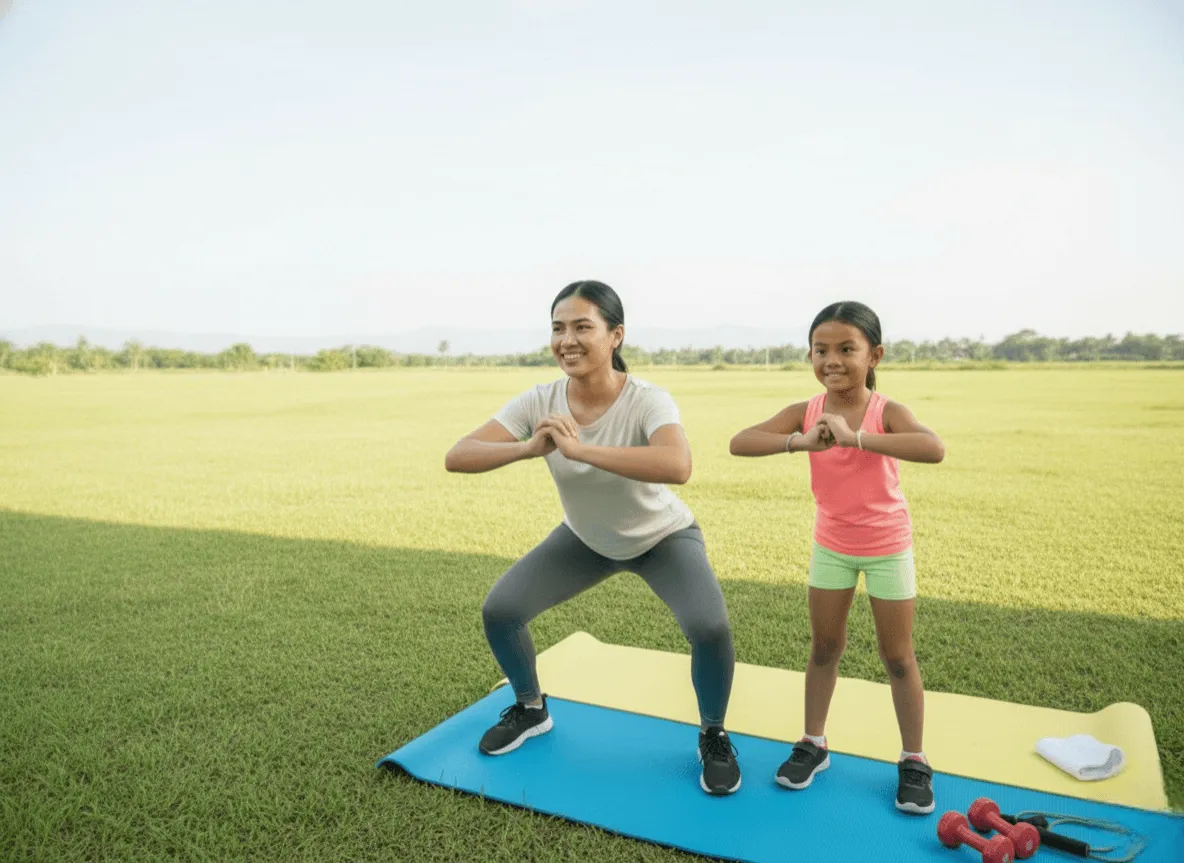
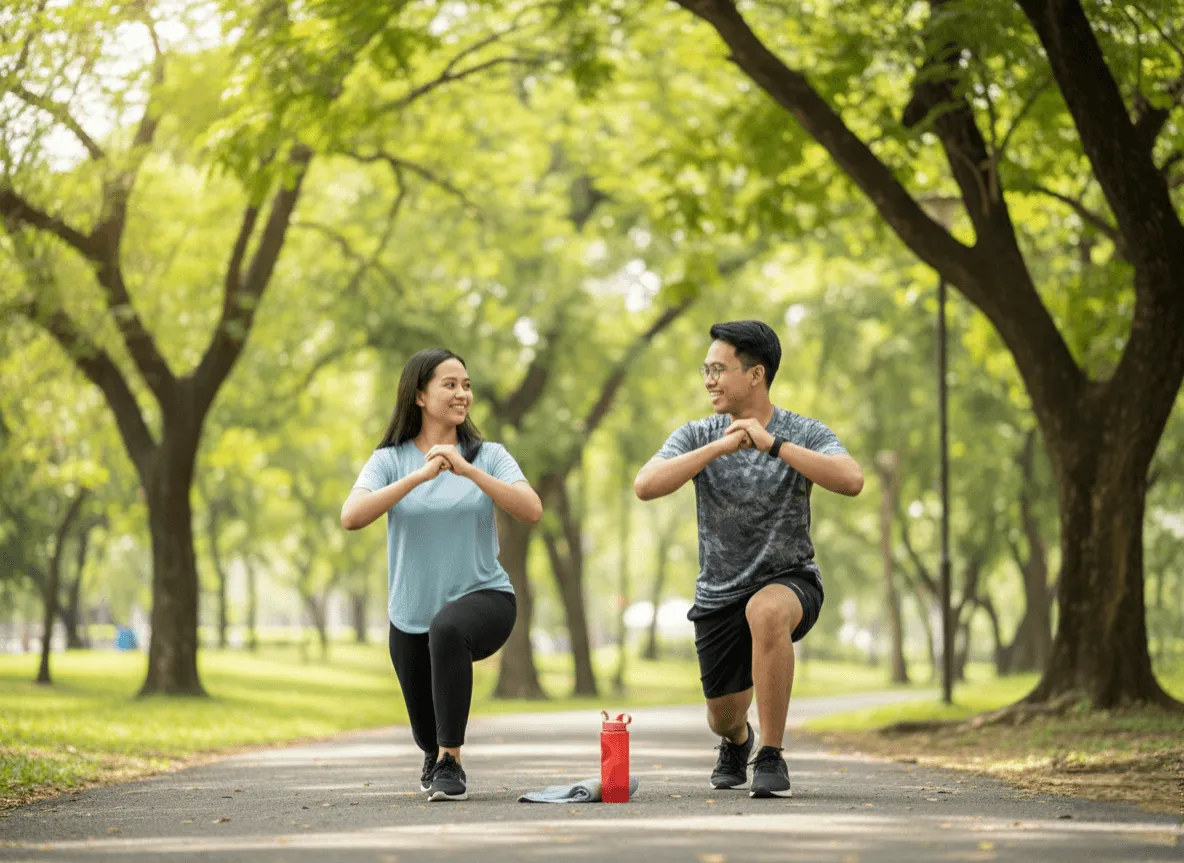
The photographs below were taken during fitness coaching in Bali sessions with learners on the island.



Service Area
Where Edupola Fitness Coaches Travel in Bali
Tutors for fitness coaching in Bali travel to the location you choose, from Denpasar, Badung, and Gianyar through to Tabanan, Buleleng, Klungkung, Bangli, Karangasem, and Jembrana. Most sessions happen at home with no equipment, since the first stages use none and the later ones need very little.
One thing is particular to this programme: where the training happens. Some learners choose their own home, some an open space near the banjar, and some a paid training place they already attend. All three work, and the choice changes which movements are available: with no equipment the first stage still runs in full, while the second stage needs weight, however simple.
The Edupola office is not used as a lesson venue. Where no tutor is available near you, sessions run online. Online sessions work with one condition about the camera angle, described next. Ask the admin about coach coverage at your location in Bali.
Online Sessions
Online Sessions in Bali and the Camera From the Side
Online sessions for fitness coaching in Bali run over Zoom or Google Meet, and one condition decides whether they are safe: the camera has to be at the side, far enough back to show the whole body. A view from the front hides exactly what the six checks look for, since a rounding back is only visible in profile.
With that angle a surprising amount transfers. Movement patterns, light load, mobility, and the independent programme all work, and the coach can stop a set the moment the form changes. Learners outside coach coverage use this route for most sessions.
What does not transfer is anything needing hands: spotting a heavy lift, adjusting a position physically, or assisted stretching. Learners loading heavily keep those sessions face to face. Fees for online sessions match face-to-face sessions.
Frequently Asked
Questions From Fitness Learners
What does private fitness coaching in Bali cost?
Fees start from IDR 120,900 for a 60-minute session, the shortest option. Sessions of 90 and 120 minutes are available with the fee following the length. The final fee follows session length and the number of sessions per month, between 4 and 28. The admin sends the breakdown in writing before the first payment. Training shoes, a mat, and any equipment are prepared by the learner and not included in the fee.
I have no equipment at home. Can I still train?
Yes, and the first stages use no load at all. Squat, hinge, push, pull, and carry are trained with body weight while the six checks become habits, which is weeks of work for most learners. Equipment is bought later and only once the coach knows what your body is ready for, which avoids the usual cupboard of unused items.
I have long-standing back pain. Is training still possible?
Usually yes, with the programme built around it and any medical instructions respected. The common finding is that the painful place is not the stiff place: desk workers typically have stiff hips and shoulders and a back that pays for both. If a doctor or physiotherapist has given you instructions, bring them; the coach works within them instead of around them.
How long before results are noticeable?
Energy and sleep usually change within two to three weeks, which is earlier than anything visible. Strength follows over a couple of months, and changes in shape take longer and depend on far more than training. Coaches set the expectation in that order deliberately, because learners who are told to expect visible change first tend to stop before anything arrives.
Why does my training feel harder in some months?
Because humidity changes the dose. Sweat cools you by evaporating and humid air slows that, so heat builds up at a moderate effort and the same pace costs more. A slower week in the hot months is the conditions and not lost fitness, which is why coaches record the conditions next to the numbers instead of answering a slow week with more training.
How is a fitness coach matched to a learner?
The schedule is settled first during the consultation, covering days, times, session length, and sessions per month. The Edupola team then looks for a tutor whose travel to your location in Bali stays short, and that search runs 1 to 5 working days. The specialism matters here: postnatal training, race preparation, older learners, and work alongside a physiotherapist are matched to different coaches. If the first 2 weeks feel like a poor fit, a replacement is arranged at no extra cost.
Related Programmes
Other Programmes Learners Add in Bali
Learners taking fitness coaching in Bali often add one other programme, usually for low-impact variety across the week.
-

Swimming Lessons in Bali
Taken by learners who want work that spares the joints on a recovery day.
-

Dance Tutoring in Bali
Chosen by learners who prefer effort that comes with a result they can show.
-

Martial Arts Training in Bali
Often added by learners who want a skill alongside the conditioning.
Get Started
Start From the Body You Have Today
Name your goal, what currently hurts or feels stiff, and the hours you can train. A tutor in Bali is matched within 1 to 5 working days.