
Private Violin Tutoring in Bali
Violin Tutoring in Bali: No Frets and the Ear Judges
Violin tutoring in Bali from Edupola pairs one teacher with one learner at home. A violin hands you no fret to land on, so the ear decides whether a note is in tune and 6 consequences follow from that single fact. Fees from IDR 120,900 per session.

Rating and fees for violin tutoring in Bali
| Programme | Violin Tutoring in Bali |
|---|---|
| Provider | Edupola |
| Description | Private violin tutoring in Bali, one teacher per learner: the instrument supplies no note markers, so the ear is trained before any piece is played. |
| Fee | Fees start from Rp120,900 per session. |
| Session Length | Sessions run 60, 90, or 120 minutes. |
| Schedule | Flexible, shaped around the learner's needs. |
| Start | Lessons begin once the tutor and materials are ready. |
| Sessions per Month | 4 to 28 sessions per month, as needed. |
| Rating | 4.9 out of 5, based on 122 reviews |
Programme at a Glance
Violin Tutoring in Bali and an Instrument With No Note Markers
Violin tutoring in Bali runs one tutor with one learner, at your home. One fact shapes the whole programme, and it is the fact beginners underestimate.
A piano gives you the note when you press the key. A guitar gives you the note when you land behind the fret. A violin gives you nothing: the fingerboard is smooth, every pitch is a position your finger has to find, and a millimetre too far is audibly out of tune. There is no mechanism on the instrument that will do this for you.
So the ear is trained first, before any piece. A learner who cannot yet hear which of two close notes is higher has no way to judge their own practice at home, and the hour between sessions becomes guesswork. Fees start from IDR 120,900 per 60-minute session, with 4 to 28 sessions a month. This programme holds a 4.9 out of 5 rating across 122 learner reviews in Bali.
Consequences
Six Things That Follow From a Smooth Fingerboard
Every item below is a direct consequence of the violin supplying no markers. They shape the first months of violin tutoring in Bali.
-
The Ear Is Trained Before Any Piece
Early sessions include hearing work: the teacher sounds two close notes and the learner says which is higher. Without this a learner cannot judge their own tuning, and home practice becomes guessing.
-
Temporary Markers Are Used, Then Removed
Small markers are taped to the fingerboard early as a reference for finger placement. They come off gradually as the ear forms, because markers left in place train a learner to look instead of listen.
-
Finger Spacing Changes Between Strings
The same note sits at a different distance on a different string, and changes again when the hand shifts position. What gets memorised is therefore the sound, and the surface position follows from it.
-
The Two Hands Do Unrelated Jobs
The left hand sets the pitch, the right hand makes the sound through the bow. Neither helps the other, and beginners usually lose one of them whenever they concentrate on the other.
-
A Note Can Be Corrected While It Sounds
Because there is no marker, a finger can slide slightly while the note rings until it is right. This is actually an advantage the violin has, and long notes are used to practise it deliberately.
-
A Recording Is More Honest Than a Feeling
A note that feels in tune while you play often sounds out of tune on a recording, because the player's ear sits next to the instrument. Recordings are used in nearly every session for that reason.
The Two Hands
What the Left Hand and the Right Hand Each Control
Violin teachers use this to locate a problem. Most learner complaints about their sound belong to one specific row, not to their general ability.
| Part | What it controls | The most common fault |
|---|---|---|
| Left hand, finger placement | Pitch, down to a millimetre | A finger landing away from the spot, unnoticed because the learner cannot yet judge pitch |
| Left hand, hand shape | Whether fingers reach notes without dragging the hand | A wrist bent inwards, so the fourth finger cannot reach and upper notes go flat |
| Right hand, bow pressure | Volume, and whether the note is clean | Pressing hard enough to make the tone harsh, or so lightly that it whispers |
| Right hand, bow speed | Note length and the weight on each beat | Running out of bow mid-phrase, because the speed was not planned at the start of the stroke |
| Right hand, bow angle | Which string sounds, and how cleanly | A tilted bow catching two strings at once without meaning to |
| Both together | Tuning inside a moving piece, not on single notes | Notes in tune when practised alone and off inside the piece, since attention is split |
Learning Path
Grade Levels in Violin Lessons From Beginner
The grade a learner starts at is set by what the teacher hears in the first session, never by how long they have owned a violin.
-
Grades 1 and 2
Beginner
Holding the instrument and the bow, the first finger positions, simple scales, and short pieces on open strings and first position. The hearing work runs alongside from the first week.
- Holding both
- First position
- Hearing two notes
-
Grades 3 and 4
Intermediate
Shifting to higher positions, longer bow strokes, vibrato introduced, and pieces with a real accompaniment. Tuning inside a moving piece becomes the main work here.
- Position shifts
- Vibrato
- Playing with accompaniment
-
Grades 5 and 6
Advanced
Repertoire that demands tone control, double stops, and performance from memory. Learners at this level usually have an exam, a recital, or an ensemble seat in view.
- Tone control
- Double stops
- Playing from memory
Who It Is For
Learners Who Take Violin Lessons in Bali
Every session holds one learner, so the instrument size and the repertoire are set for that learner.
-
Primary School Children
Younger learners in Bali. Sessions are shorter, and the instrument size is measured and changed as the child grows.
-
Learners Facing a Grade Exam
Learners in Bali with an exam date. Scales, the set pieces, and sight reading are divided across the weeks remaining.
-
School Orchestra Players
Learners in Bali holding a section seat. Reading under a conductor and blending with others carry the sessions.
-
Learners Returning After Years
Learners in Bali who played as children. The first sessions find what the hands kept and what the ear lost.
-
Wedding and Event Players
Learners in Bali who perform for pay. Set lists, playing standing, and recovering from a slip are addressed directly.
-
Adults Starting From Nothing
Learners in Bali with no background at all. Hearing work and bow control come first, and pieces arrive sooner than expected.
One Session
Inside a 60-Minute Violin Session
This is the division used once a learner is playing pieces. Tuning is inside the session on purpose, since it is a skill and not a service.
-
5 minutes
Tuning Together
The learner tunes the instrument while the teacher watches, using the fine tuners for small drifts and the pegs for larger ones.
-
15 minutes
Hearing Work and Long Notes
Comparing close notes, then long sustained notes where a finger is adjusted while the note rings until it settles.
-
15 minutes
Scales and Bowing
Scales for the left hand and bow exercises for the right, usually separated so only one hand is being judged at a time.
-
20 minutes
The Piece and Its Hard Bar
The current piece, with the difficult passage taken out and worked slowly instead of played through from the top repeatedly.
-
5 minutes
Recording and Setting Practice
A short recording made on the learner's phone, listened to once, and the week's practice named from what it revealed.
In a 90 or 120 minute session, scales, the piece, and a recording all fit without the hard passage being cut, which is what learners preparing for a grade exam or a recital usually choose.
Prepared by the Learner
The Violin and Equipment That Need to Be There
The admin confirms these once the schedule for violin tutoring in Bali is agreed. A correctly sized violin, a bow, and rosin are prepared by the learner and not included in the fee.
-
A Correctly Sized Violin
Sized to arm length, not to age. Two children of the same age often need different sizes, and the teacher measures in the first session before anything else is discussed.
-
A Bow and Rosin
Rosin is not optional: an unrosined bow slides across the string and produces almost no sound, and beginners regularly mistake this for a broken instrument.
-
A Shoulder Rest or a Sponge
Something to fill the gap between the instrument and the shoulder. Without it a learner grips with the chin and the left hand, and the left hand then cannot move.
-
A Tuner
A clip-on tuner or an app. Tuning is taught instead of being done for the learner, and in Bali it has to happen more often than in a dry climate.
-
A Music Stand and Light
A stand at eye level, because reading from a page on a table bends the neck and the left hand follows it. Light from the side instead of behind the page.
If no instrument has been bought yet, say so during the consultation. Many families rent at first, since a child's size changes once or twice across the programme, and the teacher says when a change is due.
Size
Choosing a Violin Size From Arm Length
Violins are made in several sizes, from the smallest for children up to full size for adults, and violin tutoring in Bali starts by measuring. What decides the size is the length of the player's arm and not their age, so two children born in the same year can need different instruments. The measurement is simple: the arm is stretched out to the side and the teacher sees where the fingers reach along the neck.
An instrument that is too big is more than a comfort problem. Fingers that cannot reach a note make the learner drag the whole hand and bend the wrist inwards, and those two habits take the longest of anything to undo. Some children who appear to have stopped progressing are simply holding a violin too large for their arm, and a size change fixes in a week what months of practice could not.
For children the size will change as they grow, usually once or twice across the programme. That is why many families rent at the early stages, and the teacher says when a change is due instead of leaving it to be noticed. prepared by the learner and not included in the fee
What Learners Say
Stories From Violin Learners in Bali
The quotes below come from learners in Bali who completed the violin programme at Edupola, with their situation and what changed.
-
★★★★★
My pupil used to struggle to focus on practice and her Notation mark was always borderline. After 3 months at Edupola the mark rose significantly and she is now in the top 3 of the level! The tutors are so patient with the pupils.
Pupil moved into the top three of the level
Dewi L.
Grade 4 pupil · Verified learner
-
★★★★★
In the run-up to the recital my pupil took intensive lessons at Edupola. The result was extraordinary! She passed with the highest mark at her level. Edupola tutors really know how to teach in an enjoyable way.
Passed the recital with a good assessment
Sudiarta
Grade 6 pupil · Verified learner
-
★★★★★
My pupil used to always cry when told to study. Now the pupil keeps asking for more lessons because the tutor is so much fun! Learning while practising, so the pupil enjoys it and the material still sinks in. Thank you Edupola!
The pupil came to enjoy learning
Ayu S.
Grade 2 pupil · Verified learner
-
★★★★★
My pupil struggled with bowing technique at first, and the posture was often wrong. After private lessons at Edupola, the skill is now consistently above 85! The tutor teaches with a method the pupil finds easy to understand.
Violin practice skill rose sharply
Putra
Grade 5 pupil · Verified learner
-
★★★★★
As a learner who is busy with work, I find it hard to accompany my pupil in technique practice. With Edupola, the tutor comes to the house and helps my pupil finish the practice correctly. The pupil has become more independent and confident!
practice always finished on time
Ratna
Grade 3 pupil · Verified learner
-
★★★★★
My pupil had just started learning the violin and still struggled to hold the bow. The Edupola tutor patiently taught until now the pupil reads fluently and reads notation. The fun learning method keeps the pupil eager to learn!
The pupil reads fluently and reads notation
Dharma W.
Grade 1 pupil · Verified learner
Climate
Humid Air in Bali Shifts the Tuning Often
A violin is wood under string tension, so it reacts to the air around it. In the warm humid air of Bali the tuning drifts more often than it does in a dry climate, and beginners regularly assume the instrument is faulty. What has happened is that the wood has taken up a little moisture and the string tension has changed with it.
The consequence for violin tutoring in Bali is that tuning is taught as a skill instead of being done for the learner. Learners practise turning the fine tuners at the tailpiece for small drifts and the pegs at the scroll for larger ones. Pegs that feel stiff or will not hold are also the air at work, and handling them is covered in the session instead of being treated as a repair.
Two habits are recommended for learners here. Keep the violin in its case when it is not being played, and keep it away from a window in direct sun and away from a very dry air-conditioned room, since both extremes work on the wood joints and the strings. Old strings also hold their tuning poorly, and the teacher says when replacing them is due.
How to Register
Four Steps to the First Violin Session
The opening consultation for violin lessons in Bali carries no fee. The admin asks the learner's age, which violin they own, and the goal.
-
Name the Age and the Instrument
The learner's age and whether a violin is already owned or rented. Size is confirmed by measurement in the first session, so nothing has to be bought beforehand.
-
Agree the Schedule
Days, times, session length, and sessions per month are agreed with the admin, following the hours the learner has free.
-
Matching the Teacher
The team looks for a tutor whose travel to your location in Bali stays short, and that search runs 1 to 5 working days. Grade exams, orchestral playing, and event work are matched to teachers who have done them.
-
The First Session
Arm length is measured, the hearing work starts, and the bow is held before any piece is attempted.
Need help? Contact our admin on WhatsApp for a free consultation.
Documentation
Violin Lessons With Edupola in Bali
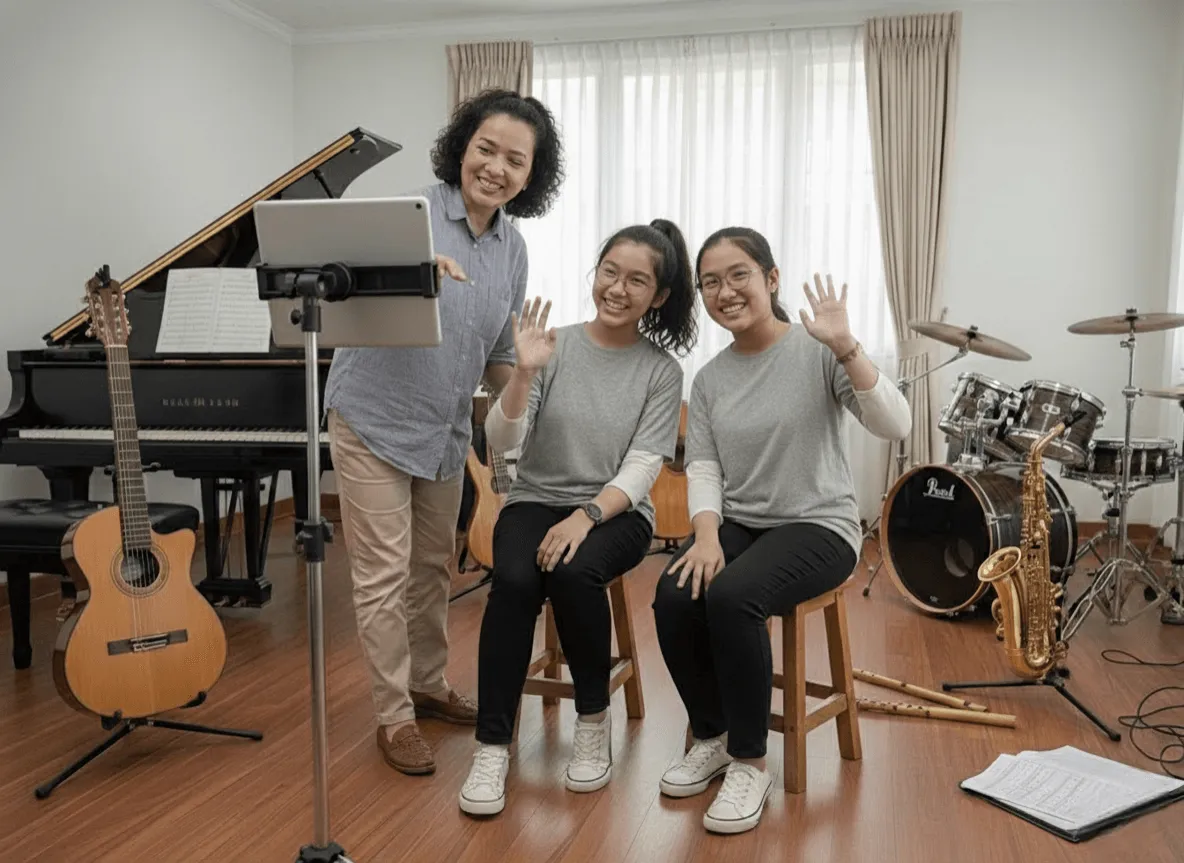
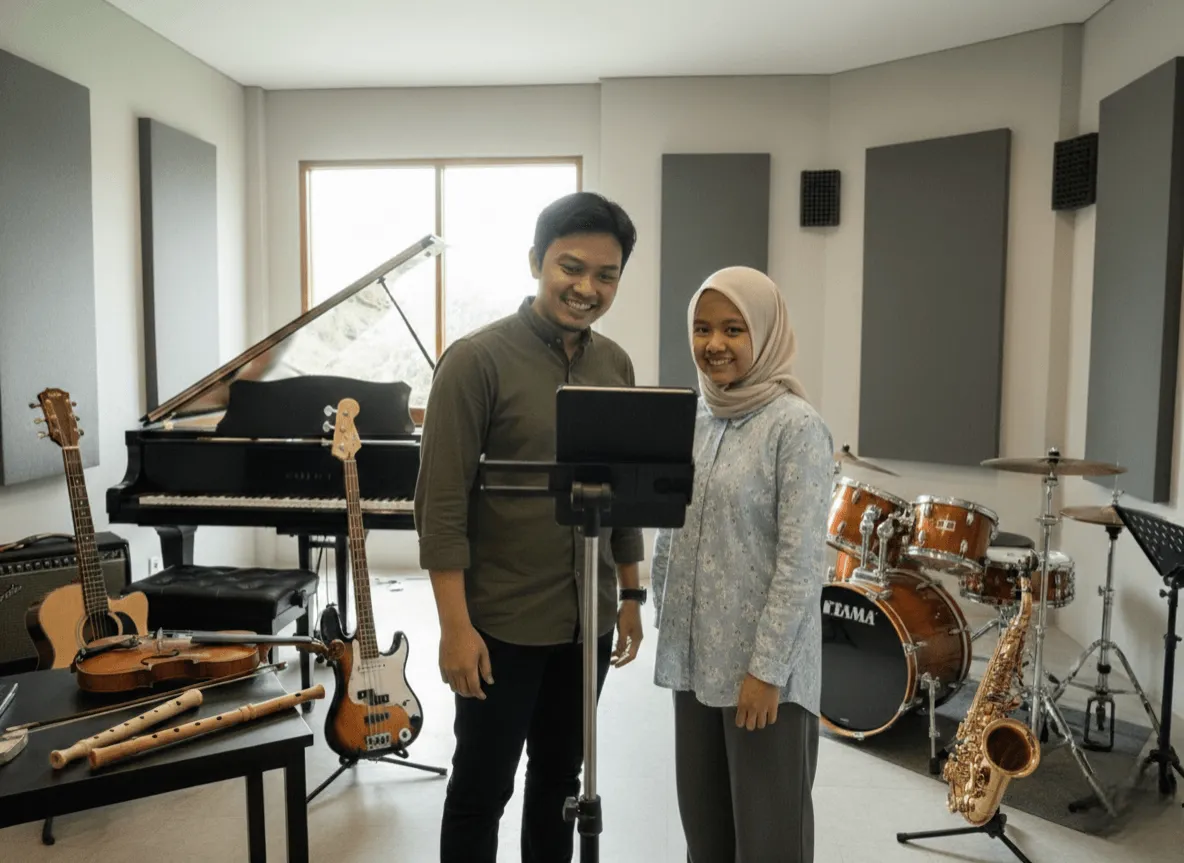
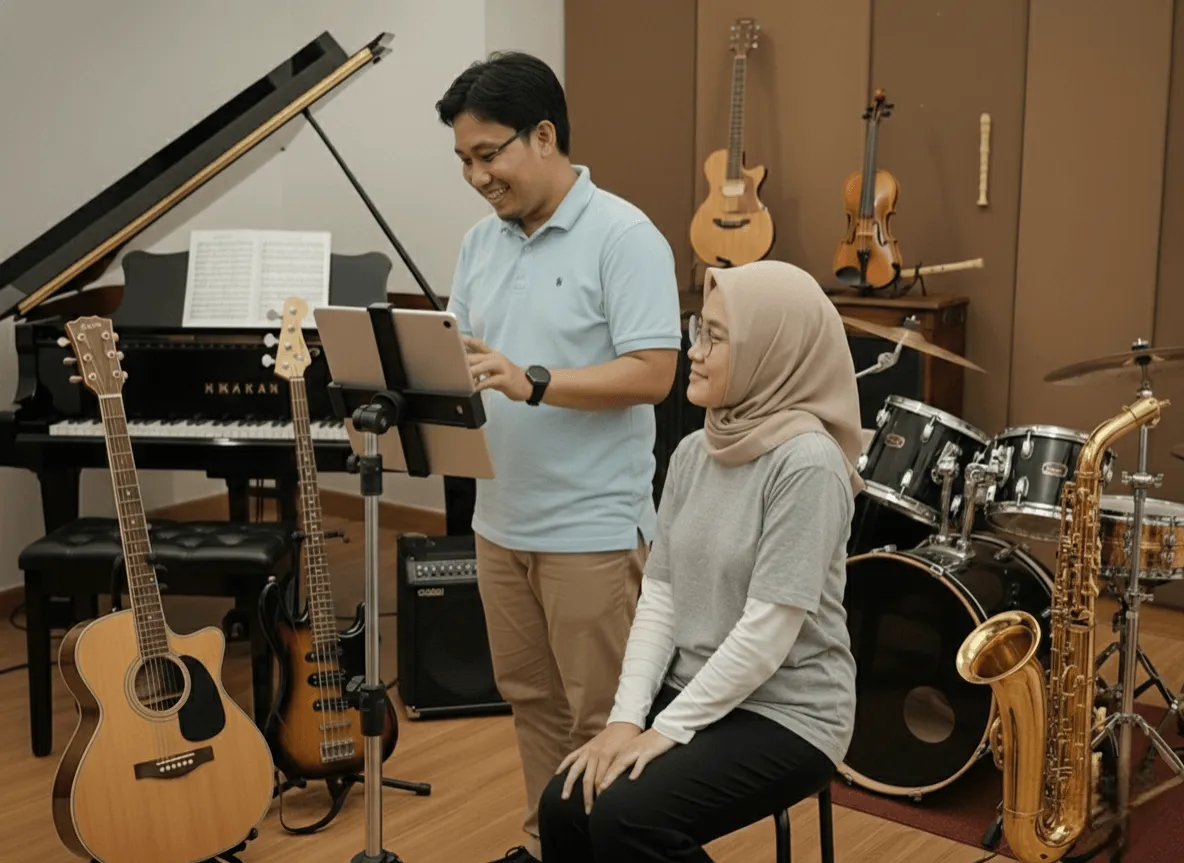
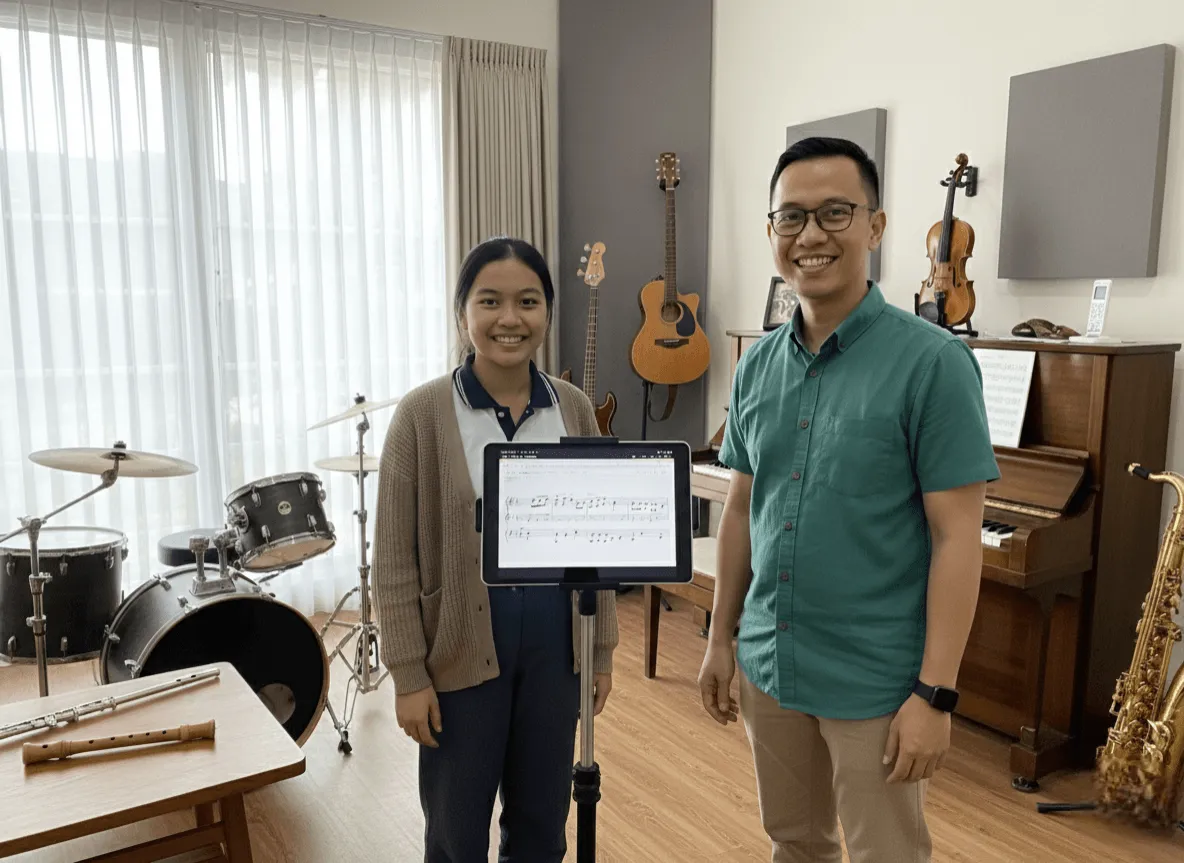
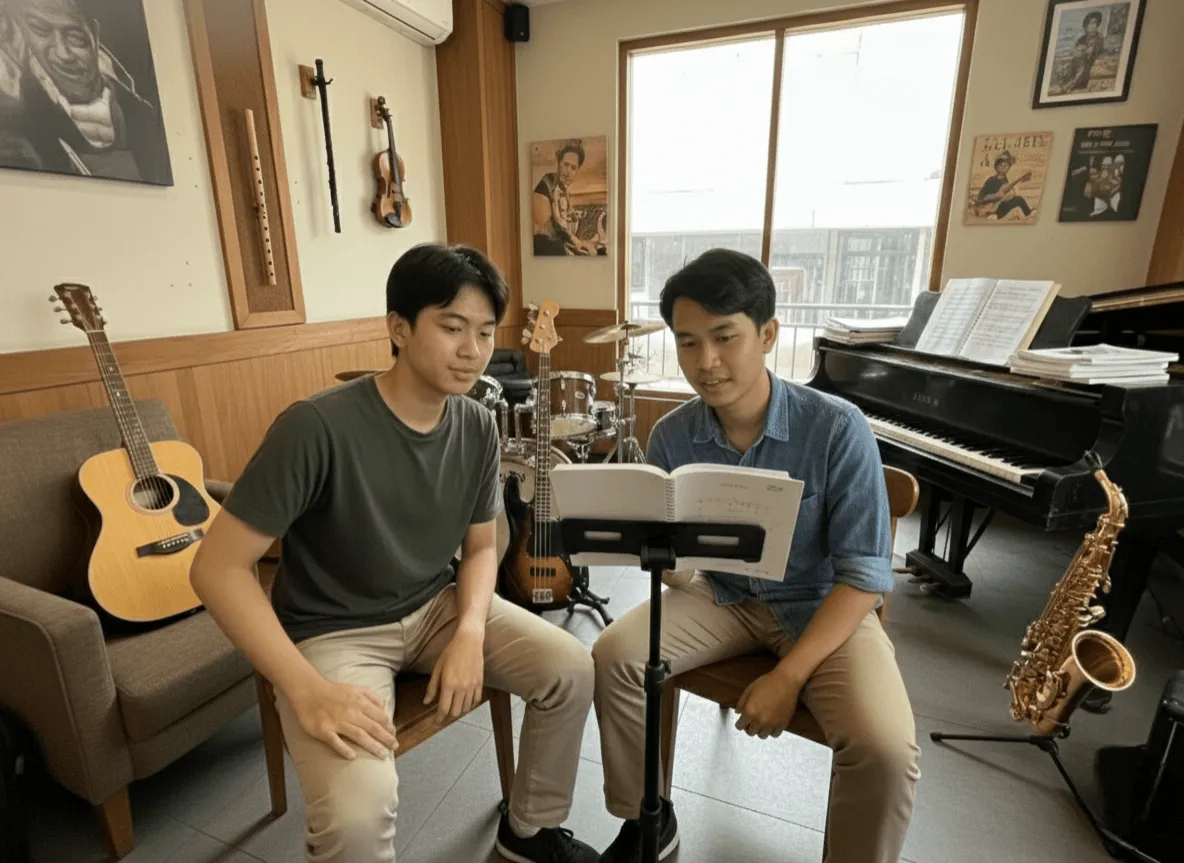
The photographs below were taken during violin tutoring in Bali sessions with learners on the island.
Service Area
Where Edupola Violin Teachers Travel in Bali
Tutors for violin tutoring in Bali travel to the location you choose, from Denpasar, Badung, and Gianyar through to Tabanan, Buleleng, Klungkung, Bangli, Karangasem, and Jembrana. The session needs a stand, light from the side, and enough room to draw a full bow without hitting anything.
What the learner is working towards decides the match as much as the distance. Learners facing a grade exam are matched to teachers who have prepared candidates for that board; learners holding an orchestra seat are matched to teachers who have played in sections, since blending is a different skill from playing alone.
The Edupola office is not used as a lesson venue. Where no tutor is available near you, sessions run online. Part of this programme transfers online and the pitch judging does not, as the next section explains. Ask the admin about teacher coverage at your location in Bali.
Online Sessions
The Limit of Online Violin Sessions Falls on Pitch
Online sessions for violin tutoring in Bali run over Zoom or Google Meet, and the limit lands on exactly the thing this programme cares about most, which is judging whether a note is in tune. Microphones and call software compress sound, and a small pitch difference can disappear inside that compression.
So teachers use recordings. The learner records their practice on their own device and sends the file, and the pitch is judged on audio that never passed through a network. This helps the learner as well: hearing your own recording is more honest than trusting how it felt while playing, because the player's ear sits next to the instrument.
What works well online is posture, hand shape, and bow movement, all of which are visible provided the camera is placed to the side. What needs a room is judging pitch live and correcting a grip by touch. Fees for online sessions match face-to-face sessions.
Frequently Asked
Questions From Violin Learners in Bali
What does private violin tutoring in Bali cost?
Fees start from IDR 120,900 for a 60-minute session, the shortest option. Sessions of 90 and 120 minutes are available with the fee following the length. The final fee follows session length and the number of sessions per month, between 4 and 28. The admin sends the breakdown in writing before the first payment. A correctly sized violin, a bow, and rosin are prepared by the learner and not included in the fee.
Is the violin harder than the piano or the guitar?
It is harder at the start and for one specific reason: the instrument gives you no note. A piano key and a guitar fret both hand you the pitch, while on a violin every pitch is a position you have to find and hear. The first weeks therefore sound rough, which is normal and not a sign of poor aptitude. Once the ear forms, progress stops feeling slower than on other instruments.
What violin size is right for my child?
Arm length sets it, not age, and the teacher measures it in the first session by having the child stretch an arm out to the side. A violin that is too large bends the wrist and puts the fourth finger out of reach, which are the two slowest habits to undo. The size will change once or twice as the child grows, and many families rent at that stage.
Why does my violin keep going out of tune?
Almost always the air. Wood takes up moisture in Bali's humidity and string tension changes with it, so the tuning drifts more often here than in a dry climate. Keeping the instrument in its case, away from direct sun and away from very dry air conditioning, reduces it. Strings that have been on for a long time also hold tuning poorly, and the teacher says when a change is due.
My violin sounds harsh and whispery. What causes that?
The bow, in almost every case, and it is the right hand instead of the left. Harshness comes from too much pressure; a whispering, airy sound comes from too little, or from a bow that has not been rosined. A tilted bow catching two strings at once adds a scratch. Teachers separate the hands in the session so the cause can be heard on its own.
How is a violin teacher matched to a learner?
The schedule comes first in the consultation: days, times, how long a session runs, and how many fall in a month. The Edupola team then looks for a tutor whose travel to your location in Bali stays short, and that search runs 1 to 5 working days. What the learner is aiming at steers the choice: grade exams, an orchestral seat, and playing at events each point to teachers who have done that. If the first 2 weeks feel like a poor fit, a replacement is arranged at no extra cost.
Related Programmes
Other Programmes Learners Add in Bali
Learners taking violin tutoring in Bali often add one other programme, usually once the first pieces are steady.
-

Piano Tutoring in Bali
Taken by learners who want reading and harmony on an instrument that supplies its notes.
-

Singing Tutoring in Bali
Chosen by learners who want pitch trained with the voice as well.
-

Music Tutoring in Bali
Often added by learners who want theory and reading taken further.
Get Started
Start From the Right Instrument Size
Name the learner's age and whether a violin is already in the house. A tutor in Bali is matched within 1 to 5 working days.