
Private Drum Tutoring in Bali
Drum Tutoring in Bali: Four Limbs, Four Separate Jobs
Drum tutoring in Bali from Edupola pairs one teacher with one learner at home. Each limb has its own job and none of them helps the others, so 6 rules govern how independence is built, two limbs at a time and never all four at once. Fees from IDR 120,900 per session.

Rating and fees for drum tutoring in Bali
| Programme | Drum Tutoring in Bali |
|---|---|
| Provider | Edupola |
| Description | Private drum tutoring in Bali, one teacher per learner: four limbs carry four separate jobs, and independence is built two limbs at a time. |
| Fee | Fees start from Rp120,900 per session. |
| Session Length | Sessions run 60, 90, or 120 minutes. |
| Schedule | Flexible, following the learner's calendar. |
| Start | Lessons can start any time after registration. |
| Sessions per Month | 4 to 20 sessions per month, as needed. |
| Rating | 4.9 out of 5, 131 reviews |
Programme at a Glance
Drum Tutoring in Bali and Four Jobs Running at Once
Drum tutoring in Bali runs one tutor with one learner, at your home. The difficulty of this instrument is not in the hands. It is in the division of labour.
The right foot marks the weight of the beat. The left foot opens and closes a pair of stacked metals. The right hand keeps the smallest count. The left hand places the accent that gives the beat its character. None of those four jobs assists another, and a beginner concentrating on one usually loses one of the others without noticing.
So independence is built two limbs at a time and a third is added only when the first two run unattended. Jumping straight to four produces a learner who stops thinking and starts hoping. Fees start from IDR 120,900 per 60-minute session, with 4 to 28 sessions a month. This programme holds a 4.9 out of 5 rating across 131 learner reviews in Bali.
The Kit
Parts of the Drum Kit and What Each One Does
Teachers use this to locate a problem a learner reports as a general looseness. The third column is almost always where it actually lives.
| Part | Its job | The most common fault |
|---|---|---|
| Largest drum, struck by the right foot | Marking the weight of the beat and filling the low end | The pedal pressed and then held, so the sound is choked and the next beat stacks on top |
| Taut drum, struck by the left hand | Placing the accent that sets the character of the beat | Struck at the edge and the centre without distinction, when the two make very different sounds |
| Pair of stacked metals | Keeping the smallest count, opened and closed by the left foot | Left open throughout because the left foot forgot to press, and the beat turns blurry |
| Drums in a row at the front | Used for fills and for moving between sections | The fill started ahead of the tempo, so the beat after it enters late as well |
| Large ringing metal | Marking the start of a new section and the peak of a song | Struck too often, so its ring covers everything else that is happening |
| The seat and its height | Setting the reach of the legs and the comfort of the arms | Too low, so the heel cannot lift, and the legs tire by the tenth minute |
The Four Limbs
What Each Limb Does and How It Is Trained
These six rules organise the first months of drum tutoring in Bali. The last two are the ones learners break on their own.
-
The Right Foot Marks the Base
The right foot strikes the largest drum with the lowest sound, and it marks where the weight of the beat falls. Learners practise keeping it steady, because everything else is read against it.
-
The Left Foot Opens and Closes
The left foot presses a pair of stacked metals, deciding whether their sound is closed or open. It is the limb that most often stops on its own, and the beat turns blurry when it does.
-
The Right Hand Keeps the Count
The right hand strikes metal or a small drum with the densest pattern, so it is heard as the timekeeper. Its pattern is the one a listener follows without knowing it.
-
The Left Hand Places the Accent
The left hand strikes the taut drum with the sharpest sound, and it decides the character of the beat. Moving one of its strikes changes the feel of the whole bar.
-
Two First, Then Three
Independence work starts with two limbs and adds one at a time. Jumping straight to four makes a learner memorise a shape without controlling any part of it.
-
Slow Tempo First
A pattern is worked at a speed that feels far too slow until all four limbs run unattended, and only then is it raised. A pattern that collapses when the tempo rises was never learned.
Learning Path
Drum Levels From Beginner Upwards
The drum level a learner starts at is set by one basic beat played in the first session, never by the patterns they can name.
-
Level 1
Foundation
Two different stick grips, seated posture, the basic rock and pop beats, and the hand exercises used most. Independence work starts here with two limbs.
- Two grips
- Basic beats
- Two limbs
-
Level 2
Intermediate
Quiet strikes between the main ones, control of loud and soft, moving the weight onto beats that do not usually carry it, and wider hand exercises.
- Quiet strikes
- Loud and soft
- Shifted weight
-
Level 3
Advanced
Patterns that flow with no simultaneous strikes, two tempos running at once, and bars that do not count to four, such as five or seven.
- Flowing patterns
- Two tempos
- Bars of five
Who It Is For
Drum Learners in Bali by Where They Play
The grouping below follows where the learner plays their drums, because that place decides what needs practising. One drum session in Bali holds one learner, so the balance is still set per person.
-
Cafe and Event Stages
Playing with no rehearsal, from a set list handed over on the spot. The work is recognising a song's shape from its first bars.
-
Weekly Worship
Playing to a leader's cues in Bali, with a beat that must not cover the singing. Control of loud and soft takes the larger share.
-
The Recording Room
Playing to a tempo marker through headphones, with no room to drift at all. Holding the tempo carries the sessions.
-
School Group Practice
Playing in Bali alongside others who are also learning. The work is becoming a timekeeper others can follow.
-
Their Own Room
Learners in Bali playing for their own pleasure at home. Quiet kit options are discussed first, and independence work is given more room.
-
Never Played Before
Any learner in Bali who has never held a stick, child or adult. The first session checks leg reach and seat height.
One Session
A Drum Session That Runs at Two Tempos
This is the division used once a learner has a basic beat. Two different tempo numbers appear in every session, and both are written down.
-
5 minutes
Setting the Seat and the Tempo Marker
Seat height and pedal distance are checked, then the tempo marker is set to last week's number. One shifted fitting can undo a week of work.
-
15 minutes
Hand Patterns at a Slow Tempo
Hand exercises at a low number on a practice pad, with attention on striking from the same height every time. Uneven height is heard as uneven volume.
-
15 minutes
Independence, Two Then Three
Two limbs run together at a slow tempo, then a third is added. If the third stops one of the others, the number comes down instead of the pattern simplifying.
-
15 minutes
Raising It Towards the Real Tempo
The same material is raised a few steps towards the song's tempo. The highest number that stays clean is written down as this week's figure.
-
10 minutes
Recording at the Real Tempo
One passage is recorded at the real tempo and listened back, because drift is far easier to hear on a recording than to feel while playing.
In a 90 or 120 minute session, a pattern is taken from the slow tempo to the real one inside one sitting, which is what learners playing to a tempo marker or preparing a set list usually choose.
Prepared by the Learner
The Practice Equipment That Needs to Be at Home
The admin confirms these once the schedule for drum tutoring in Bali is agreed. A kit or a practice pad, sticks, and ear protection are prepared by the learner and not included in the fee.
-
A Kit or a Practice Pad
A drum kit if you have one; if not, a single practice pad and a pedal is enough for the first level. A pad cannot teach the kit, but it can teach the hands.
-
A Suitable Pair of Sticks
Sticks sized to the learner's hand. Sticks that are too heavy stiffen the wrist and make quiet strikes impossible, which blocks the whole second level.
-
An Adjustable Seat
A drum seat whose height can be changed. Seat height sets the reach of the legs, and a seat too low stops the heel lifting at all.
-
Ear Protection
Ear protection for the learner, and ideally for anyone else in the room. Drums are the loudest instrument we teach, and the exposure is repeated weekly.
-
A Tempo Marker
A separate tempo marker or a phone app, plus headphones so it can be heard over the drums. Practising without one hides drift instead of removing it.
If there is no kit at home yet, say so during the consultation. The first level runs on a pad and a pedal, including in a small room, and the teacher says when a kit becomes the limiting factor.
Volume
Drums Are the Loudest Instrument, and That Is Settled First
One thing has to be discussed before the first session of drum tutoring in Bali: drums cannot be played quietly. The sound comes from impact, so reducing force changes the character of the playing instead of simply lowering its volume. In the dense housing common across Bali, that makes the hour a practical question and not a musical one.
Learners use several ways out and each has its price. Mesh drum heads reduce the sound considerably and change how the stick rebounds, so a learner needs to play on ordinary heads occasionally. A practice pad is quieter still and teaches only the hands. Electronic kits move the problem to headphones and remove the feel of a struck head.
The simplest answer is usually the schedule. Practice hours are agreed with the household and the nearest neighbours, and in some neighbourhoods in Bali that conversation is better held through the local head of the community. Learners who settle it in advance practise more, because nothing interrupts them halfway through.
Tempo
The Drummer Is the Timekeeper for Everyone Else
In a band, the other players follow the drums. A drift in the drums therefore drifts everybody, and the drummer who drifts usually cannot feel it: from the seat, the beat feels steady because it is the drummer producing it. This is the main reason recordings are used in nearly every session of drum tutoring in Bali.
Drift happens in predictable places. The tempo rises slightly in busy sections and falls in quiet ones, and it shifts most often immediately after a fill, when the learner returns to the base pattern. So practice is aimed at those joins specifically, with the tempo marker left running through them instead of switched off.
A recording is the honest comparison. The learner records a passage and listens with the teacher, and almost every learner is surprised to hear drift they did not feel while playing. For learners heading into a recording room, playing to a tempo marker through headphones is practised deliberately, because there the drift is not negotiable at all.
What Learners Say
Stories From Drum Learners in Bali
The quotes below come from learners in Bali who completed the drum programme at Edupola, with their situation and what changed.
-
★★★★★
I had played drums for 3 years self-taught but always felt my groove was not tight. After 10 sessions at Edupola the instructor took apart my bad habits in grip and posture. My fills are cleaner now and our band passed the festival audition in Bali.
Band made the line-up of a Bali music festival
Rai S.
Drummer in a local indie band · Verified learner
-
★★★★★
At first I could only play basic beats and I was often too loud during the service. The Edupola instructor taught ghost notes, dynamics, and how to listen to the whole band. Now the worship leader says my playing is far more sensitive and supportive of the mood.
Can play dynamically to suit the service
Candra D.
Worship team drummer at a church · Verified learner
-
★★★★★
I held drumsticks for the first time at Edupola. The instructor is super patient and taught me from the correct way to hold the sticks. Within 3 months I could play a basic beat and simple fills. I even dared to perform a solo at the school arts night!
Performed a solo at the school arts night
Agus W.
Senior secondary pupil, new to drums · Verified learner
-
★★★★★
My child and I are both beginners. We took drum lessons together at Edupola as quality time. The instructor is clever at dividing attention and always makes the session fun. Now we often jam at home, which is extraordinary bonding through music.
Father and child bonding through music
Dharma P.
Father learning drums with his child · Verified learner
-
★★★★★
I needed a technique upgrade to get into session playing. The instructor at Edupola trained me to read charts, play with a click track, and handle a range of genres. Now I have had several offers of recording work at professional studios in Bali.
Offered recording work at a professional studio
Aditya
Session musician and freelance drummer · Verified learner
-
★★★★★
I had been playing drums self-taught from YouTube for 2 years but felt something was wrong in my basic technique. The Edupola instructor immediately spotted the problem in my single stroke and double stroke. After drilling rudiments for 8 sessions, my time keeping improved sharply. Worth every rupiah!
Rudiments and time keeping improved sharply
Ratna S.
Self-taught drummer wanting to fix technique · Verified learner
How to Register
Four Steps to the First Drum Session
The opening consultation carries no fee. The admin asks what kit is at home and which hours are safe to practise in.
-
Name the Kit and the Hours
What equipment is at home, where it sits, and which hours are safe for practice. Those two answers set the starting level and the schedule.
-
Agree the Schedule
Days, times, session length, and sessions per month are agreed with the admin, following the practice hours already agreed with the household, since those bind harder than your own free time.
-
Matching the Teacher
The team looks for a tutor whose travel to your location in Bali stays short, and that search runs 1 to 5 working days. Genre and the learner's age matter here, and so does whether a tempo marker will be used.
-
The First Session
The teacher sets seat height and pedal distance, watches one basic beat, and sets the starting level from it.
Need help? Contact our admin on WhatsApp for a free consultation.
Documentation
Drum Lessons With Edupola in Bali
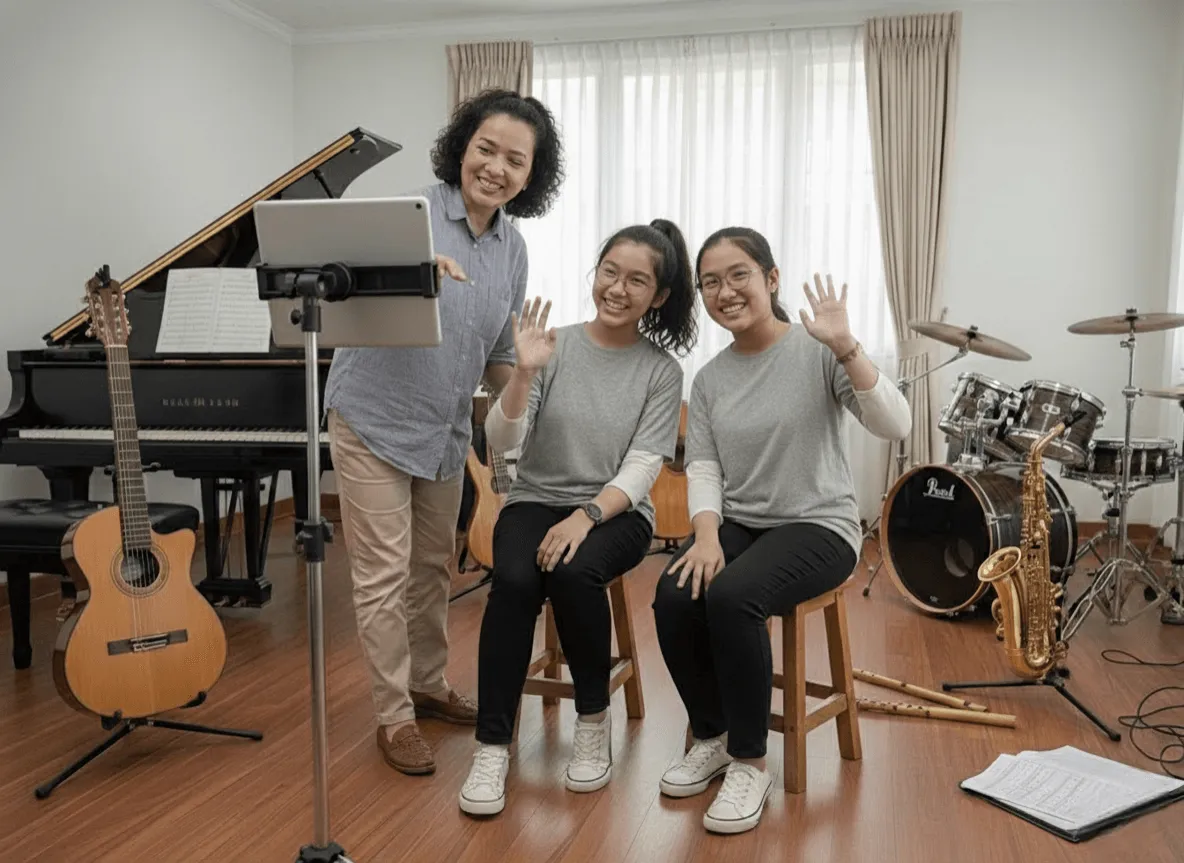
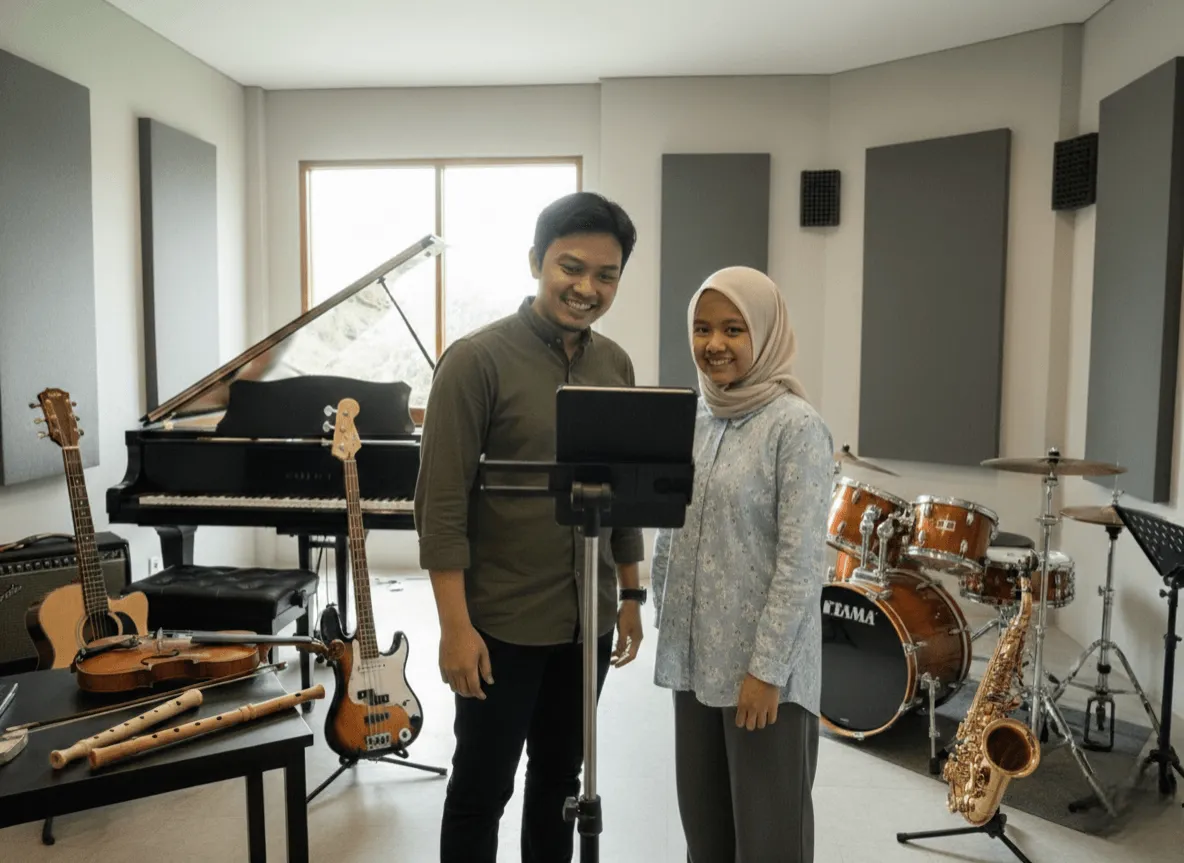
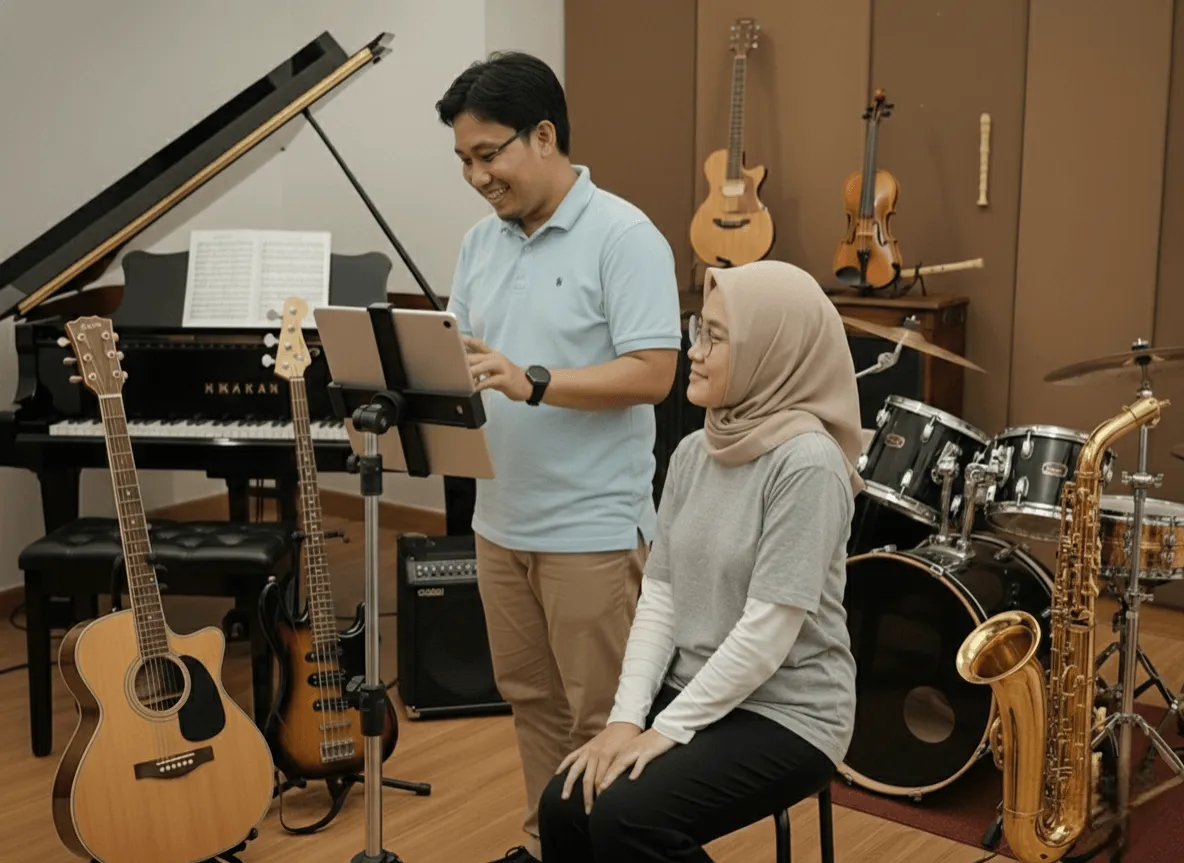
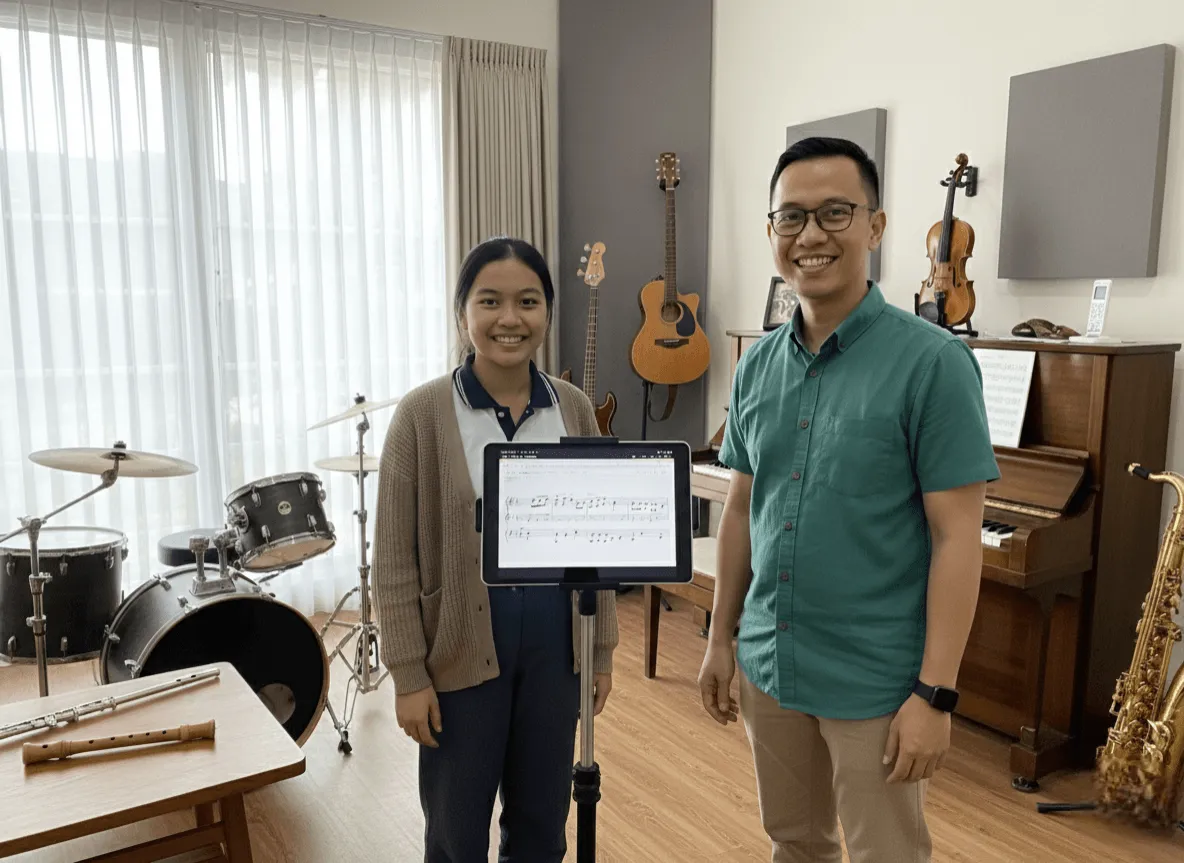
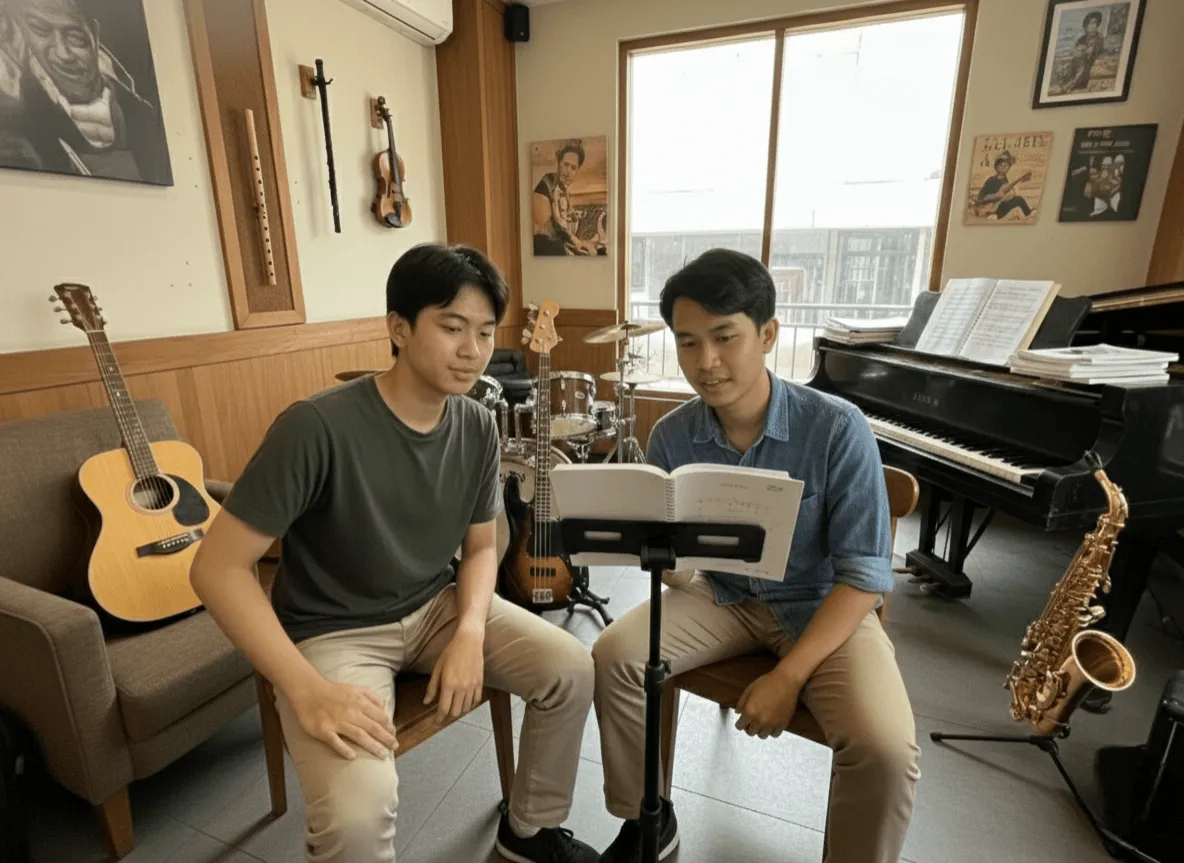
The photographs below were taken during drum tutoring in Bali sessions with learners on the island.
Service Area
Where Edupola Drum Teachers Travel in Bali
Tutors for drum tutoring in Bali travel to the location you choose, from Denpasar, Badung, and Gianyar through to Tabanan, Buleleng, Klungkung, Bangli, Karangasem, and Jembrana. This programme runs at the learner's home because the equipment is heavy and does not move.
What the admin asks before a teacher is matched is the state of the room: where the kit sits, how close the neighbours are, and which hours are safe. Those three decide the schedule more than the learner's own free time does, and that is unusual among our programmes.
The Edupola office is not used as a lesson venue. Where no tutor is available near you, sessions run online. For learners with no kit yet, the first level runs on a practice pad, including in a small room. Ask the admin about teacher coverage at your location in Bali.
Online Sessions
Online Drum Sessions and the Limit of a Microphone
Online sessions for drum tutoring in Bali run over Zoom or Google Meet, and the limit sits in the microphone. Drums produce a loud sound arriving from several directions at once, and call software is designed for a speaking voice, so it compresses exactly the loud and soft distinction this programme spends a level on.
So assessment uses recordings. The learner records practice on their own device and sends the file, and the teacher hears the dynamics and the drift on audio that never passed through a network. The habit helps the learner too, since listening back is what makes drift audible in the first place.
What works well online is posture, stick grip, and foot movement. The camera is placed to the side so all four limbs are in frame at once, and from that angle a teacher can see the left foot that has quietly stopped pressing. Fees for online sessions match face-to-face sessions.
Frequently Asked
Questions From Drum Learners in Bali
What does private drum tutoring in Bali cost?
Fees start from IDR 120,900 for a 60-minute session, the shortest option. Sessions of 90 and 120 minutes are available with the fee following the length. The final fee follows session length and the number of sessions per month, between 4 and 28. The admin sends the breakdown in writing before the first payment. A kit or a practice pad, sticks, and ear protection are prepared by the learner and not included in the fee.
Do I need a complete drum kit at home?
Not for the first level. A practice pad with a pedal covers stick grip, hand patterns, posture, and the first independence work, which is several months of material. A kit becomes the limiting factor once the drums in a row and the large ringing metal enter, and the teacher says when that point has arrived.
My house is close to my neighbours. How do I practise?
Settle the hours first, and in many neighbourhoods in Bali that conversation is better held through the local head of the community. After that choose a quieter option: mesh heads, a pad, or an electronic kit. Each one trades something away, so the teacher explains which trade matters for your level before you spend anything.
My beat sounds unsteady even though I know the pattern. Why?
Usually one limb has stopped, and most often it is the left foot. A pattern memorised as a shape can be played while one limb quietly drops out, and from the seat it still feels complete. The second likely cause is the join after a fill, where the tempo shifts as the base pattern returns. A recording settles which of the two it is in under a minute.
How long before I can play through a whole song?
Learners usually accompany a simple song within a few months, since one basic beat plus one fill covers a great deal of popular music. Playing it at the real tempo without drifting takes longer, because that depends on independence instead of on knowing the pattern. Teachers write down the highest clean tempo each week, so the progress is a number instead of an impression.
How is a drum teacher matched to a learner?
The schedule is settled first during the consultation, covering days, times, session length, and sessions per month. The Edupola team then looks for a tutor whose travel to your location in Bali stays short, and that search runs 1 to 5 working days. Genre and age matter here, and so does the room: a learner on an electronic kit and a learner on an acoustic kit are taught differently. If the first 2 weeks feel like a poor fit, a replacement is arranged at no extra cost.
Related Programmes
Other Programmes Learners Add in Bali
Learners taking drum tutoring in Bali often add one other programme, usually once a basic beat is steady.
-
Bass Tutoring in Bali
The closest partner inside a band: bass and drums work the same foundation, so understanding the other part helps.
-

Guitar Tutoring in Bali
Taken by learners who want to write their own songs and need an instrument that sounds pitches.
-
Music Tutoring in Bali
A choice for learners who want theory and reading handled apart from their practice hours.
Get Started
Start Drum Lessons From Independence Between Your Limbs
Name what equipment is at home and which hours are safe to practise in. A tutor in Bali is matched within 1 to 5 working days.