
Private Flute Tutoring in Bali
Flute Tutoring in Bali: Your Lips Make the Sound
Edupola's flute tutoring in Bali puts one teacher with one learner. No reed and no mouthpiece shapes the air for you, so the lips do it, and 6 things decide whether a note comes out round or breathy. Fees from IDR 174,100 per session.
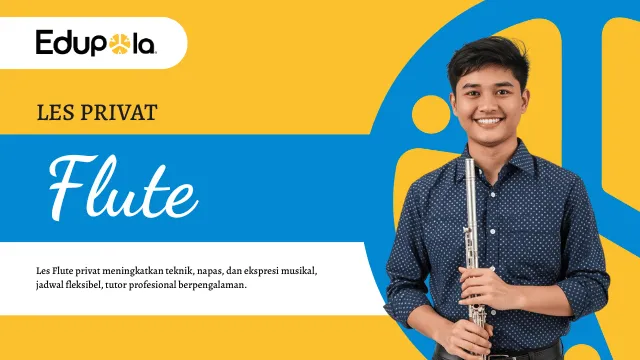
Rating and fees for flute tutoring in Bali
| Programme | Flute Tutoring in Bali |
|---|---|
| Provider | Edupola |
| Description | Private flute tutoring in Bali, one teacher per learner: the sound is made by the lips and the breath, so the first stage uses the head joint alone. |
| Fee | Fees start from Rp174,100 per session. |
| Session Length | Sessions run 60, 90, or 120 minutes. |
| Schedule | Flexible, following the learner's schedule. |
| Start | Lessons can start any time after registration. |
| Sessions per Month | 4 to 16 sessions per month, as needed. |
| Rating | 4.9 out of 5, 104 reviews |
Programme at a Glance
Flute Tutoring in Bali and a First Week With No Note
A flute lesson in Bali is one tutor with one learner, at your home. One fact about the instrument sets the order of the first stage.
A clarinet has a reed that vibrates. A trumpet has a mouthpiece that shapes the air. A flute has an open hole and nothing else: the player's lips form the opening, direct the air across the edge, and decide whether the result is a note or a breathy hiss. Nothing on the instrument does that part for you.
So the first stage uses the head joint alone, with no keys and no pitches to think about, and the whole of the learner's attention stays on the lips. Fees start from IDR 174,100 per 60-minute session, with 4 to 28 sessions a month. This programme holds a 4.9 out of 5 rating across 104 learner reviews in Bali.
The Sound
Six Things That Decide Your Flute Sound
Every item below belongs to the lips or the breath. They are the content of the first weeks of flute tutoring in Bali.
-
A Small and Steady Lip Opening
The gap between the lips needs to be small and to keep its shape for the length of a note. A gap that changes makes the pitch drift up and down inside one note.
-
Air Aimed Across the Edge
The air is aimed across the hole and not blown into it. A few degrees of angle separate a round note from a breathy one, which is why the teacher watches from the side.
-
Pressure From the Abdomen
The breath is pressed from below the breastbone so the throat stays loose. Learners who press from the throat run out of air early and produce a tight sound.
-
Low Notes Need More Air
Low notes need a larger flow of air at lower pressure. That reversal is the opposite of what beginners assume, and it is why low notes are trained before high ones.
-
The Octave Jump Comes From the Lips
Moving to a higher octave is done by changing the lip shape and the speed of the air, and not by pressing harder. Pressing harder produces a sharp note or no note.
-
The Tongue Starts the Note
The tongue touches a particular spot to start each note so its beginning is clean. Learners who do not use the tongue produce notes that fade in, which sounds hesitant.
Goals
Where You Play and the Practice That Follows
The balance is set from this by the teacher. Each goal runs into its own obstacle, named in the third column, and they differ sharply.
| Goal | What comes first | The obstacle that appears |
|---|---|---|
| School orchestra or ensemble | The flute part, plus sight reading | Fast passages that cannot be read at the real tempo |
| Marching band | A strong sound and long breath while moving | Breath that breaks up once the feet are walking |
| A graded examination | Set pieces, scales, and sight reading | Scales postponed until the exam is close |
| Playing for yourself | Pieces the learner wants to play | High notes forced before the lips are ready |
| Playing to a child at home | Short pieces and a soft sound | Short breath caused by a stooped posture |
| Moving from another wind instrument | Rebuilding the lip shape from scratch | A habit of pressing from the throat, carried over |
Learning Path
Flute Material From Hiss to Finished Piece
Sounding a few notes in the first session sets the starting stage, so the teacher hears the lips as they are now.
-
Stage 1
Sound Without the Whole Instrument
Practice begins with the head joint alone, without the body. With no keys and no pitch to think about, the learner's attention stays on the lips.
- Head joint only
- No keys
- Attention on the lips
-
Stage 2
Long Breath and Low Notes
The instrument is assembled and low notes come first, because they demand the larger airflow. Breath is measured in counts and the number is written down.
- Low notes first
- Counted breath
- Numbers recorded
-
Stage 3
Octaves and Scales
The jump between octaves is trained from the lips, then scales are worked with a slow metronome. Scales enter here so they are not postponed to an exam.
- Octave jumps
- Slow metronome
- Scales early
-
Stage 4
Pieces and Sight Reading
Pieces follow the learner's goal, and sight reading is practised on material never seen before. Recordings are used to judge the tone honestly.
- Your own pieces
- Unseen material
- Recorded checks
Who It Is For
Flute Learners in Bali
One session holds one learner, so the pieces and the balance between them are taken from what that learner already does in Bali.
-
School Orchestra Members
Learners in Bali holding the flute part in a school orchestra. The piece their school is rehearsing comes first.
-
Marching Band Players
Learners in Bali playing while walking. Long breath is trained together with the steps, since breath that suffices seated often breaks up moving.
-
Graded Exam Candidates
Learners in Bali aiming at a graded examination. Scales and sight reading enter from the third stage so neither is rushed.
-
Adults Starting From Nothing
Learners in Bali playing for themselves, including those beginning later in life. A chosen piece enters early.
-
Parents Playing at Home
Learners in Bali playing lullabies for a child. A soft sound on low notes is trained specifically, and posture is checked.
-
Players of Other Wind Instruments
Learners in Bali who already play a reed instrument. The lip shape is rebuilt from scratch, since the throat habit carries over.
One Session
Inside a 60-Minute Flute Session
This is the division used once the instrument is assembled. Two numbers are written down every session, and both are read back the next week.
-
10 minutes
Basic Sound and Breath
Several long notes are sounded and their length counted. The number is recorded, and that record shows progress which cannot be felt from inside.
-
15 minutes
Scales With a Beat
One scale is worked with a slow metronome, up and then down. The tempo rises only once the octave jumps are clean.
-
20 minutes
The Learner's Own Piece
A section of the current piece is worked in fragments, instead of starting from the top every time. The hard bar is repeated at a tempo where it holds.
-
10 minutes
Sight Reading
One piece of material never seen before is read at a slow tempo. This block is small and always present, since reading unseen music decays without use.
-
5 minutes
Setting the Daily Practice
The teacher sets long notes, one scale, and one section of the piece for each day, each kept short so the whole set actually gets done.
In a 90 or 120 minute session, a whole piece is worked alongside the scales without the sight reading being dropped, which is what learners preparing for a graded examination usually choose.
Prepared by the Learner
What to Have Ready Before the First Session
The admin confirms these once the schedule for flute tutoring in Bali is agreed. A flute, a cleaning cloth, and a music stand are prepared by the learner and not included in the fee.
-
Your Own Flute
A beginner instrument is adequate through to the end of this programme. If you have none yet, say so at the consultation and the teacher names a suitable specification.
-
An Inside Cleaning Cloth
A flute has to be dried after use: breath leaves water inside the body, and the pads are ruined by it. The cloth and its rod usually come with the instrument.
-
A Music Stand
A stand keeps the body upright. Reading from paper laid on a table makes the learner stoop, and a stooped learner's breath shortens immediately.
-
A Room That Is Not Too Small
A flute sounds loud in a cramped room, so learners hold their blowing back. A living room or a medium bedroom is better than a very small space.
-
A List of Pieces You Want
Write down the pieces you want to be able to play, even if they feel far off now. They are broken into sections that can be worked much earlier than the whole.
Say so during the consultation if you have yet to buy an instrument. The teacher names a specification before anything is purchased, and the head joint alone covers the first stage.
The First Week
The First Week Is Often Hiss, and That Is Normal
New learners in flute tutoring in Bali are often anxious by the second session: the keys have been learned, the breath is long enough, and what comes out is still air. That state is ordinary on this instrument and it signals nothing at all about aptitude. The lips are doing a job no part of the instrument helps with.
That is why the first stage is worked on the head joint alone, without the body. With no keys and no pitch to think about, the learner's attention stays where the problem is. The teacher watches the direction of the air and the shape of the opening from the side, which is the only angle from which either is visible.
One measure is used for moving to the next stage: the sound comes out on the first attempt, several times in a row, without the learner resetting their lips. Learners who move on before that usually come back to the first stage a month later, having built a habit of resetting between notes.
What Learners Say
Stories From Flute Learners in Bali
The quotes below come from learners in Bali who completed the flute programme at Edupola, with their situation and what changed.
-
★★★★★
At first I could only blow and hope for a sound. After 10 sessions at Edupola my embouchure is far steadier and my tone is clearer. At the school orchestra audition I was chosen as flute section leader straight away. The teacher is so patient teaching from the basics.
Passed the audition for flute section leader
Sinta P.
Senior secondary pupil, school orchestra member · Verified learner
-
★★★★★
At 55 I decided to learn the flute as company in retirement. The Edupola tutor never made an issue of my age. Within 6 months I could play 12 favourite classical pieces. Playing the flute is now a calming morning ritual.
Can play 12 classical pieces within 6 months
Dharma P.
Retiree, aged 55 · Verified learner
-
★★★★★
In the school marching band I was always at the back. My mother enrolled me at Edupola and the tutor focused on my breathing and tonguing technique. Four months later the band coach was surprised because I moved up to solo player. I felt so proud.
Moved from second chair to solo player in 4 months
Ari K.
Junior secondary marching band member · Verified learner
-
★★★★★
I wanted to give my children something personal beyond songs from a digital playlist. Learning the flute at Edupola means I can play a lullaby every night before they sleep. The children always ask mum to play the flute first before they will settle.
Plays a flute lullaby for her children every night
Ayu S.
Young mother of two · Verified learner
-
★★★★★
Preparing for ABRSM Grade 6 was fairly intense, especially sight reading and the aural test. The Edupola tutor helped me build a structured practice schedule and gave me mock exams repeatedly. The result was a pass with merit. Now I am preparing for Grade 7.
Passed ABRSM Flute Grade 6 with merit
Oka M.
Music student · Verified learner
-
★★★★★
Office work left me stressed almost every day. Since learning the flute at Edupola I have a new ritual: playing for 30 minutes after I get home. My breathing is more regular and my mind is calmer. The flute has genuinely become an active form of meditation for me.
Uses the flute as a daily meditation after work
Kirana D.
Office employee, music lover · Verified learner
Breath
Long Breath Comes From the Position of the Body
A learner who feels short of breath almost always has a position problem instead of a capacity problem. A flute is played with the head turned to one side and both hands reaching the same way, and that arrangement invites two habits: the chin drops towards the chest, and the shoulders rise. Each one shortens the breath on its own.
So the teacher checks the position first whenever a learner reports short breath: the height of the music stand, where the elbows sit, and where the eyes are looking. Often one small adjustment adds length to the breath with no extra practice at all, which is a faster result than any exercise can give.
Breath length is still trained and measured for every learner in Bali, in a simple way: one note is sounded until the air runs out while the seconds are counted, and the number is written down each session. The record matters because breath progress cannot be felt from inside, and a learner comparing week six with week one hears nothing while the number has moved clearly.
How to Register
Four Steps to the First Flute Session
The opening consultation carries no fee. The admin asks three things: which flute you hold, where you play it, and the goal you are aiming at.
-
Name the Instrument and the Goal
The flute you hold and where you play it: a school orchestra, a marching band, a graded exam, or at home. Both set the balance of the sessions.
-
Agree the Schedule
Days, times, session length, and sessions per month are agreed with the admin, following the short daily practice this instrument needs, since lip shape is built by frequency instead of by length.
-
Matching the Teacher
The team looks for a tutor whose travel to your location in Bali stays short, and that search runs 1 to 5 working days. Orchestral parts, marching band, and graded exams are matched to teachers who have done them.
-
The First Session
You sound a few notes so the teacher can hear the lips as they are now, then the starting stage and the daily practice are set.
Need help? Contact our admin on WhatsApp for a free consultation.
Documentation
Flute Lessons With Edupola in Bali
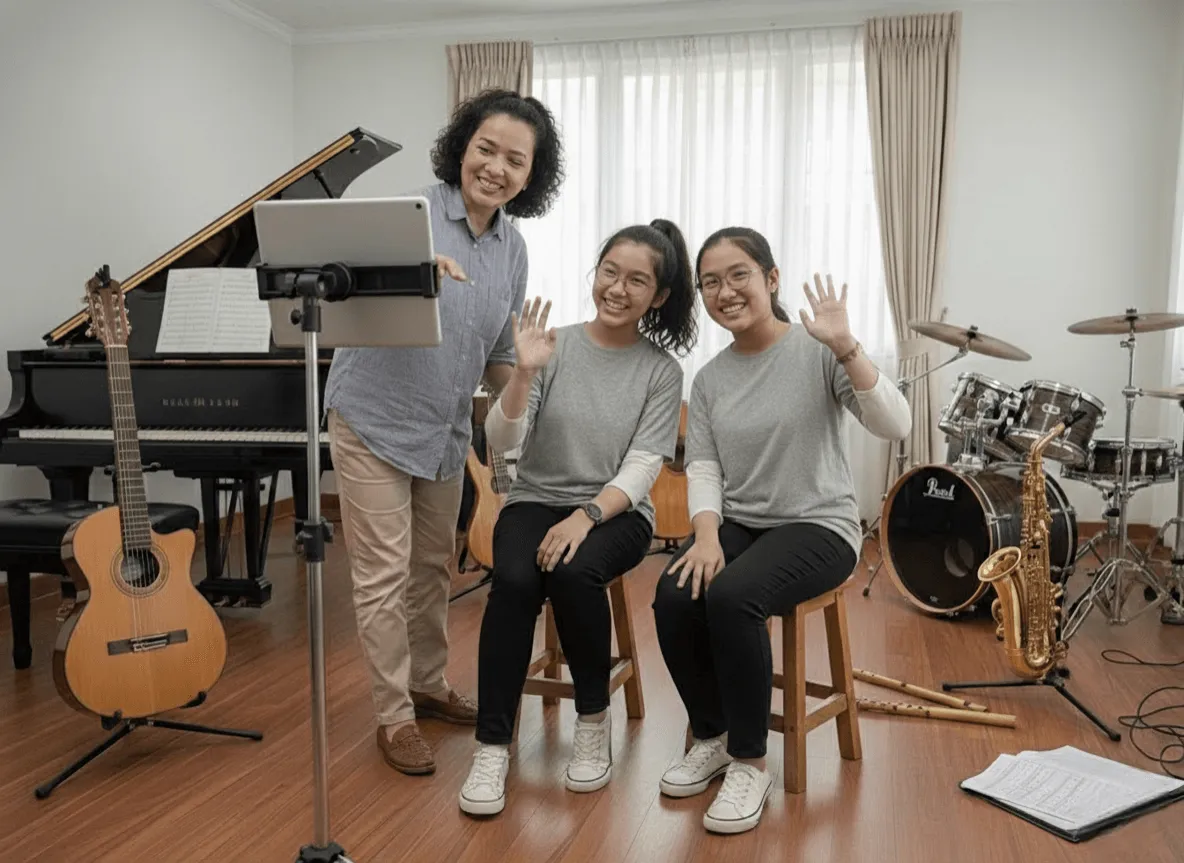
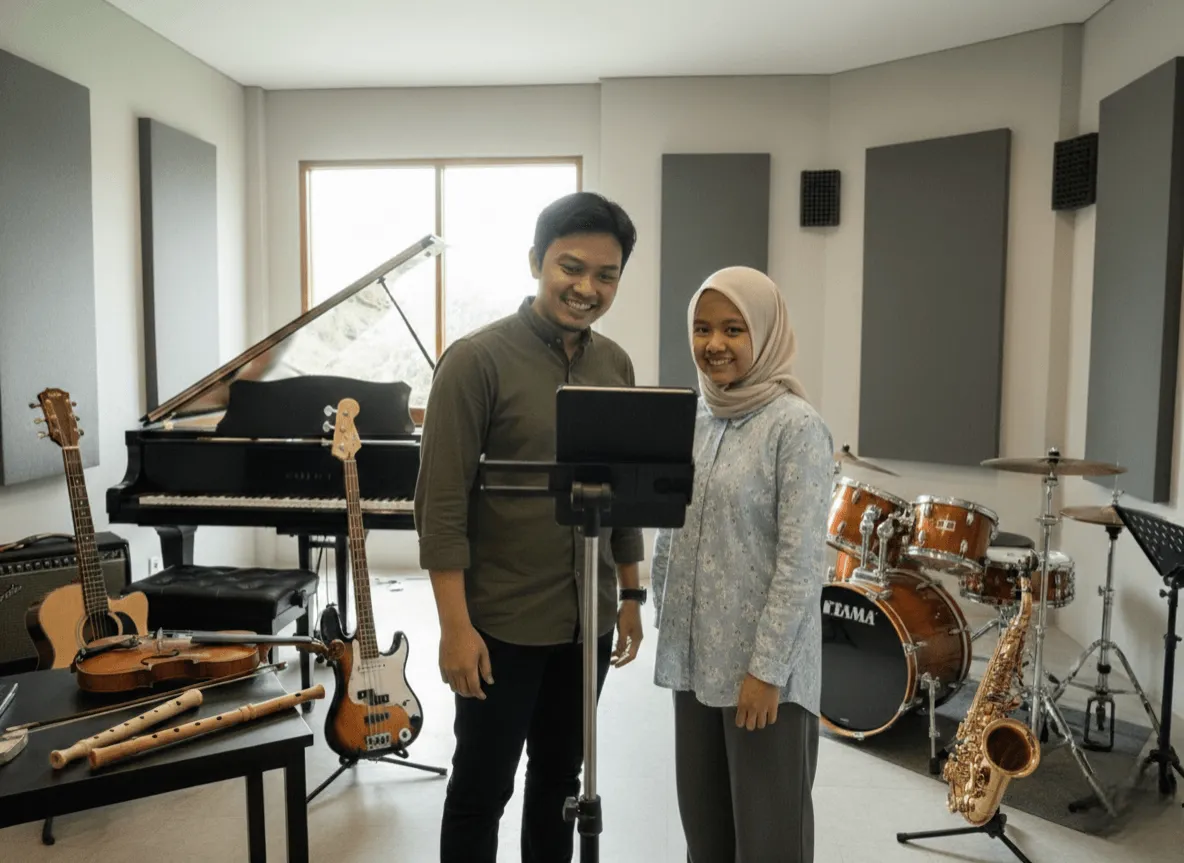
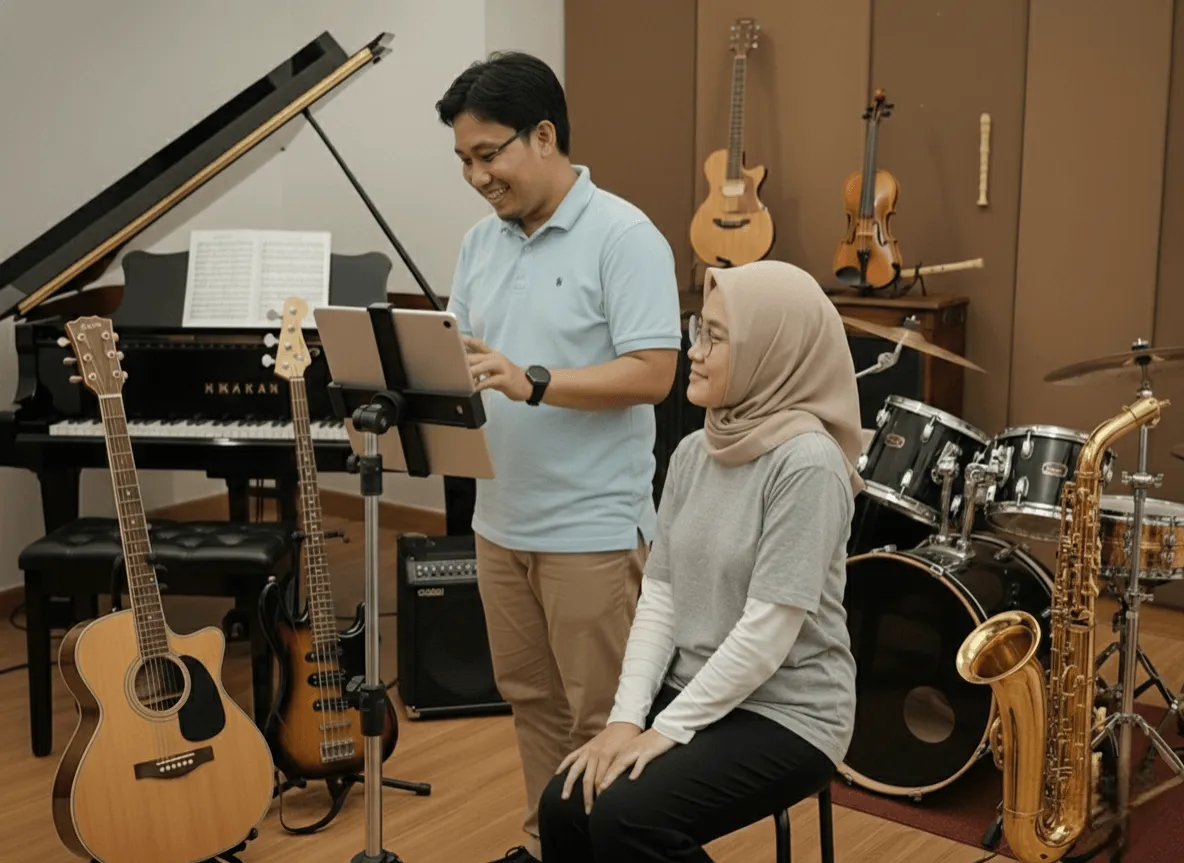
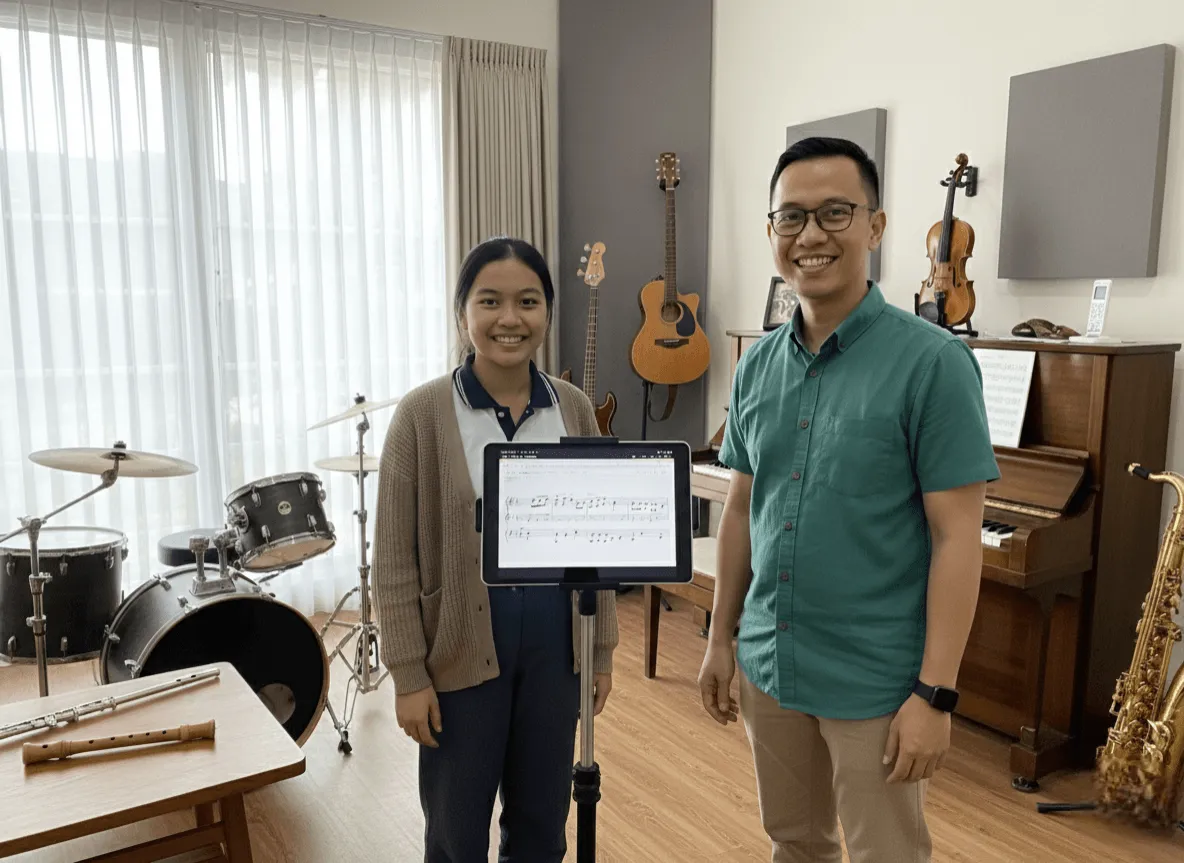
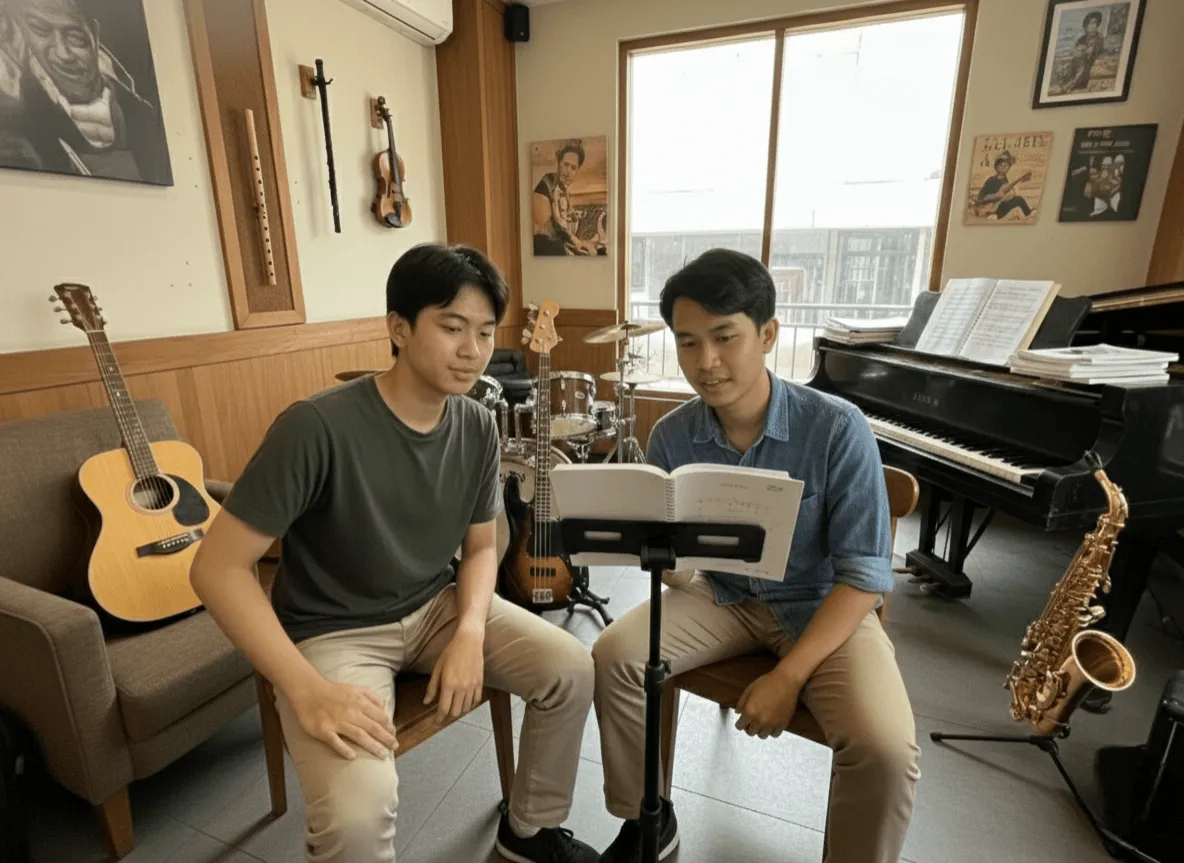
The photographs below are from flute tutoring in Bali, taken with learners around the island.
Service Area
Where Edupola Flute Teachers Travel in Bali
A flute teacher travels to wherever you choose in Bali: Denpasar, Badung, and Gianyar through to Tabanan, Buleleng, Klungkung, Bangli, Karangasem, and Jembrana. What has to be there is enough standing room and a stand at eye level, because posture decides the breath.
One feature of this instrument makes things easier across Bali: a flute needs no electricity, no amplification, and no special room, and its sound does not carry through walls as strongly as other wind instruments. So sessions can run in a house with close neighbours, which is not true of every programme we teach.
The Edupola office is not used as a lesson venue. Where no tutor is available near you, sessions run online. For this programme the online route works well once the camera is placed correctly, as the next section explains. Ask the admin about teacher coverage at your location in Bali.
Online Sessions
Online Flute Sessions and the Camera Angle
Online sessions for flute tutoring in Bali run over Zoom or Google Meet, and for this instrument one thing decides whether it works: the camera angle. The teacher needs to see the lips and the blowing hole from the side, so the camera goes beside the learner instead of in front.
Once the angle is right, most of the programme runs on equal terms: lip shape, scales, pieces, and sight reading. The one part that loses accuracy is judging tone colour, because a microphone compresses the difference between a round sound and a thin one.
Playing simultaneously with the teacher cannot be done on this route because of network delay, so accompaniment is replaced by a backing recording sent in advance. Fees for online sessions match face-to-face sessions.
Frequently Asked
Questions From Flute Learners in Bali
What does private flute tutoring in Bali cost?
Fees start from IDR 174,100 for a 60-minute session, the shortest option. Sessions of 90 and 120 minutes are available with the fee following the length. The final fee follows session length and the number of sessions per month, between 4 and 28. The admin sends the breakdown in writing before the first payment. A flute, a cleaning cloth, and a music stand are prepared by the learner and not included in the fee.
I have had two sessions and it is still hissing. Am I unsuited to this?
No, and this is the most common question on this instrument. The lips are doing a job nothing on the flute helps with, so the first week producing air instead of notes is ordinary. The measure for progress is not whether a note appears but whether it appears on the first attempt, several times running, without resetting the lips.
Why do my low notes keep disappearing?
Because low notes need more air at lower pressure, which is the opposite of what most learners assume. Blowing harder for a low note makes it jump up an octave or vanish. Teachers train low notes before high ones for exactly this reason, since a learner who has the low register has the airflow the rest of the instrument needs.
Do I need my own flute?
Yes, because lip shape is built on one instrument and changing between instruments slows it down. A beginner model is adequate through the whole of this programme, so there is no reason to spend more at the start. Say so at the consultation if you have not bought one, and the teacher names a specification first.
At what age can a child start the flute?
Usually from around 9 or 10, and the limit is physical instead of musical: the arms need to reach the keys with the head turned, and the lungs need enough air for a low note. Younger children can start on a curved head joint, which brings the keys closer. The first session measures the reach instead of assuming from the age.
How is a flute teacher matched to a learner?
Days, times, session length, and how many sessions a month are agreed at the consultation. Matching then prefers a teacher who can get to you in Bali without a long drive, and it takes 1 to 5 working days. Where you play steers the choice: orchestral parts, marching band, and graded exams are three different briefs, and the teacher is picked from whichever one you are in. If the first 2 weeks feel like a poor fit, a replacement is arranged at no extra cost.
Related Programmes
Other Programmes Learners Add in Bali
Flute tutoring in Bali is often taken with one other programme, usually once the tone is steady.
-
Saxophone Tutoring in Bali
Taken by learners who want to add a reed instrument for events.
-
Piano Tutoring in Bali
A choice for learners who need their reading and the basics of harmony strengthened.
-

Bamboo Flute Tutoring in Bali
Often taken by learners who want to play the bamboo flute in gamelan tuning.
Get Started
Start Flute Lessons From One Clean Note
Name the instrument you hold and where you want to play it. A tutor in Bali is matched within 1 to 5 working days.