
Private Saxophone Tutoring in Bali
Saxophone Tutoring in Bali: The Reed Owns the Sound
Saxophone tutoring in Bali from Edupola pairs one teacher with one learner. A reed that is too hard, worn out, or fitted a millimetre off produces the same thin sound as bad technique, so 6 facts about that small piece of cane come first. Fees from IDR 136,200 per session.

Rating and fees for saxophone tutoring in Bali
| Programme | Saxophone Tutoring in Bali |
|---|---|
| Provider | Edupola |
| Description | Private saxophone tutoring in Bali, one teacher per learner: the sound belongs to the reed, so the first inspection is of the instrument and not of the player. |
| Fee | Fees start from Rp136,200 per session. |
| Session Length | Sessions run 60, 90, or 120 minutes. |
| Schedule | Flexible, following the learner's calendar. |
| Start | Lessons can start any time after registration. |
| Sessions per Month | 4 to 20 sessions per month, as needed. |
| Rating | 4.9 out of 5, 104 reviews |
Programme at a Glance
Saxophone Tutoring in Bali and the Small Piece That Decides
Saxophone tutoring in Bali runs one tutor with one learner, at your home or your workplace. One thing about this instrument reverses the usual order of a first lesson.
The sound is produced by a thin piece of cane vibrating against the mouthpiece. A reed that is too hard for a beginner, one that has been played until its tip splits, or one seated a millimetre off the mouthpiece tip all return a thin, resistant sound, and that sound is indistinguishable from poor embouchure.
So the first session inspects the instrument before it assesses the player. Only once the equipment is fit does a judgement about technique mean anything at all. Fees start from IDR 136,200 per 60-minute session, with 4 to 28 sessions a month. This programme holds a 4.9 out of 5 rating across 104 learner reviews in Bali.
The Reed
Six Things to Know About the Reed
These six come before any assessment of playing in saxophone tutoring in Bali. Most beginners have never been told any of them.
-
Hardness Comes With a Number
Reeds are sold with a strength number, and beginners need a low one. A high number resists the vibration, so the learner blows harder and the sound gets thinner.
-
It Is a Consumable
An old reed changes its sound and then splits at the tip. Learners using one reed for months conclude their ability has stopped improving, when the cane is simply finished.
-
It Has to Be Wet First
The material absorbs water and needs a few minutes of soaking before it is fitted. A dry reed returns a thin sound and splits sooner than a soaked one.
-
Where It Sits Matters
The tip of the reed needs to line up with the tip of the mouthpiece, and a millimetre's difference changes the sound. Fitting it is practised until it is automatic.
-
No Two Reeds Are the Same
From one identical box, some sound rounder than others. Experienced players try several and set aside the ones that suit, which is normal and not fussiness.
-
The Mouthpiece Plays a Part
The shape of the chamber inside the mouthpiece changes the feel of the sound, and the one supplied with a cheap instrument is often the obstacle. A mouthpiece change is discussed before an instrument change.
Where You Play
Saxophone Venues and the Sound Each One Demands
The instructor sets the balance from this. The third column is what actually causes trouble at that venue.
| Playing venue | The sound demanded | The hardest part |
|---|---|---|
| Hotel lobbies and restaurants | A soft sound that does not cover guests talking | Holding back for two hours without the sound going thin |
| Wedding receptions | A big sound that carries in an open space | Requested songs sent a few hours before the event |
| Jazz cafes | A breathy sound with room to improvise | Taking turns with other players with no shared rehearsal |
| Campus ensembles | A sound that blends with other wind instruments | Matching pitch with the rest of the wind section |
| Worship and family events | A warm sound in the middle register | Songs transposed down to suit a singer |
| Playing for yourself | A sound that pleases you | Practice hours colliding with the neighbours |
Learning Path
The Order of Material in Saxophone Lessons
The saxophone stage a learner starts at is set after the equipment is checked, by sounding a few long notes.
-
Stage 1
Fit Equipment and Long Notes
The reed is changed if it is too hard or worn out, then fitting it is practised. After that, long notes are sounded with the pitch held steady.
- A fit reed
- Fitting practised
- Steady long notes
-
Stage 2
Fingering and the Low Register
Fingering is learned in groups, and the low register comes first because it demands a looser embouchure. Learners who start high build a tight one.
- Grouped fingering
- Low notes first
- A loose embouchure
-
Stage 3
Tone and Repertoire
Tone is built through long notes at different volumes, then pieces from the genre the learner is heading for. Volume control is the skill underneath both.
- Long notes, varied volume
- Your genre
- Volume control
-
Stage 4
Improvisation and the Stage
Scales for improvising are learned over backing recordings, starting from two safe notes. Learners who play events also practise transposing on short notice.
- Two safe notes
- Backing recordings
- Transposing fast
Who It Is For
Saxophone Learners in Bali
Each session holds one learner, so the run of pieces and the tone aimed for follow where that learner plays in Bali.
-
Hotel Lobby Players
Learners filling the music in a hotel lobby in Bali. The training is holding back for two hours while keeping the sound soft and alive.
-
Wedding Band Members
Learners in Bali playing receptions. Transposing quickly is trained specifically, since requested songs often arrive hours before.
-
Jazz Cafe Players
Learners in Bali filling weekend slots. Improvisation starts from two safe notes, because taking turns with unrehearsed players is unforgiving.
-
Adults With a New Hobby
Learners in Bali starting later in life for themselves. A chosen piece enters from the first sessions, with the balance set to their own goal.
-
Music Students
Learners in Bali facing an exam or an ensemble audition. Matching pitch with other wind parts is trained against recordings.
-
Self-Taught Players Rebuilding
Learners in Bali who learned from videos. The check starts with the reed and the embouchure, and often the sound changes before any technique does.
One Session
Inside a 60-Minute Saxophone Session
This is the division used once the equipment is fit. The first block is equipment, every session, and it is not a formality.
-
5 minutes
Checking the Reed
The reed is examined together: its edge, how wet it is, and where it sits. A worn reed is replaced there and then instead of being played through.
-
15 minutes
Long Notes at Different Volumes
One note is taken from soft to loud and back with the pitch held steady. This exercise builds the control that every venue later asks for.
-
20 minutes
The Learner's Own Repertoire
A piece from the learner's set list is worked in fragments. A passage that slips is repeated at a slow tempo instead of restarting from the top each time.
-
15 minutes
Improvising or Sight Reading
Depending on the goal, this block is improvising over a backing recording or reading notation never seen before.
-
5 minutes
Setting the Daily Practice
The instructor picks one long-note exercise and one section of a piece for each day, each kept short so the embouchure is not exhausted.
In a 90 or 120 minute session, improvisation and repertoire both fit without the long notes being cut, which is what learners playing events or preparing an audition usually choose.
Prepared by the Learner
What to Have Ready Before the First Session
The admin confirms these once the schedule for saxophone tutoring in Bali is agreed. A saxophone, several new reeds, and an inside cleaning cloth are prepared by the learner and not included in the fee.
-
Your Own Saxophone
The alto is what most beginners use and it is adequate for every stage here. If you have none yet, say so at the consultation; the instructor names a specification first.
-
Several New Reeds
Bring a few reeds with a low strength number. They are consumables, and having spares saves you from a session spent on a reed that is already finished.
-
An Inside Cleaning Cloth
Water from the breath settles inside the body and ruins the key pads. Drying the instrument after use extends its life more than any other habit.
-
An Agreement on Hours With Neighbours
This instrument is loud and cannot be fully held back. Settle practice hours with your neighbours or your venue's management in advance, before the first session.
-
Your Event Set List
Write down the songs you play or will play at events. They become practice material, including the keys, which often need changing for a singer.
If you have not bought an instrument yet, say so during the consultation. The instructor names a specification and a reed strength, so the first purchase is not the wrong one.
The First Check
The First Inspection Touches the Instrument, Not the Player
This order separates saxophone tutoring in Bali from many other places to learn, and the reason is measurable. A reed that is too hard, worn out, or seated off the mouthpiece tip returns symptoms identical to bad technique: a thin sound, a high note that will not come, and a learner tiring within ten minutes. Judging technique on top of that is judging the wrong thing.
So the first session checks the equipment first. The instructor looks at the reed's strength number, the state of its edge, and where it sits on the mouthpiece, then checks the key pads for leaks. On a number of learners, the sound changes in that first half hour without a word being said about embouchure.
Once the equipment is fit, a judgement about technique means something. And the habit of checking equipment is taught as part of the programme, because the reed will be finished again a few weeks later. Learners used to checking stop blaming themselves for a problem the cane caused.
Volume
A Big Sound Is a Problem at Home and in a Hotel
The saxophone is loud, and its loudness cannot be turned down the way an electric instrument's can. The consequence appears in two different places. At home, daily practice collides with the neighbours' rest hours, and in saxophone tutoring in Bali that is the most frequent reason a learner's practice stops. In a lobby or a restaurant, the same volume covers the conversation the venue is there for.
For the situation at home, instructors discuss the real options: agreed hours, the room furthest from a shared wall, and silent practice for the fingering part. Some of the work genuinely can be done without sound, which buys back practice time on days when sound is impossible.
For the situation at a venue, what is trained is volume control. One note is taken from soft to loud and back without the pitch shifting, and that exercise is repeated every session. Learners who have it can fill a lobby for two hours without the sound going thin, which is the specific thing lobby work asks for.
What Learners Say
Stories From Saxophone Learners in Bali
The quotes below come from learners in Bali who completed the saxophone programme at Edupola, with their situation and what changed.
-
★★★★★
I used to be able to play only simple songs. After 16 sessions at Edupola the instructor trained my jazz improvisation and tone quality until I was trusted with a regular slot in a five-star hotel lobby lounge. The backing tracks used in practice genuinely helped build my confidence.
Performs regularly in a five-star lobby lounge in Nusa Dua
Rai S.
Hotel jazz performer · Verified learner
-
★★★★★
I joined a wedding band but my saxophone skill was still borderline. The Edupola instructor taught the pop and R&B repertoire that gets requested at weddings. Now my saxophone is the highlight of every reception. Clients always ask for an extra song!
The saxophone is now the highlight of every reception
Ayu D.
Wedding band member · Verified learner
-
★★★★★
At 58 I decided to learn the saxophone, a dream since I was young. The Edupola instructor was very patient teaching embouchure and fingering from nothing. Within 6 months I could play 15 of my favourite jazz standards. It is never too late to learn!
Can play 15 favourite jazz pieces in 6 months
Dharma P.
Retiree with a new hobby · Verified learner
-
★★★★★
I needed extra preparation for the ensemble audition on campus. Private lessons at Edupola gave me intensive sight reading and articulation work that I was not getting in the regular class. The result is that I passed the audition and am now the lead saxophone in the ensemble.
Passed the campus ensemble audition after intensive practice
Indra M.
Music student · Verified learner
-
★★★★★
I taught myself saxophone for 2 years but was stuck at the same level. The Edupola instructor corrected my embouchure and breathing technique straight away. My saxophone tone changed dramatically within 8 sessions. Now I perform at a jazz cafe every Friday and Saturday night.
Performs regularly at a jazz cafe every weekend
Arimbi
Cafe lounge player · Verified learner
-
★★★★★
I could already play the saxophone but my basic technique was a mess from learning alone. Edupola helped fix my posture and embouchure and taught advanced technique such as circular breathing and overtones. My playing level is far above where it was.
Mastered circular breathing and the overtone register
Arya W.
Self-taught player upgrading technique · Verified learner
How to Register
Four Steps to the First Saxophone Session
The opening consultation carries no fee. The admin asks which horn and which reed you use, where you play, and which practice hours are workable.
-
Name the Instrument and the Venue
Your type of saxophone and where you play it: a hotel, a reception, a cafe, an ensemble, or at home. Both set the material.
-
Agree the Schedule
Days, times, session length, and sessions per month are agreed with the admin, following the hours when sound is actually possible, since the neighbours' rest hours bind harder than your own calendar.
-
Matching the Instructor
The team looks for a tutor whose travel to your location in Bali stays short, and that search runs 1 to 5 working days. Two conditions are used: an instructor who plays similar venues, and one reachable from your location.
-
The First Session
The reed and mouthpiece are checked and replaced if needed, then you sound a few long notes and the starting stage is set.
Need help? Contact our admin on WhatsApp for a free consultation.
Documentation
Saxophone Lessons With Edupola in Bali
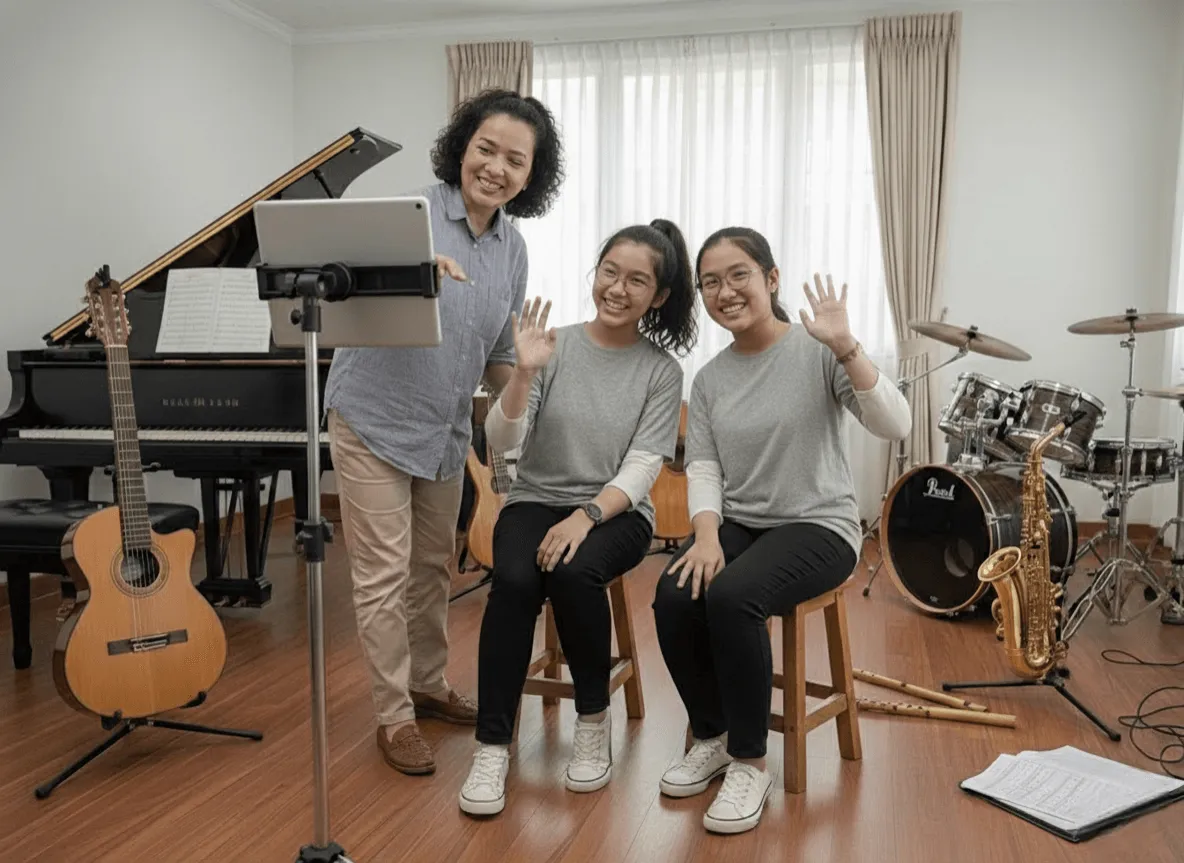
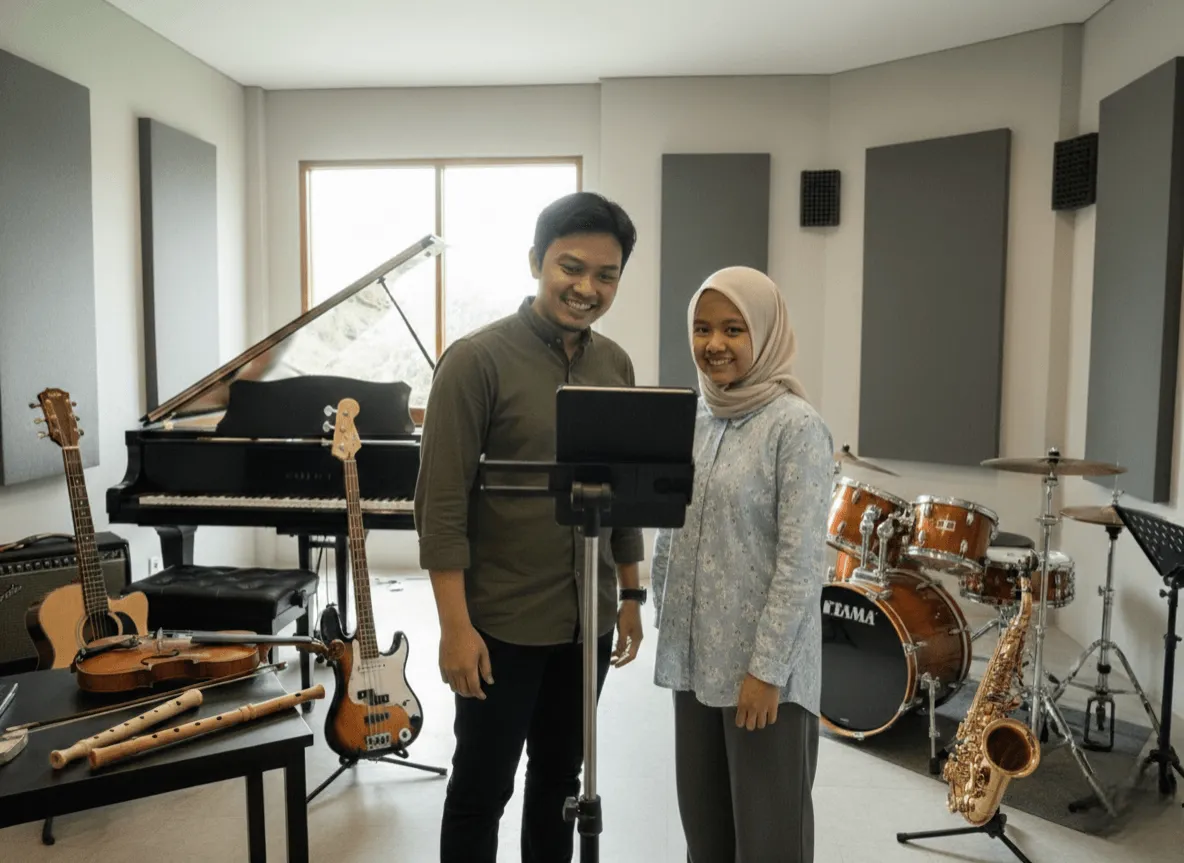
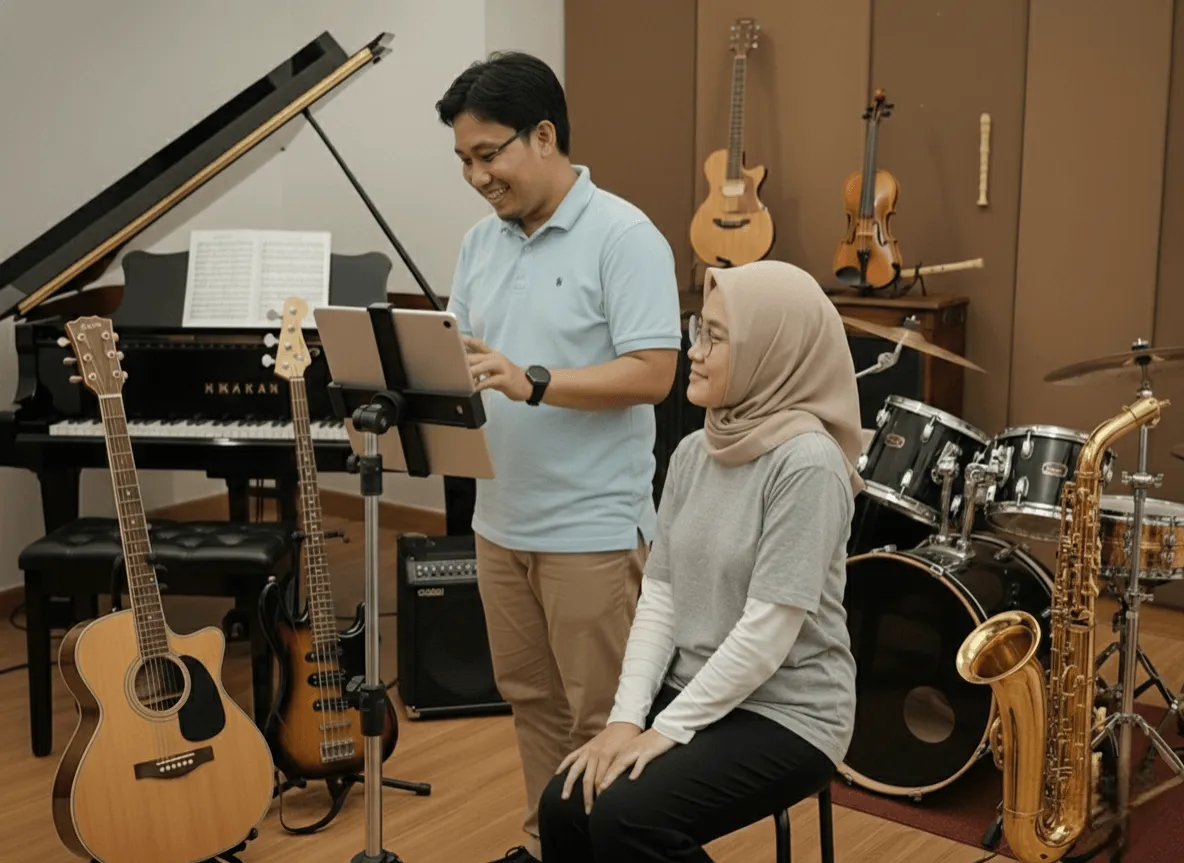
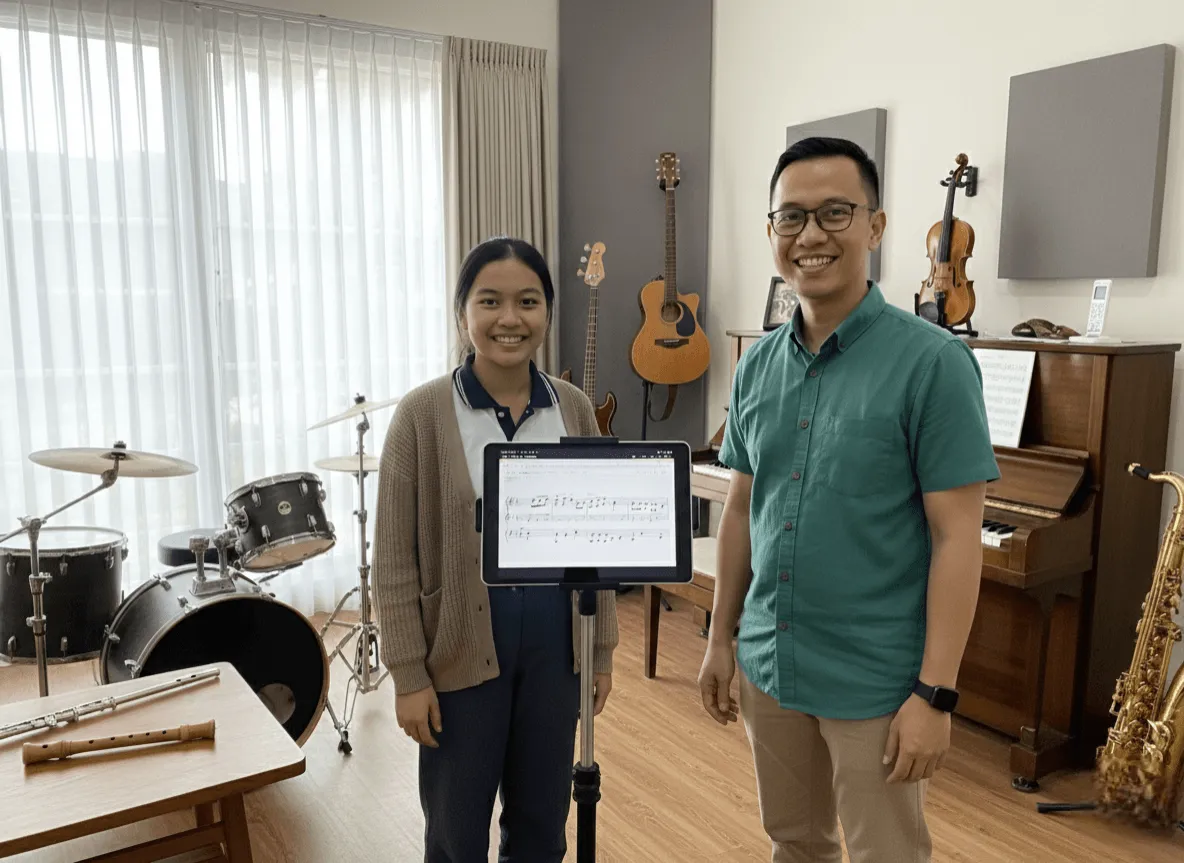
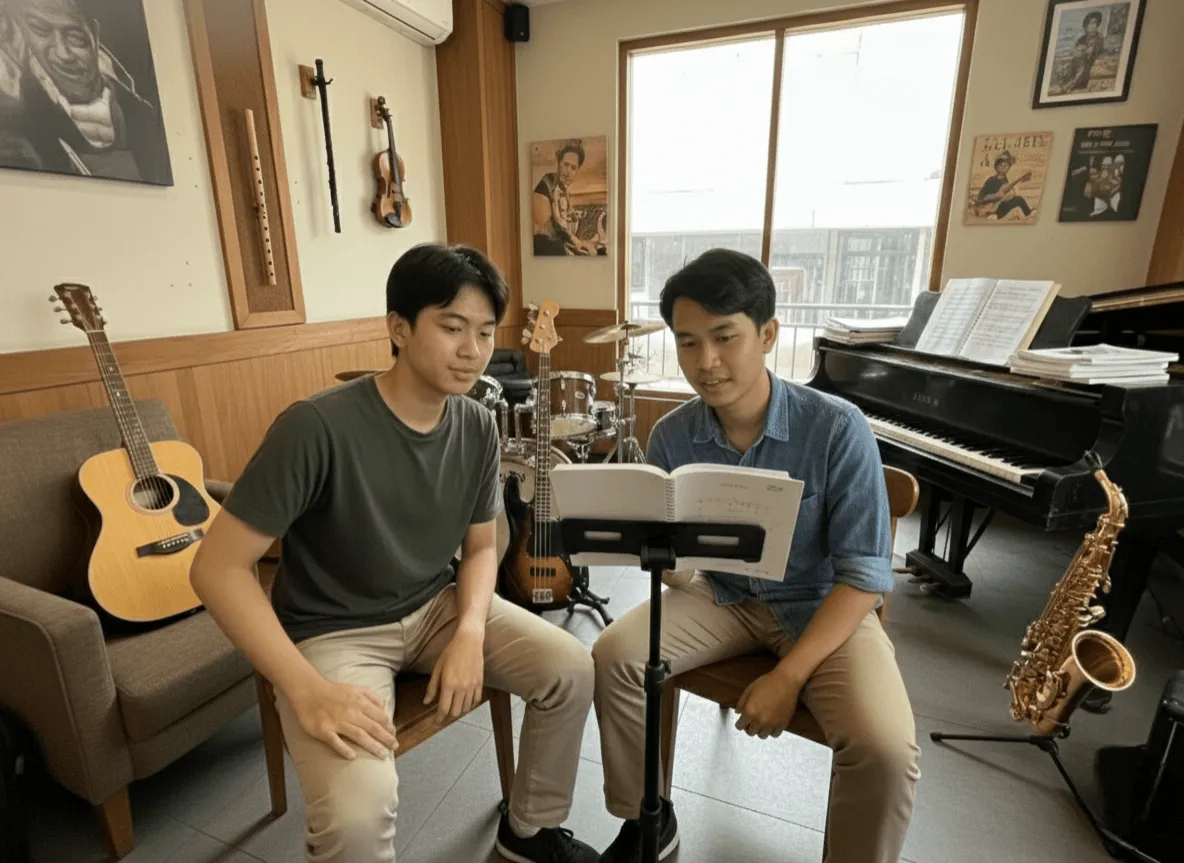
The photographs below were taken during saxophone tutoring in Bali sessions with learners on the island.
Service Area
Where Edupola Saxophone Instructors Travel in Bali
Instructors for saxophone tutoring in Bali come to the place you choose: Denpasar, Badung, Gianyar, Tabanan, Buleleng, Klungkung, Bangli, Karangasem, and Jembrana. Many learners choose their own workplace in a tourist area, during the quiet hours.
One feature of this instrument decides the schedule more than distance does: the hours when sound is possible. The admin asks about that first, and for learners whose houses adjoin a neighbour's wall, sessions often sit inside working hours when the surrounding houses are empty.
The Edupola office is not used as a lesson venue. Where no tutor is available near you, sessions run online. For this programme the online route needs a microphone setting changed first, as the next section explains. Ask the admin about instructor coverage at your location in Bali.
Online Sessions
Online Sessions and the Sound a Microphone Clips
Online sessions for saxophone tutoring in Bali run over Zoom or Google Meet, and one thing has to be known in advance: phone and laptop microphones clip the peaks of this instrument. A sound that is round in the room arrives flattened and harsh on the other side, and an instructor hearing that would correct a fault the learner does not have.
There are two ways around it. First, the microphone is moved further away and automatic noise suppression is switched off, and the admin walks you through the steps before the first session. Second, for any judgement about tone, the learner records one long note on their own device and sends the file, so the sound never passes through a call.
What works well on this route is fingering, reading, repertoire, and improvising over a backing recording, because none of those depend on hearing the tone exactly. Fees for online sessions match face-to-face sessions.
Frequently Asked
Questions From Saxophone Learners in Bali
What does private saxophone tutoring in Bali cost?
Fees start from IDR 136,200 for a 60-minute session, the shortest option. Sessions of 90 and 120 minutes are available with the fee following the length. The final fee follows session length and the number of sessions per month, between 4 and 28. The admin sends the breakdown in writing before the first payment. A saxophone, several new reeds, and an inside cleaning cloth are prepared by the learner and not included in the fee.
My sound is small even when I blow hard. What causes that?
Usually the reed, and blowing harder makes it worse. A reed with too high a strength number resists the vibration, and a worn one has lost its spring, so in both cases more air produces a thinner sound. The instructor checks the strength number, the edge, and where it sits before looking at your embouchure at all.
How often does a reed need replacing?
It depends on how much you play, and the sign is in the sound instead of a date: when a reed that used to feel easy starts needing more air, it is finished. Players who perform weekly go through them faster. Keeping several in rotation extends each one, since they last longer when they get a chance to dry between sessions.
Which type of saxophone should I use?
The alto for almost all beginners: it is the most common, the easiest to hold, and adequate through every stage here. The tenor is larger and favoured in some jazz and event settings, and it asks for more air. The soprano looks appealing and is the hardest to keep in tune, so it is rarely a first instrument.
How do I practise without disturbing my neighbours?
Settle the hours first, because that solves more than any equipment does. Then use the room furthest from a shared wall, and keep the fingering work for the times when sound is impossible, since it can be done silently. Some learners in Bali also arrange to practise at their workplace during the quiet hours.
How is a saxophone instructor matched to a learner?
The schedule is settled first during the consultation, covering days, times, session length, and sessions per month. The Edupola team then looks for a tutor whose travel to your location in Bali stays short, and that search runs 1 to 5 working days. The venue matters here: lobby work, receptions, jazz cafes, and ensembles are matched to instructors who play them. If the first 2 weeks feel like a poor fit, a replacement is arranged at no extra cost.
Related Programmes
Other Programmes Learners Add in Bali
Learners taking saxophone tutoring in Bali often add one other programme, usually once a set list is steady.
-

Singing Tutoring in Bali
Taken by learners who sing in the same set as they play.
-

Piano Tutoring in Bali
A choice for learners who need stronger harmony for improvising.
-

Bass Tutoring in Bali
Often taken by learners whose band needs a bass player at small events.
Get Started
Start Saxophone Lessons by Checking Your Reed
Name the instrument you hold, where you play, and which hours sound is possible. A tutor in Bali is matched within 1 to 5 working days.