
Private Bamboo Flute Tutoring in Bali
Bamboo Flute Tutoring in Bali: Breath That Never Stops
Bamboo flute tutoring in Bali from Edupola pairs one teacher with one learner. Gamelan phrases run longer than a lungful, so the breath is taken without the sound ever stopping, and 6 steps build towards that while the ear learns a tuning it has never held before. Fees from IDR 120,900 per session.

Rating and fees for bamboo flute tutoring in Bali
| Programme | Bamboo Flute Tutoring in Bali |
|---|---|
| Provider | Edupola |
| Description | Private bamboo flute tutoring in Bali, one teacher per learner: the breath never stops, and the gamelan tuning has to be held in the ear before the instrument is bought. |
| Fee | Fees start from Rp120,900 per session. |
| Session Length | Sessions run 60, 90, or 120 minutes. |
| Schedule | Flexible, following the learner's calendar. |
| Start | Lessons can start any time after registration. |
| Sessions per Month | 4 to 20 sessions per month, as needed. |
| Rating | 4.9 out of 5, 109 reviews |
Programme at a Glance
Bamboo Flute Tutoring in Bali and Two Things No Other Instrument Has
Bamboo flute tutoring in Bali runs one tutor with one learner, at your home or your banjar. Two features of this instrument have no equivalent on a Western one.
The first is the breath. A gamelan phrase can run longer than one lungful, and the sound is not allowed to stop, so air is stored in the cheeks and pushed out while the nose draws a new breath. The second is the tuning: pelog and selendro are not the scale a listener raised on popular music carries, and two of their notes sound like the same note to a new ear.
So the ear is built by singing the scale before the instrument is touched, and the continuous breath is opened only once the basic tone is steady. Fees start from IDR 120,900 per 60-minute session, with 4 to 28 sessions a month. This programme holds a 4.9 out of 5 rating across 109 learner reviews in Bali.
The Breath
Six Things About Continuous Breath on the Suling
These six are built in order in bamboo flute tutoring in Bali. The last one is a rule about when not to start.
-
Air Is Stored in the Mouth
The cheeks are filled with air as a reserve, then pushed out while the nose draws a new breath. The first step is practised with a straw in a glass of water, with no flute at all.
-
A Changeover Nobody Hears
What is judged is whether a listener catches the join, not whether you managed to breathe. A rough changeover returns a note that bulges, which is more audible than a gap.
-
Trained in the Middle Register First
Middle notes are the easiest to sustain, so practice starts there. Low notes need more air, so the cheek reserve empties before the nose has finished.
-
A Relaxed Nose
The breath through the nose has to arrive quickly and calmly. Learners who tense the face block the air, and the earliest sign of it is a changeover that gets louder.
-
Held Across a Long Phrase
A gamelan phrase can run a long time, so the changeover is repeated several times inside one phrase. Practice uses real phrases instead of exercises.
-
Not Forced in the First Weeks
Forcing this technique before the basic tone is steady damages both at once. Teachers open it only after a long note can be held without the sound wavering.
Tunings
Pelog and Selendro and What Each Does to Your Ear
Teachers use this before any instrument is bought, because a suling is made for one tuning. The fourth row is the honest part.
| Point | Pelog | Selendro |
|---|---|---|
| The feel of it | Unevenly spaced, and it feels more assertive | More evenly spaced, and it feels more open |
| Used in | Most gong gamelan and dance accompaniment | Particular gamelan and the older repertoire |
| How many notes are used | Five notes chosen from the row available | Five notes with more uniform spacing |
| The obstacle for a new ear | Two notes sound like the same note | It feels familiar and then misleads you at the fourth note |
| What is trained first | Singing the row with no flute in hand | Telling it apart from the pelog row |
| The flute used | A particular length, matched to the group's tuning | A different length, and two flutes are often carried at once |
Learning Path
The Order of Material in Bamboo Flute Lessons
The suling stage a learner starts at is set by sounding a few notes and singing the row back in the first session.
-
Stage 1
Basic Tone and Long Notes
The learner finds the lip shape that returns a calm note, then holds it for several beats. This stage ends when the sound no longer wavers inside one note.
- The lip shape
- A calm note
- No wavering
-
Stage 2
The Scale Row and the Ear
The pelog or selendro row is sung before it is played. The order is deliberate: the ear has to hold the spacing before the fingers are asked to find it.
- Sung first
- Then played
- Spacing held
-
Stage 3
Ornament and Phrase
Vibrations and slides between notes are learned as part of the style instead of as additions. Phrases are worked whole so the ornament sits where it belongs.
- Part of the style
- Whole phrases
- Ornament placed
-
Stage 4
Continuous Breath and Accompaniment
The continuous breath is opened here, then the learner practises accompanying a gamelan or dance recording. What is guarded is the continuity of the sound.
- Breath opened
- Accompaniment
- Unbroken sound
Who It Is For
Bamboo Flute Learners in Bali
Every session holds one learner, so the tuning and the repertoire come from where that learner plays.
-
Members of a Gamelan Group
Learners in Bali already in their banjar's group, trusted with the flute part. The piece the group is preparing comes first.
-
Young People Aiming to Play at the Temple
Learners in Bali aiming to accompany ceremonies. Long phrases and the continuous breath take a large share, since ceremony music runs for hours.
-
Arts and Culture Teachers
Learners in Bali teaching arts at school who want the flute in their lessons. How to break the material into stages is added.
-
Dancers Learning the Accompaniment
Learners in Bali who dance and want to recognise the flute's cues. Practice uses the dance pieces they perform, heard from the player's side.
-
Visitors and Newcomers
Learners from outside Bali drawn to the sound. The scale row is taught by singing first, because an ear raised elsewhere needs that step most.
-
Karawitan Students
Learners in Bali studying arts in Denpasar. Ornament and comparison between tunings are covered in more depth, including the cues.
One Session
Inside a 60-Minute Bamboo Flute Session
This is the division used once the basic tone is steady. The fourth block uses a straw and a glass of water, with no flute involved.
-
10 minutes
Long Notes and Singing
Several long notes are sounded, then the scale row is sung with no flute in hand. The two are paired, because the voice is what proves the ear.
-
10 minutes
One Ornament
One form of vibration or slide is worked on a note already secure. A new ornament is not introduced until the previous one sits where it belongs.
-
20 minutes
A Phrase From the Group's Piece
A phrase from the piece the learner's group is preparing is worked whole. The teacher marks where that phrase demands a continuous breath.
-
15 minutes
Breath Practice With a Straw
The basic continuous-breath exercise is done with a straw in water and no flute. Bubbles that never stop are the measure, and it is honest.
-
5 minutes
Setting the Home Practice
The teacher picks one phrase and one straw exercise for each day, each kept short so the practice is not a burden.
In a 90 or 120 minute session, a whole gamelan phrase is taken with its ornament and its breath changeovers in one sitting, which is what learners preparing to accompany a ceremony usually choose.
Prepared by the Learner
What to Have Ready Before the First Session
The admin confirms these once the schedule for bamboo flute tutoring in Bali is agreed. A suling matched to your group's tuning, a straw, and a glass are prepared by the learner and not included in the fee.
-
The Tuning of Where You Play
Ask which tuning your group or studio uses before buying a flute. A suling is made for one tuning, and an instrument in the wrong one cannot be corrected by playing.
-
One Suitable Suling
The teacher will come with you to choose if you have none. Bamboo that is too dry cracks easily and bamboo that is too wet returns a dull sound, and neither is obvious to a buyer.
-
Somewhere Cool to Store It
Bamboo moves with temperature and humidity, and a flute stored on top of a cupboard near the roof can change its pitch. A shaded shelf away from heat is enough.
-
A Straw and a Glass of Water
Both are used for the basic continuous-breath exercise in the early sessions. These simple items are more useful here than any accessory sold for the instrument.
-
A Recording of the Piece You Want
If you are aiming at a particular group or dance piece, bring the recording. The phrases and the places for ornament are taken from it instead of from a book.
If you have not bought a flute yet, say so during the consultation. The tuning is confirmed first, because that is the one decision a purchase cannot undo.
The Ear
The Ear Is Built by Singing First
Learners whose ear grew up on popular music meet a characteristic obstacle at the start of bamboo flute tutoring in Bali: two notes in the pelog row sound like the same note to them. The obstacle has nothing to do with poor hearing. It is that the spacing is unfamiliar, and an ear recognises spacings it has heard repeatedly.
So the row is sung first, with no flute. Singing forces the learner to hold the spacing in their own head, and a mistake is audible to them immediately instead of being hidden behind a finger position. Once the row can be sung, playing it takes a fraction of the time it would otherwise.
Teachers across Bali also play two tunings side by side so the difference is felt. Learners who know only one tuning tend to decide the other is out of tune, when both are valid and both are used in their own places, and hearing them together settles that in a minute.
One extra exercise checks whether the ear has actually taken the spacing: the teacher sounds one note, the learner sings the next note of the row, then both are sounded together. If the spacing is wrong, the two notes beat against each other and the learner hears it without being told.
What Learners Say
Stories From Bamboo Flute Learners in Bali
The quotes below come from learners in Bali who completed the bamboo flute programme at Edupola, with their situation and what changed.
-
★★★★★
I came to Bali on holiday, but learning the bamboo flute at Edupola became the most memorable part of it. The maestro was very patient teaching embouchure and the pelog scale. I took a bamboo flute home to Australia and I still practise regularly through online sessions!
Took a Balinese bamboo flute home to Australia
Sarah M.
Tourist from Melbourne, Australia · Verified learner
-
★★★★★
I used to be embarrassed that I could not play a traditional instrument myself. After 8 sessions at Edupola I now play the flute regularly at the temple during odalan. My grandfather was moved to see me carrying on a family tradition that had been broken.
Performed on the bamboo flute at a temple ceremony
Dwi M.
Balinese young man, aged 19 · Verified learner
-
★★★★★
As an arts and culture teacher I felt I needed to master a traditional instrument properly. Lessons at Edupola made me understand not only the technique but also the philosophy behind each note. My pupils are now far more enthusiastic about learning regional music.
Brought the Balinese flute into the school curriculum
Sukerti
Junior secondary arts and culture teacher · Verified learner
-
★★★★★
I have lived in Ubud for the past year and wanted to understand Balinese culture more deeply. The Balinese bamboo flute has a character of sound very different from the shakuhachi. The maestro at Edupola taught me the selendro scale with great care. This is my best musical experience.
Fell in love with the Balinese bamboo flute
Takeshi Y.
Retiree from Osaka, Japan · Verified learner
-
★★★★★
As a dancer, understanding the flute melody is very important for the timing of the movement. Learning to play the flute at Edupola made me understand the structure of gamelan music from the inside. I even managed to perform a dance and flute collaboration at a Bali arts festival this year.
Dance and flute collaboration at an arts festival
Ayu D.
Professional Legong dancer · Verified learner
-
★★★★★
For my thesis on flute ornamentation in Gong Kebyar gamelan, lessons at Edupola gave me understanding directly from a maestro. The gregel and ngumbang-ngisep techniques taught are in no book anywhere. My supervisor was impressed by the depth of the research.
Gamelan research from a flute practitioner's perspective
Arya W.
Karawitan arts student, ISI Denpasar · Verified learner
The Material
Bamboo Moves With the Weather
A bamboo flute is not as fixed as a metal instrument. Bamboo absorbs and releases water with the humidity, and its pitch shifts slightly along with that. New learners usually blame their own blowing, and in bamboo flute tutoring in Bali the first thing a teacher separates is the state of the instrument from the state of the breath.
So two small habits are taught from the start. First, check the flute's pitch against the gamelan or a tuning meter before playing, so you know the condition of your instrument today. Second, how to store it: too hot and too dry are both harmful, and a shaded shelf away from the roof is enough.
One practical consequence has to be said openly: a flute that has shifted a long way cannot be fixed by technique. An instrument like that gets replaced, and the cost is modest compared with other instruments. Teachers name the signs so a learner is not persuaded to keep working around a flute that has gone.
One simple habit helps a learner separate the instrument from the breath. Before practising, one middle note is sounded and compared against a tuning meter on a phone, and the result is written down as the day's starting point.
How to Register
Four Steps to the First Suling Session
The opening consultation carries no fee. The admin asks which tuning your group uses.
-
Name the Tuning and Where You Play
Which tuning your group or studio uses, and where you play: a banjar group, temple ceremonies, dance accompaniment, or for yourself.
-
Agree the Schedule
Days, times, session length, and sessions per month are agreed with the admin, following the ceremony days at your banjar, since the Balinese calendar differs between villages and sessions are placed outside them.
-
Matching the Teacher
The team looks for a tutor whose travel to your location in Bali stays short, and that search runs 1 to 5 working days. The tuning decides this, and so does whether you accompany dance or ceremony.
-
The First Session
You sound a few notes and sing the row back, and the starting stage plus the daily practice are set from that.
Need help? Contact our admin on WhatsApp for a free consultation.
Documentation
Bamboo Flute Lessons With Edupola in Bali
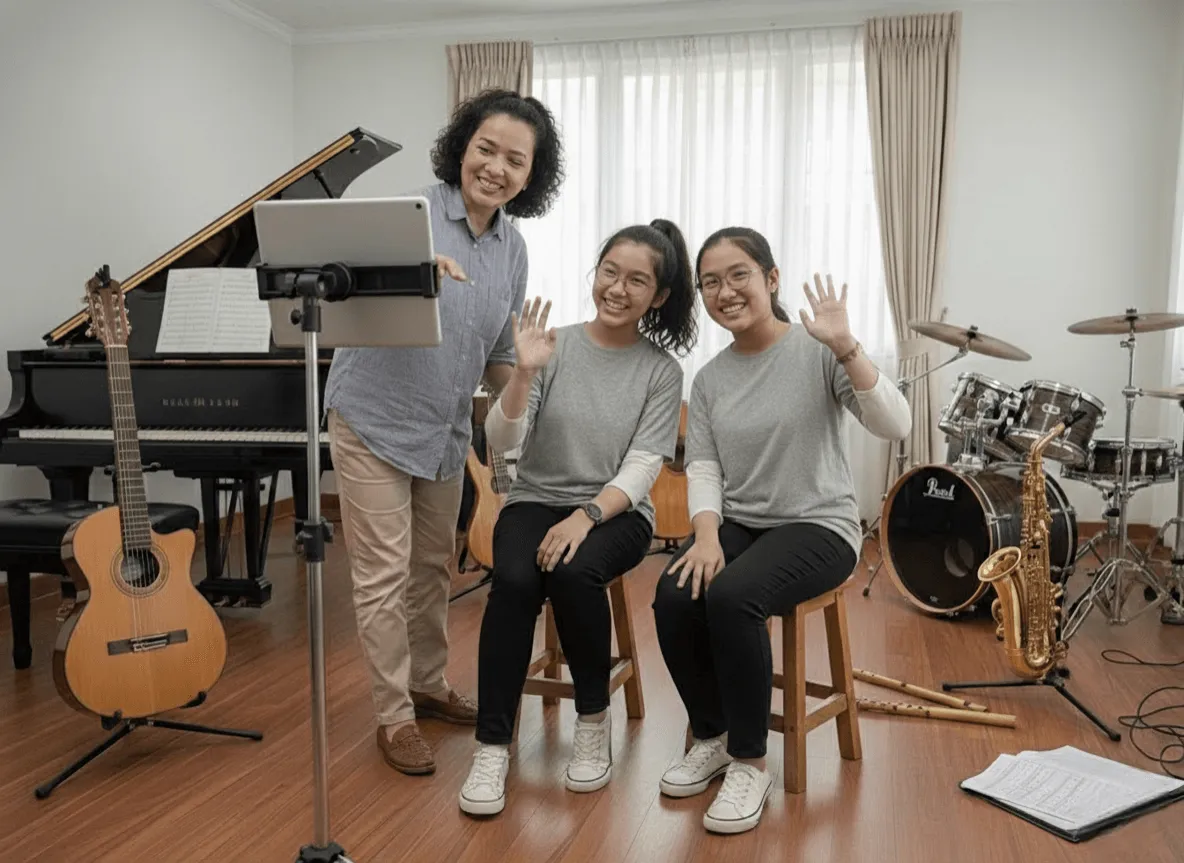
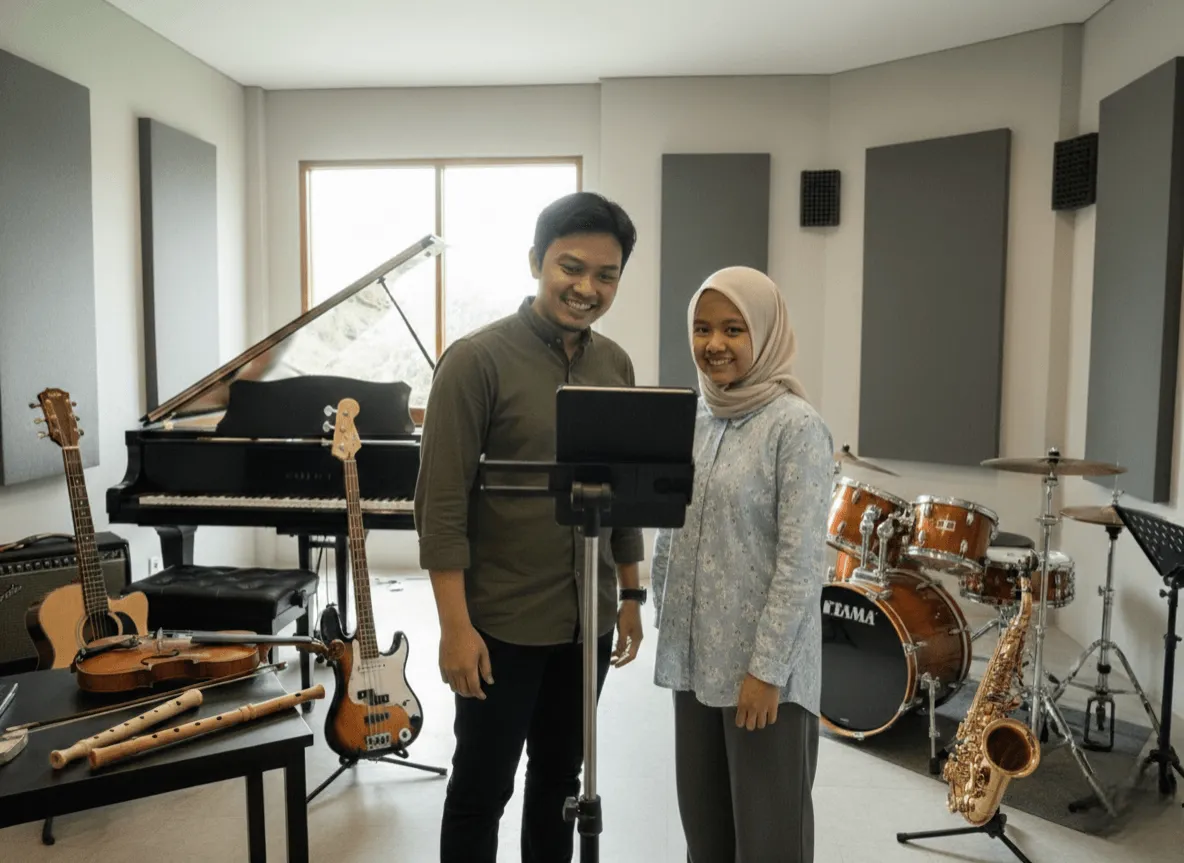
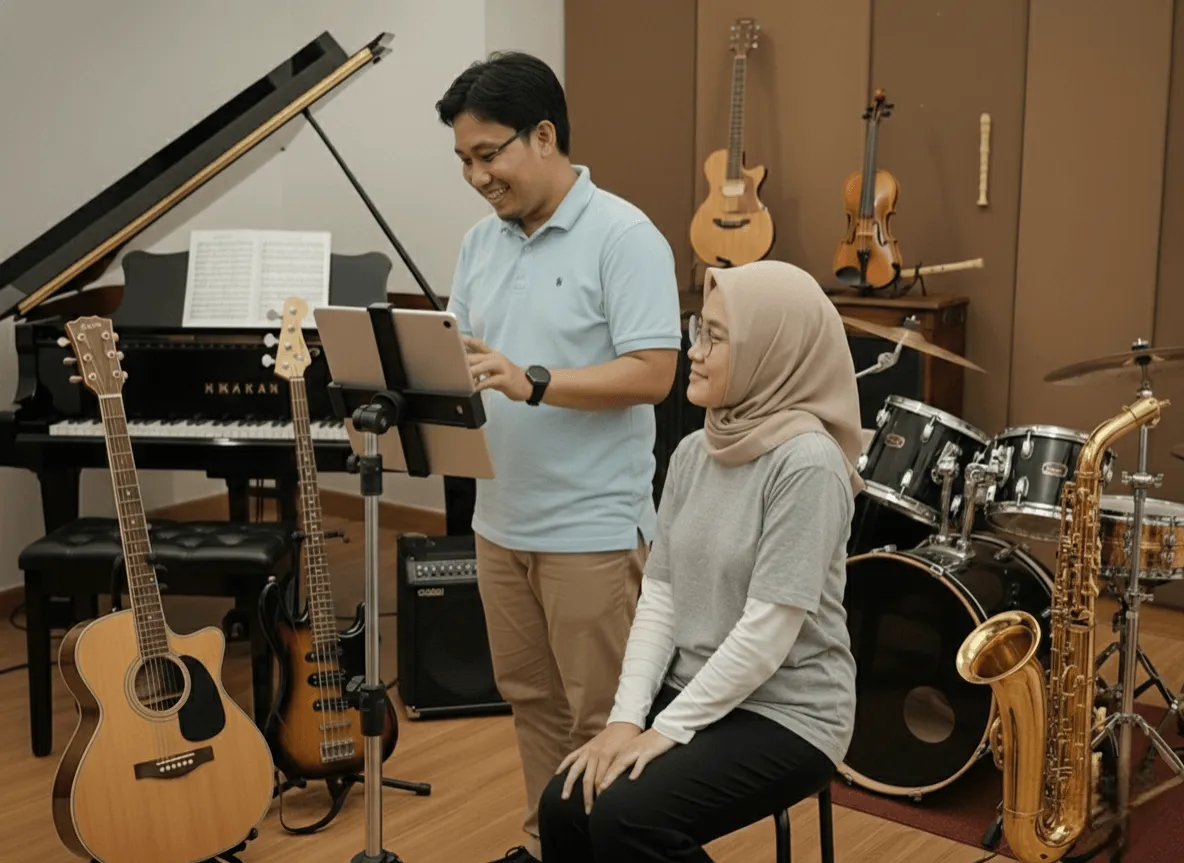
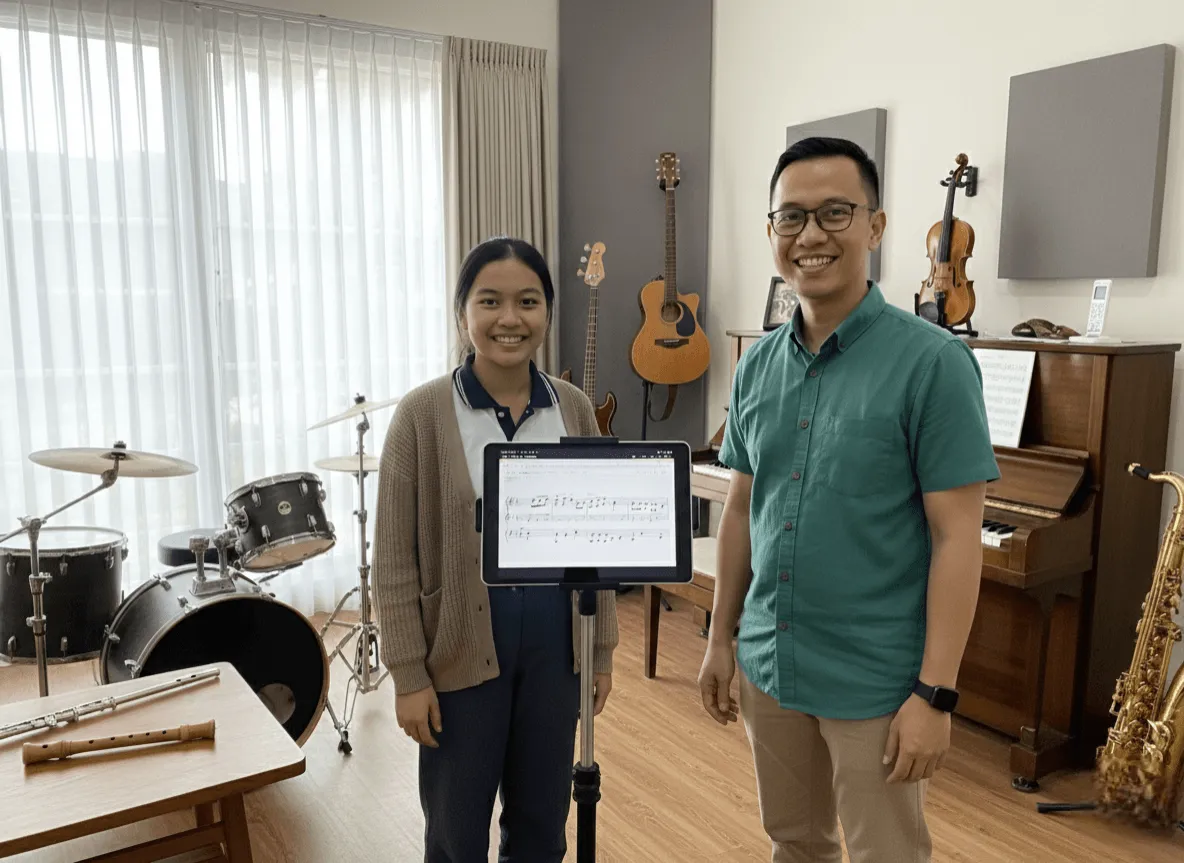
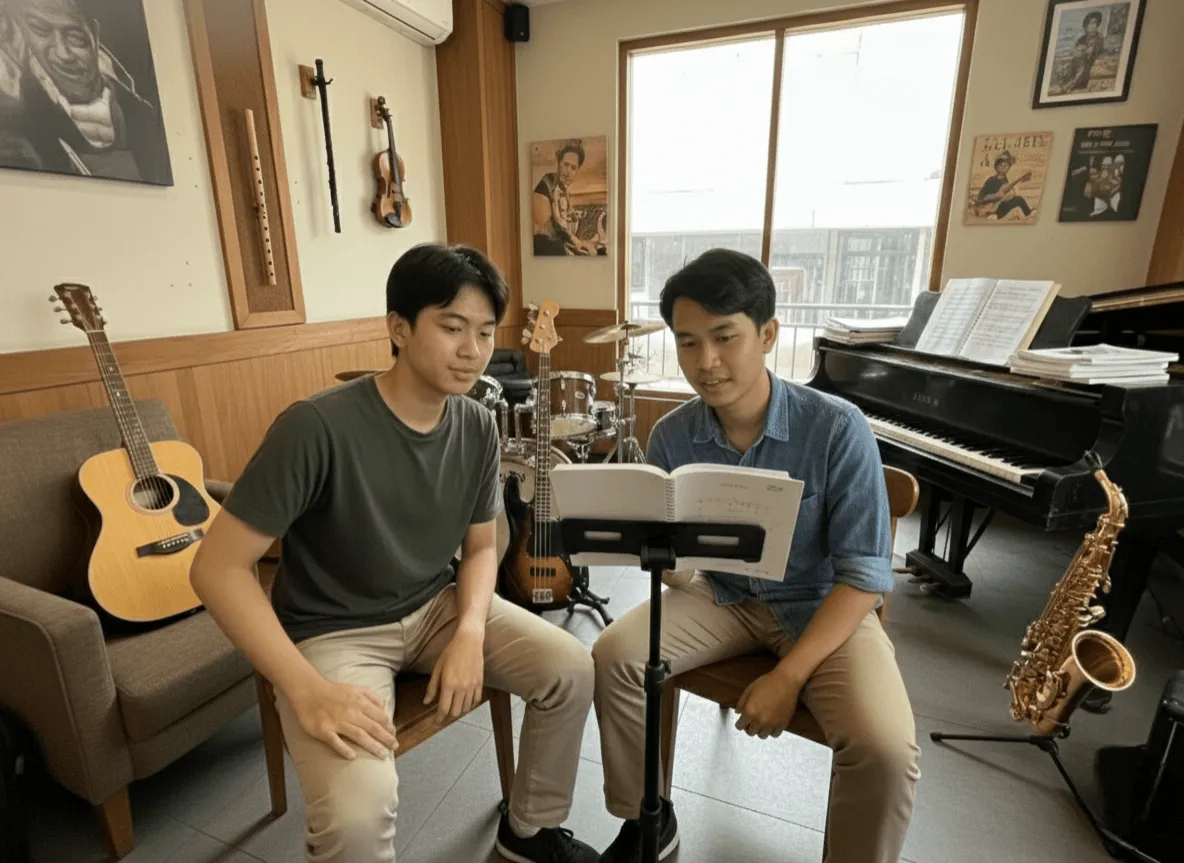
The photographs below were taken during bamboo flute tutoring in Bali sessions with learners on the island.
Service Area
Where Edupola Suling Teachers Travel in Bali
Tutors for bamboo flute tutoring in Bali travel to the location you choose, from Denpasar, Badung, and Gianyar through to Tabanan, Buleleng, Klungkung, Bangli, Karangasem, and Jembrana. Some learners choose their banjar's practice pavilion, because that is where the group's instruments already are.
One thing particular to this programme concerns the calendar. Ceremony dates differ between banjar and they move with the Balinese calendar, so a week that is busy in one village is quiet in another. The admin records the learner's ceremony days at the consultation and places sessions outside them.
The Edupola office is not used as a lesson venue. Where no tutor is available near you, sessions run online. For this programme the online route carries most of the material, with one exception covered next. Ask the admin about teacher coverage at your location in Bali.
Online Sessions
Online Sessions and Notes That Need Hearing Whole
Online sessions for bamboo flute tutoring in Bali run over Zoom or Google Meet, and most of the material still runs: singing the scale row, ornament, phrases from a piece, and the straw exercise.
One part does lose accuracy, which is judging the flute's pitch against a gamelan's tuning. A microphone compresses the sound and removes some of the fine vibration, so a small difference in pitch is not audible on the other side. For that, learners check against a tuning meter themselves and report the reading.
The continuous breath actually works well online, because what the teacher watches is the learner's face and cheeks, and both are clearly visible on camera. Accompanying a gamelan simultaneously cannot be done because of network delay, so a recording is used. Fees for online sessions match face-to-face sessions.
Frequently Asked
Questions From Bamboo Flute Learners in Bali
What does private bamboo flute tutoring in Bali cost?
Fees start from IDR 120,900 for a 60-minute session, the shortest option. Sessions of 90 and 120 minutes are available with the fee following the length. The final fee follows session length and the number of sessions per month, between 4 and 28. The admin sends the breakdown in writing before the first payment. A suling matched to your group's tuning, a straw, and a glass are prepared by the learner and not included in the fee.
Do I need to know the gamelan tuning before buying a flute?
Yes, and it is the one decision a purchase cannot undo. A suling is made for a particular tuning, so an instrument bought for the wrong one will not sit with your group however well you play it. Ask the group or studio first, and say the answer at the consultation; the teacher will come with you to choose if you prefer.
How long before I can do the continuous breath?
It depends on the basic tone, because the technique is opened only once a long note can be held without wavering. The straw exercise starts early and costs nothing, so many learners can keep bubbles going weeks before they try it on the flute. Pushing the technique onto an unsteady tone damages both at once, which is why teachers hold it back.
I have played the Western flute. Does that help?
With breath support and reading, yes. With the tuning it works against you, because the spacings you have internalised are different ones, and two notes of the pelog row will sound like the same note at first. So players coming from the Western flute spend the same time on singing the row as a complete beginner does.
Can a child join this programme?
Yes, and the limiting factor is the length of the flute instead of the age. The hands need to reach the finger holes with the instrument angled correctly, and shorter flutes exist for that reason. The continuous breath is left until later for younger learners, and the first sessions are the tone and the scale row, which children often take faster than adults.
How is a bamboo flute teacher matched to a learner?
The schedule is settled first during the consultation, covering days, times, session length, and sessions per month. The Edupola team then looks for a tutor whose travel to your location in Bali stays short, and that search runs 1 to 5 working days. The tuning matters here, and so does whether you accompany dance, ceremony, or a gamelan group. If the first 2 weeks feel like a poor fit, a replacement is arranged at no extra cost.
Related Programmes
Other Programmes Learners Add in Bali
Learners taking bamboo flute tutoring in Bali often add one other programme, usually once they play with a group.
-

Dance Tutoring in Bali
Taken by learners who accompany dance and want to recognise the cues from the dancer's side.
-

Balinese Language Tutoring in Bali
A choice for learners entering traditional activity who need the language for group business.
-

Flute Tutoring in Bali
Often taken by learners who want to add a wind instrument in Western tuning.
Get Started
Start From the Tuning of Where You Play
Name your group's tuning and whether you have a flute yet. A tutor in Bali is matched within 1 to 5 working days.